

LOT 2628
Paphlagonia, Sinope AE 20mm. Time of Mithradates VI Eupator, circa 120-111 or 110-100 BC.
Head of Artemis to right wearing stephane; bow and quiver over shoulder / ΣINΩ-ΠHΣ, tripod-lebes. SNG BM Black Sea 1524; HGC 7, 417. Good Very Fine.(8.14gr, 20mm, 12h.).
ProvenanceProperty of a North London, UK, gentleman.
TimeLine Auctions follows a vetting process to ensure the authenticity and legality of all items, reinforcing our commitment to integrity and responsible trading. Each antiquity, antique, and coin lot undergoes thorough examination by a vetting committee of at least ten external specialists, professional trade association members, scientists, and archaeologists: Our Vetting Process
AUCTIONS:
TimeLine is a leading auction house specialising in antiquities, ancient art, collectables, natural history, coins, medals, and books. Our auctions offer museums, collectors, historians, and enthusiasts the opportunity to acquire unique and historically significant pieces.
-
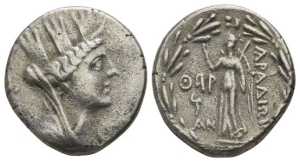
Phoenicia, Arados AR Tetradrachm. Circa 138/7-44/3 BC.
Sold for (Inc. bp): £98
Dated CY 199 (61/60 BC). Turreted, veiled and draped bust of Tyche to right / ΑΡΑΔΙΩΝ, Nike standing facing, head to left, holding aplustre and palm; ΘϘΡ (date) above Aramaic letter qoph above AN; all within wreath. Duyrat 4189; DCA 772; HGC 10, 72. 13.17gr, 27mm, 12h.
Very Fine.
From the collection of a gentleman, acquired on the London art market in the 1990s. -

Group of Eight [8] AR Sigloi of Achaemenid Empire. 5th-4th century BC.
Sold for (Inc. bp): £390
Various types. 44.04gr total.
Fine to Very Fine.
Ex 'V' gentleman's collection, Switzerland. From the property of a North London, UK, gentleman. -
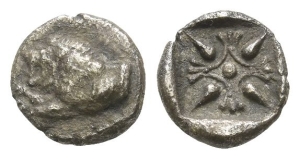
Western Asia Minor, uncertain mint AR Diobol. Circa 6th-5th century BC.
Sold for (Inc. bp): £195
Possibly Caria, uncertain mint or Ionia, Miletos. Forepart of roaring lion to left / Stellate pattern within incuse square. Unpublished in the standard references including HN Online. 0.98gr, 9mm.
Very Fine. Apparently unpublished and possibly unique.
From the collection of a London antiquarian, formed since the 1980s.
The fact that the present coin has the same reverse stellate pattern as the Diobols of Miletos (cf. SNG Kayhan I 462-75 and SNG Copenhagen 953) and some of the silver coins of the satraps of Caria (cf. HN Online 2926), leads us to attribute its origin to one of these two regions.
