
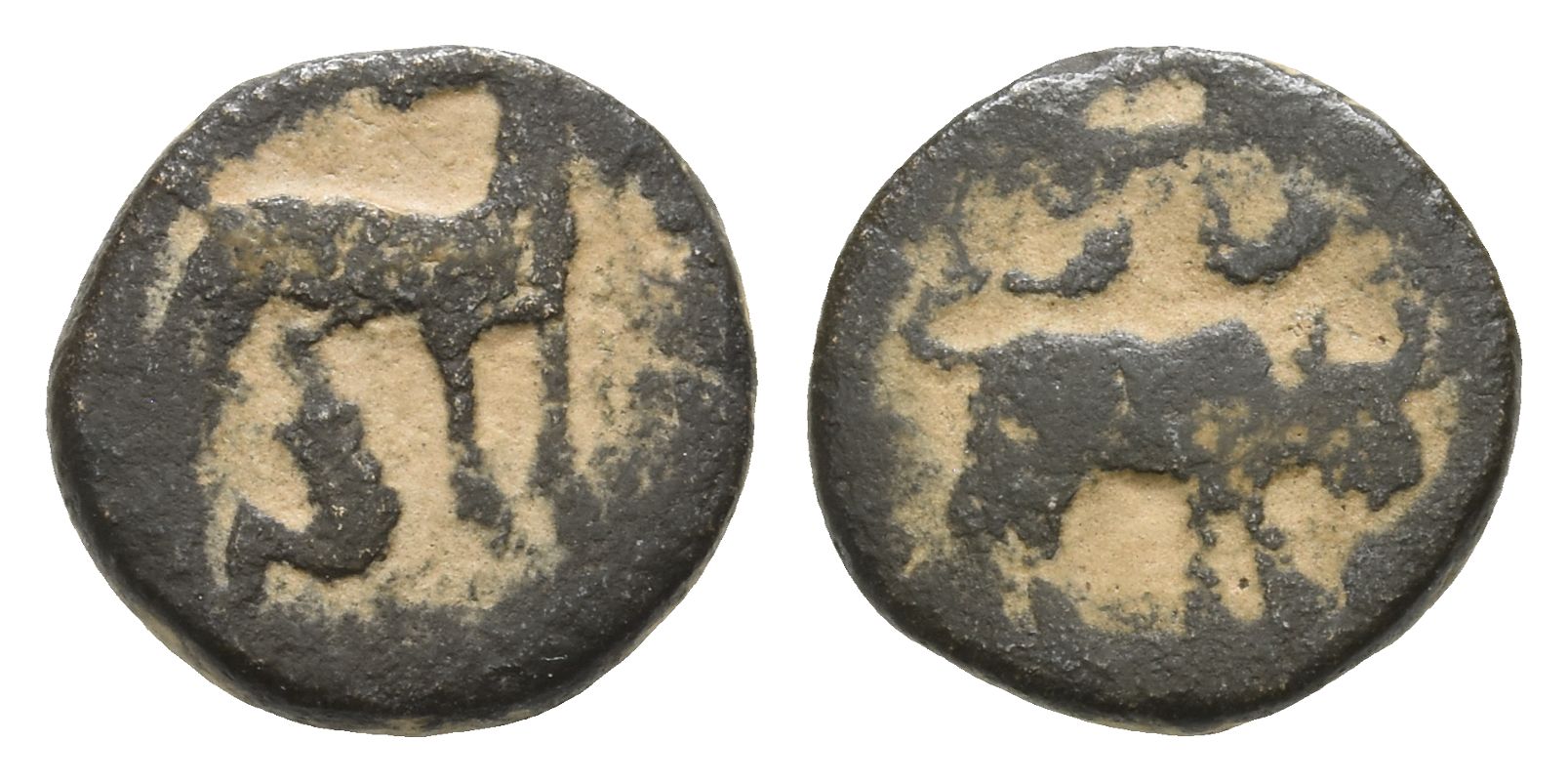
LOT 3330
Palmyrene, Palmyra AE Unit. 2nd-3rd century AD.
Doe standing to right, head to left, suckling a fawn / Bull standing to right, crescent above. Krzyzanowska, type X. Near Very Fine.(1.46gr, 11mm, 8h.).
ProvenanceAcquired on the European coin market.
Property of a Kent, UK, gentleman.
TimeLine Auctions follows a vetting process to ensure the authenticity and legality of all items, reinforcing our commitment to integrity and responsible trading. Each antiquity, antique, and coin lot undergoes thorough examination by a vetting committee of at least ten external specialists, professional trade association members, scientists, and archaeologists: Our Vetting Process
AUCTIONS:
TimeLine is a leading auction house specialising in antiquities, ancient art, collectables, natural history, coins, medals, and books. Our auctions offer museums, collectors, historians, and enthusiasts the opportunity to acquire unique and historically significant pieces.
-
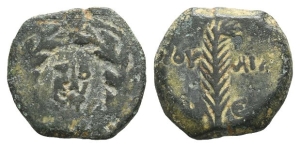
Judaea. Procurators, Valerius Gratus AE Prutah. Dated RY 5 of Tiberius (18/9 CE). Jerusalem mint.
Sold for (Inc. bp): £52
In the names of Tiberius and Julia Augusta (Livia). TIB KAICAP in three lines within wreath / Palm frond; IOY-ΛIA and [L] Є (date) across field. RPC I 4965; Meshorer 328; Hendin 6368. 2.28gr, 15mm, 12h.
Very Fine.
London, UK, dealership, 1990s. -
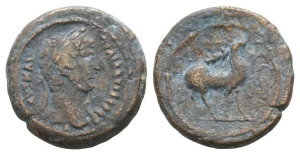
Hadrian AE Obol of Alexandria, Egypt. Dated RY 11 (AD 126/7).
Sold for (Inc. bp): £46
ΑΥΤ ΚΑΙ ΤΡΑΙ ΑΔΡΙΑ CЄB, laureate bust to right, drapery over far shoulder / Stag standing to right; [L IA] (date) across fields. RPC III 5693; Dattari (Savio) 2023; Emmett 1169.11. 5.36gr, 19mm, 12h.
Near Very Fine. Hints of blue patina.
From the collection of a gentleman, acquired on the London art market in the 1990s. -
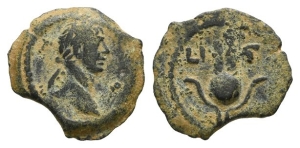
Trajan AE Dichalkon of Alexandria, Egypt. Dated RY 16 (AD 112/3).
Sold for (Inc. bp): £13
Laureate head to right / Headdress of Isis; L Ι-Ϛ (date) across fields. RPC III 4773; Dattari (Savio) 1097-8; Emmett 710. 1.11gr, 14mm, 12h.
Very Fine.
Property of a North London, UK, gentleman.
