
LOT 3326
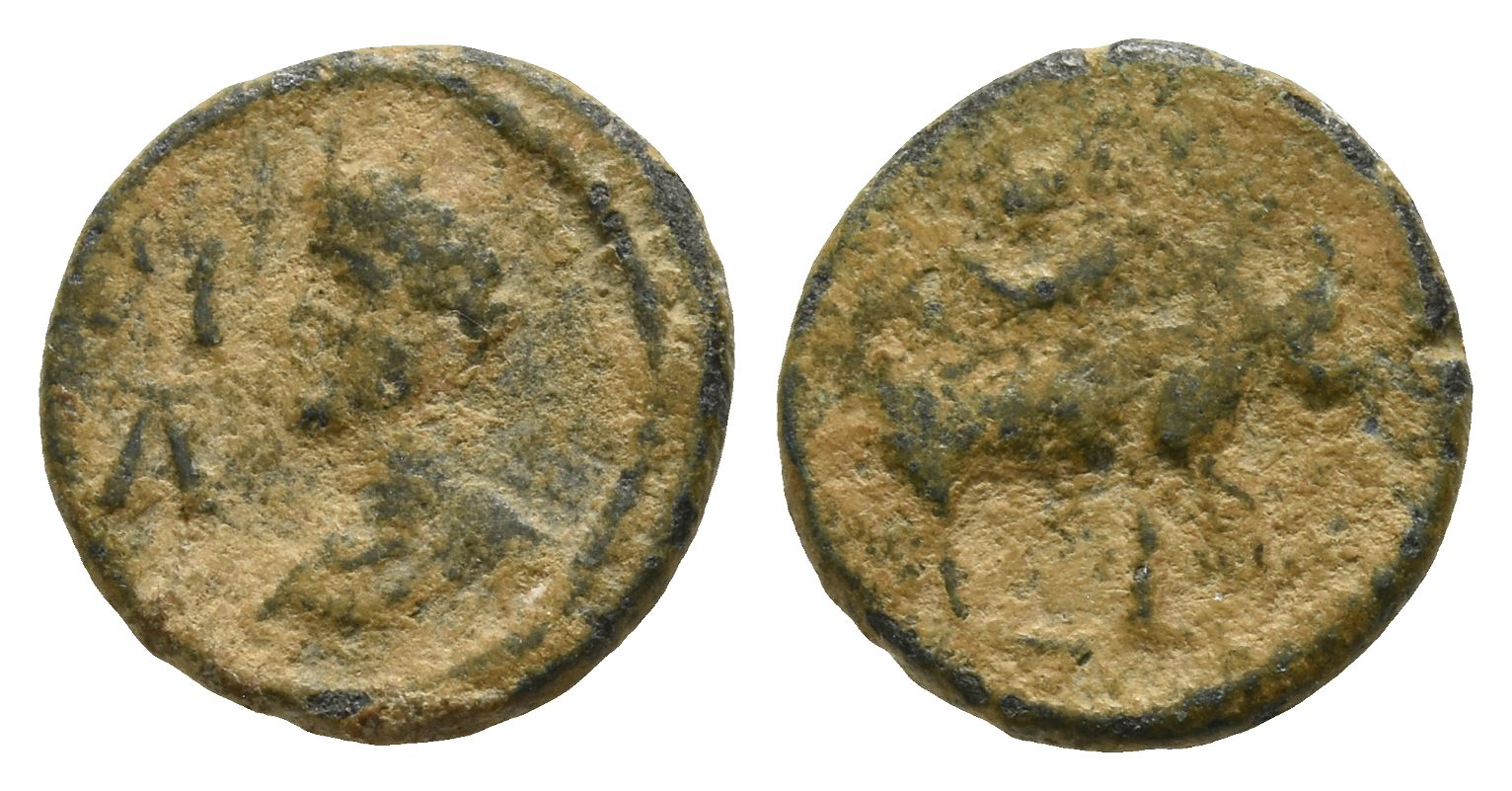
Palmyrene, Palmyra AE 14mm. Circa 2nd-3rd centuries AD. Pseudo-autonomomous issue.
Draped male bust to left; ΠΑ before / Bull standing to right, head facing; above, sun and crescent. De Saulcy p. 61, 8 var. (confronted busts on obverse); Krzyzanowska -. Very Fine. Apparently unpublished and possibly unique.(1.73gr, 12mm, 10h.).
ProvenanceAcquired on the European coin market.
Property of a Kent, UK, gentleman.
TimeLine Auctions follows a vetting process to ensure the authenticity and legality of all items, reinforcing our commitment to integrity and responsible trading. Each antiquity, antique, and coin lot undergoes thorough examination by a vetting committee of at least ten external specialists, professional trade association members, scientists, and archaeologists: Our Vetting Process
AUCTIONS:
TimeLine is a leading auction house specialising in antiquities, ancient art, collectables, natural history, coins, medals, and books. Our auctions offer museums, collectors, historians, and enthusiasts the opportunity to acquire unique and historically significant pieces.
-
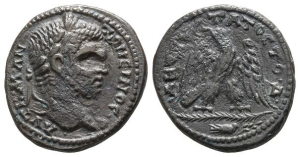
Caracalla BI Tetradrachm of Ascalon, Judaea. Struck AD 215-217.
Estimate: £200 - 300 (+bp*)
Opening Bid: £100
ΑVΤ Κ • Μ • ΑΝ-ΤΩΝЄΙΝΟϹ • Ϲ, laureate head to right / ΔΗ ЄΞ V-ΠΑΤΟϹ • ΤΟ • Δ •, eagle standing facing on palm frond, head and tail to left, with wings displayed, holding wreath in beak; in exergue, dove to right with olive branch in beak. RPC V.3 Unassigned ID 79260 (this coin cited); Prieur 1654 var. (obverse legend); Sofaer 177 var. (same). 11.92gr, 27mm, 12h.
Very Fine. Toned. Very rare. This coin published at Roman Provincial Coinage Online (rpc.ashmus.ox.ac.uk).
From the collection of a gentleman, acquired on the London art market in the 1990s. Ex Classical Numismatic Group, Electronic Auction 362, 28 October 2015, lot 320. -
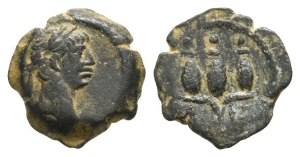
Trajan AE Dichalkon of Alexandria, Egypt. Dated RY 17(?) (AD 113/4).
Sold for (Inc. bp): £20
Laureate head to right / Hemhem crown, [L I-Z(?) (date)] below. Cf. RPC III 4820; cf. Dattari (Savio) 7221; cf. Emmett 707.17. 1.46gr, 13mm, 12h.
Very Fine.
From the collection of a gentleman, acquired on the London art market in the 1990s. -
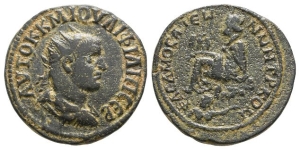
Philip II AE 27mm of Samosata, Commagene. AD 247-249.
Sold for (Inc. bp): £20
AVTOK K M IOVΛΙ ΦIΛIΠ CЄB, radiate, draped and cuirassed bust to right / ΦΛ CAMOCATЄѠN MHTP KOM, Tyche seated to left on rocks, with eagle perched on arm; river god swimming to right below. RPC VIII Online Unassigned ID 8350; Butcher 32; BMC 62-6. 12.76gr, 27mm, 12h.
Near Very Fine.
Ex Roma Numismatics Ltd, E-Sale 97, 26 May 2022, lot 771. Property of a London antiquarian.
