
LOT 3482
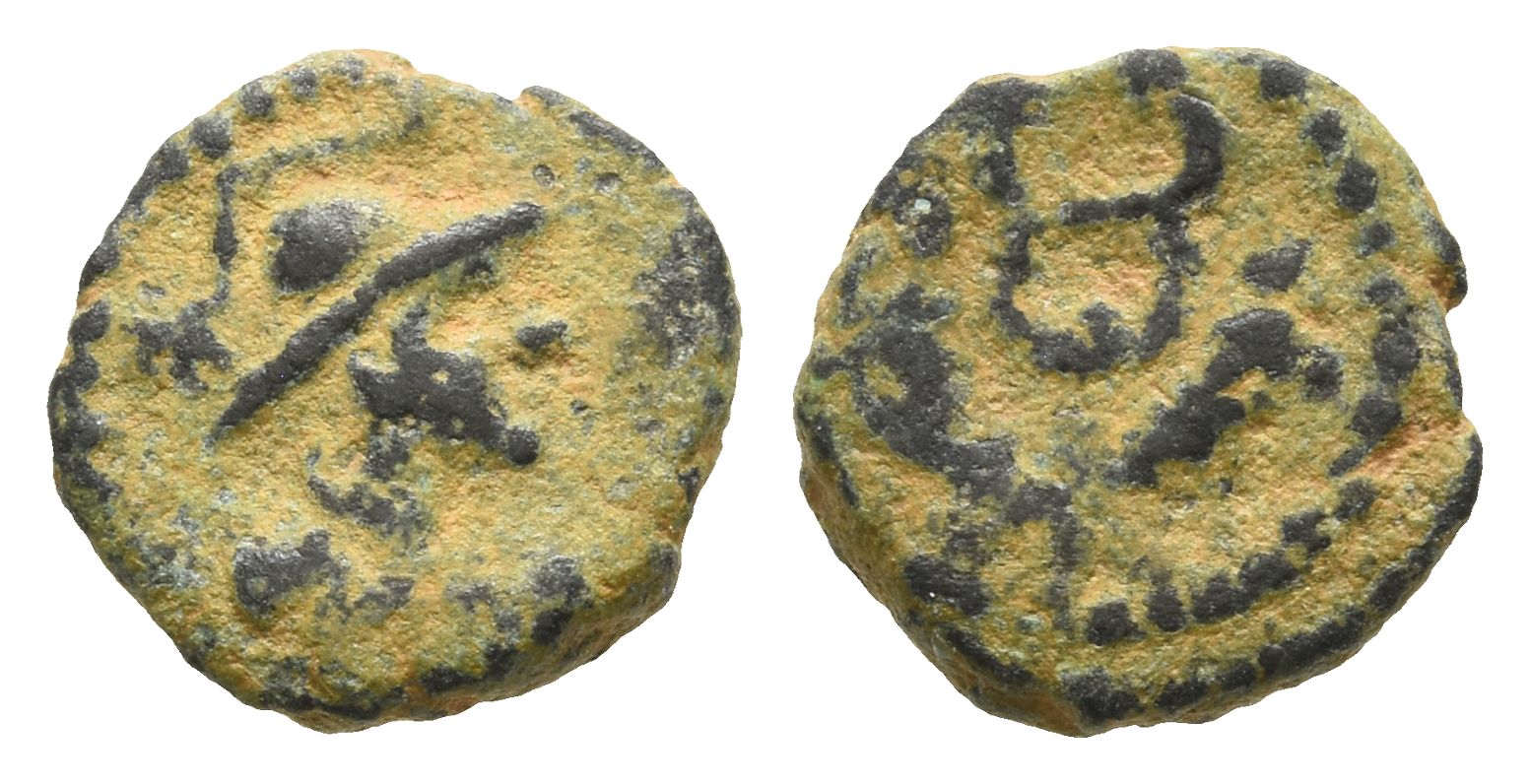
Palmyrene, Palmyra AE 10mm. Circa 1st-3rd centuries AD. Pseudo-autonomous issue.
Helmetted and draped bust of Athena to right / Caduceus between two cornucopiae. De Saulcy -; BMC -; Krzyźanowska, Monnayage de Palmyre -; Lindgren I-; for a similar example cf. Roma, e-118, 791. Very Fine. Extremely rare; unpublished.(1.01gr, 10mm, 9h.).
ProvenanceAcquired on the European coin market.
Property of a Kent, UK, gentleman.
TimeLine Auctions follows a vetting process to ensure the authenticity and legality of all items, reinforcing our commitment to integrity and responsible trading. Each antiquity, antique, and coin lot undergoes thorough examination by a vetting committee of at least ten external specialists, professional trade association members, scientists, and archaeologists: Our Vetting Process
AUCTIONS:
TimeLine is a leading auction house specialising in antiquities, ancient art, collectables, natural history, coins, medals, and books. Our auctions offer museums, collectors, historians, and enthusiasts the opportunity to acquire unique and historically significant pieces.
-
Trajan AE Dichalkon of Alexandria, Egypt. Dated RY 17 (AD 113/4).
Sold for (Inc. bp): £7
Laureate head to right / Headdress of Isis; L Ι-Z (date) across fields. RPC III 4819; Emmett 710. 1.43gr, 14mm, 12h.
Near Very Fine.
From the collection of a gentleman, acquired on the London art market in the 1990s. -
Gordian III AE 25mm of Edessa, Macedon. AD 238-244.
Sold for (Inc. bp): £65
AV • K • M • ANT • ΓOPΔIANOC •, laureate, draped and cuirassed bust to right, seen from rear / CΔC-C-CCΩN, Roma seated to left on shield, holding Nike, being crowned by the Tyche of Edessa standing to left behind, holding sceptre. Varbanov 3674. 7.91gr, 25mm, 1h.
Very Fine. Dark green patina.
From the collection of a gentleman, acquired on the London art market in the 1990s. -
Augustus AE Obol-40 Drachmai of Alexandria, Egypt. Struck circa 3/2 BC.
Sold for (Inc. bp): £85
Third(?) series. ΣΕΒΑΣΤΟΥ, garlanded altar; laurel branches flanking / KAIΣAPOΣ in two lines within laurel wreath. RPC I 5013; Köln 9; Dattari (Savio) 16; K&G 2.9; Emmett 27. 5.24gr, 21mm, 12h.
Very Fine.
From the collection of a gentleman, acquired on the London art market in the 1990s.
