
Loading, please wait...
LOT 1388
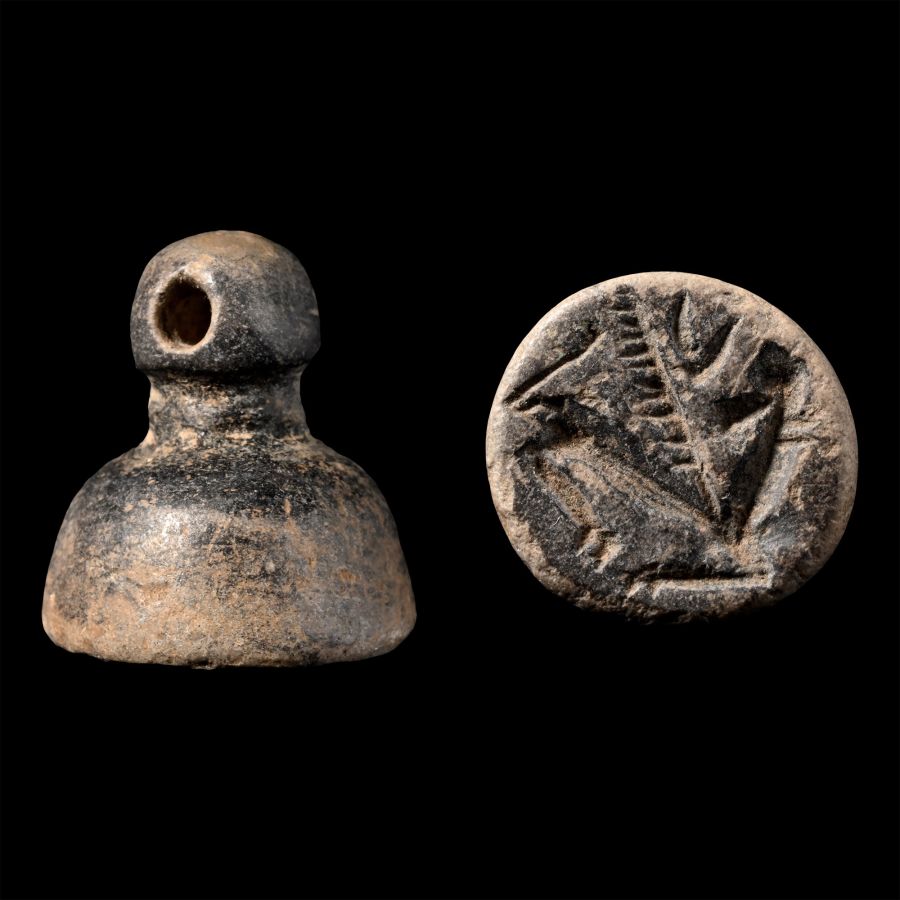
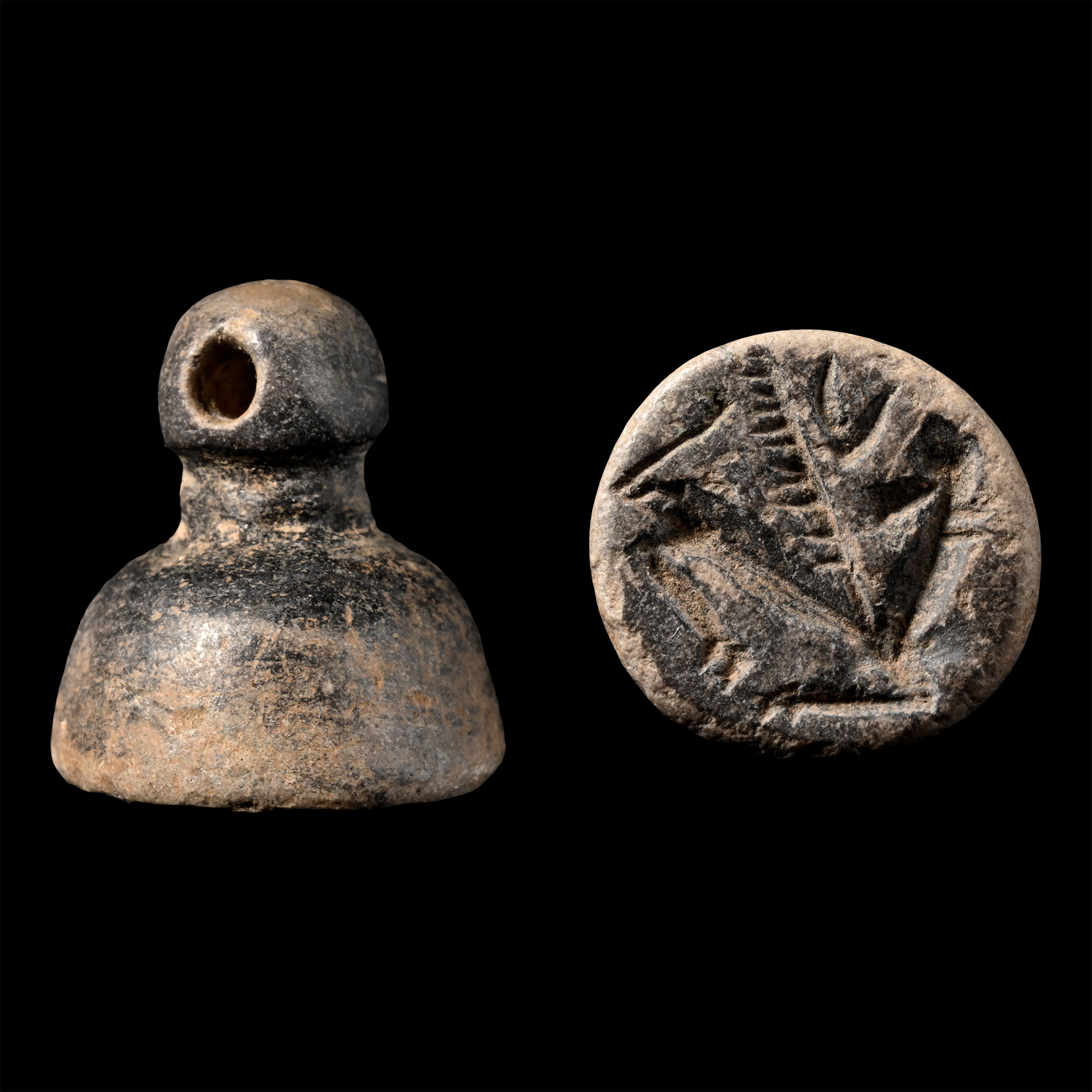
Palestinian or Anatolian Brown Stone Stamp Seal with Sphinx
CIRCA 1200-900 B.C.
3/4 in. (4.61 grams, 18 mm).
Comprising a domed body and a large handle, accompanied by an old scholarly note, typed and signed by W.G. Lambert, late Professor of Assyriology, University of Birmingham, 1970-1993, which states: 'Stamp Seal of Brown Stone with Black Patina, 17 x 17.5 x 18 mm. The seal has an oval face, with domed back with superimposed handle, which is nicely shaped. The design shows a recumbent sphynx: body of a quadruped, but human head and wings. Above its back is a bird or fly. This is a seal from Syria / Palestine or Anatolia, c. 1200-900 B.C. It is in fine condition.' [No Reserve]
ProvenanceAcquired in the late 1980s-early 1990s.
Ex property of a West London businessman.
Academically researched and catalogued by the late Professor Lambert in the early 1990s.
Accompanied by a copy of a scholarly report, numbered 1607, typed and signed by Professor Wilfrid George Lambert.
TimeLine Auctions follows a vetting process to ensure the authenticity and legality of all items, reinforcing our commitment to integrity and responsible trading. Each antiquity, antique, and coin lot undergoes thorough examination by a vetting committee of at least ten external specialists, professional trade association members, scientists, and archaeologists: Our Vetting Process
AUCTIONS:
TimeLine is a leading auction house specialising in antiquities, ancient art, collectables, natural history, coins, medals, and books. Our auctions offer museums, collectors, historians, and enthusiasts the opportunity to acquire unique and historically significant pieces.
LOT 1388
Palestinian or Anatolian Brown Stone Stamp Seal with Sphinx
Sold for (Inc. bp): £52
-
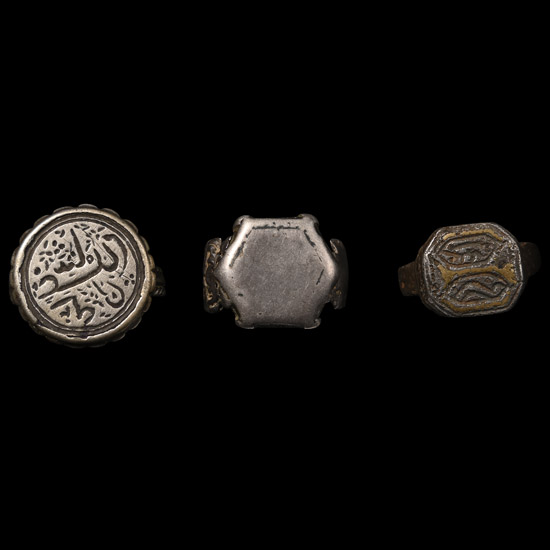
Western Asiatic Silver-Coloured Metal Ring Group
Circa 12th-18th century A.D.Sold for (Inc. bp): £221
A mixed group of rings from the Seljuk and Ottoman periods, comprising three rings: one with a calligraphic inscription, one with a hexagonal bezel with remains of niello, and one with the bezel divided into two fields. 24.9 grams total, 21-27 mm
Acquired in the late 1980s-early 1990s. Private collection, London, UK -
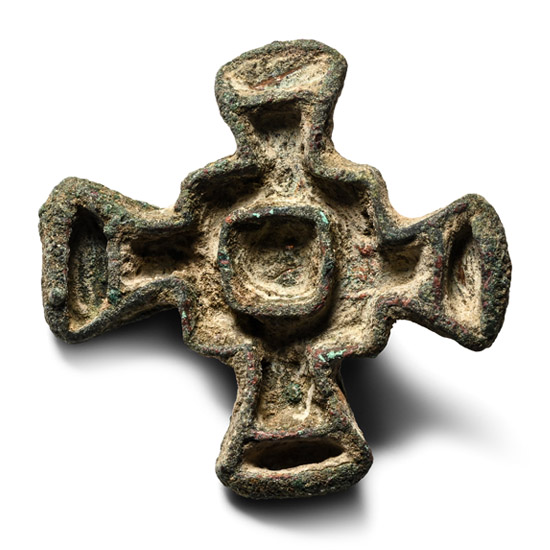
West Central Asian Bronze Quadrate Cross Seal Matrix
Circa 2300-2000 B.C.Sold for (Inc. bp): £39
Comprising a cross-shaped body with a small loop on the reverse, accompanied by an old scholarly note, typed and signed by W.G. Lambert, late Professor of Assyriology, University of Birmingham, 1970-1993, which states: 'Stamp Seal of Bronze, 39 x 38 x 12 mm. This bears the shape of the design, with flat compartmented face and flat back on which is mounted a loop handle for suspension. The design is a quadrate cross with small square in the middle, and to the end of each arm is added a rough oblong shape. This comes from west central Asia and dates to c. 2300-2000 B.C. It is generally in good condition, only the handle is worn and the outer edges are also a little worn in two places.' 17.1 grams, 39 mm
Acquired in the late 1980s-early 1990s. Ex property of a West London businessman. Academically researched and catalogued by the late Professor Lambert in the early 1990s. Accompanied by a copy of a scholarly report, numbered U-388, typed and signed by Professor Wilfrid George Lambert. -
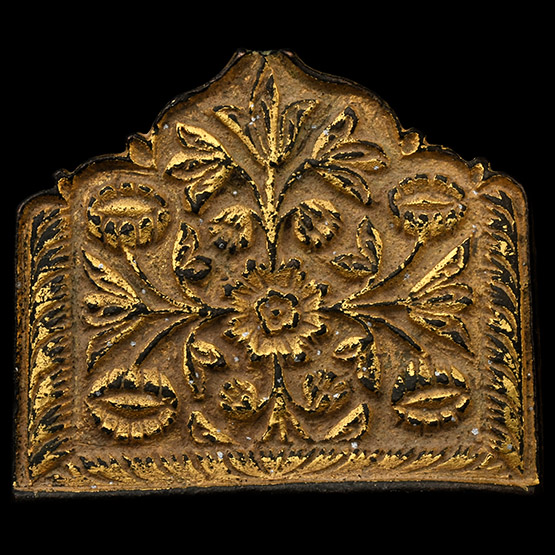
Golden Horde Gilt Bronze Fastening Element
13th-14th century A.D.Estimate: £200 - 300 (‡+bp*)
Opening Bid: £100
Pentagonal in plan with scooped ogival upper edge, shallow sides and slider-bar to reverse; high-relief decorative motifs of rosette and radiating stems and leaves. 18.25 grams, 43 mm
Acquired in the mid 1980s-1990s. Private collection, Switzerland, thence by descent. Private collection, since the late 1990s.
