
Loading, please wait...
LOT 0278
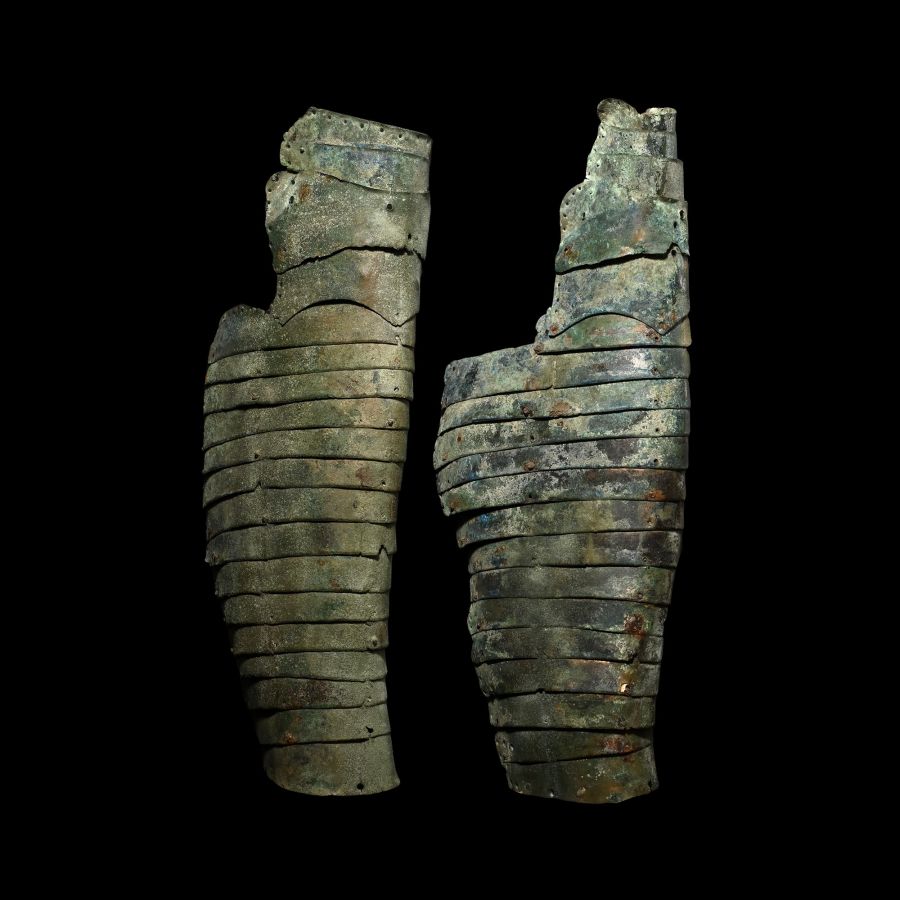
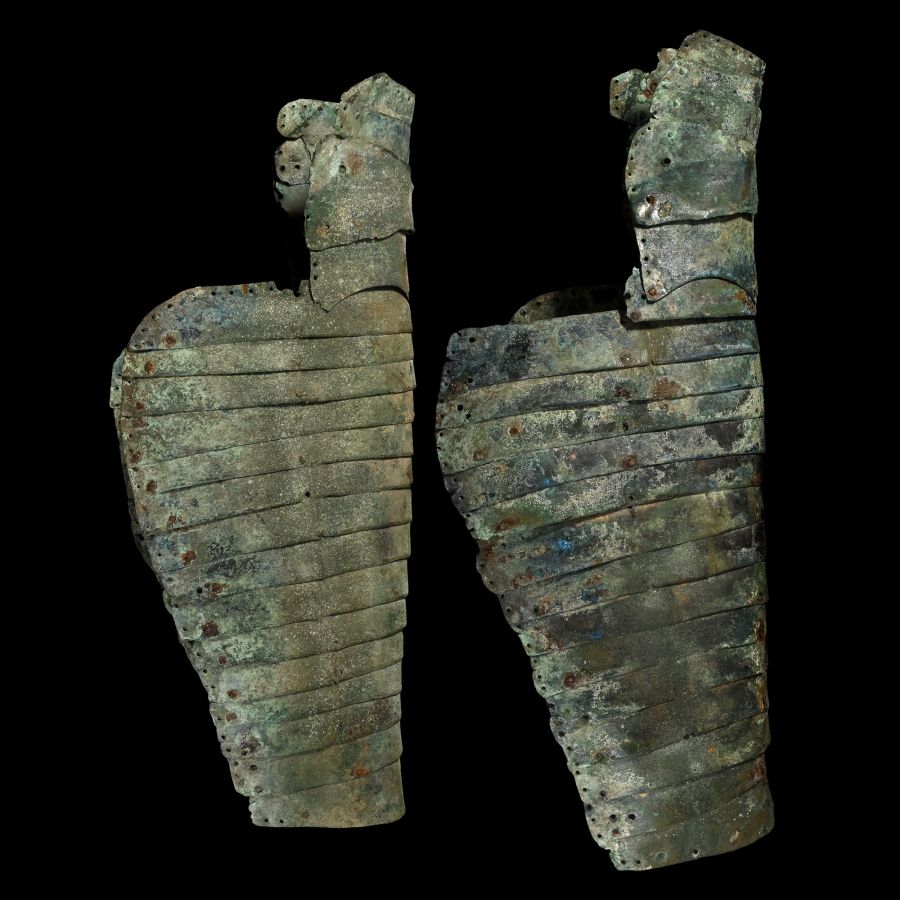
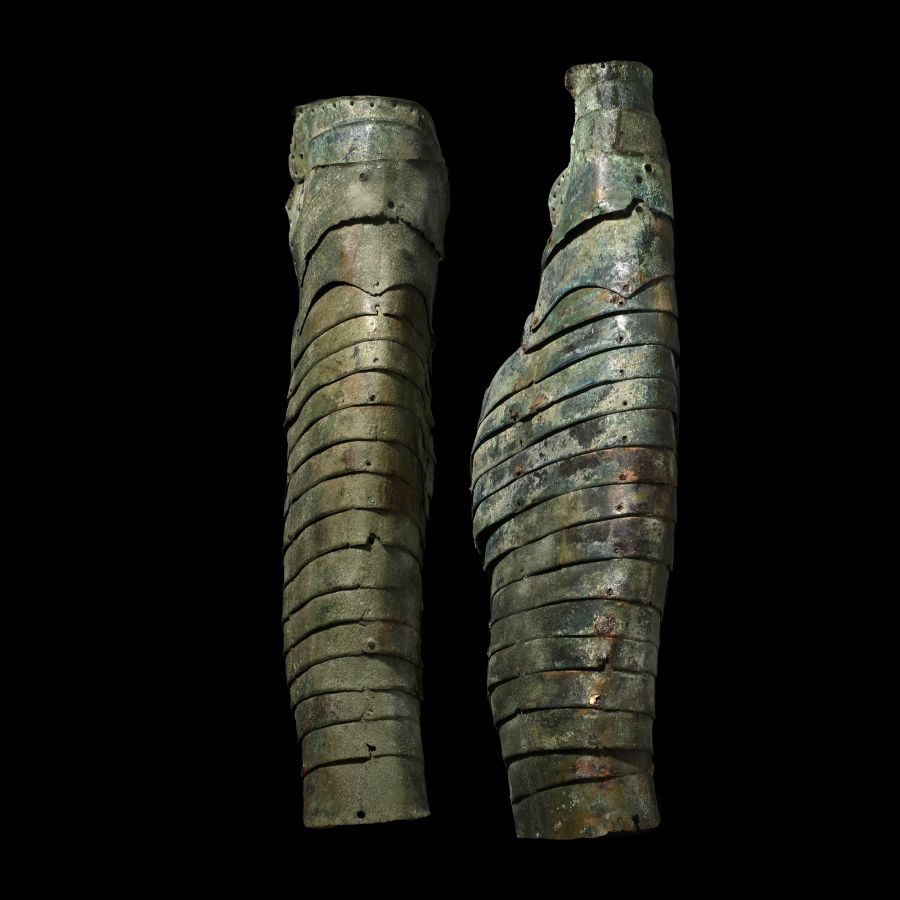
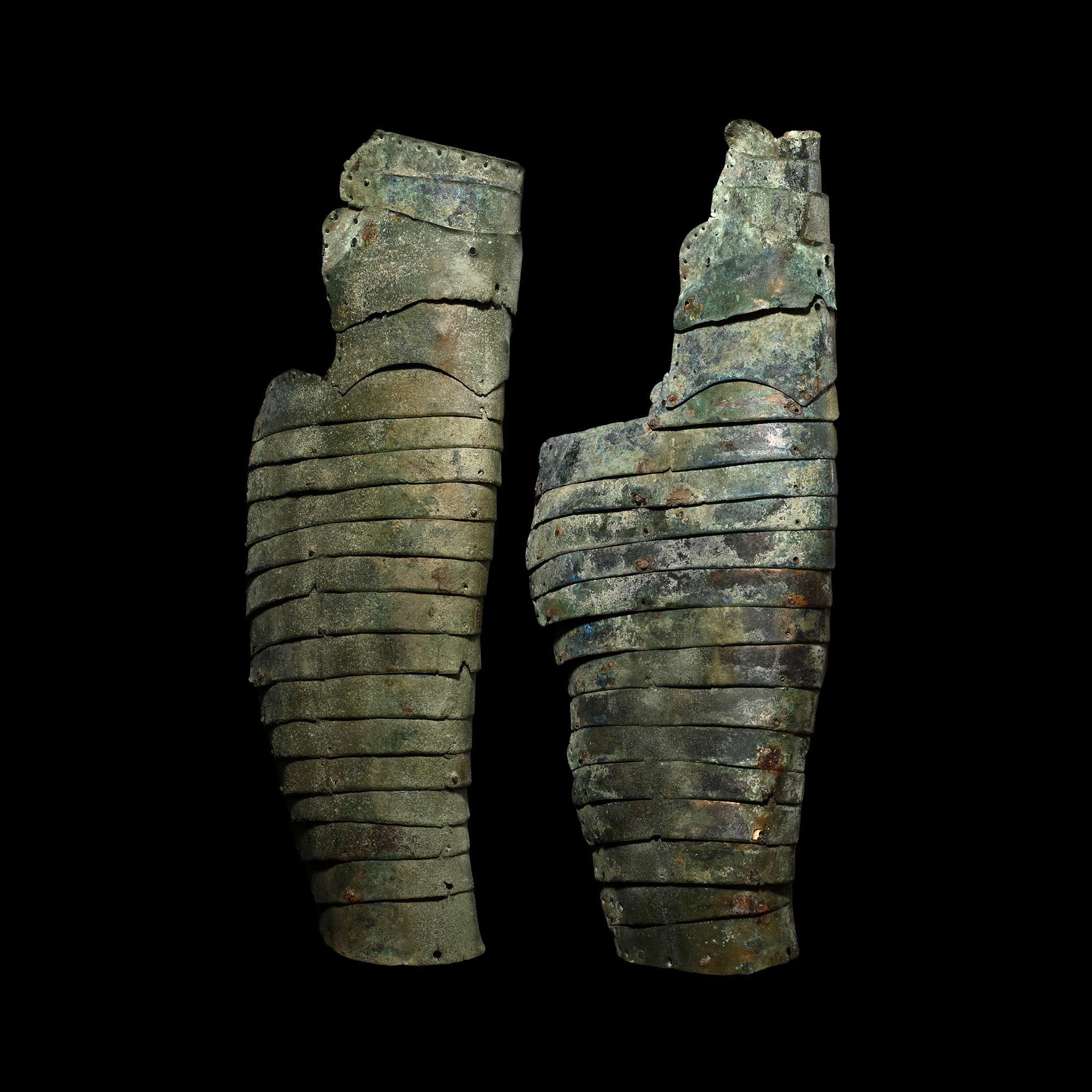
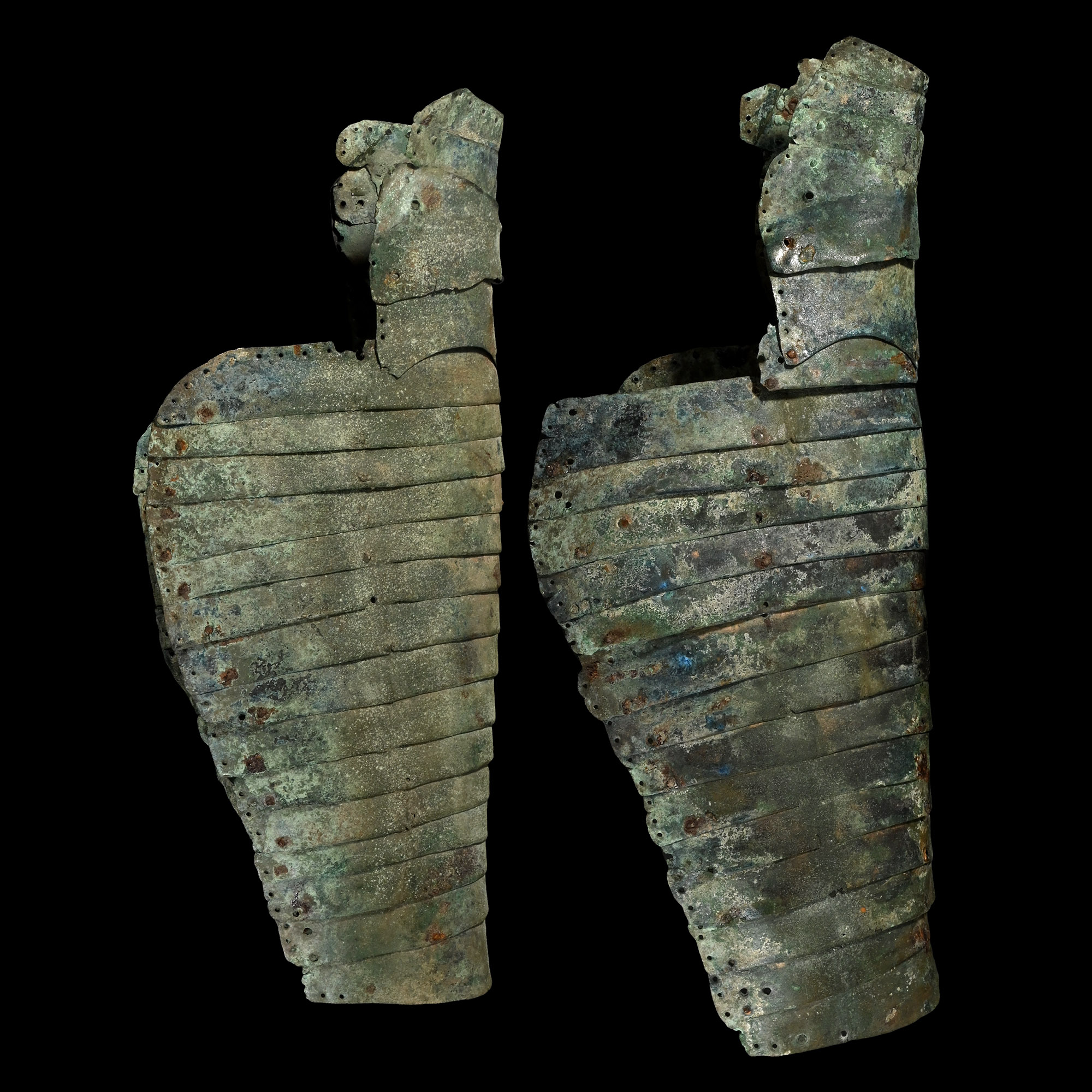
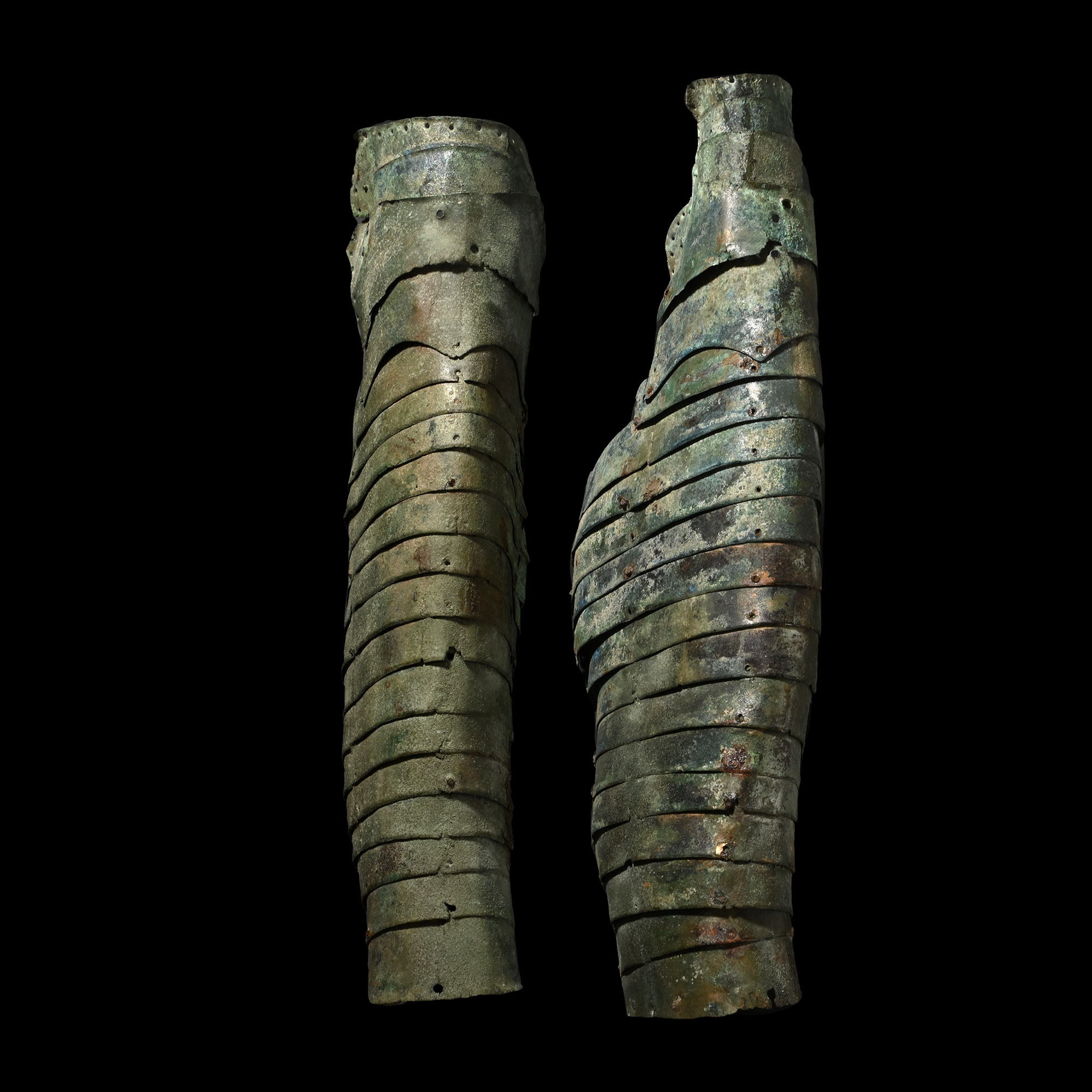
Pair of Roman Lamellar Greaves of a Heavily Armoured Mounted Cataphractarius Soldier
2ND-3RD CENTURY A.D.
17 3/4 x 19 7/8 in. (1.8 kg total, 45-50.5 cm).
A complete pair of lamellar greaves, anatomically formed protection featuring curved, overlapping metal plates (lames), the knee area having large plates and cut-outs at the sides to enable better movement; the left greave consists of nineteen overlapping U-shaped metal strips, whilst the right consists of twenty, each with two rivets at each end of every strip. [2]
ProvenanceAcquired on the Munich art market in the 1990s.
From a South German private collection.
German export licence no.15771.
Accompanied by an academic report by Prof. Dr Phil. Peter Rothenhöfer and Dr Raffaele D'Amato.
This lot has been checked against the Interpol Database of stolen works of art and is accompanied by search certificate no.13540-263658.
Cf. D’Amato, R., Negin, A., Roman Heavy Cavalry (1), Cataphractarii & Clibanarii,1st Century BC-5th Century AD, Oxford, 2018, figs.pp.38-39; Hunter F. and Braby, A., The complete brass armguard (manica) from Newstead, Scottish Borders. Journal of Roman Military Equipment Studies 22, 2021, pp. 1–13; Bryan, B., Hunter, F., West, R., The Newstead brass manica: an update. Journal of Roman Military Equipment Studies 23/24, 2022/23, pp. 69-72; D'Amato, R., Rothenhöfer, P., A Pair of Complete Lamellar Greaves of a Catafractarius, JAC 2027 (forthcoming).
FootnotesA close example in construction technique and material is an arm guard (manica) from Newstead (Trimontium).
The heavy armoured cavalrymen (cataphractarii) were often protected entirely on arms and legs, as shown by the Dura Europos graffito and echoed in the words of Nazianzius describing the clibanarii of Maxentius (Pan., XXII,5ff.): 'In the army they are called clibanarii, the men are covered in the upper part, an armour (lorica) which extends down to the horses’chest (pectora equorum) and hang to their forelegs protects them from the injury of a wound without impending their gait…' Nazanzius speaks of an ostentatio armorum (display of armour) and of operti ferro exercitus (army covered with iron). A long splint-armour gauntlet with metal staves had already begun to appear as early as the third century in the Roman army. It had an Iranian origin and is typical of Eurasian horse people.
TimeLine Auctions follows a vetting process to ensure the authenticity and legality of all items, reinforcing our commitment to integrity and responsible trading. Each antiquity, antique, and coin lot undergoes thorough examination by a vetting committee of at least ten external specialists, professional trade association members, scientists, and archaeologists: Our Vetting Process
AUCTIONS:
TimeLine is a leading auction house specialising in antiquities, ancient art, collectables, natural history, coins, medals, and books. Our auctions offer museums, collectors, historians, and enthusiasts the opportunity to acquire unique and historically significant pieces.
LOT 0278
Pair of Roman Lamellar Greaves of a Heavily Armoured Mounted Cataphractarius Soldier
Estimate £20,000 - 30,000€23,200 - 34,800 (for guidance only)$27,000 - 40,500 (for guidance only)
-
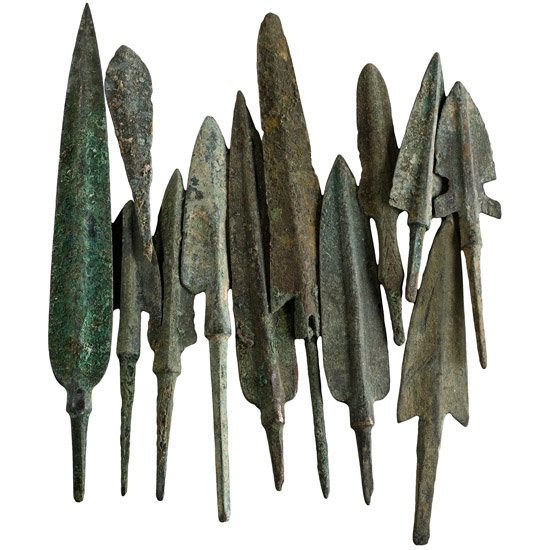
Western Asiatic Bronze Arrowhead Collection
2nd-1st millennium B.C.Estimate: £100 - 140 (+bp*)
Opening Bid: £55
Including barbed-and-tanged, leaf-shaped and other types. 266 grams total, 8.5-16.5 cm
Ex Abelita collection, 1980s-2010. -
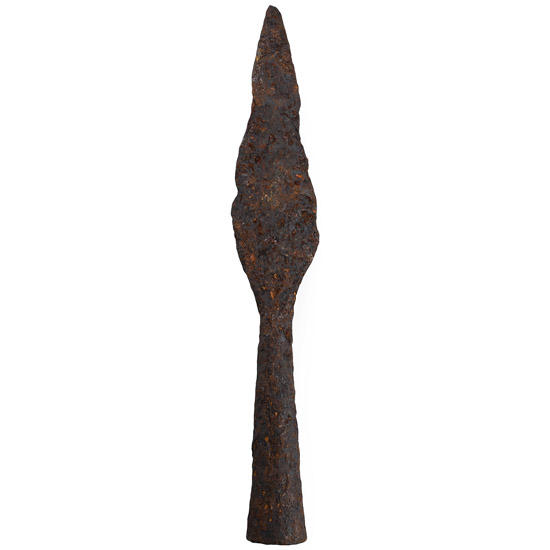
Viking Age Iron Socketted Spearhead
Circa 9th-11th century A.D.Estimate: £80 - 100 (+bp*)
Bids: 1 | Current Bid: £5
Featuring a leaf-shaped blade and an expanding tubular socket. 199 grams, 25 cm
Acquired on the UK art market since the 1960s. From the private collection of Mr J.P.H., a Woolwich, UK, collector, his collection formed since the 1960s. -
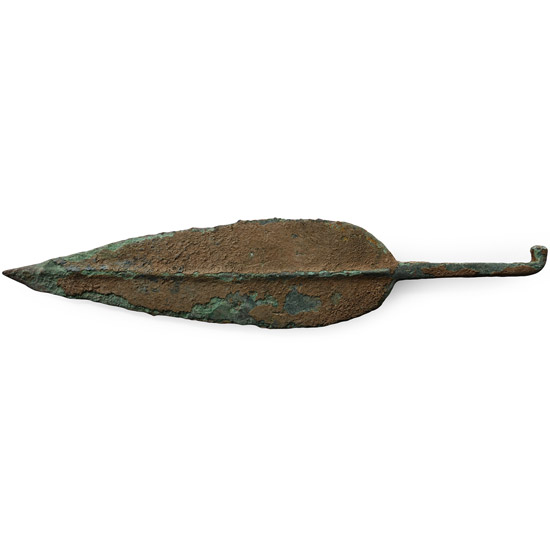
Luristan Bronze Tanged Spearhead
14th-10th century B.C.Estimate: £100 - 140 (+bp*)
Opening Bid: £50
Large leaf-shaped blade with a narrow midrib and a rectangular-section tang with bent finial. 275 grams, 30.4 cm
Ex Abelita collection, 1990s.
