
Loading, please wait...
LOT 1326
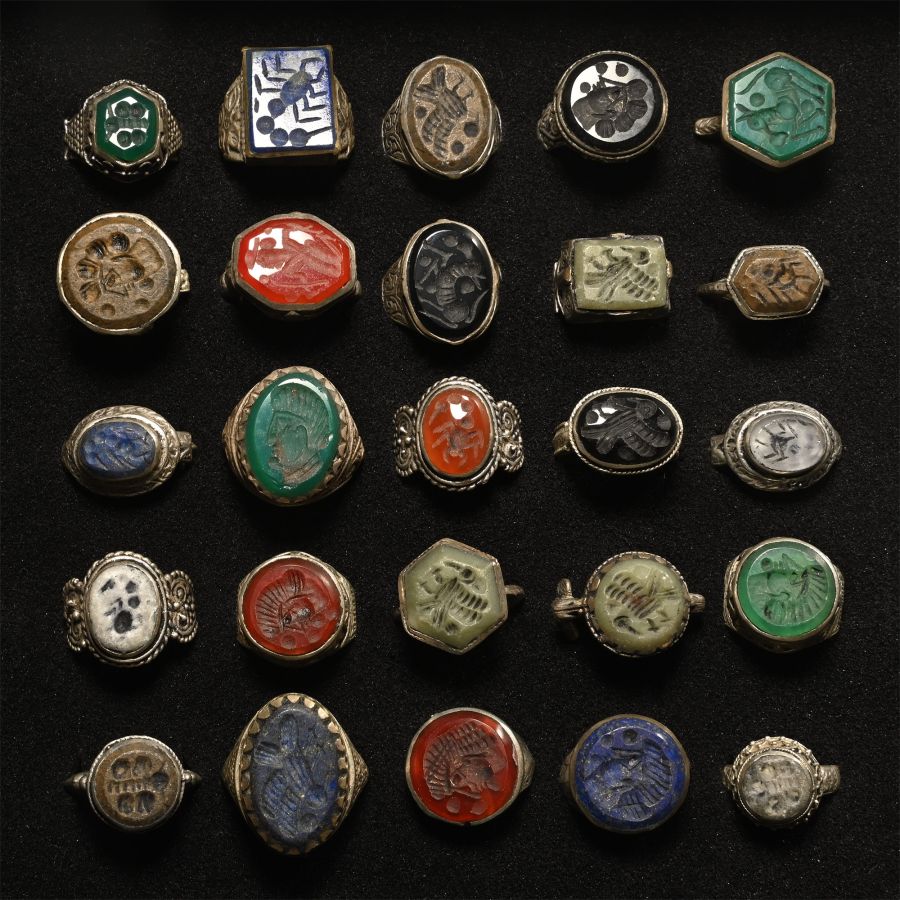
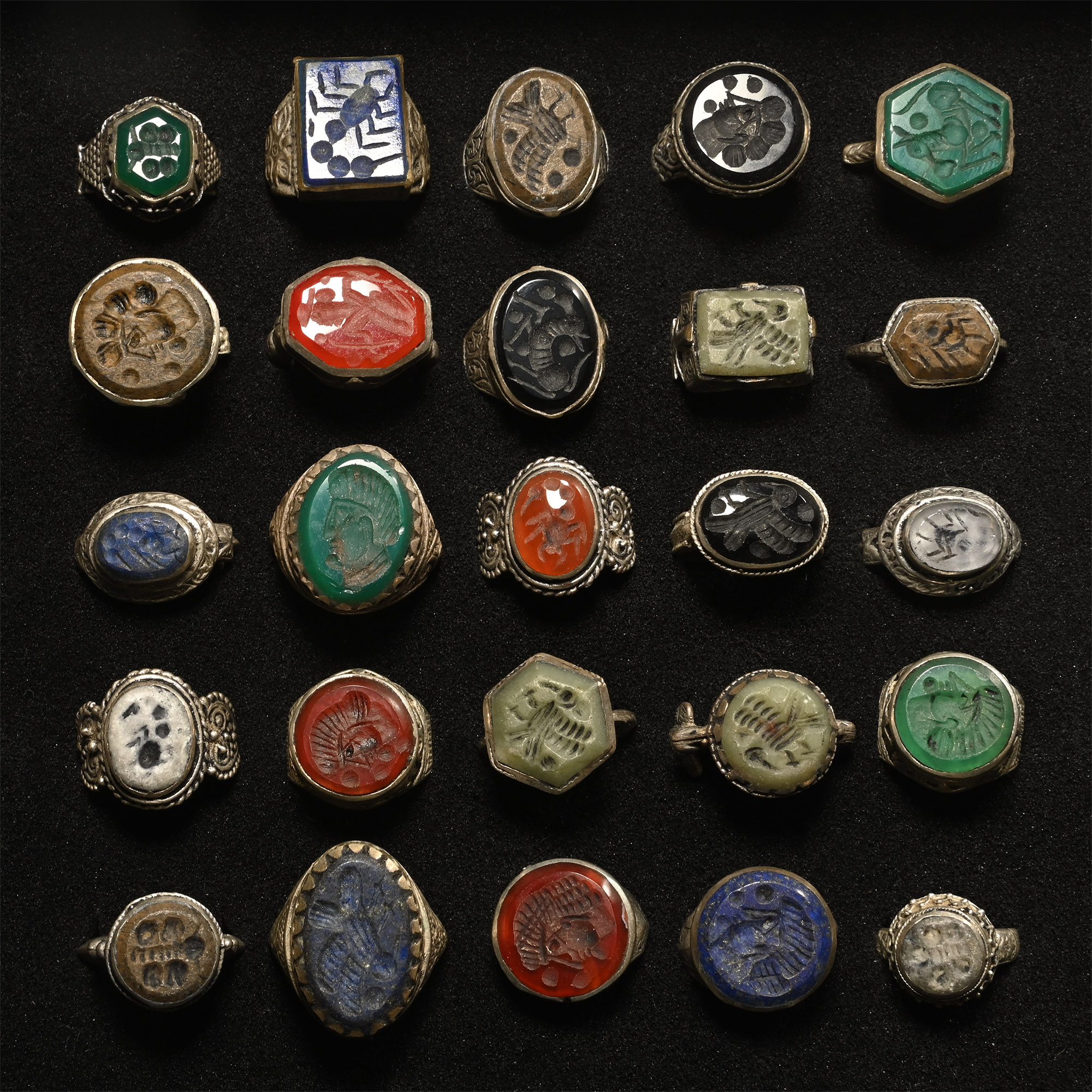
Ottoman Style Silver Ring Group
20TH CENTURY A.D.
1 - 1 1/4 in. (230 grams total, 23-32 mm).
Mostly with inset lapis lazuli, nicolo or other cloison, with incuse portrait bust, epigraphic legend, zoomorph or other design. [25]
ProvenanceAcquired on the London, UK, art market in the 1990s
This lot has been cleared against the Art Loss Register database, and is accompanied by an illustrated lot declaration signed by the Head of the Antiquities Department, Dr Raffaele D'Amato.
TimeLine Auctions follows a vetting process to ensure the authenticity and legality of all items, reinforcing our commitment to integrity and responsible trading. Each antiquity, antique, and coin lot undergoes thorough examination by a vetting committee of at least ten external specialists, professional trade association members, scientists, and archaeologists: Our Vetting Process
AUCTIONS:
TimeLine is a leading auction house specialising in antiquities, ancient art, collectables, natural history, coins, medals, and books. Our auctions offer museums, collectors, historians, and enthusiasts the opportunity to acquire unique and historically significant pieces.
-
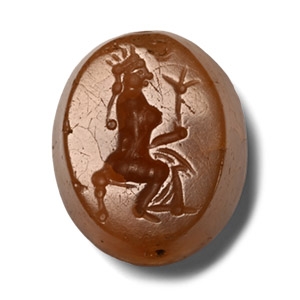
Neo Babylonian Chalcedony Stamp Seal with Seated Goddess
5th-4th century B.C.Estimate: £500 - 700 (+bp*)
Opening Bid: £250
Plano-convex with chamfered sidewall, with incuse engraved image of a seated female holding a flower; Bivar notes in his detailed description: 'Queen, or more probably a goddess, crowned and seated to front on a throne, extending in her left hand a lily...'; accompanied by a museum-quality impression. 4.72 grams, 19.94 mm
with Christie's, London, 13 June 2000, no.517 [Part]. Accompanied by a copy of a scholarly note typed and signed by A.D.H. (David) Bivar. Accompanied by copies of the relevant Christie's catalogue pages. This lot has been cleared against the Art Loss Register database, and is accompanied by an illustrated lot declaration signed by the Head of the Antiquities Department, Dr Raffaele D'Amato. -
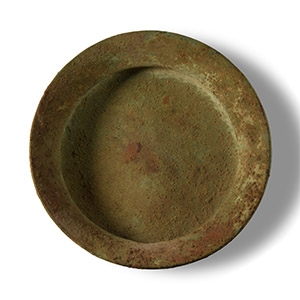
Achaemenid Bronze Bowl
5th-4th century B.C.Estimate: £150 - 200 (‡+bp*)
Opening Bid: £75
With broad flange rim, carinated profile and broad dished base. 225 grams, 15.3 cm
Private collection of Mr S.A., Switzerland, 1990s, thence by descent. This lot has been cleared against the Art Loss Register database, and is accompanied by an illustrated lot declaration signed by the Head of the Antiquities Department, Dr Raffaele D'Amato. -
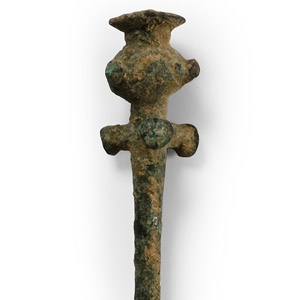
Luristan Bronze Poppy-Headed Dress Pin
13th-7th century B.C.Sold for (Inc. bp): £78
With a short tapering body, poppy-head finial and three radiating lugs. 17.9 grams, 12.5 cm
Acquired on the UK art market before 2000. Property of an Essex, UK, gentleman. This lot has been cleared against the Art Loss Register database, and is accompanied by an illustrated lot declaration signed by the Head of the Antiquities Department, Dr Raffaele D'Amato.
