
Loading, please wait...
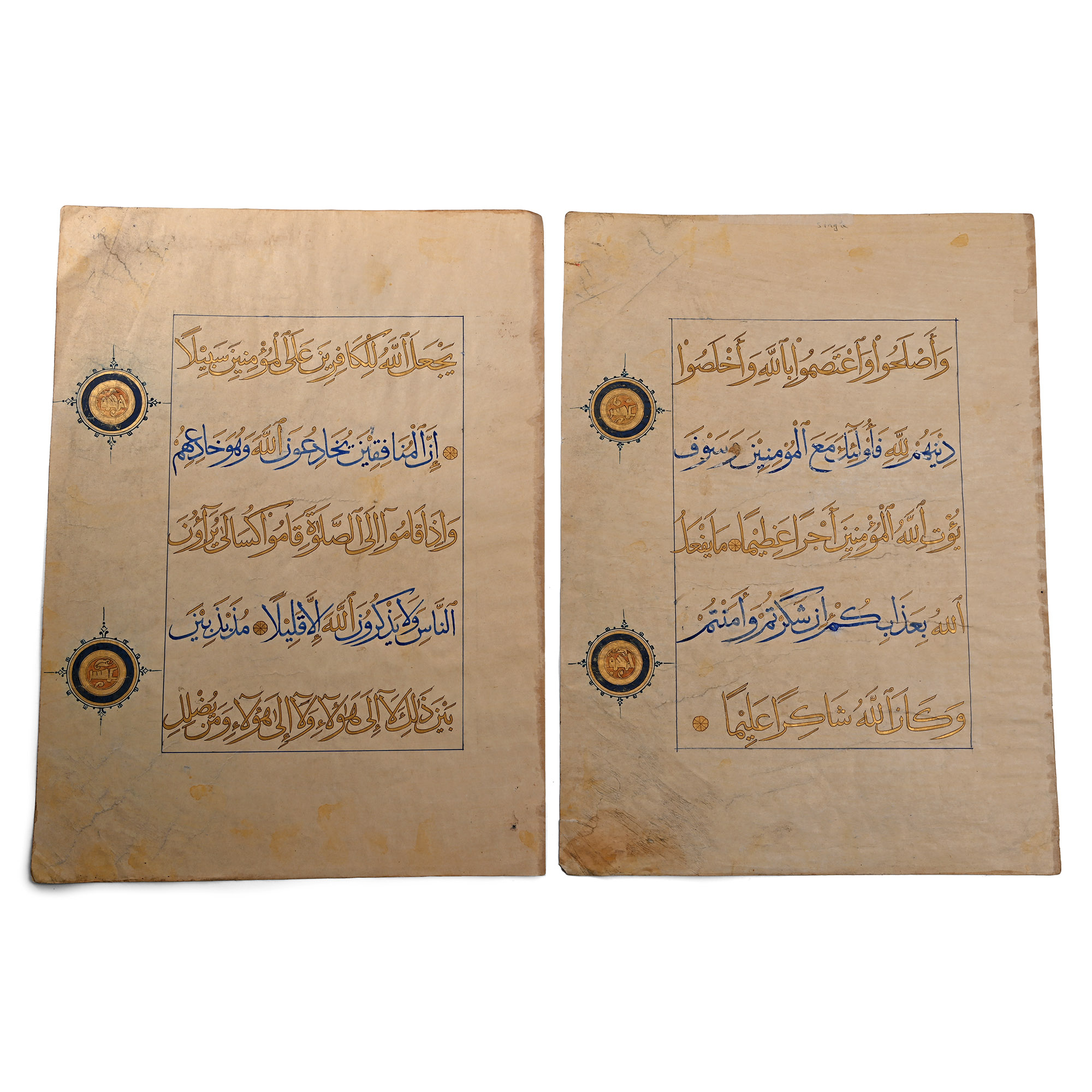
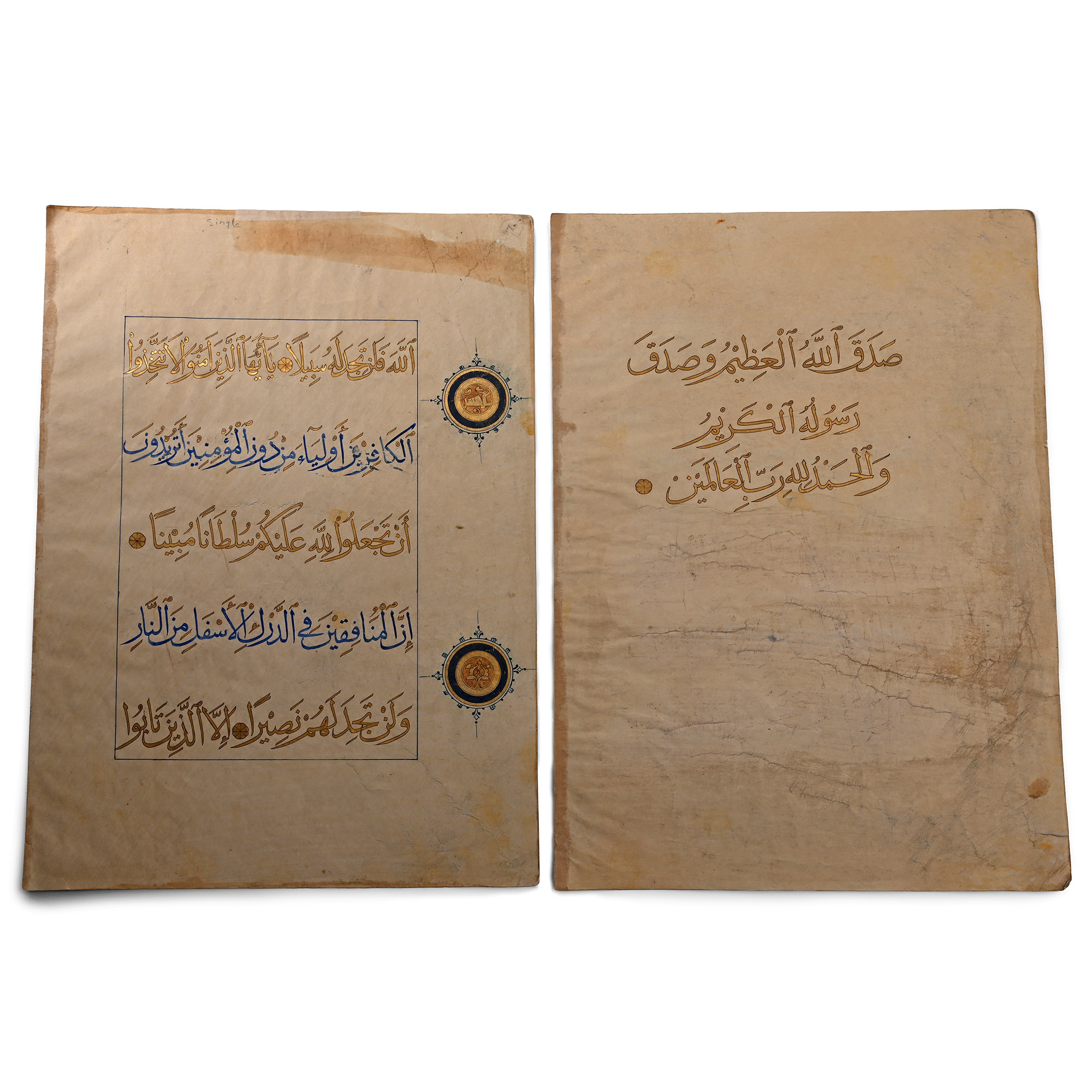
LOT 1218
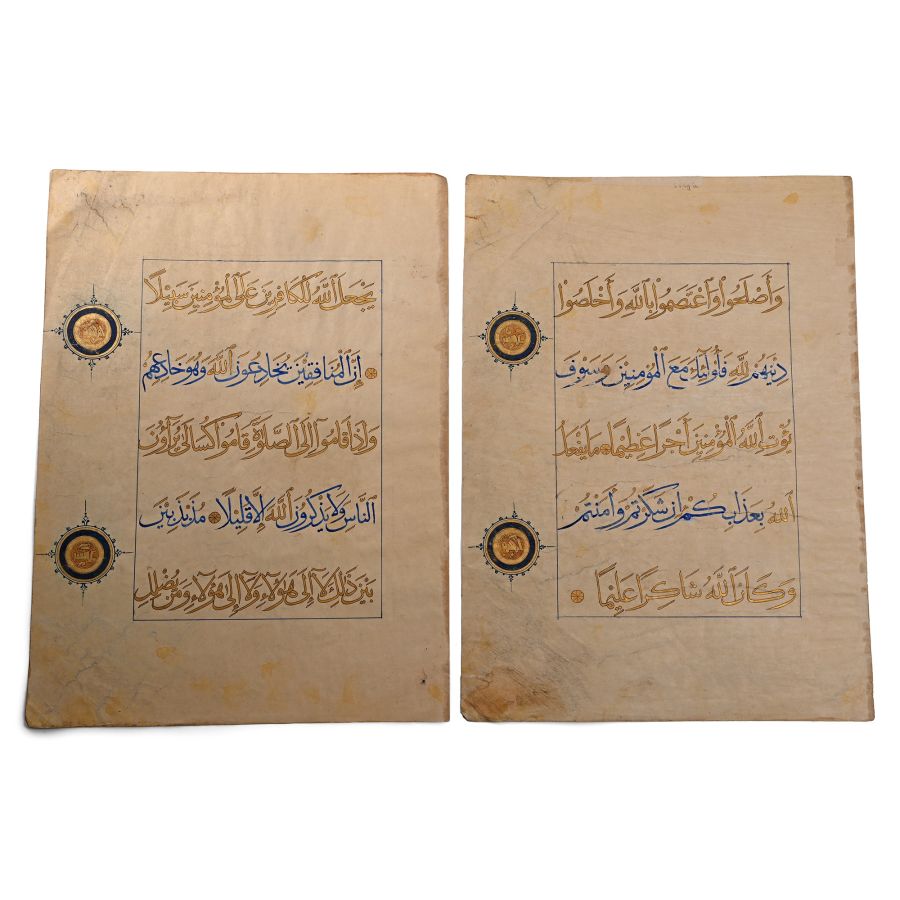
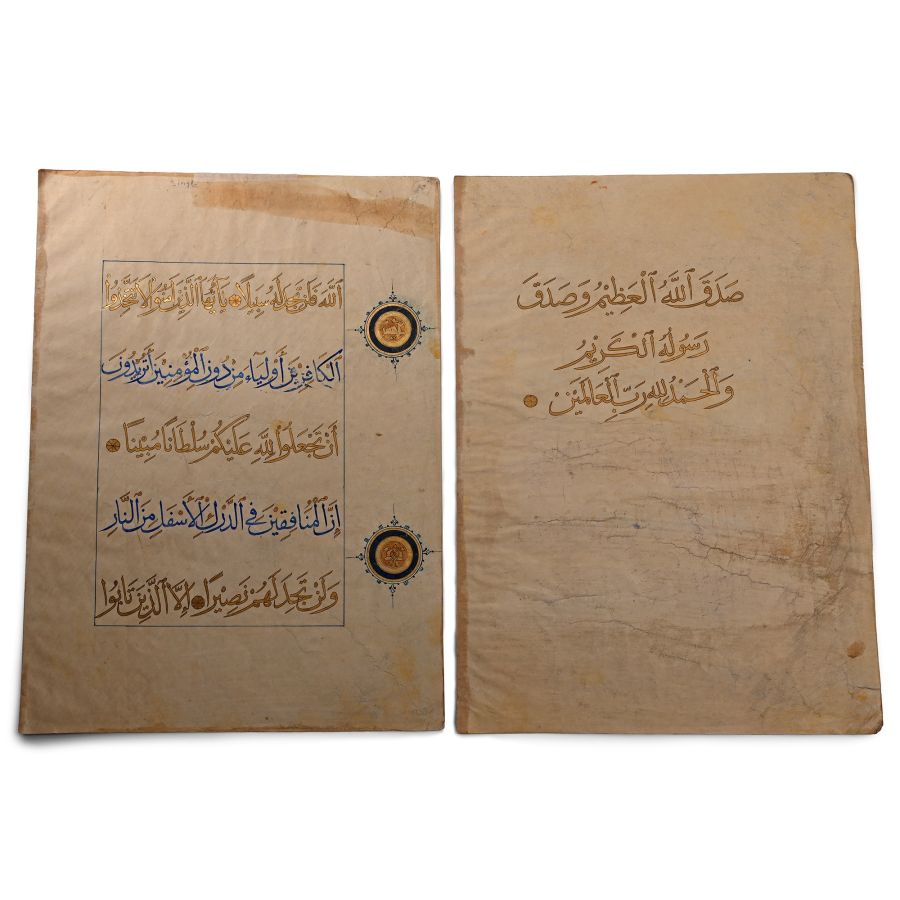
Ottoman Qu'ran Painted Gilt Miniature Leaf Pair
20TH CENTURY A.D.
13 3/4 x 10 in. (37 grams total, 35 x 25.5 cm each).
Each a rectangular leaf with inked frame enclosing blue and liquid gold calligraphic text; outside the frame, two decorative discs with text to the centre, radiating spikes and spurs to the rim. [2, No Reserve]
ProvenancePrivate collection, UK.
CONDITIONTimeLine Auctions follows a vetting process to ensure the authenticity and legality of all items, reinforcing our commitment to integrity and responsible trading. Each antiquity, antique, and coin lot undergoes thorough examination by a vetting committee of at least ten external specialists, professional trade association members, scientists, and archaeologists: Our Vetting Process
AUCTIONS:
TimeLine is a leading auction house specialising in antiquities, ancient art, collectables, natural history, coins, medals, and books. Our auctions offer museums, collectors, historians, and enthusiasts the opportunity to acquire unique and historically significant pieces.
-
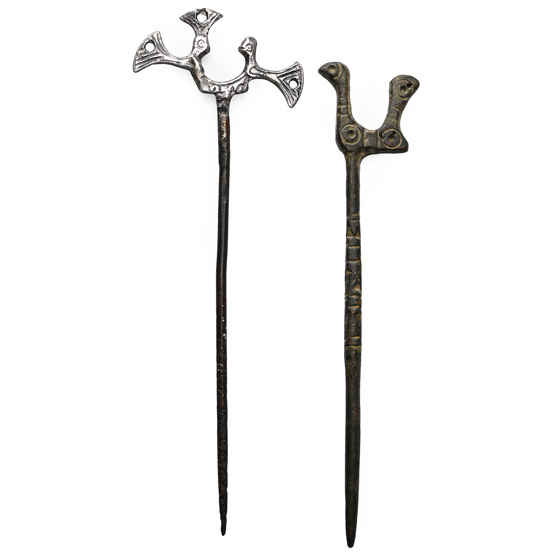
Western Asiatic Silver and Bronze Dress Pin with Birds Group
1st-4th century A.D.Sold for (Inc. bp): £85
Comprising a silver round-section tapering shank, head formed as a pair of birds with three pierced ribbed triangular sections; bronze with round-section tapering shank, head formed as a pair of opposite facing birds with incised decoration. 6.08 grams, 11.7 cm
Ex property of an Essex, UK, gentleman collector. From the private collection of a Colchester, UK, gentleman. -
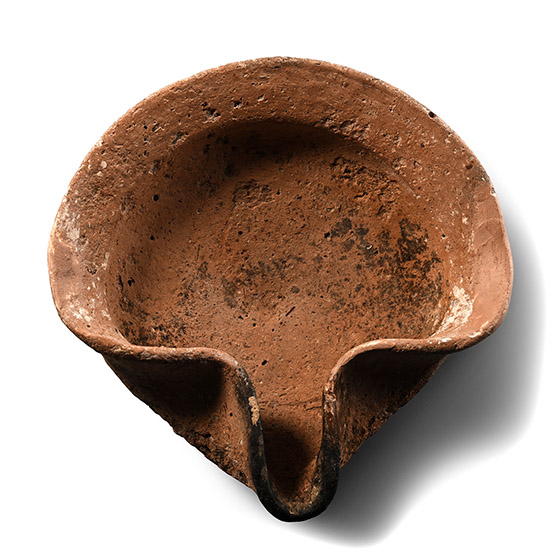
Large Bronze Age Holy Land Terracotta Pinched Rim Oil Lamp
Kingdom of Judah, circa 930-700 B.C.Sold for (Inc. bp): £143
Discoid in plan with carinated rim pinched to form a nozzle. 128 grams, 11.7 cm
From the Lloyd and Jeanne Raport collection, Washington, D.C. and Florida, USA, formed between 1972-2000. Acquired through Bonhams, London, UK. -
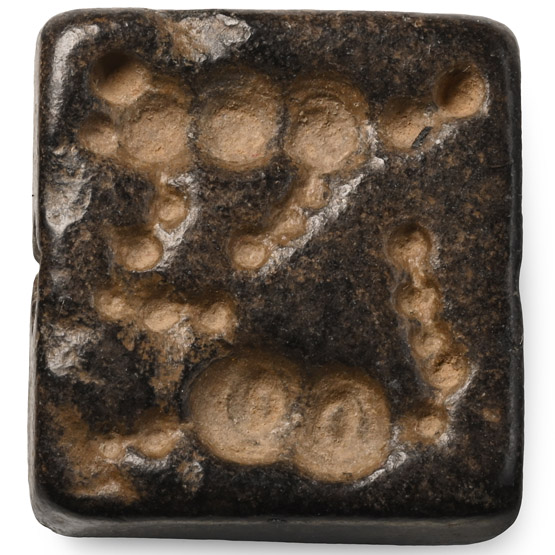
Uruk Stone Stamp Seal
4th-3rd millennium B.C.Sold for (Inc. bp): £208
Square in plan with incuse standing quadruped motif. 13.15 grams, 27 mm
Ex 'S' collection, London, UK, 1970s-1990s. Accompanied by a copy of a previous illustrated catalogue slip.
