
Loading, please wait...
LOT 1459
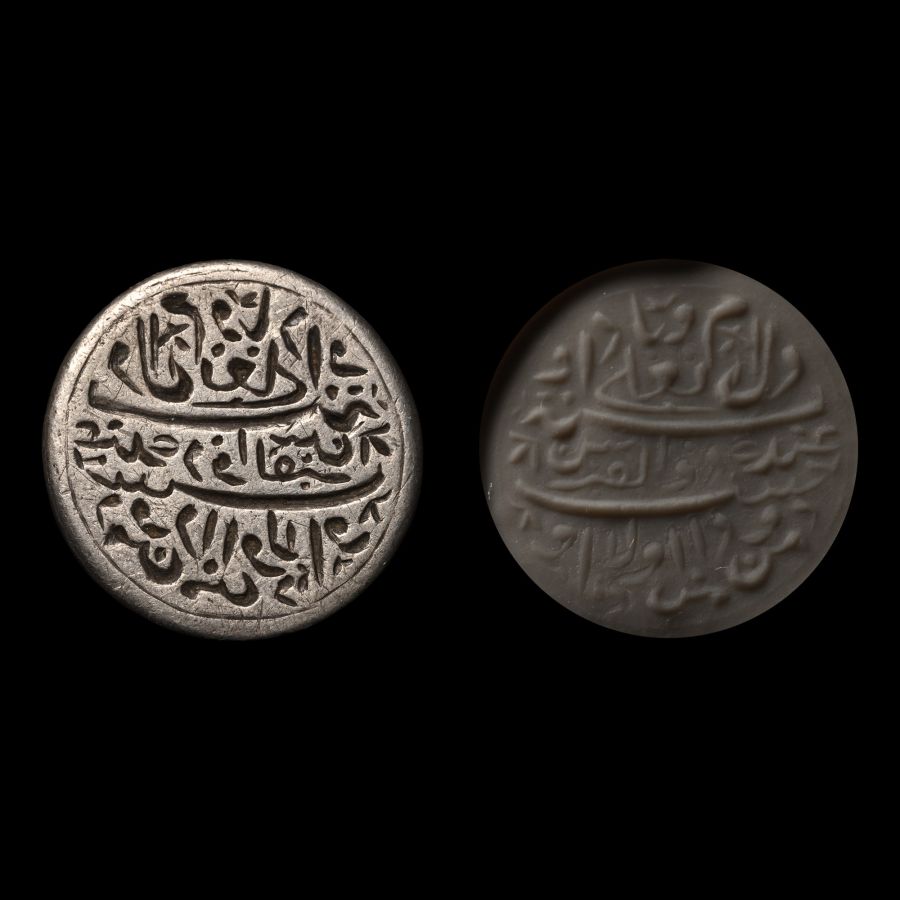
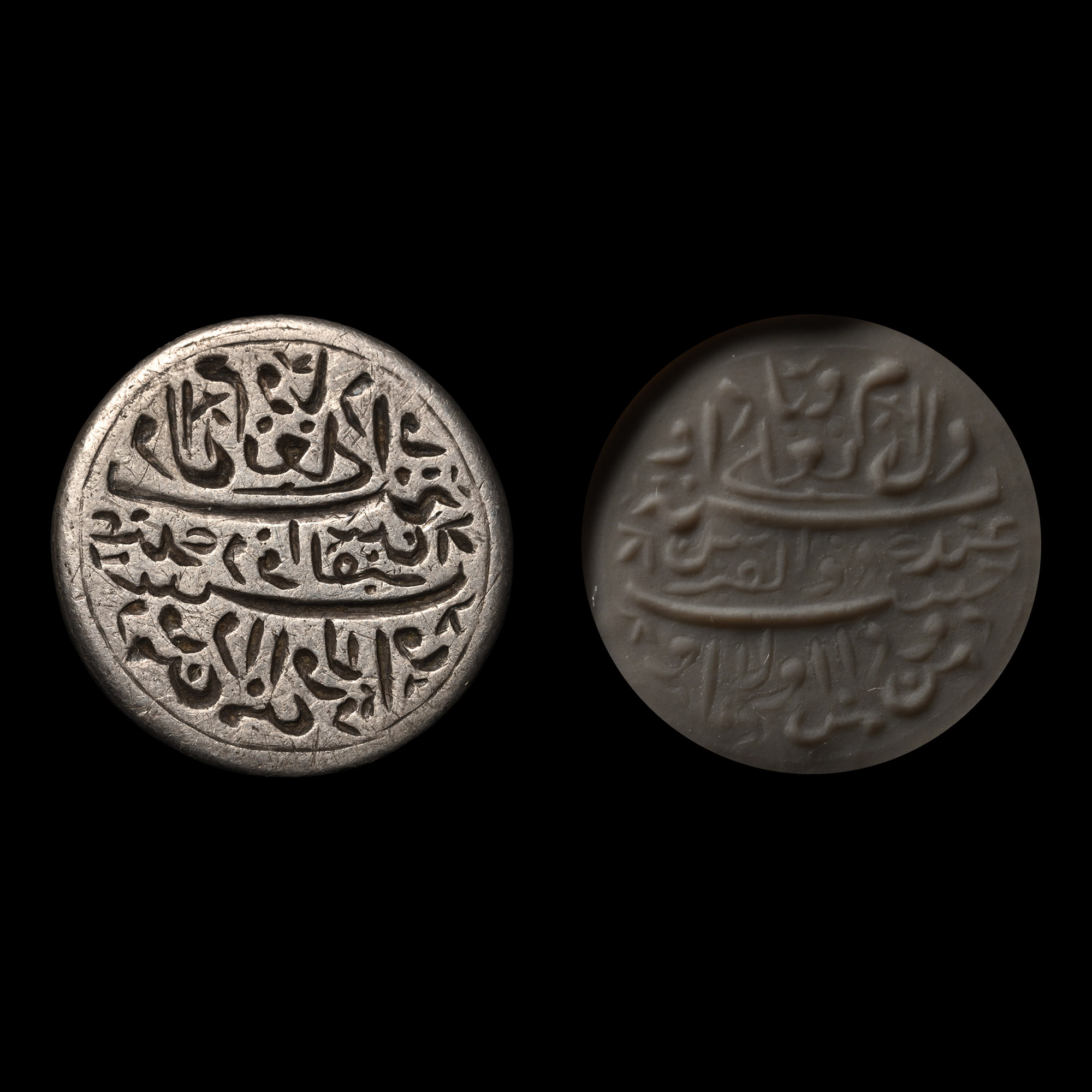
Ottoman Period Engraved Silver Calligraphic Intaglio
LATE 16TH-EARLY 17TH CENTURY A.D.
3/4 in. (4.78 grams, 18 mm).
A circular mount with an X-motif on the reverse, the obverse with a three-line inscription; supplied with a museum-quality impression. [No Reserve]
ProvenanceAcquired in the late 1980s-early 1990s.
Private collection, London, UK.
Cf. Gerelyes, I., ‘Ottoman seals at the Hungarian National Museum: connections between shapes, inscriptions, and materials’ in Gergely, S. (ed.), Communicationes Archaeologicae Hungariae, Budapest, 2023, pp.277-295, fig.5, for similar intaglio on a seal.
CONDITIONTimeLine Auctions follows a vetting process to ensure the authenticity and legality of all items, reinforcing our commitment to integrity and responsible trading. Each antiquity, antique, and coin lot undergoes thorough examination by a vetting committee of at least ten external specialists, professional trade association members, scientists, and archaeologists: Our Vetting Process
AUCTIONS:
TimeLine is a leading auction house specialising in antiquities, ancient art, collectables, natural history, coins, medals, and books. Our auctions offer museums, collectors, historians, and enthusiasts the opportunity to acquire unique and historically significant pieces.
-
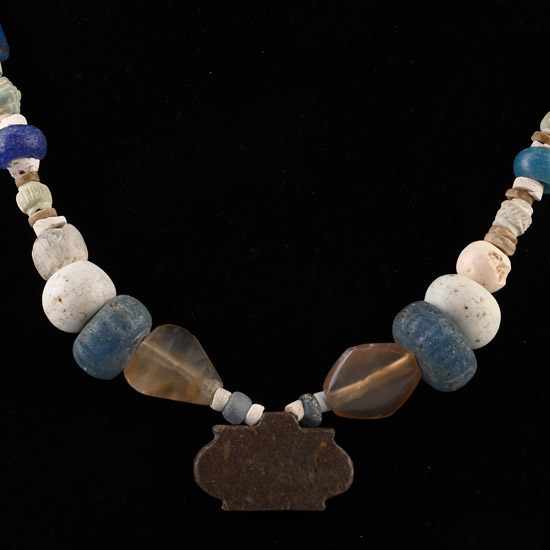
Western Asiatic Stone, Faience and Glass Bead Necklace
1st millennium B.C. and laterSold for (Inc. bp): £26
Restrung group including blue glass melon beads, gold-in-glass square-section beads, fusiform beads and other types. 39.7 grams, 51 cm
From the private collection of Mr Brian Edwards, New Malden, Surrey, UK, formed from the late 1970s-early 1980s; thence by descent. -
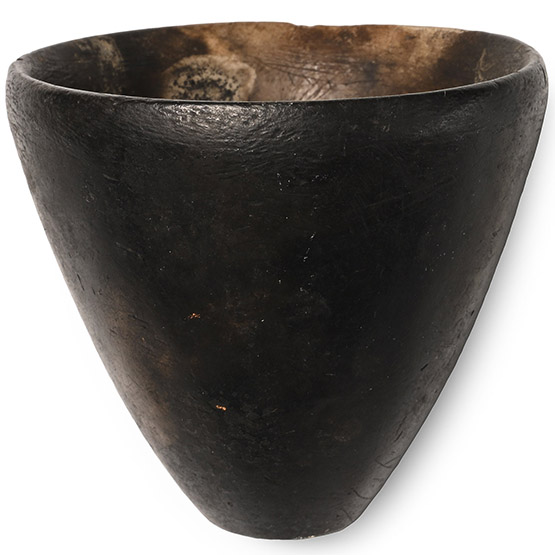
Western Asiatic Stone Beaker
Warka Culture, 4000-3100 B.C.Sold for (Inc. bp): £130
With narrow base, conical body and rounded rim. 132 grams, 66 mm wide
Private collection, assembled in the 1950s-1970s, thence by descent. -
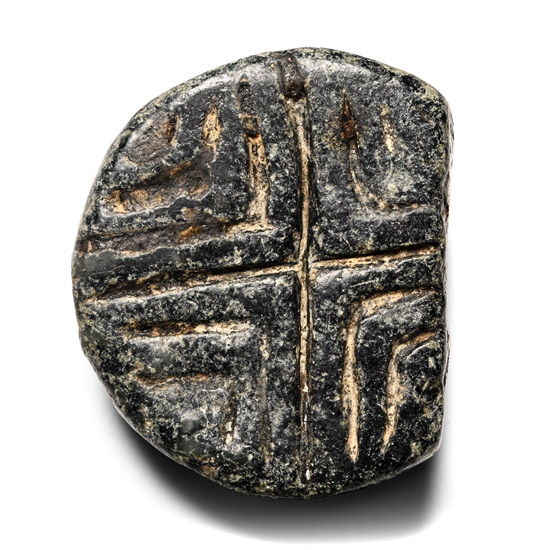
Early West Central Asian Schist Stamp Seal with Cross
Circa 4000-3400 B.C.Sold for (Inc. bp): £39
Domed stamp seal with engraved face; accompanied by an old scholarly note, typed and signed by W.G. Lambert, late Professor of Assyriology, University of Birmingham, 1970-1993, which states: 'Stamp Seal of Black/Green Stone 25 x 22.5 10 mm. This is a hemispheroid with flat face, pierced. The design consists of a simple cross and each vacant quarter so created is filled with two V-shapes. This comes from west central Asia and dates to c. 4000-3400 B.C. One side is broken off, but what remains is in good condition.' 9.5 grams, 25 mm
Acquired in the late 1980s-early 1990s. Ex property of a West London businessman. Academically researched and catalogued by the late Professor Lambert in the early 1990s. Accompanied by a copy of a scholarly report, numbered V-88, typed and signed by Professor Wilfrid George Lambert.
