
Loading, please wait...
LOT 1096
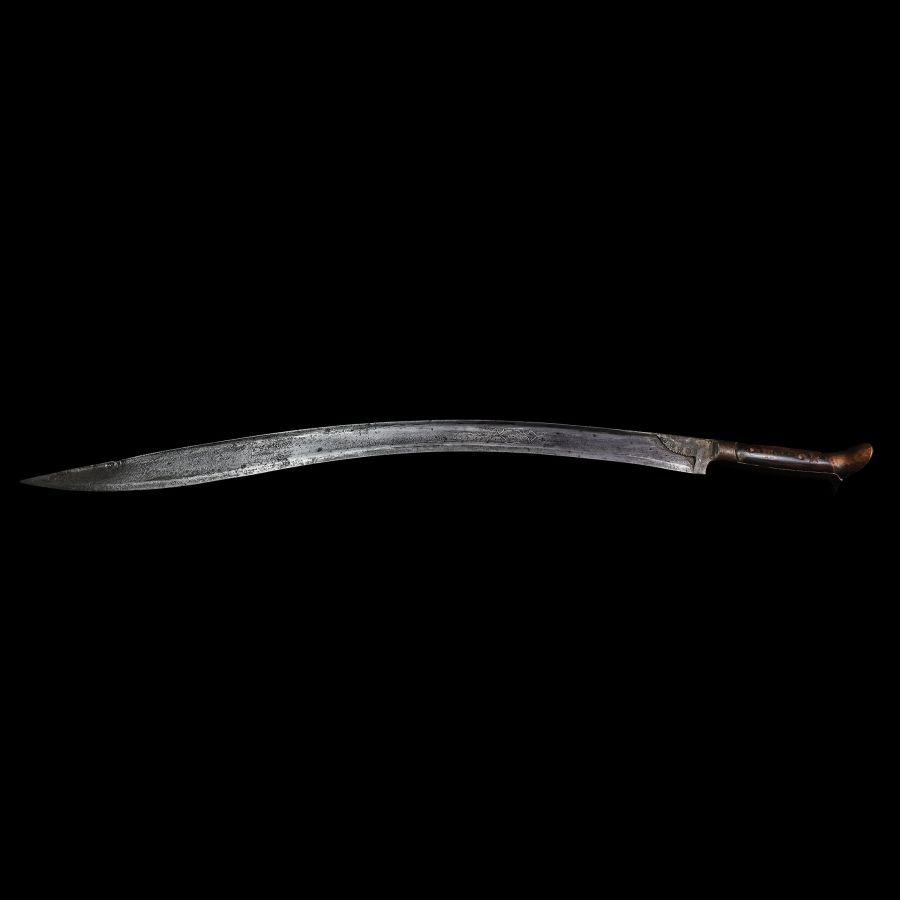
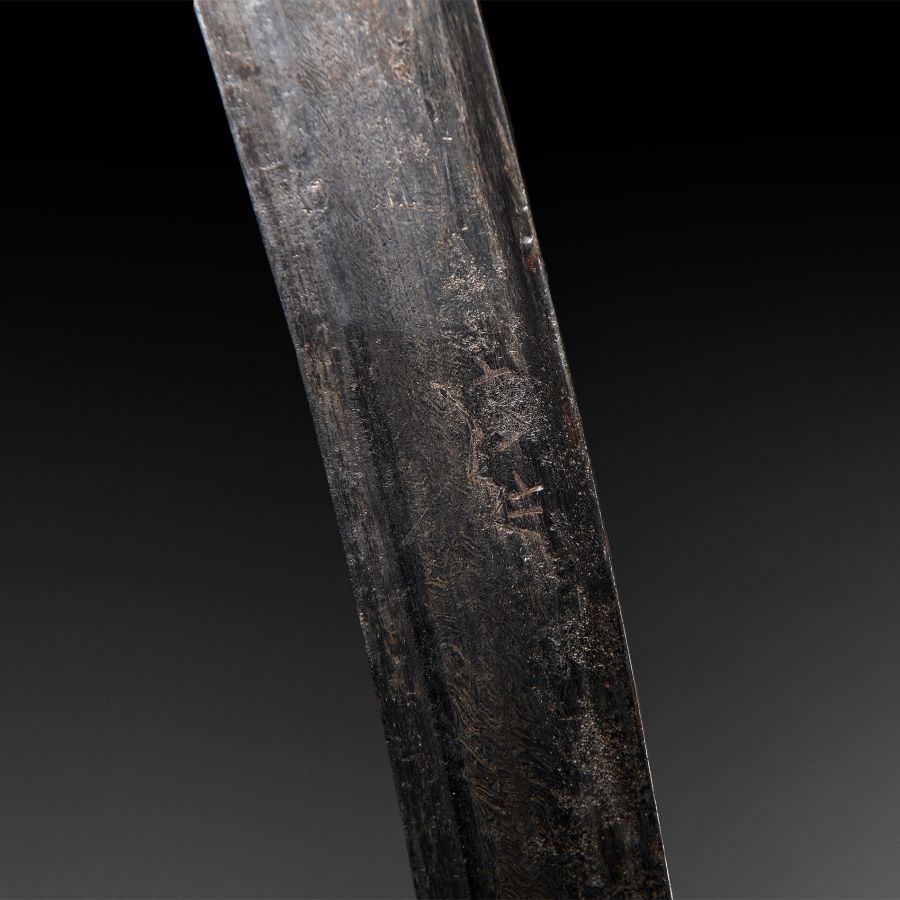
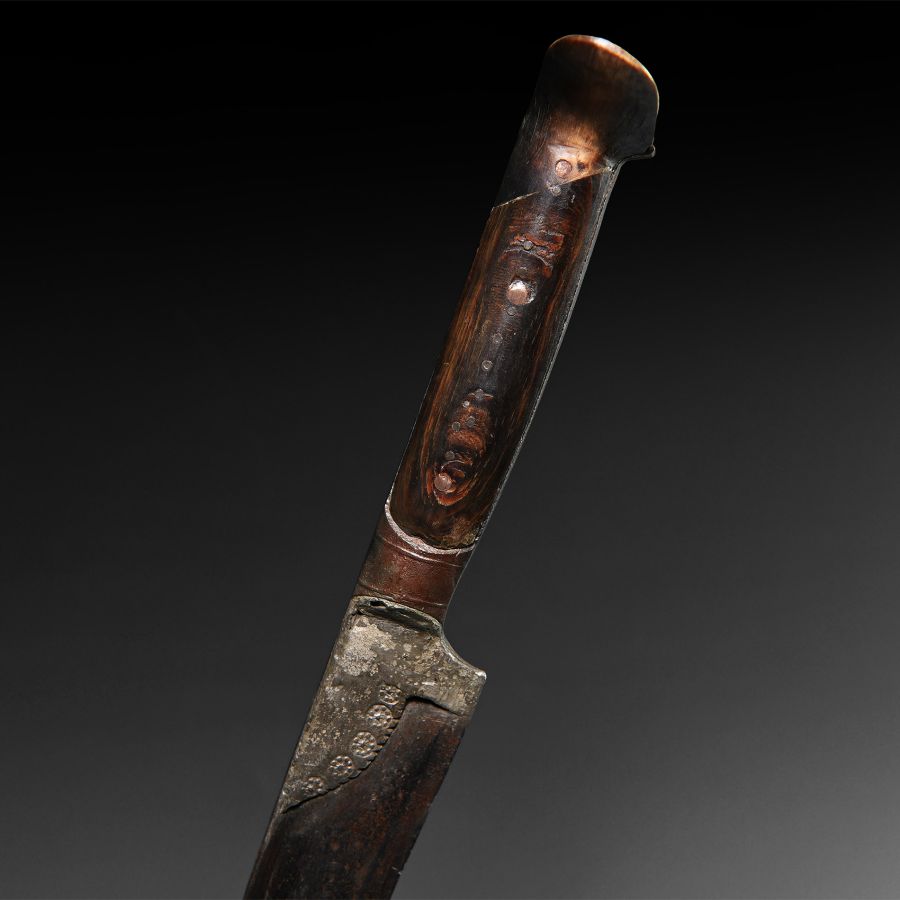
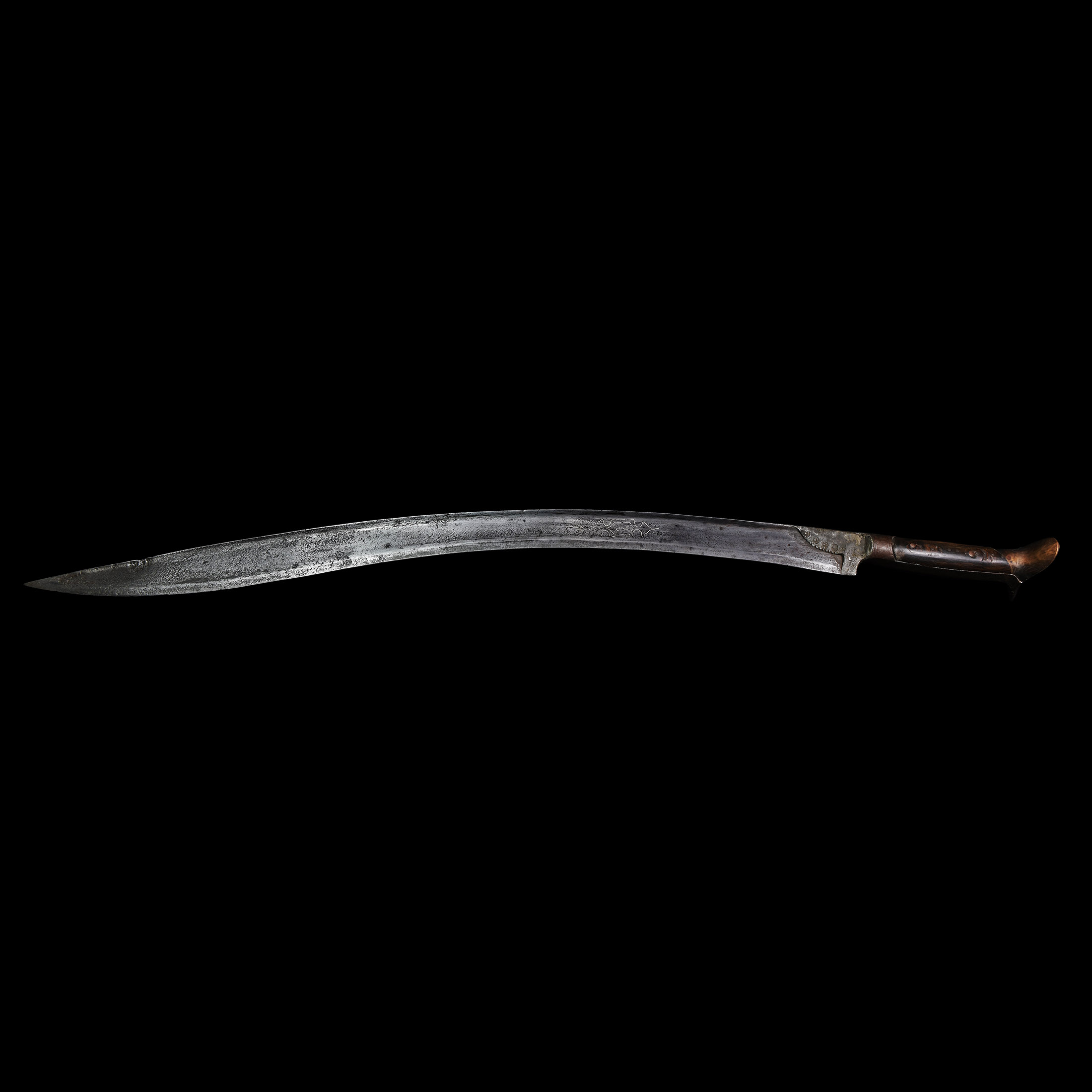
Ottoman Inscribed Pattern-Welded Yatagan Sabre
C.1800 A.D.
31 1/2 in. (650 grams, 79.5 cm).
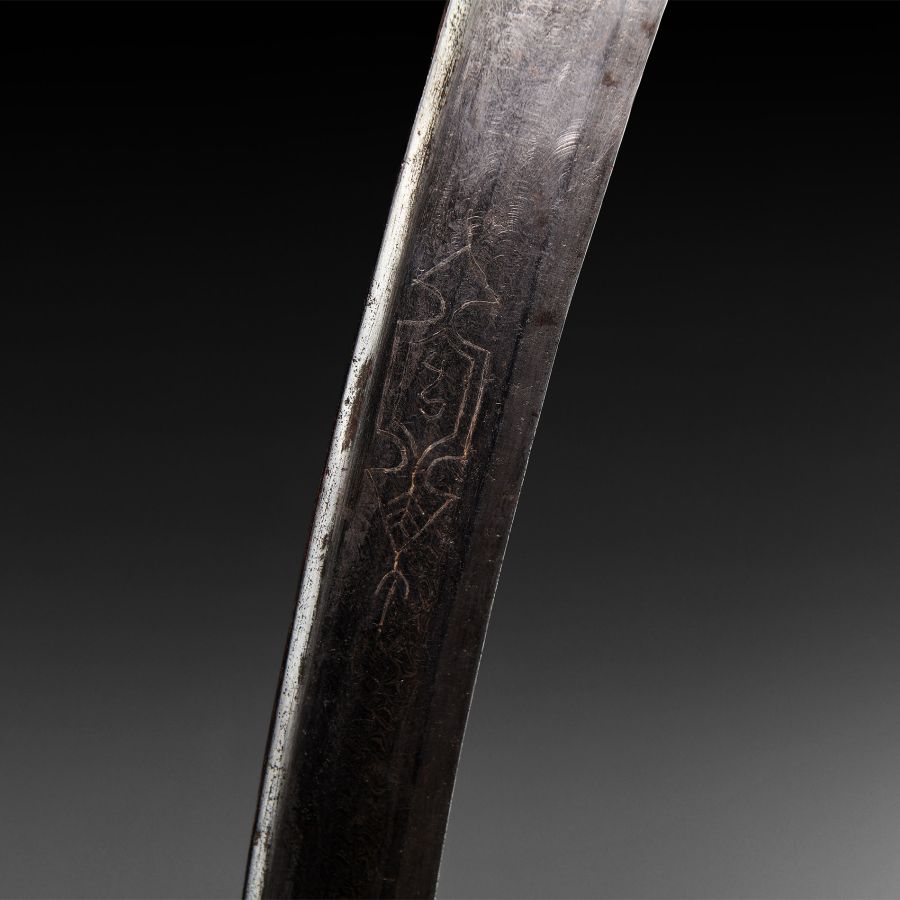
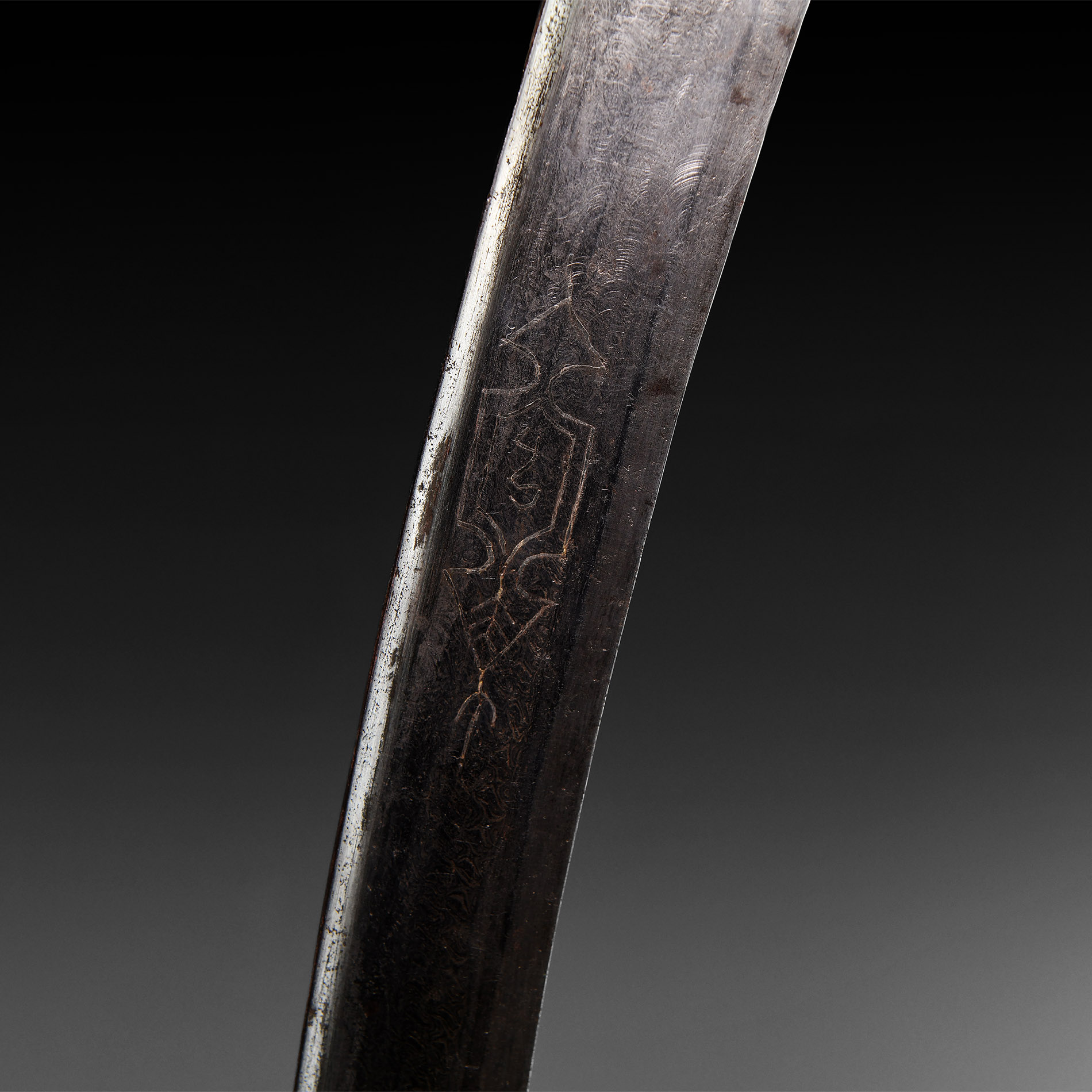
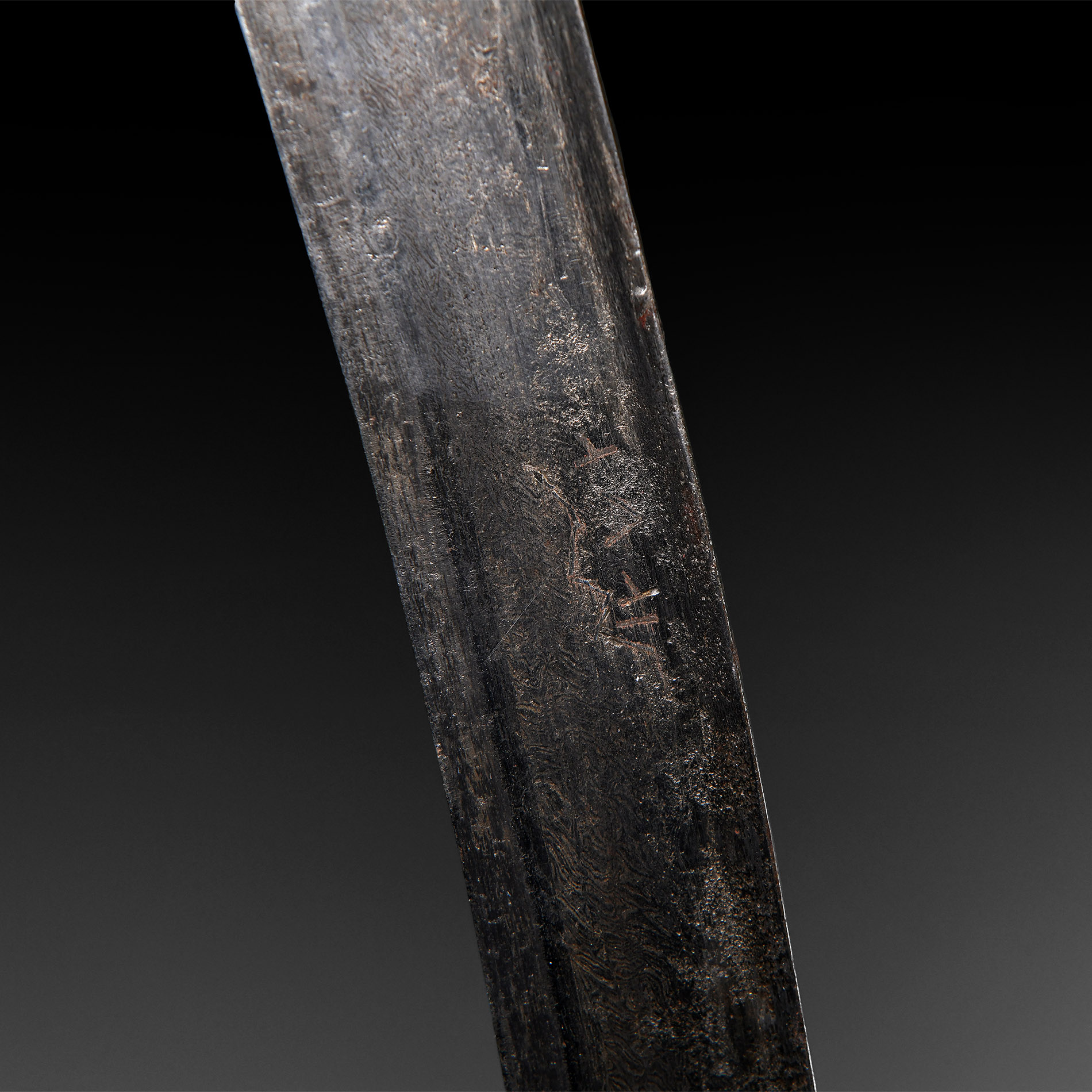
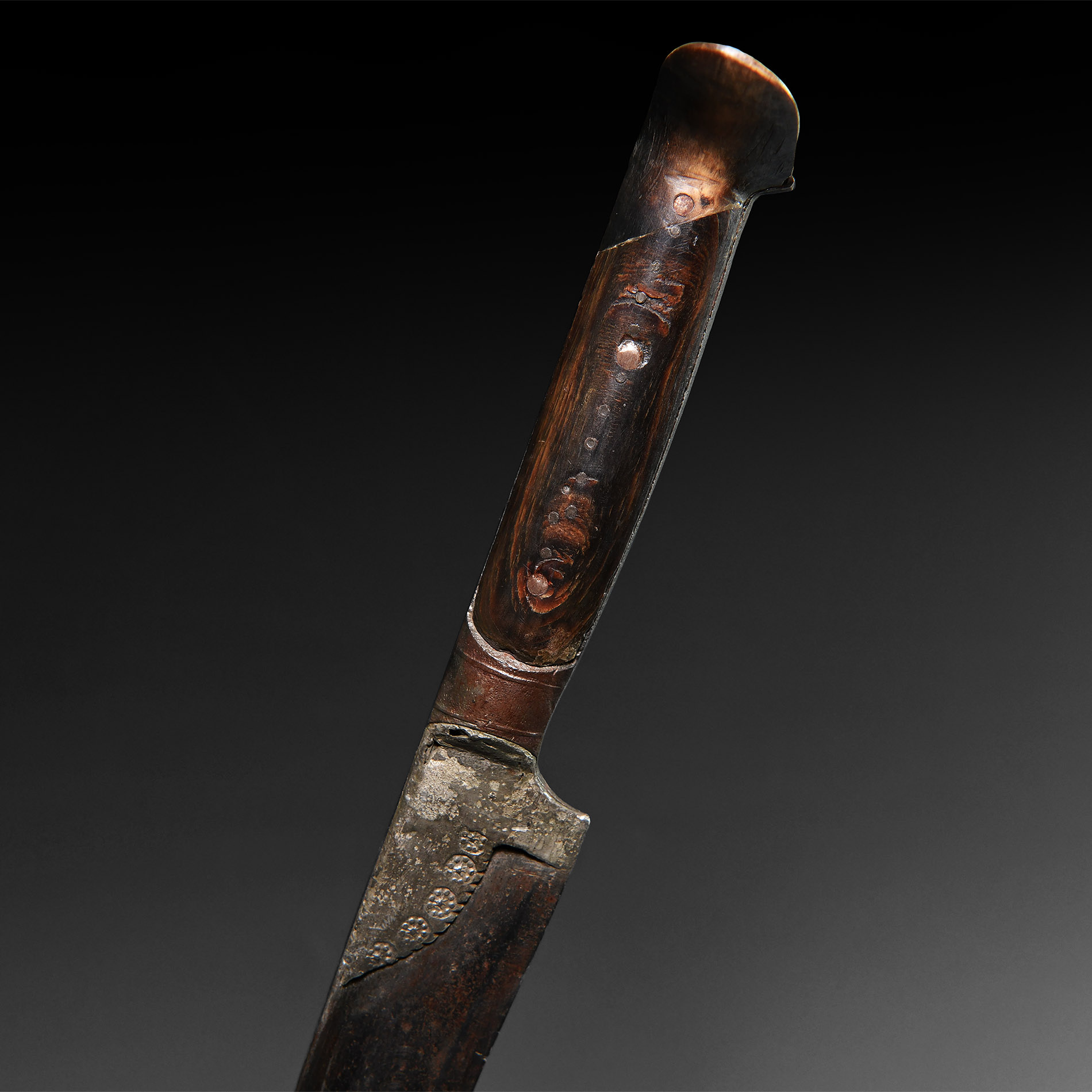
With a pattern-welded 'damascened' single-edged T-section blade with swept profile, guard with quadrant profile with rosettes, antler grip with projecting ears; silver-inlaid name panel to one face, with silver-inlaid arabesque panel to the other; blade inscribed with the Arabic year '1172'; silver maker's mark and inscription either side of the blade.
ProvenanceAcquired in the 1970s.
Ex collection of a London gentleman.
See Nicolle, D., Armies of the Ottoman Empire 1775-1820, London, 1998; Tirri, A.C., Islamic Weapons: Maghrib to Moghul, Indigo, 2003.
FootnotesThe yatagan is a long knife or short sabre that lacks a guard for the hand at the juncture of blade and hilt, and that usually has a double-curve to the edge and an almost straight back. It was one of the favoured side-arms of the Janissary infantry regiments. Yatagans were carried by the Zeibeks, who lived on the Ionian coast, around Smyrna.
CONDITIONTimeLine Auctions follows a vetting process to ensure the authenticity and legality of all items, reinforcing our commitment to integrity and responsible trading. Each antiquity, antique, and coin lot undergoes thorough examination by a vetting committee of at least ten external specialists, professional trade association members, scientists, and archaeologists: Our Vetting Process
AUCTIONS:
TimeLine is a leading auction house specialising in antiquities, ancient art, collectables, natural history, coins, medals, and books. Our auctions offer museums, collectors, historians, and enthusiasts the opportunity to acquire unique and historically significant pieces.
-
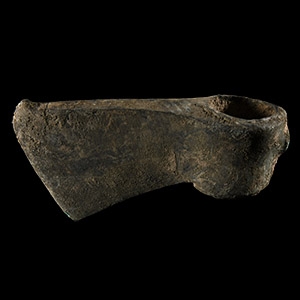
Heavy Western Asiatic Bronze Axehead
Late 3rd millennium B.C.Estimate: £100 - 140 (+bp*)
Opening Bid: £50
With swept blade, large socket with shallow raised circumferential rib and a vertical rib to the rear. 741 grams, 14.5 cm
Acquired 1980-2015. Ex Abelita family collection.
In the middle of the 3rd millennium B.C., the most widespread types of axes were those made for splitting and those for cutting. In the last third of this millennium there emerged a sharp differentiation between such axes. Such a sharp division by function should be associated with the influence of the Syro-Palestinian tradition. Such differentiation, in the absence of some multifunctional forms can be observed from the end of the 4th millennium B.C. and during the 3rd millennium B.C. -
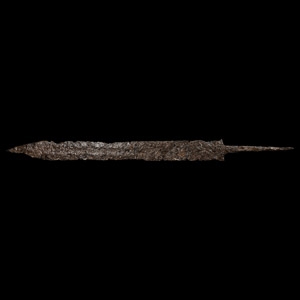
Roman Iron Gladius
1st-2nd century A.D.Sold for (Inc. bp): £1,300
Or semi-spatha blade with parallel-sided lentoid-section body and a long rectangular-section tang; Mainz type, Wederath-Canterbury-Kopki variant; repaired and surface treated. 557 grams, 83 cm
Ex South London collection, acquired 1970-1990. The Kusmirek Collection, UK. Accompanied by an academic report by Dr Raffaele D'Amato.
In contrast to the average length of the Roman Pompeii type gladius, some Roman swords, continuing the typology of the Mainz gladius, tend to be longer and transform themselves into a semi-spatha. Both the weapon from Eich (Miks, 2001, AI43), and especially a gladius from Korytnica with approximate blade length of 548mm (total length 762mm) is very close to the length limit of a semi-spatha. The same can be said of a blade from Godmanchester (Miks, 2001, no.A824) for its dimensions and proportions, where the tip of the blade already gives a significantly shorter impression, showing a certain relationship to 'Lauriacum-Hrornöwka', 'Mainz-Canterbury' variant type spathae. -
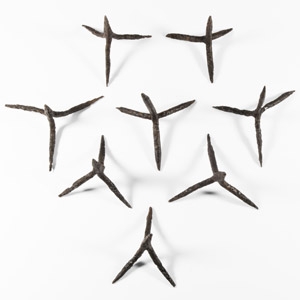
Medieval Iron Anti-Cavalry Caltrop Group
13th-15th century A.D.Sold for (Inc. bp): £364
Comprising eight anti-cavalry caltrops, hand-forged with square-section spikes. 298 grams total, 77-95 mm
From the private collection of a London gentleman, from his grandfather's collection formed before the early 1970s.
