
Loading, please wait...
LOT 2315
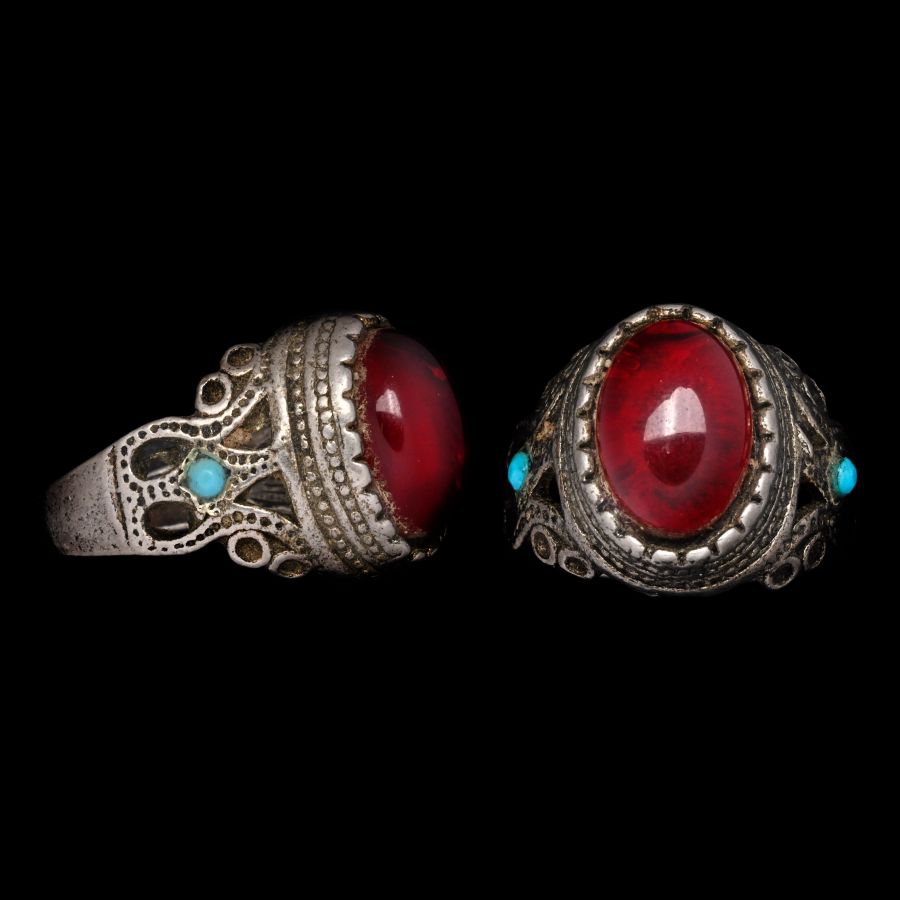
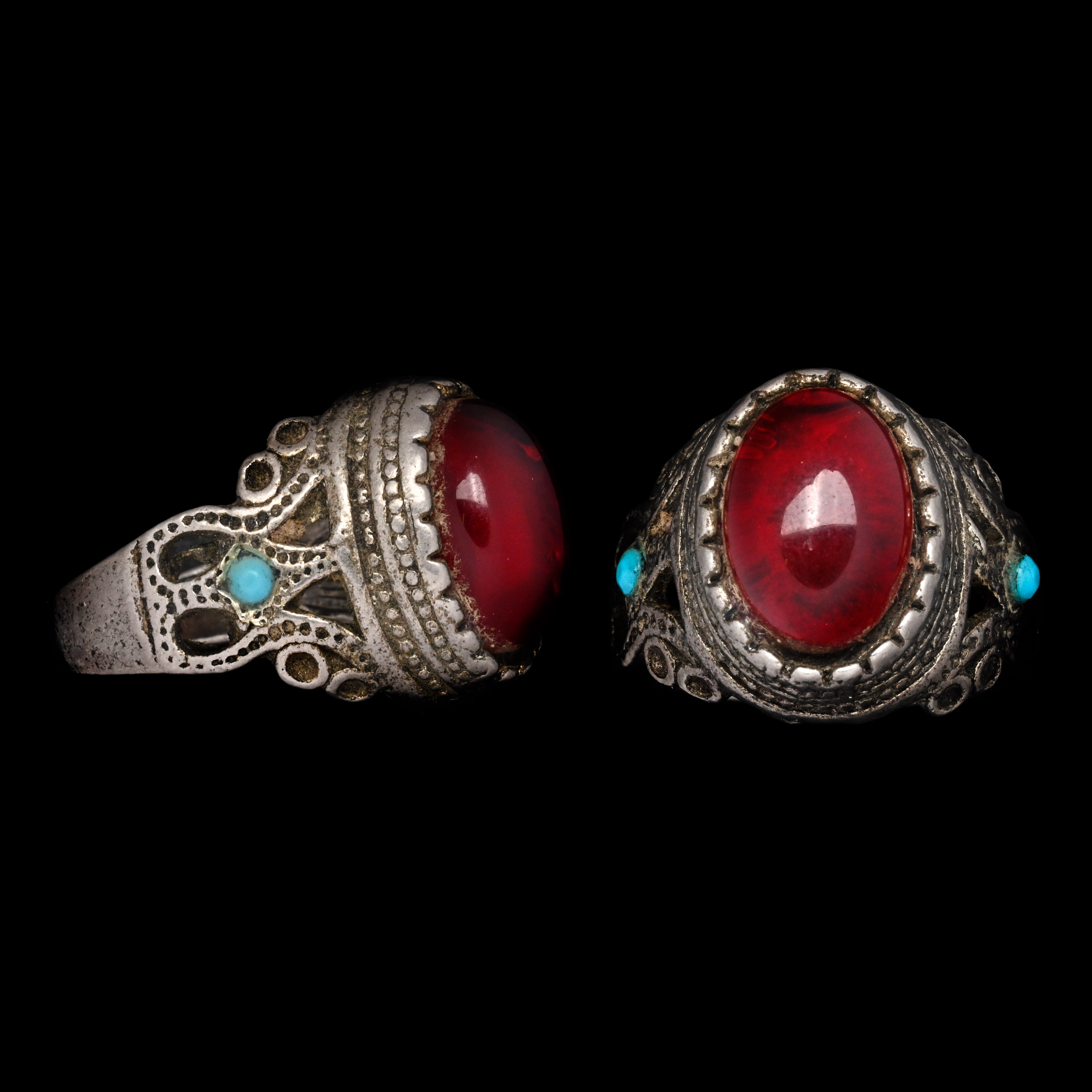
Ottoman Empire Silver-Coloured Metal Ring with Red Cabochon
18TH-19TH CENTURY A.D.
1 1/8 in. (8.41 grams, 30.94 mm overall, 19.96 mm internal diameter (approximate size British T 1/2, USA 9 3/4, Europe 21.89, Japan 21)).
Comprising a flat-section hoop with expanding openwork shoulders set with turquoise-coloured glass cabochons, a raised bezel with piecrust edge, and an oval red glass cabochon. [No Reserve]
ProvenancePrior English collection of Mr A.H.D.
Property of a West Northamptonshire, UK, gentleman.
Accompanied by an Ancient Art certificate of authenticity.
TimeLine Auctions follows a vetting process to ensure the authenticity and legality of all items, reinforcing our commitment to integrity and responsible trading. Each antiquity, antique, and coin lot undergoes thorough examination by a vetting committee of at least ten external specialists, professional trade association members, scientists, and archaeologists: Our Vetting Process
AUCTIONS:
TimeLine is a leading auction house specialising in antiquities, ancient art, collectables, natural history, coins, medals, and books. Our auctions offer museums, collectors, historians, and enthusiasts the opportunity to acquire unique and historically significant pieces.
LOT 2315
Ottoman Empire Silver-Coloured Metal Ring with Red Cabochon
Sold for (Inc. bp): £143
-
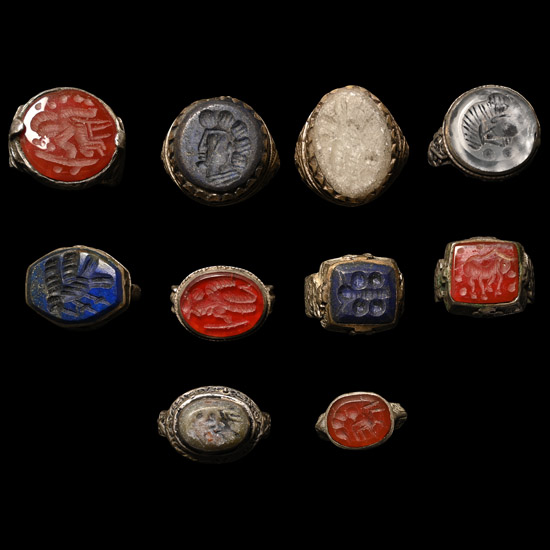
Bedouin Silver-Coloured Metal Ring Group
20th century A.D.Sold for (Inc. bp): £156
Comprising ten rings with decorative hoops, each set with a carved intaglio. 96 grams total, 25-32 mm
Ex North West London collection, 2000s. -
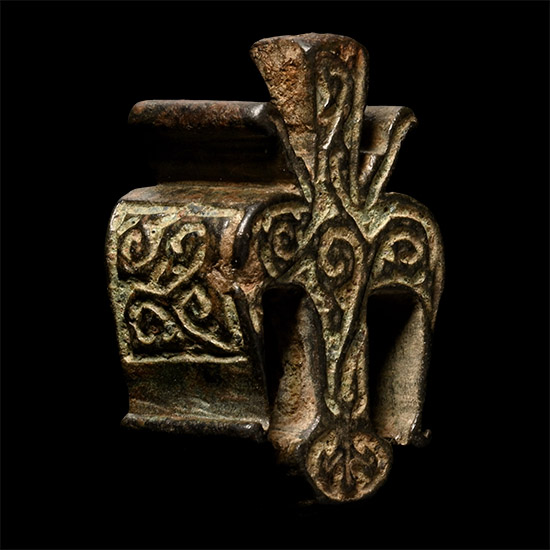
Enamelled Bronze Dagger Pommel
Circa 18th century A.D. or earlierEstimate: £500 - 700 (+bp*)
Opening Bid: £250
Comprising a rectangular-section body pierced longitudinally with knop finial; lateral bowed arms with scrolled ends rising to the level of the knop and similar flared below; panels of arabesque tendril ornament to both flat faces and to the lateral arms; damaged. 42.9 grams, 38 mm
From an English private collection, 1980s. Property of a London, UK, antiquarian.
There seems to be a good argument for this pommel to be part of the French group of crusader pommels in the Metropolitan Museum of Art and in the University of Chicago, which date to the 12th-13th century A.D. This object has parallels with this group in terms of its crude manufacture, type of enamel, and overall style, as well as the fleur in scallop shape, which is almost identical to the lobes found on many of the circular sword pommels of this group. -
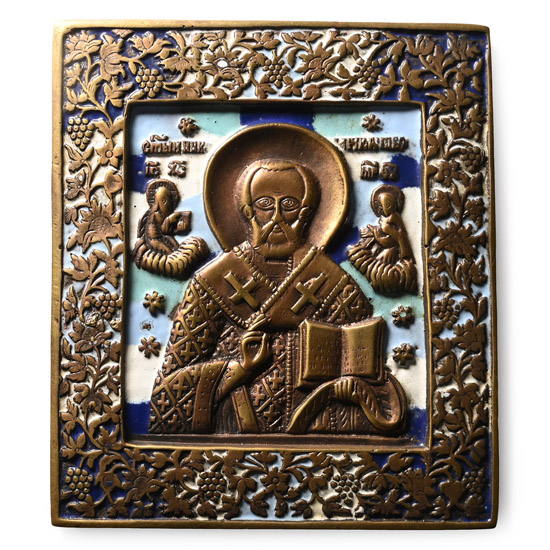
Russian Orthodox Enamelled Bronze Travel Icon with Saint Nicholas
19th century A.D.Estimate: £200 - 300 (+bp*)
Opening Bid: £89
Representing Saint Nicholas of Myra with a book in his left hand and making the gesture of blessing with his right, dressed as a bishop with sticharion, covered by omophorion, and surmounted by an epitrachelion embroidered with crosses; the saint flanked by Jesus and Virgin Mary, Christ holding the gospel, Mary the bishop’s epitrachelion; Cyrillic inscriptions 'Saint Nikolaos the Wonderworker (СВЯТЫЙ НИКОЛА ЧУДОТВОРЕЦ), Iesus Christos (ΙΣ ΧC) and Mother of God (ΜΡ ΘΥ)' on the enamelled background. 348 grams, 10.7 cm
Acquired from Chris Martin-Zakheim, Iconastas, 5 Piccadilly Arcade, London SW1. From the private collection of a West London, UK, gentleman, formed since the early 2000s.
The icon features meticulous craftsmanship typical of Orthodox iconography. The enamel colors, despite the passage of time, retain their vibrant intensity, highlighting the key elements of the depicted images. The refined details and use of enamel give depth and luminosity to the icon, making it a precious example of the Russian Orthodox tradition.
