
Loading, please wait...
LOT 1770
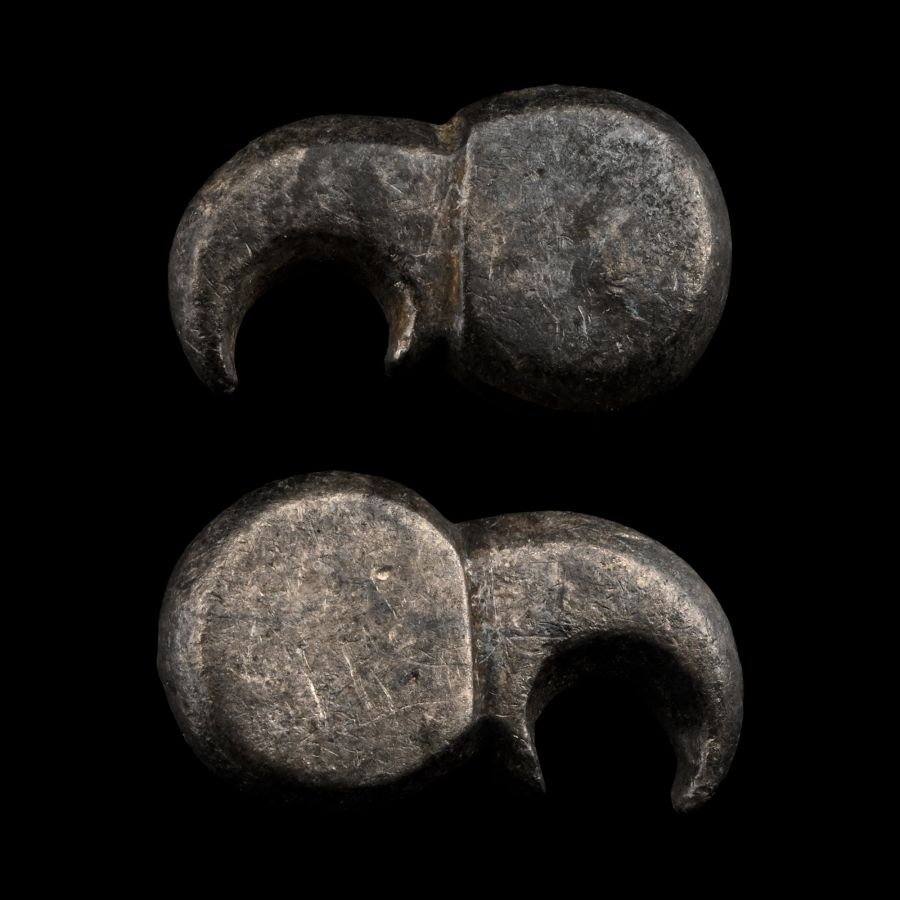
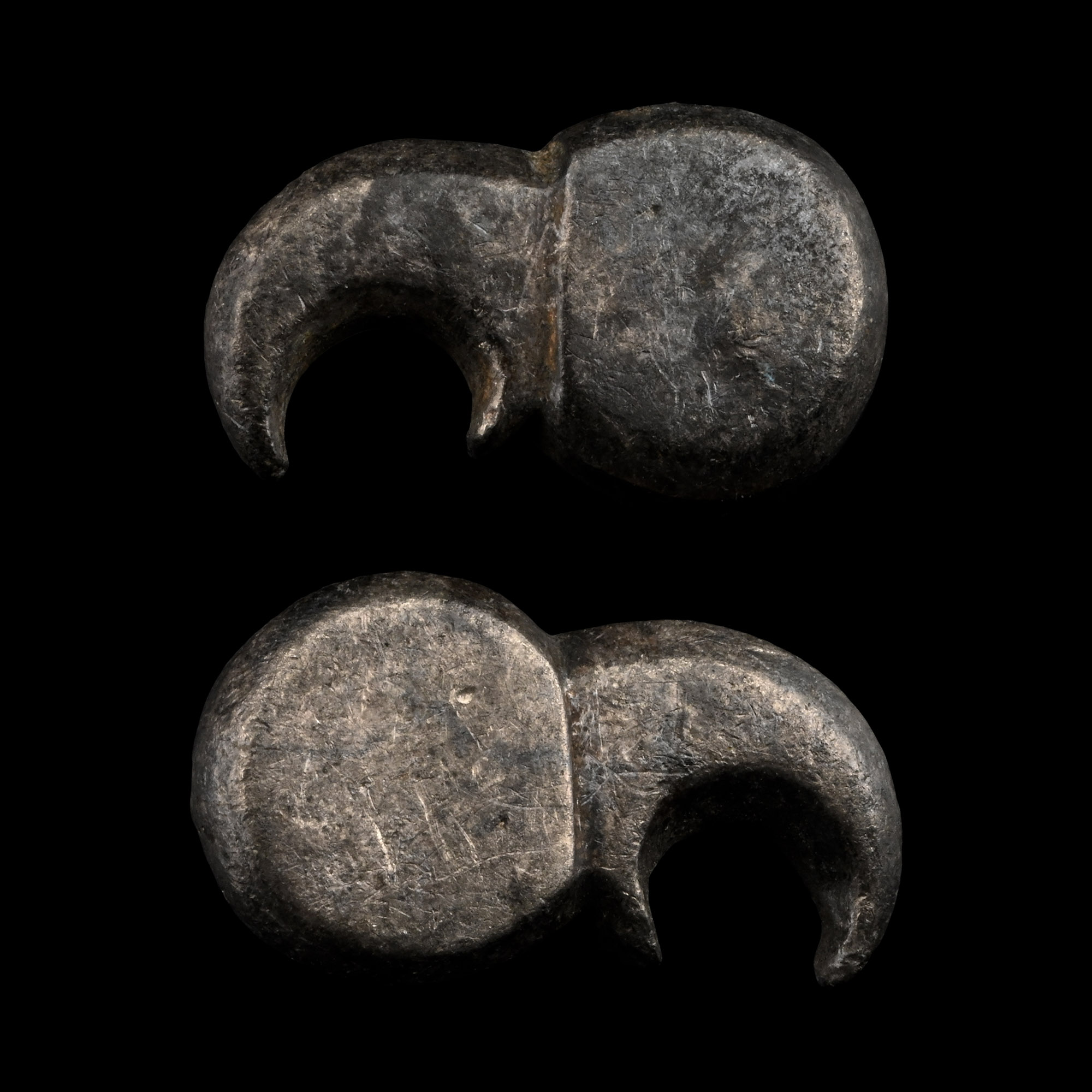
Ostrogothic Silver Raven-Headed Stud Pair
CIRCA 6TH CENTURY A.D.
3/4 in. (5.11 grams total, 20-21 mm).
Matched pair, each a hollow-formed disc with hooked beak, two mounting studs to reverse. [2]
ProvenanceLondon, UK, collection, 1990s.
CONDITIONTimeLine Auctions follows a vetting process to ensure the authenticity and legality of all items, reinforcing our commitment to integrity and responsible trading. Each antiquity, antique, and coin lot undergoes thorough examination by a vetting committee of at least ten external specialists, professional trade association members, scientists, and archaeologists: Our Vetting Process
AUCTIONS:
TimeLine is a leading auction house specialising in antiquities, ancient art, collectables, natural history, coins, medals, and books. Our auctions offer museums, collectors, historians, and enthusiasts the opportunity to acquire unique and historically significant pieces.
-
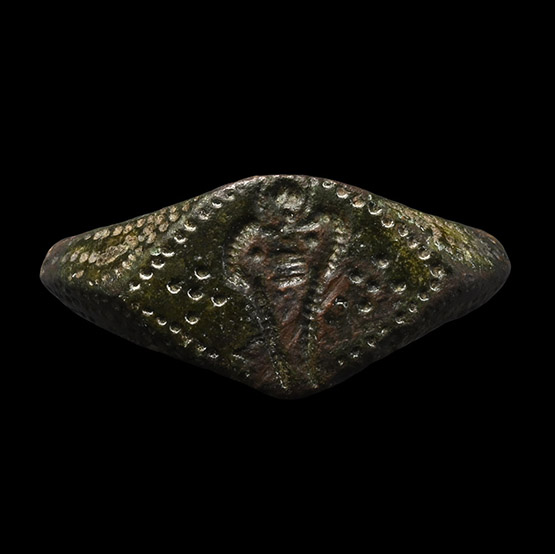
Merovingian Bronze Ring with Facing Figure
6th-7th century A.D.Sold for (Inc. bp): £111
Comprising a round-section hoop with keeled shoulders, with pointillé decoration; a lentoid bezel with pointillé border and central facing figure. 6.34 grams, 25.80 mm overall, 20.46 mm internal diameter (approximate size British P 1/2, USA 7 3/4, Europe 16.86, Japan 16)
Acquired on the UK and EU art market before 2000. From the private collection of a Surrey, UK, gentleman.
The image is reminiscent of Celtic (Gaulish) divine iconography, and these kinds of rings were in fact found in Gallo-Roman graves, belonging to the Gallo-Roman population under Carolingian rule. -
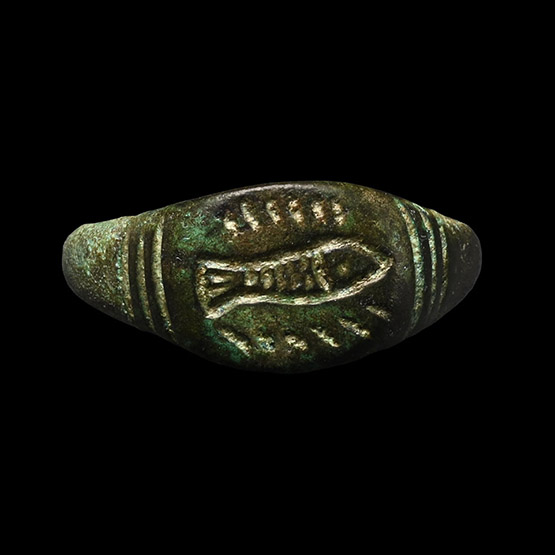
Merovingian Bronze Ring with Early Christian Fish Symbol
6th century A.D.Sold for (Inc. bp): £195
Comprising a D-section hoop expanding at the shoulders, an oval bezel with a stylised fish flanked by linear motifs. 5.72 grams, 25.40 mm overall, 19.14 mm internal diameter (approximate size British S, USA 9, Europe 20, Japan 19)
Acquired on the UK and EU art market before 2000. From the private collection of a Surrey, UK, gentleman.
The German tribes who settled inside the Roman Empire were great wearers of rings; archaeological discoveries show that these ornaments were worn by adults and children of both sexes. The number of graves excavated in Gaul and Germany is large, and the material for comparative study is extensive. A considerable proportion of rings are signets, with portraits, names or monograms, and emblems such as the cross, the fish, the dove, i.e. early Christian symbols; most of these have the designs cut in a metal bezel. -
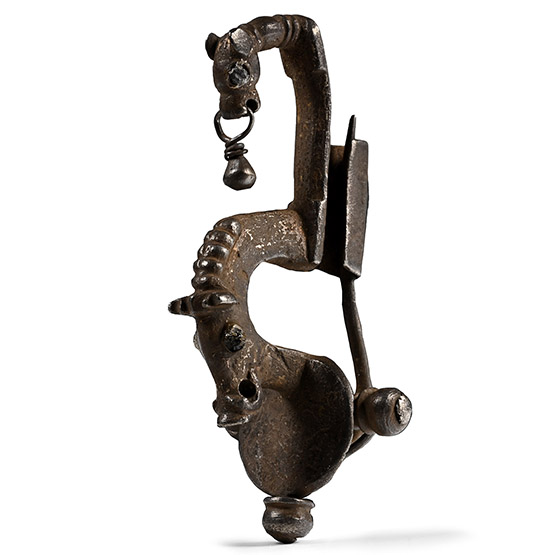
Dark Age Silver Boar Bow Brooch
5th-7th century A.D.Sold for (Inc. bp): £1,560
Comprising a circular headplate with pointillé tendril ornament, and three radiating lugs, each with a flared collar below; deep D-section bow with boar-head modelling including open mouth and tusks, bristles and pricked ears; parallel-sided chamfered edges, recurved finial with dog-head detailing and teardrop dangle in the mouth; spring and pin to the reverse. 28 grams, 65 mm
with Artemis Gallery, Münich, before 1998. Acquired by the present owner from the above in 2001. Accompanied by an academic report by Dr Raffaele D'Amato. This lot has been checked against the Interpol Database of stolen works of art and is accompanied by search certificate number no.12226-222179.
As the boar's mouth is modelled open, it is likely that it also had a dangle similar to that of the dog's head. The artistic effect of the brooch is to symbolise the chase, with the boar fleeing and the hound in close pursuit behind. This kind of fibula was used by the Romano-British people of Britannia, as attested by specimens found in Britain (BM inventory no.PRB 1954.12-6.1).
