
Loading, please wait...
LOT 0285
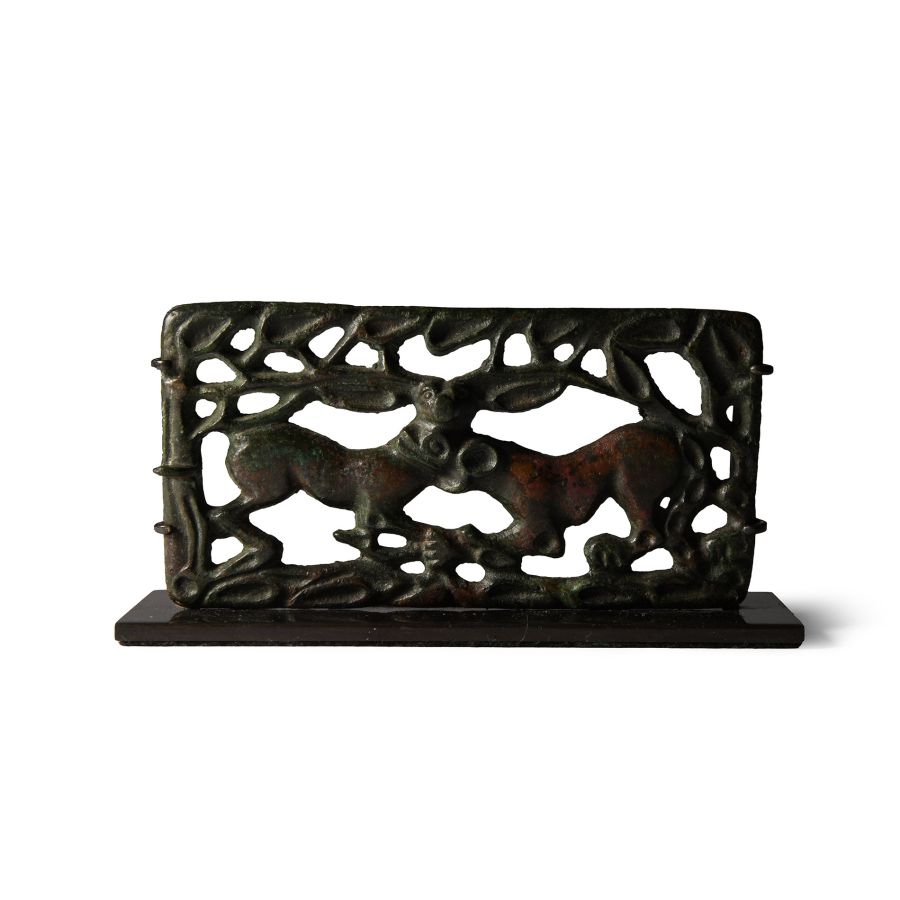
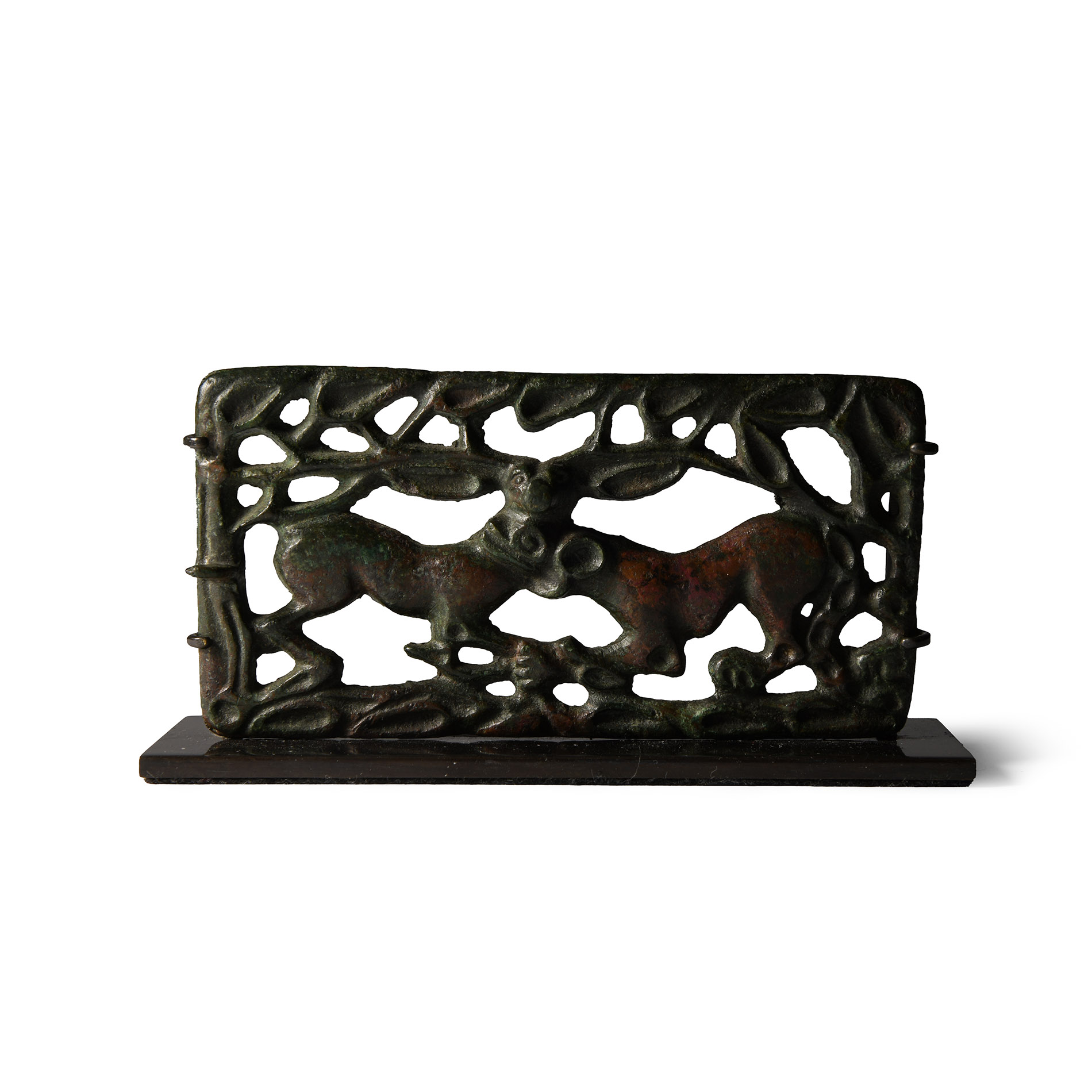
Ordos Bronze Belt Buckle with Lion Attacking a Doe
4TH-3RD CENTURY B.C.
4 3/4 in. (234 total, 12.2 cm wide including stand).
Rectangular openwork panel with lioness biting the neck of a doe in a foliage setting; hook to one short edge; mounted on a custom-made stand.
ProvenancePrivate collection, UK, acquired 1986.
Acquired from Chiswick Auctions, London, 11 December 2018, lot 131.
Private collection of Professor Kenneth Graham, London, UK.
Accompanied by the original catalogue page and a copy of the original invoice.
TimeLine Auctions follows a vetting process to ensure the authenticity and legality of all items, reinforcing our commitment to integrity and responsible trading. Each antiquity, antique, and coin lot undergoes thorough examination by a vetting committee of at least ten external specialists, professional trade association members, scientists, and archaeologists: Our Vetting Process
AUCTIONS:
TimeLine is a leading auction house specialising in antiquities, ancient art, collectables, natural history, coins, medals, and books. Our auctions offer museums, collectors, historians, and enthusiasts the opportunity to acquire unique and historically significant pieces.
-
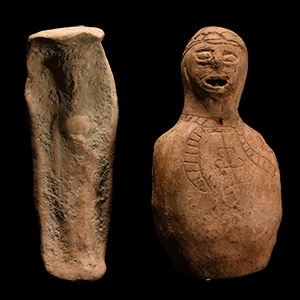
Western Asiatic Terracotta Idol Group
Circa 1st millennium B.C.Sold for (Inc. bp): £91
Comprising a stylised hollow form figure with open mouth and incised detailing, carrying a netted bag on his back with the wide straps going over his shoulders, a necklace(?) shown between the straps, an intricate headdress with small lappets covering most of his head; a votive figure of a nude woman on a tongue-shaped plaque with a raised lip above and below. 149 grams total, 90-95 mm
UK private collection. Acquired from Den of Antiquity, Cambridgeshire, UK, 2011. Property of a Nottinghamshire gentleman. -
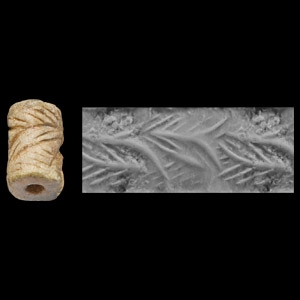
Western Asiatic Stone Cylinder Seal with Abstract Design
Circa 3rd millennium B.C.Sold for (Inc. bp): £78
Of cotton-reel shape; deeply incised leaf and other motifs. 4.98 grams, 19 mm
Ex property of a West London businessman, formed in the late 1980s-early 1990s, item no.28B (111). Academically researched and catalogued by the late Professor Lambert in the early 1990s. -
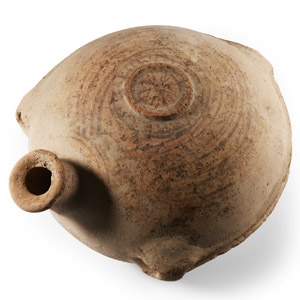
Western Asiatic Terracotta Flask with Star Design
1st millennium B.C.Estimate: £100 - 140 (+bp*)
Opening Bid: £50
Of lentoid form with u-section medial channel incorporating three suspension lugs, short spout with rounded rim, central raised ring to the upper face decorated with a stylised star, the body with concentric roundels. 1.4 kg, 26 cm wide
Acquired 1980-2015. Ex Abelita family collection.
