
Loading, please wait...


LOT 0264
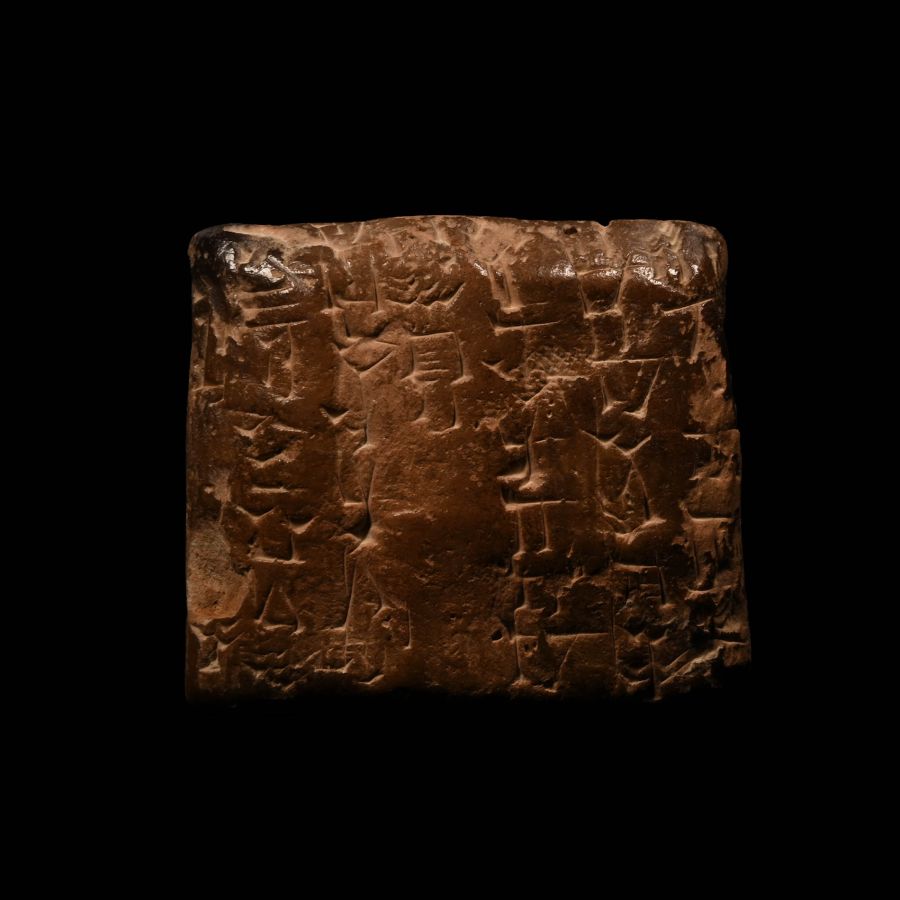
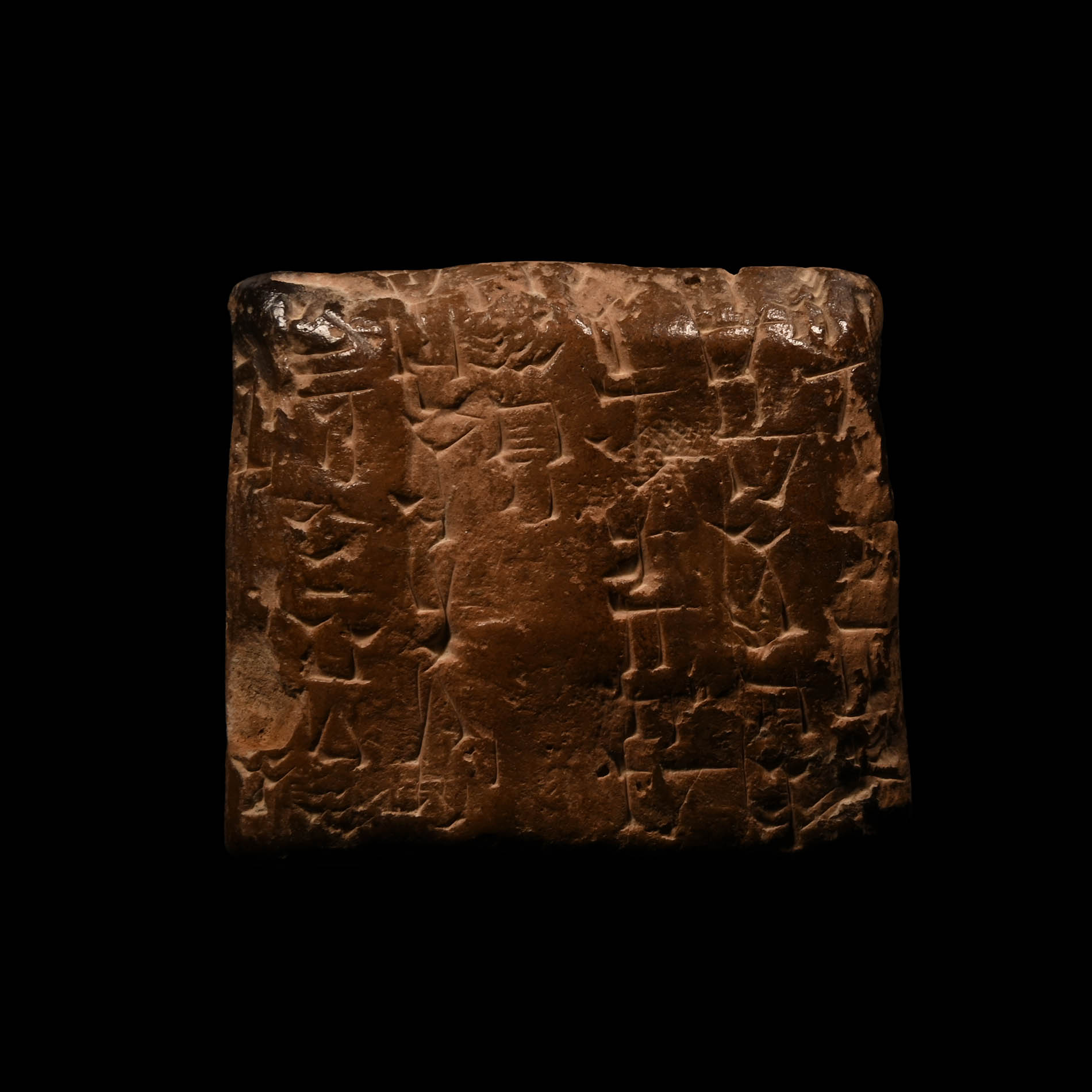
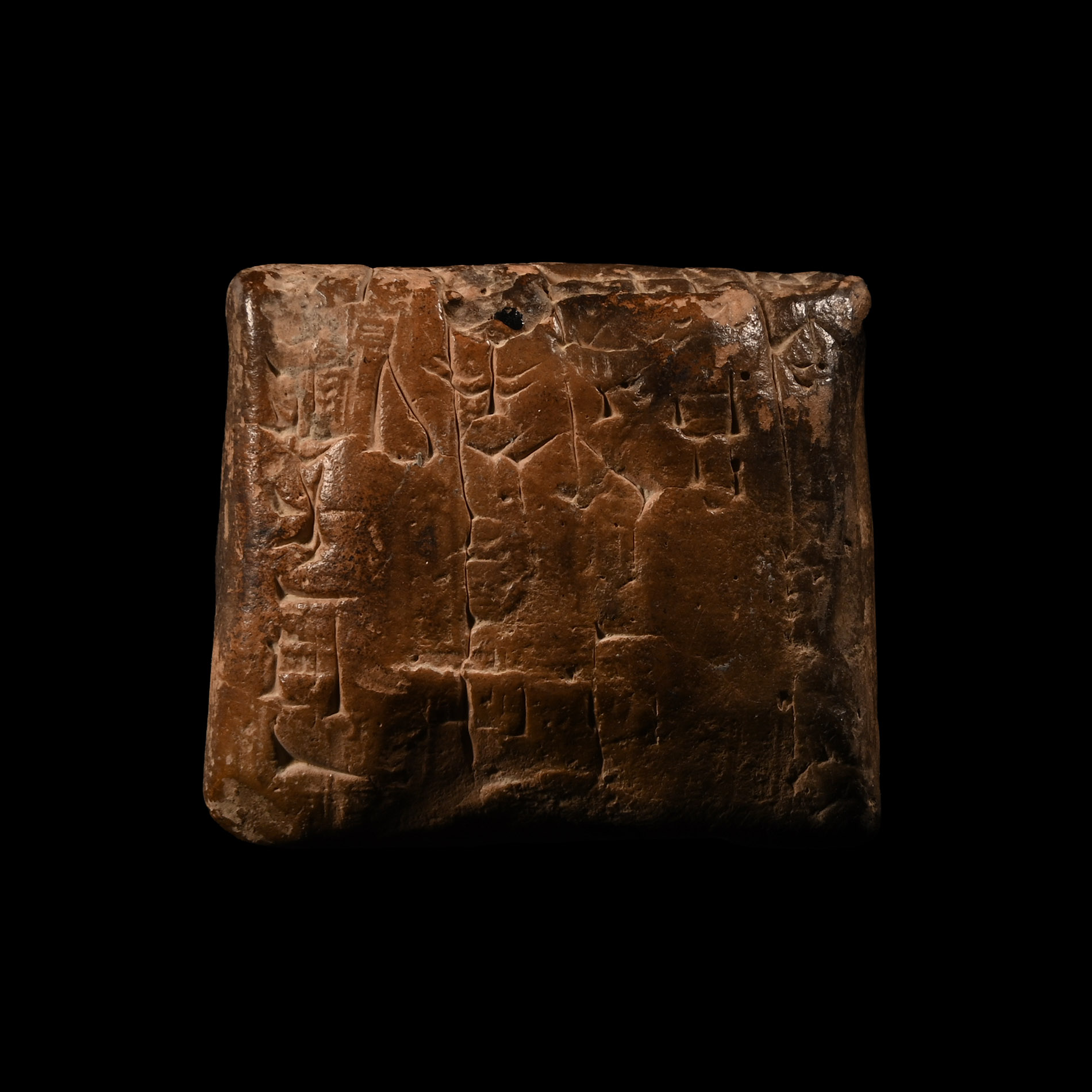
Old Babylonian Terracotta Cuneiform Tablet
UR III, EARLY 2ND MILLENNIUM B.C.
1 1/2 in. (27.6 grams, 40 mm).
Pillow-shaped tablet with columns of pictograms to two broad faces and one edge.
ProvenanceEx De Groot collection, Belgium, acquired in the 1930s.
with Bonhams, London, 13 April 2011, no.137.
Accompanied by copies of the relevant Bonhams catalogue pages.
This lot has been checked against the Interpol Database of stolen works of art and is accompanied by a search certificate number no.12118-218148.
Cf. similar from Babylon in the Metropolitan Museum of Art, New York, under accession no.86.11.282.
CONDITIONTimeLine Auctions follows a vetting process to ensure the authenticity and legality of all items, reinforcing our commitment to integrity and responsible trading. Each antiquity, antique, and coin lot undergoes thorough examination by a vetting committee of at least ten external specialists, professional trade association members, scientists, and archaeologists: Our Vetting Process
AUCTIONS:
TimeLine is a leading auction house specialising in antiquities, ancient art, collectables, natural history, coins, medals, and books. Our auctions offer museums, collectors, historians, and enthusiasts the opportunity to acquire unique and historically significant pieces.
-
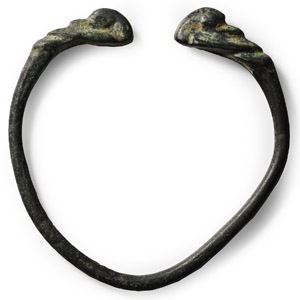
Western Asiatic Dragon-Headed Bronze Bracelet
1st millennium B.C.Sold for (Inc. bp): £39
Comprising a round-section shank and opposed beast-head finials. 23.7 grams, 68 mm
UK private collection before 2000. Acquired on the UK art market. Property of a London gentleman. -
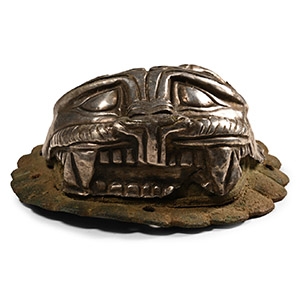
Pre-Achaemenid Silver Plated Lion Shield Boss
9th-8th century B.C.Estimate: £2,000 - 3,000 (+bp*)
Opening Bid: £1,000
With stylised repoussé head and face detailing showing two faces, one to the side and the other to the top, the mane represented by a scalloped border; sheet-silver cladding to the head over bronze; pierced for attachment. 84 grams, 78 mm
Ex London, UK, gallery, 1971-early 2000s. London, UK, collection. -
.jpg)
Aramaic Lead Magical Text Scroll
2nd-8th century A.D.Sold for (Inc. bp): £468
A rectangular sheet-lead panel with columns of lightly incised Aramaic text; the sheet originally rolled tightly. 25.2 grams, 14.5 cm
Fine condition.
Acquired 1979-1999. London collection of the late Mr S.M., thence by descent.
The item was possibly meant to be a defixio or curse tablet on which the malediction was recorded and then shut away (by being tightly rolled up) so that the victim could not find it or negate it.
