
Loading, please wait...
LOT 0280
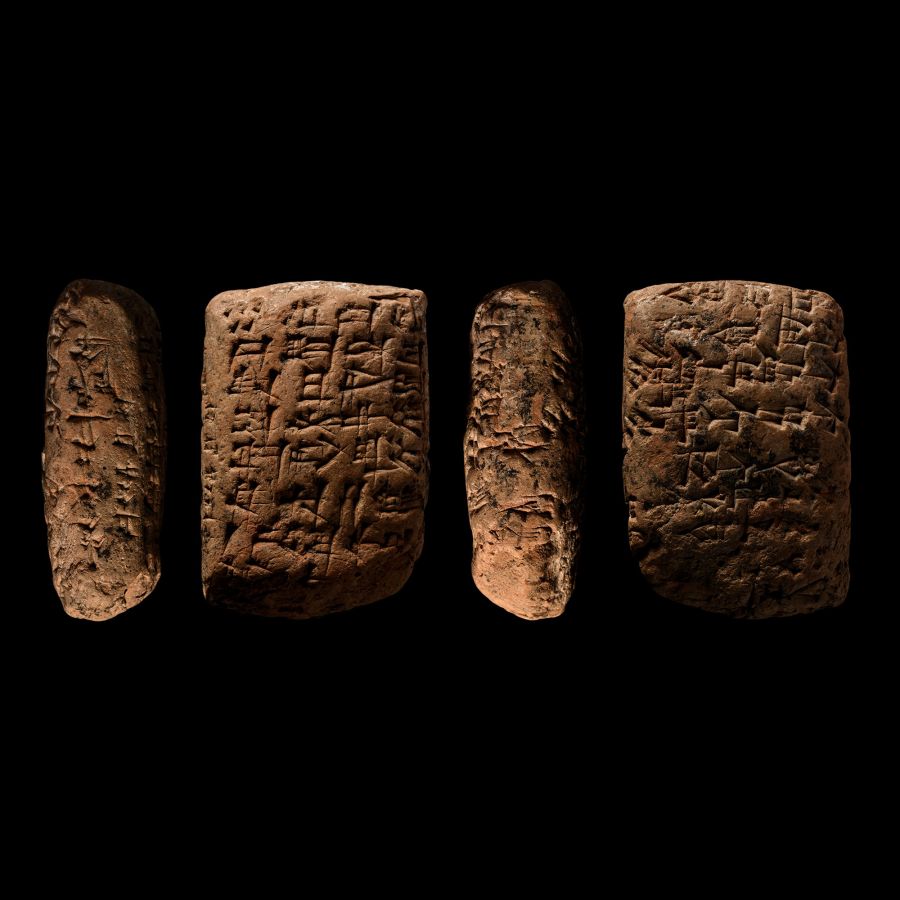
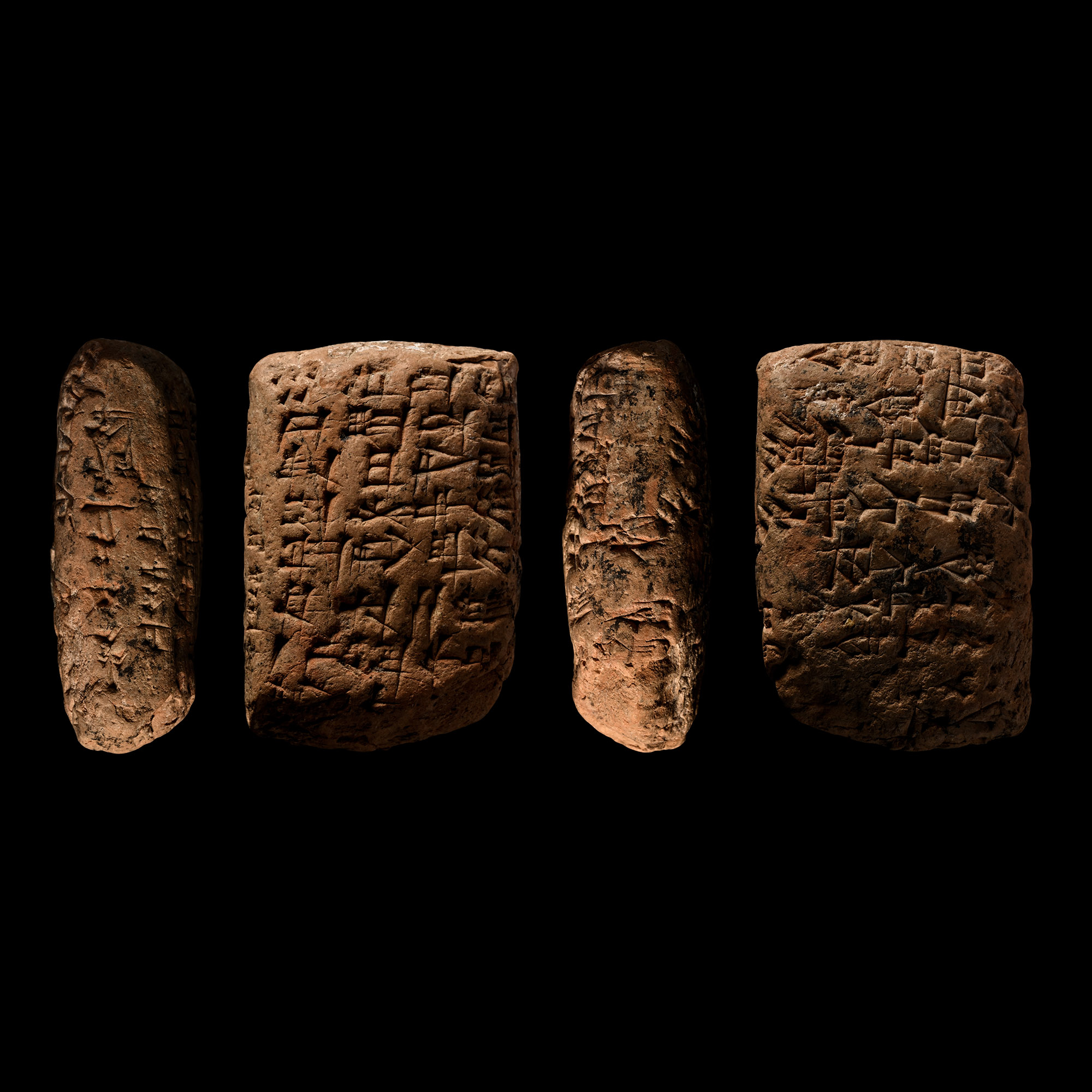
Old Babylonian Terracotta Cuneiform Tablet For the Sale of a Palm Grove during the Reign of Nur-Adad King of Larsa
1865-1850 B.C.
2 1/4 in. (52 grams, 56 mm).
A pillow-shaped tablet, with cuneiform text on the broad faces and an edge, reading:
'50 sar of orchard, planted with palm trees, next to Kunia, next to Amurutu, on the first small side:
Rabutum. Sîn-pilah bought from Huzalum. He paid him its full price of 1/3 silver mine. He swore in the
name of Nur-Adad the king that no one would constest in the future.
In front of Itišumum
In front of Sinennam
Before Sugalum
Before Kurušum
Before Awīl-Amurrim the scribe
In the month of šabatu, the year Nur-Adad (offered) a throne of justice (?) ...'
Ex private collection.
with Bonhams, Antiquities, London, 21 October 1999, no.260 (Part).
Private central European collection.
Accompanied by copies of the relevant Bonhams catalogue pages.
This lot has been checked against the Interpol Database of stolen works of art and is accompanied by search certificate number no.12244-219769.
TimeLine Auctions follows a vetting process to ensure the authenticity and legality of all items, reinforcing our commitment to integrity and responsible trading. Each antiquity, antique, and coin lot undergoes thorough examination by a vetting committee of at least ten external specialists, professional trade association members, scientists, and archaeologists: Our Vetting Process
AUCTIONS:
TimeLine is a leading auction house specialising in antiquities, ancient art, collectables, natural history, coins, medals, and books. Our auctions offer museums, collectors, historians, and enthusiasts the opportunity to acquire unique and historically significant pieces.
LOT 0280
Old Babylonian Terracotta Cuneiform Tablet For the Sale of a Palm Grove during the Reign of Nur-Adad King of Larsa
Sold for (Inc. bp): £1,755
-
.jpg)
Syrian Haematite Cylinder Seal with Storm God
2nd-1st millenium B.C.Sold for (Inc. bp): £520
With three standing figures and animals; accompanied by a copy of an old scholarly note, typed and signed by W.G. Lambert, late Professor of Assyriology, University of Birmingham, 1970-1993, which states: 'Cylinder Seal of Hematite, 19.5 x 8 mm. The main scene consists of three figures: to the right the Storm God standing with one foot on each of two mountains. He wears an elaborate hat, and holds up a symbol. Facing him is a human figure with both hands raised, and wearing a robe to the knees. behind the worshipper stands a goddess holding up a curved object. There are two fillers: a scorpion, and a pillar--table with two objects resting on it. The minor scene consists of a walking quadruped with human head below, and a reared-up lion above a short guilloche. This is a Syrian seal, c. 1800-1600 B.C., perhaps from Palestine.'; accompanied by a museum quality impression and a pair of red stone beads. 3.38 grams, 20 mm
Anonymous French sale. Private collection, London, UK. Accompanied by a copy of an old scholarly note, typed and signed by W.G. Lambert, late Professor of Assyriology, University of Birmingham, 1970-1993. -
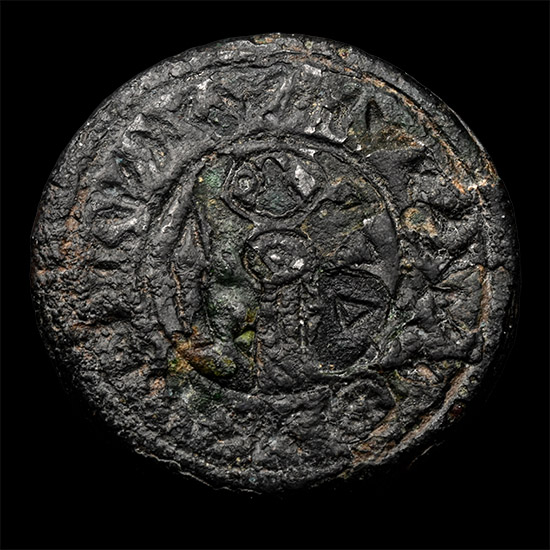
Hittite Silvered Bronze Domed Stamp Seal with Hieroglyphs
Circa 1500-1300 B.C.Sold for (Inc. bp): £247
Plano-convex in profile with gusset to the rim; underside: central panel with geometric design, hieroglyphic text to the border; obverse: central tondo with hieroglyphs, beaded ring and geometric border; transverse piercing; an important piece. 13.4 grams, 23 mm
From a London, UK, private collection.
The so-called 'Hittite hieroglyphs' encode texts in the Luwian language of Asia Minor. Hieroglyphic Luwian is a native script, also known as 'Anatolian hieroglyphs', which was used on official or royal seals and a few monumental inscriptions. -
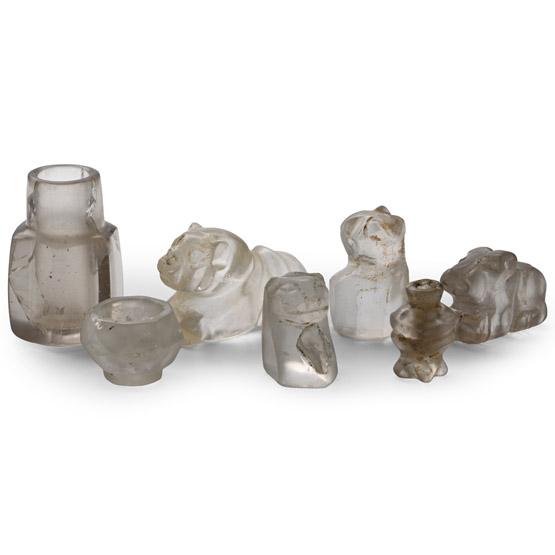
Western Asiatic Rock Crystal Animal and Other Artefact Collection
20th century A.D.Estimate: £200 - 300 (+bp*)
Opening Bid: £100
Including cat's head, crouching lion, dog and other designs. 160 grams total, 24-46 mm
Private collection, UK.
