
Loading, please wait...
LOT 0170
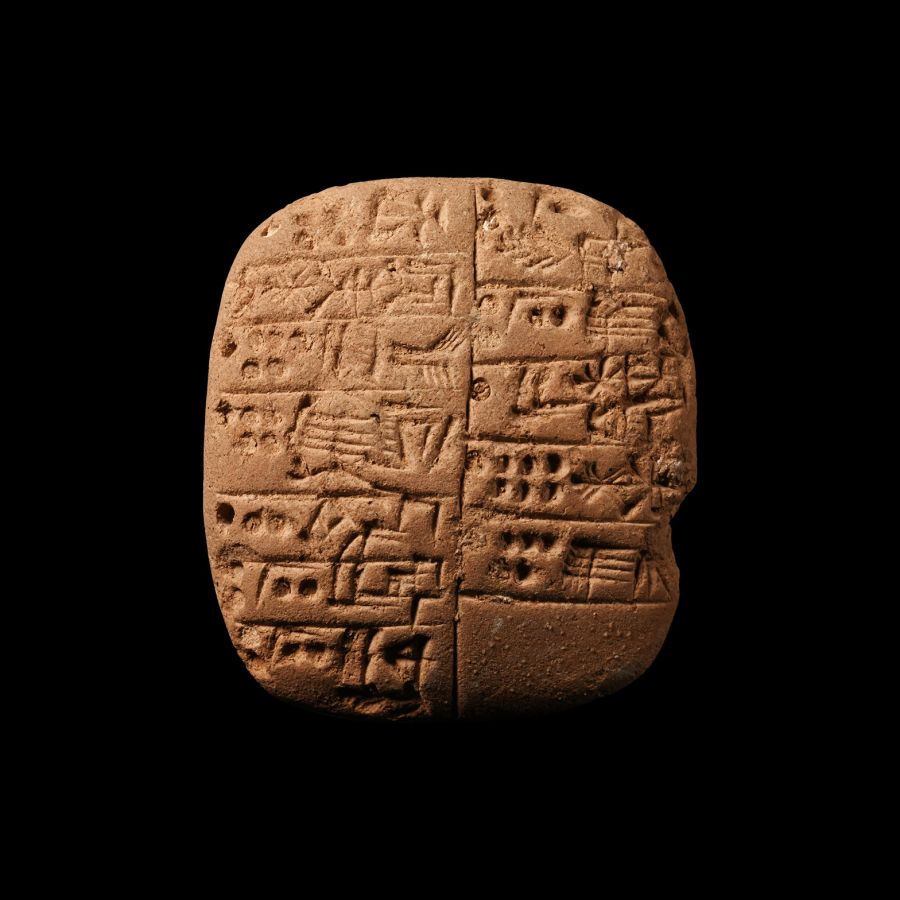
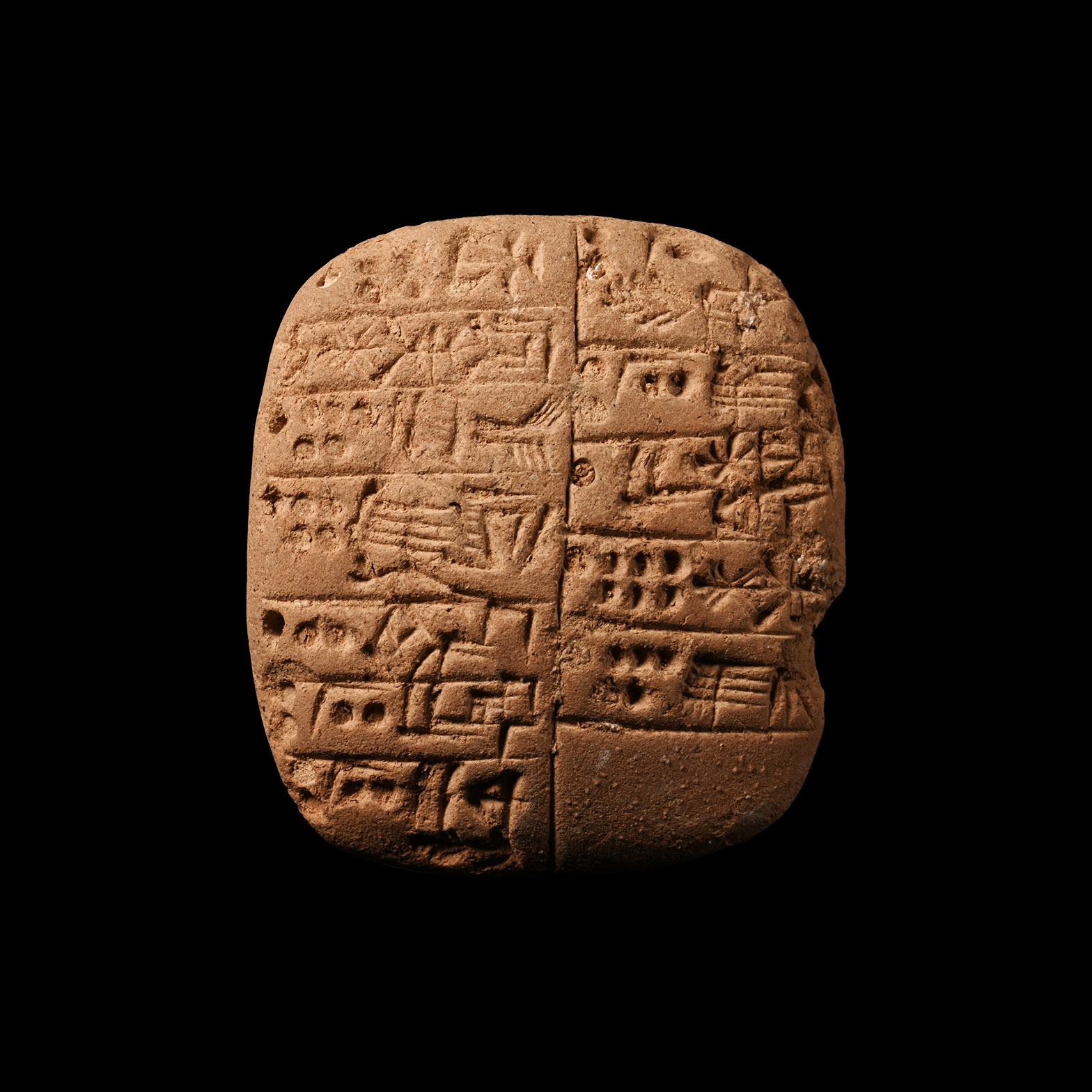
Old Babylonian Pictographic Tablet
2600-2400 B.C.
2 in. (47 grams, 50 mm).
A roughly pillow-shaped clay tablet bearing pictographs to one face.
ProvenanceAcquired early 1990s.
Ex private American collection; thence by descent.
Private Swiss collection since 1998.
TimeLine Auctions follows a vetting process to ensure the authenticity and legality of all items, reinforcing our commitment to integrity and responsible trading. Each antiquity, antique, and coin lot undergoes thorough examination by a vetting committee of at least ten external specialists, professional trade association members, scientists, and archaeologists: Our Vetting Process
AUCTIONS:
TimeLine is a leading auction house specialising in antiquities, ancient art, collectables, natural history, coins, medals, and books. Our auctions offer museums, collectors, historians, and enthusiasts the opportunity to acquire unique and historically significant pieces.
-
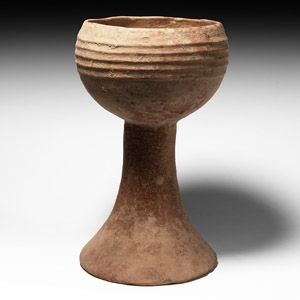
Western Asiatic Large Terracotta Chalice
1st millennium B.C.Estimate: £100 - 140 (+bp*)
Opening Bid: £50
A ceramic chalice with ribbed bowl, waisted stem and splayed foot. 1.44 kg, 26 cm high
Acquired 1980-2015. Ex Abelita family collection. -
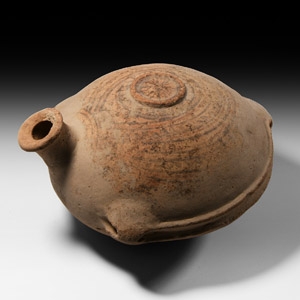
Western Asiatic Flask with Star Design
1st millennium B.C.Estimate: £150 - 200 (+bp*)
Opening Bid: £75
A ceramic flask of lentoid form with u-section medial channel incorporating three suspension lugs, short spout with rounded rim, central raised ring to the upper face decorated with a stylised star, the body with concentric roundels. 1.4 kg, 26 cm wide
Acquired 1980-2015. Ex Abelita family collection. -
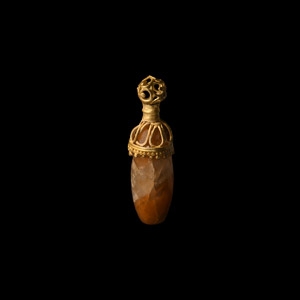
Western Asiatic Gold Pendant with Carnelian
1st-2nd century A.D.Estimate: £100 - 140 (+bp*)
Opening Bid: £56
A gold pendant with openwork domed filigree cell set with a capsule-shaped banded carnelian stone bead, ribbed collar and openwork bulb above for suspension. 1.42 grams, 23 mm
Fine condition.
Acquired 1970-2010. Collection of a late Japanese gentleman.
