
Loading, please wait...
LOT 1010
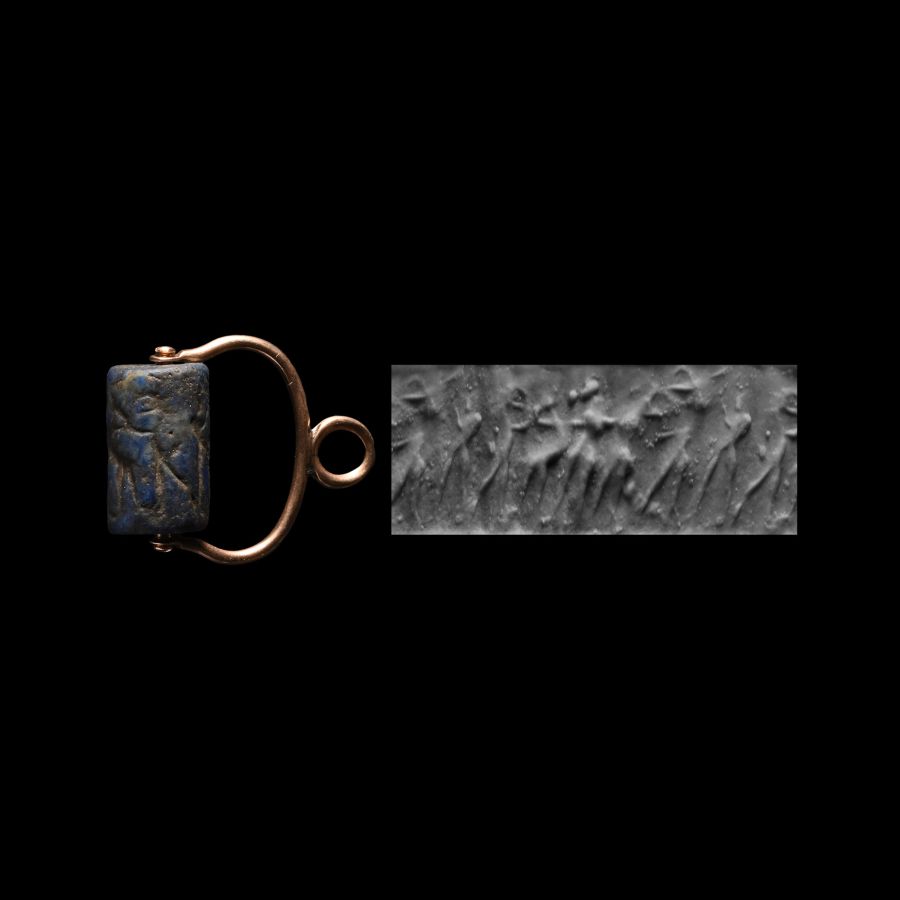
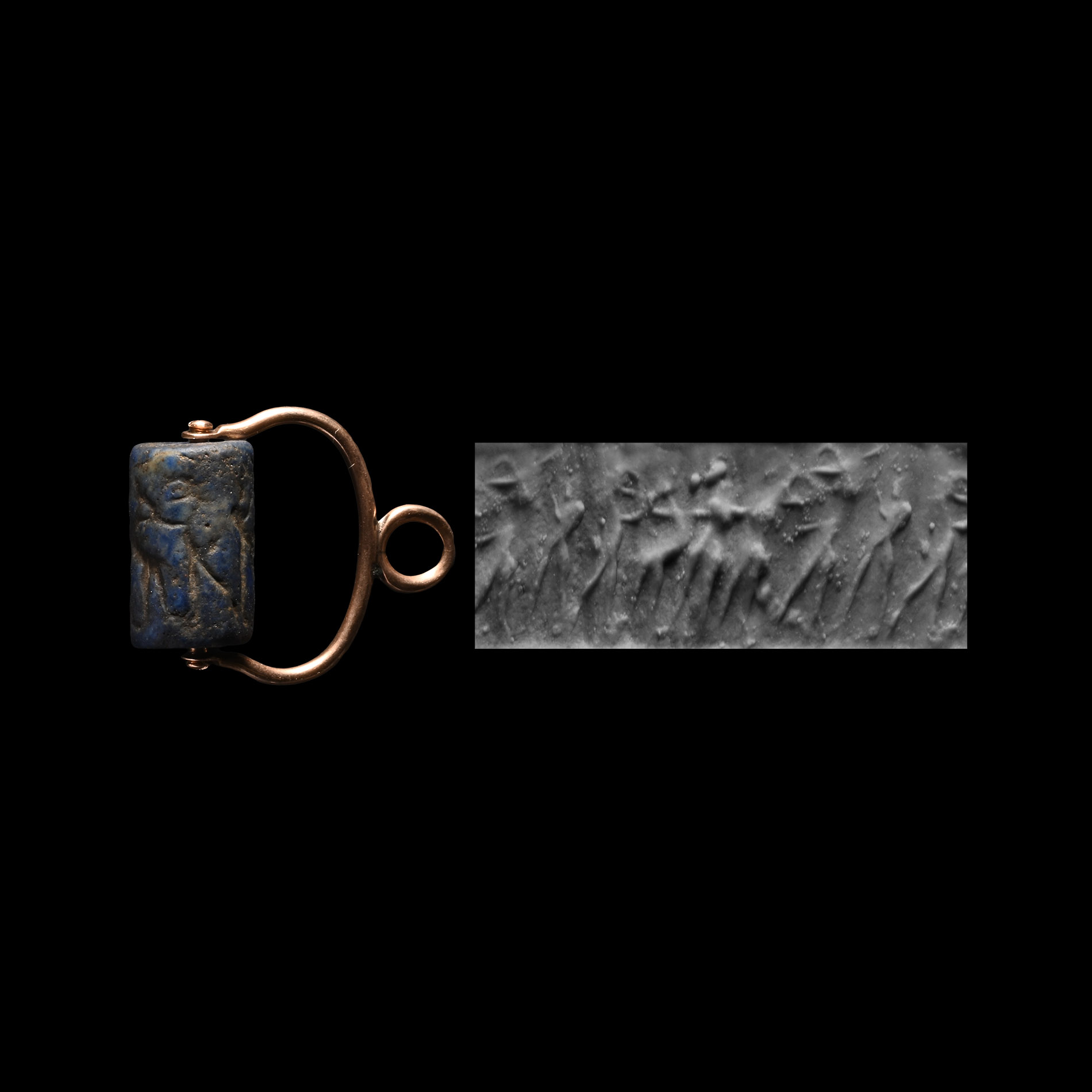
Old Babylonian Lapis Lazuli Cylinder Seal with Figures and Gold Pendant Mount
18TH-14TH CENTURY B.C.
1 in. (5.18 grams, 27 mm).
With incuse human figures and a stag in a hunting scene; gold mount with loop.
ProvenanceFrom a family collection formed 1900-1950; by descent circa 1980.
LiteratureCf. Teissier, B., Ancient Near Eastern Cylinder Seals in the Marcopoli Collection, Berkeley, 1984, item 145, for type.
CONDITIONTimeLine Auctions follows a vetting process to ensure the authenticity and legality of all items, reinforcing our commitment to integrity and responsible trading. Each antiquity, antique, and coin lot undergoes thorough examination by a vetting committee of at least ten external specialists, professional trade association members, scientists, and archaeologists: Our Vetting Process
AUCTIONS:
TimeLine is a leading auction house specialising in antiquities, ancient art, collectables, natural history, coins, medals, and books. Our auctions offer museums, collectors, historians, and enthusiasts the opportunity to acquire unique and historically significant pieces.
LOT 1010
Old Babylonian Lapis Lazuli Cylinder Seal with Figures and Gold Pendant Mount
Estimate £250 - 350€290 - 410 (for guidance only)$340 - 470 (for guidance only)
-
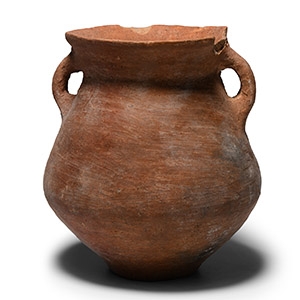
Trans Jordan Terracotta Jar with Handles
Early Bronze Age, 3rd millennium B.C.Sold for (Inc. bp): £65
Of biconical form with flared mouth, two small loop handles to the shoulder; rim chipped. 332 grams, 12.2 cm high
Ex London, UK, collection, 1988. -
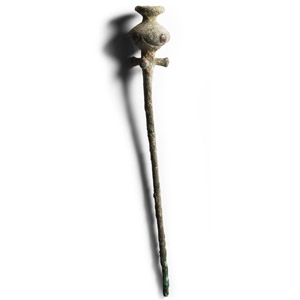
Luristan Poppy-Headed Cloak Pin
Circa 13th-8th century B.C.Sold for (Inc. bp): £52
Comprising a substantial round-sectioned pin with bulbous poppy-shaped head with three turrets below. 73 grams, 17.7 cm
UK private collection formed before 2000. Ex North London, UK, gallery. -
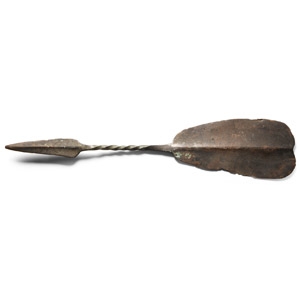
Luristan Double-Ended Bronze Razor
11th-8th century B.C.Sold for (Inc. bp): £143
Comprising a wide double-edged blade with central midrib, twisted handle and a small triangular blade to the other end. 51 grams, 21.5 cm
From a UK private collection, before 1980.
