
Loading, please wait...
LOT 1403
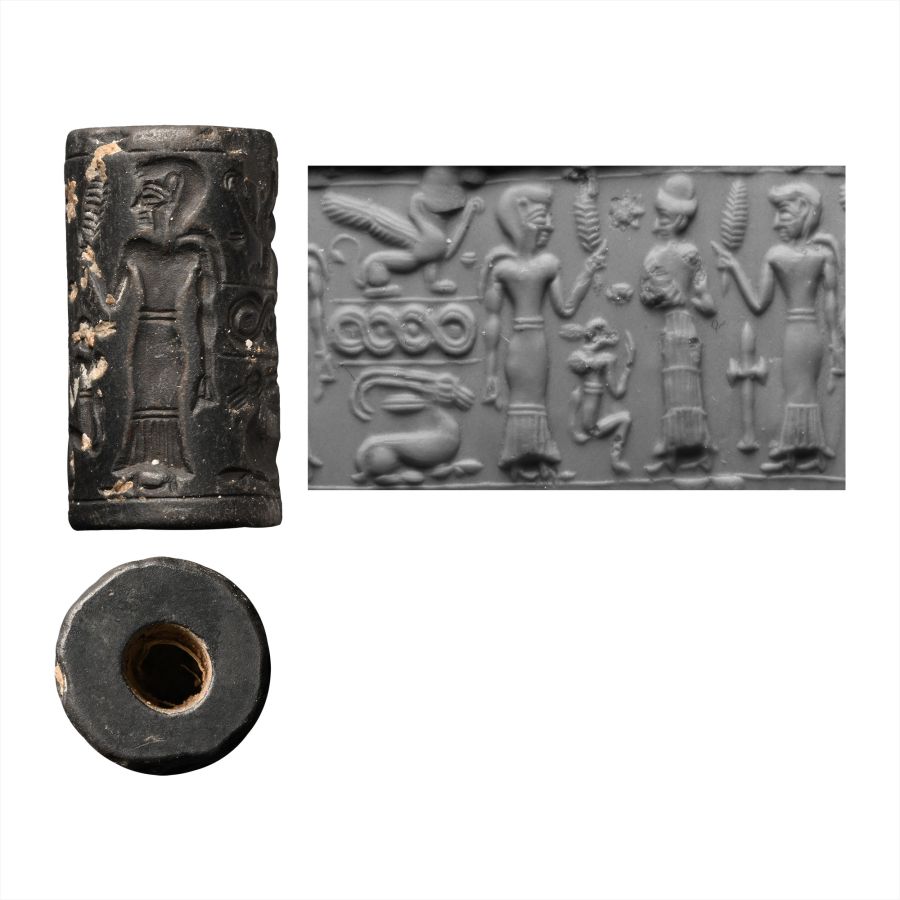
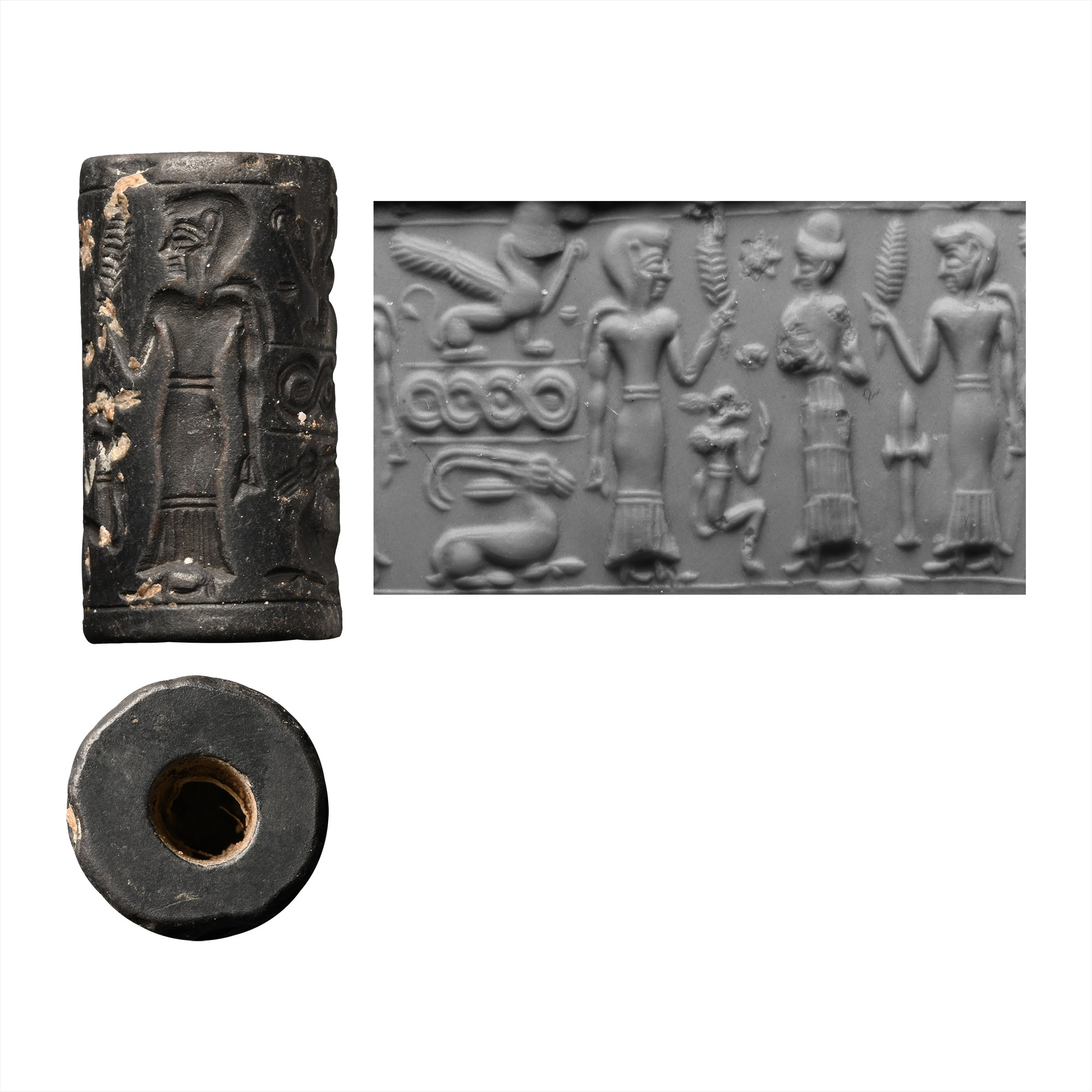
Old Babylonian Haematite Cylinder Seal
EARLY 2ND MILLENNIUM B.C.
3/4 in. (5.86 grams, 19 mm).
With frieze in three scenes: crouching gryphon with one foreleg raised above a guilloche scene-divider with a crouching ibex below; three human figures standing, the outer two wearing an ankle-length skirt with waistband, one arm bent holding a frond and, between them, a standing figure in flounced robe flanked by a squatting monkey with tail raised and a freestanding cruciform symbol; supplied with a museum-quality impression.
ProvenanceFrom the 'S' collection, acquired 1970-1990s.
The collection was seen and studied by W.G.Lambert, late Professor of Assyriology at the University of Birmingham, 1970-1993.
This lot has been cleared against the Art Loss Register database, and is accompanied by an illustrated lot declaration signed by the Head of the Antiquities Department, Dr Raffaele D'Amato.
TimeLine Auctions follows a vetting process to ensure the authenticity and legality of all items, reinforcing our commitment to integrity and responsible trading. Each antiquity, antique, and coin lot undergoes thorough examination by a vetting committee of at least ten external specialists, professional trade association members, scientists, and archaeologists: Our Vetting Process
AUCTIONS:
TimeLine is a leading auction house specialising in antiquities, ancient art, collectables, natural history, coins, medals, and books. Our auctions offer museums, collectors, historians, and enthusiasts the opportunity to acquire unique and historically significant pieces.
-
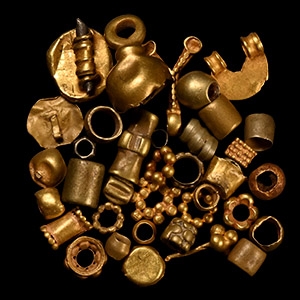
Western Asiatic Mixed Gold Bead Group
1st millennium B.C. and laterSold for (Inc. bp): £520
A mixed group of beads and pendants, including a Y-shaped pendant with granulation. 6 grams total, 2-11 mm
Ex property of a late Japanese collector, 1970-2000s. This lot has been cleared against the Art Loss Register database, and is accompanied by an illustrated lot declaration signed by the Head of the Antiquities Department, Dr Raffaele D'Amato. -
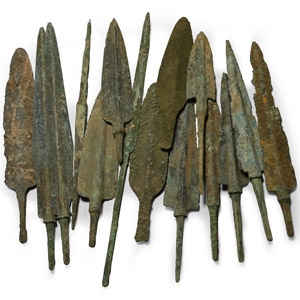
Luristan Bronze Arrowhead Group
13th-6th century B.C.Sold for (Inc. bp): £247
Including flat leaf-shaped, narrow, triangular and other tanged types. 395 grams total, 9.9-19.5 cm
Acquired 1980-2015. Ex Abelita family collection. This lot has been cleared against the Art Loss Register database, and is accompanied by an illustrated lot declaration signed by the Head of the Antiquities Department, Dr Raffaele D'Amato. -
.jpg)
Achaemenid Columnar Seal with Figures
Circa 500 B.C.Sold for (Inc. bp): £3,640
Square in section, sides tapering to the pierced apex; sequence of four intaglio figures: female on a hatched seat offering food to a goose; advancing female with hair in a single braid to the rear, holding a bowl and alabastron; male in knee-length tunic with lion-skin hood, holding an inverted spear; advancing female with hair in a single braid to the rear, holding a wreath and flower; rhyton to the underside. 9.8 grams, 25 mm
Acquired 1970-1999. London collection of the late Mr S.M., thence by descent. This lot has been checked against the Interpol Database of stolen works of art and is accompanied by a search certificate number no.12540-231460. This lot has been cleared against the Art Loss Register database, and is accompanied by an illustrated lot declaration signed by the Head of the Antiquities Department, Dr Raffaele D'Amato.
