
Loading, please wait...
LOT 1233
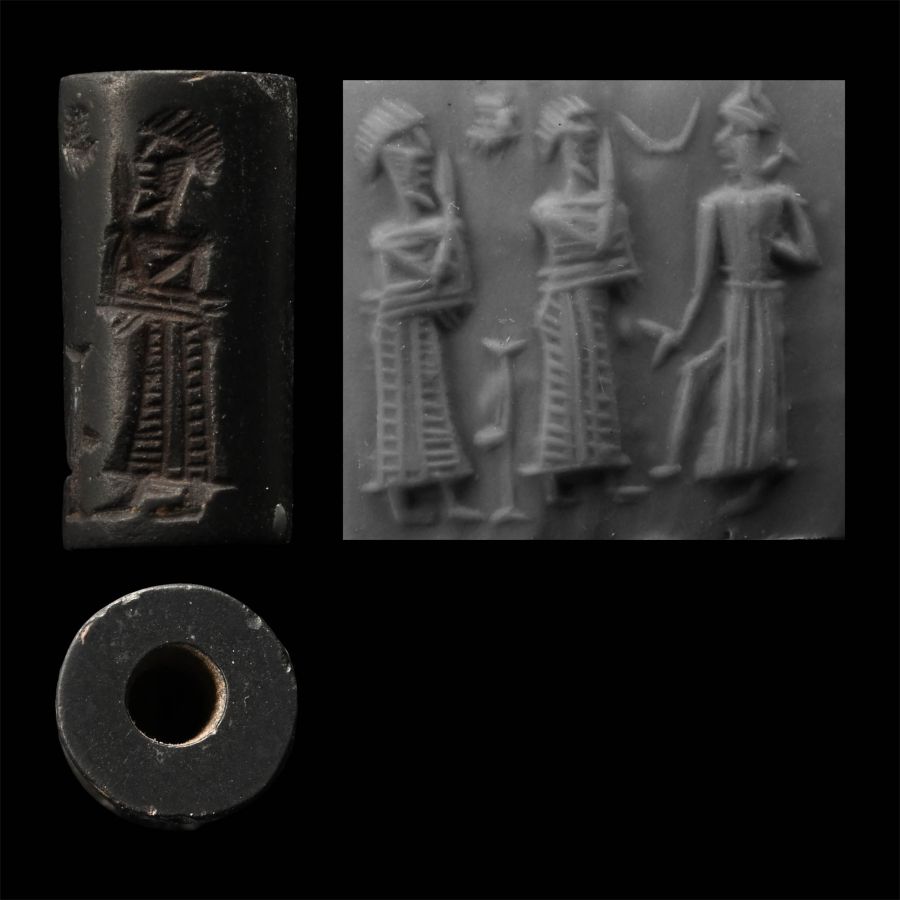
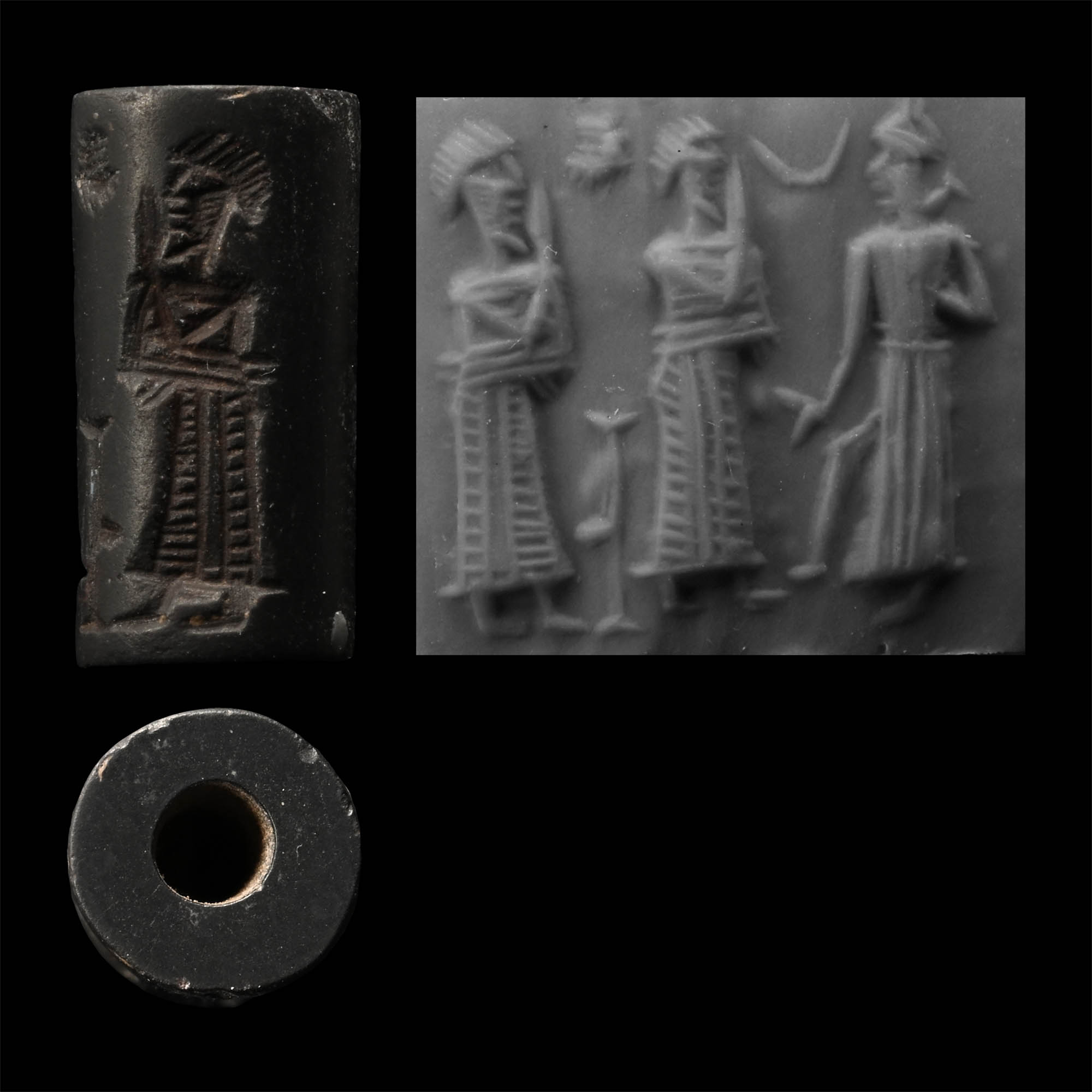
Old Babylonian Haematite Cylinder Seal
EARLY 2ND MILLENNIUM B.C.
5/8 in. (3.019 grams, 16 mm).
With frieze of three facing figures wearing long robes and headdress, crescent and other objects in the field.
ProvenanceEx 'S' collection, London, UK.
Examined by Professor Wilfrid George Lambert FBA (1926-2011), historian, archaeologist, and specialist in Assyriology and Near Eastern archaeology, in the late 1980s and early 1990s.
TimeLine Auctions follows a vetting process to ensure the authenticity and legality of all items, reinforcing our commitment to integrity and responsible trading. Each antiquity, antique, and coin lot undergoes thorough examination by a vetting committee of at least ten external specialists, professional trade association members, scientists, and archaeologists: Our Vetting Process
AUCTIONS:
TimeLine is a leading auction house specialising in antiquities, ancient art, collectables, natural history, coins, medals, and books. Our auctions offer museums, collectors, historians, and enthusiasts the opportunity to acquire unique and historically significant pieces.
-
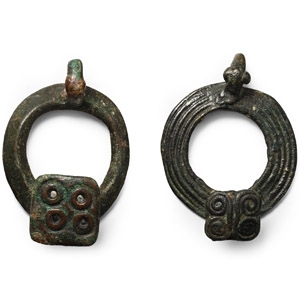
Amlash Bird-Headed Clasp Group
2nd-1st millennium B.C.Sold for (Inc. bp): £20
Each a slightly domed ring with hooked bird-head and stud with square head. 23.4 grams total, 42-43 mm
UK private collection before 2000. Acquired on the UK art market. Property of a London gentleman. -
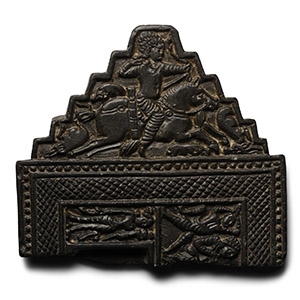
Sassanian Black Stone Fragment with Hunting and Battle Scenes
5th-6th century A.D.Sold for (Inc. bp): £468
Comprising: rectangular plaque and stepped finial; the plaque with beaded border and hatched inner band framing figural scenes in two registers; finial with horseman aiming his bow while galloping forwards, dead animals at his horse's hooves; underside segmented. 50.3 grams, 70 mm
Ex 'S' collection, London, UK. Examined by Professor Wilfrid George Lambert FBA (1926-2011), historian, archaeologist, and specialist in Assyriology and Near Eastern archaeology, in the late 1980s and early 1990s. -
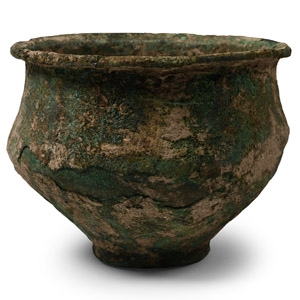
Western Asiatic Bronze Footed Cup
1st millennium B.C.Estimate: £100 - 140 (+bp*)
Opening Bid: £50
Biconvex in profile with basal ring, carination, rolled rim. 275 grams, 11.5 cm
Acquired 1980-2015. Ex Abelita family collection.
