
Loading, please wait...


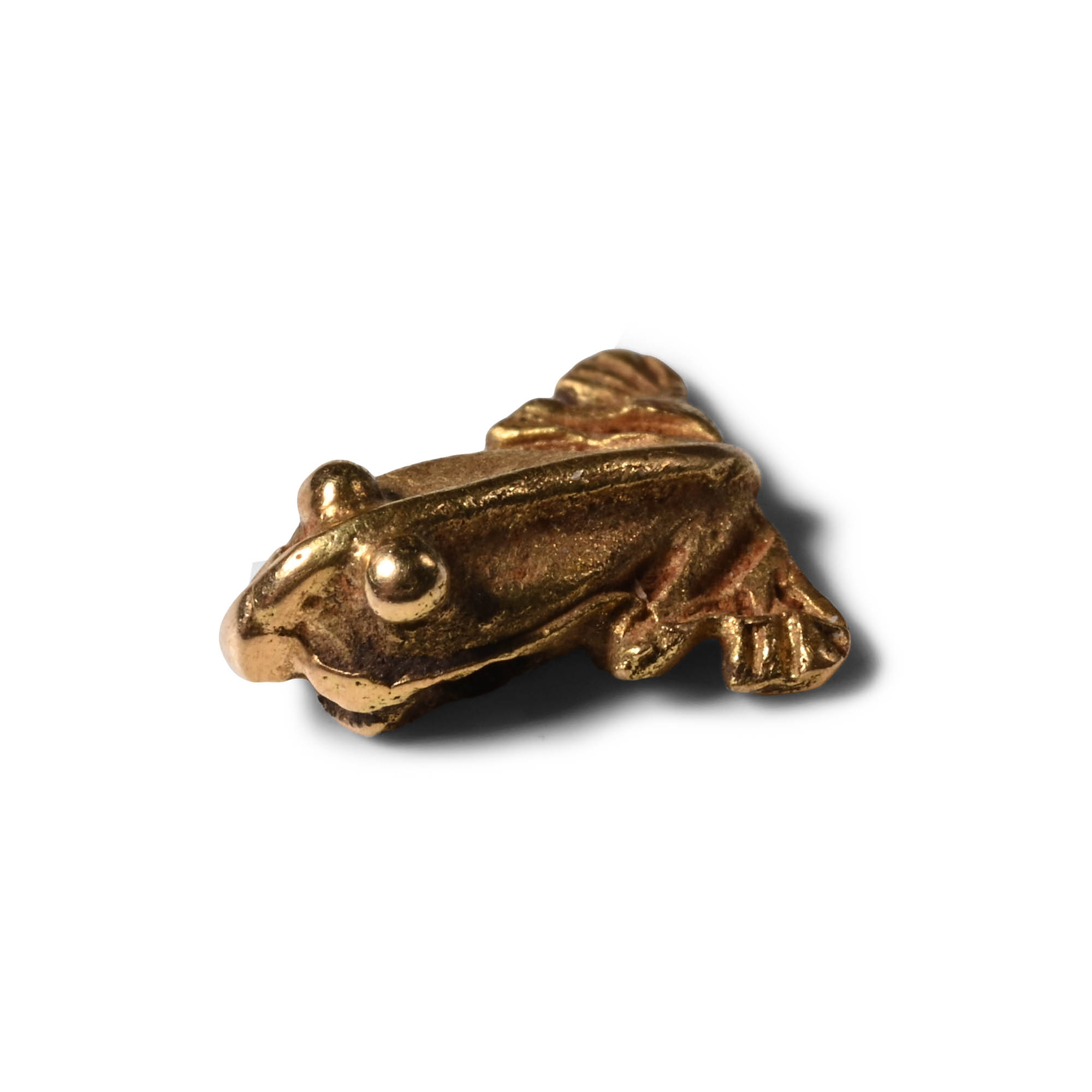
LOT 0315
Old Babylonian Gold Frog Amulet
2000-1800 B.C.
1/4 in. (0.45 grams, 7 mm).
The frog modelled in the round with anatomical detailing, pierced at the middle.
ProvenanceAcquired in Switzerland, 1999.
Private collection, Europe.
TimeLine Auctions follows a vetting process to ensure the authenticity and legality of all items, reinforcing our commitment to integrity and responsible trading. Each antiquity, antique, and coin lot undergoes thorough examination by a vetting committee of at least ten external specialists, professional trade association members, scientists, and archaeologists: Our Vetting Process
AUCTIONS:
TimeLine is a leading auction house specialising in antiquities, ancient art, collectables, natural history, coins, medals, and books. Our auctions offer museums, collectors, historians, and enthusiasts the opportunity to acquire unique and historically significant pieces.
-
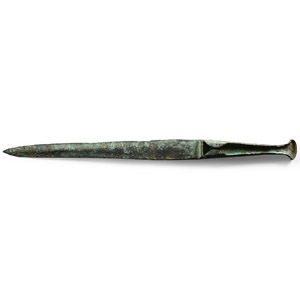
Luristan Bronze Dagger Blade
Circa 1000 B.C.Sold for (Inc. bp): £208
With lentoid section blade tapering to a point; the hilt hollowed both sides to accept an organic handle. 70 grams, 27.5 cm
Acquired 1980-2015. Ex Abelita family collection.
The dirk belongs to type I of the Medveskaya classification. This type of weapon is very common among daggers and dirks attributed to Luristan. According to Moorey, the typology was used in Western Iran at least from 13th century B.C. and remained in use at least until the late 9th century B.C. -
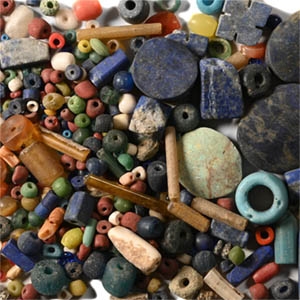
Mixed Ancient Necklace Bead Group
1st millennium B.C. and laterSold for (Inc. bp): £390
Comprising a large quantity of beads in glass, stone and faience, including some large tabular and cylindrical beads. 85 grams total, 1-25 mm
From a bead collection formed in the 1990s. -
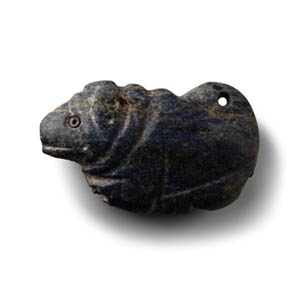
Bactrian Lapis Lazuli Recumbent Bull with Inlaid Eyes
3rd millennium B.C.Estimate: £1,200 - 1,700 (+bp*)
Opening Bid: £480
Carved in the round as a bull with curved tail forming the suspension lug, recessed sockets for eyes on with inset turquoise bead. 31.6 grams, 46 mm
with Gallery Rosen Ancient Art, Tel Aviv, 1968. with a London, UK gallery, 1971-early 2000s. Includes a copy of the original 1968 invoice.
