
Loading, please wait...


LOT 1425
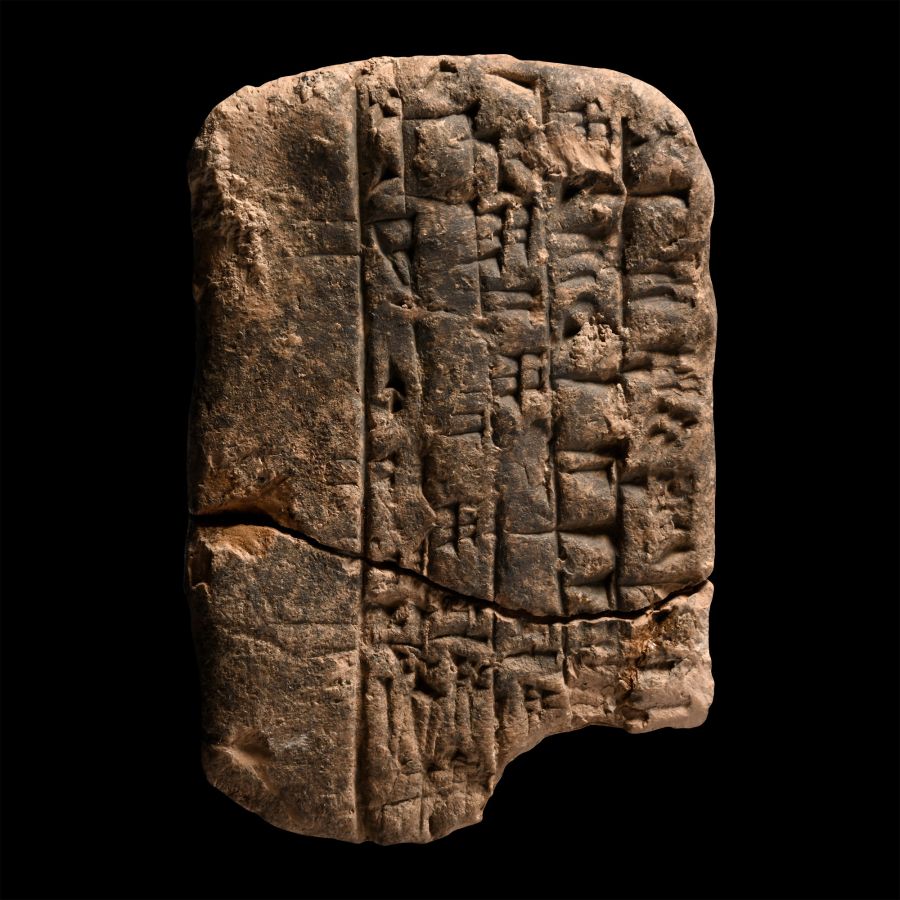
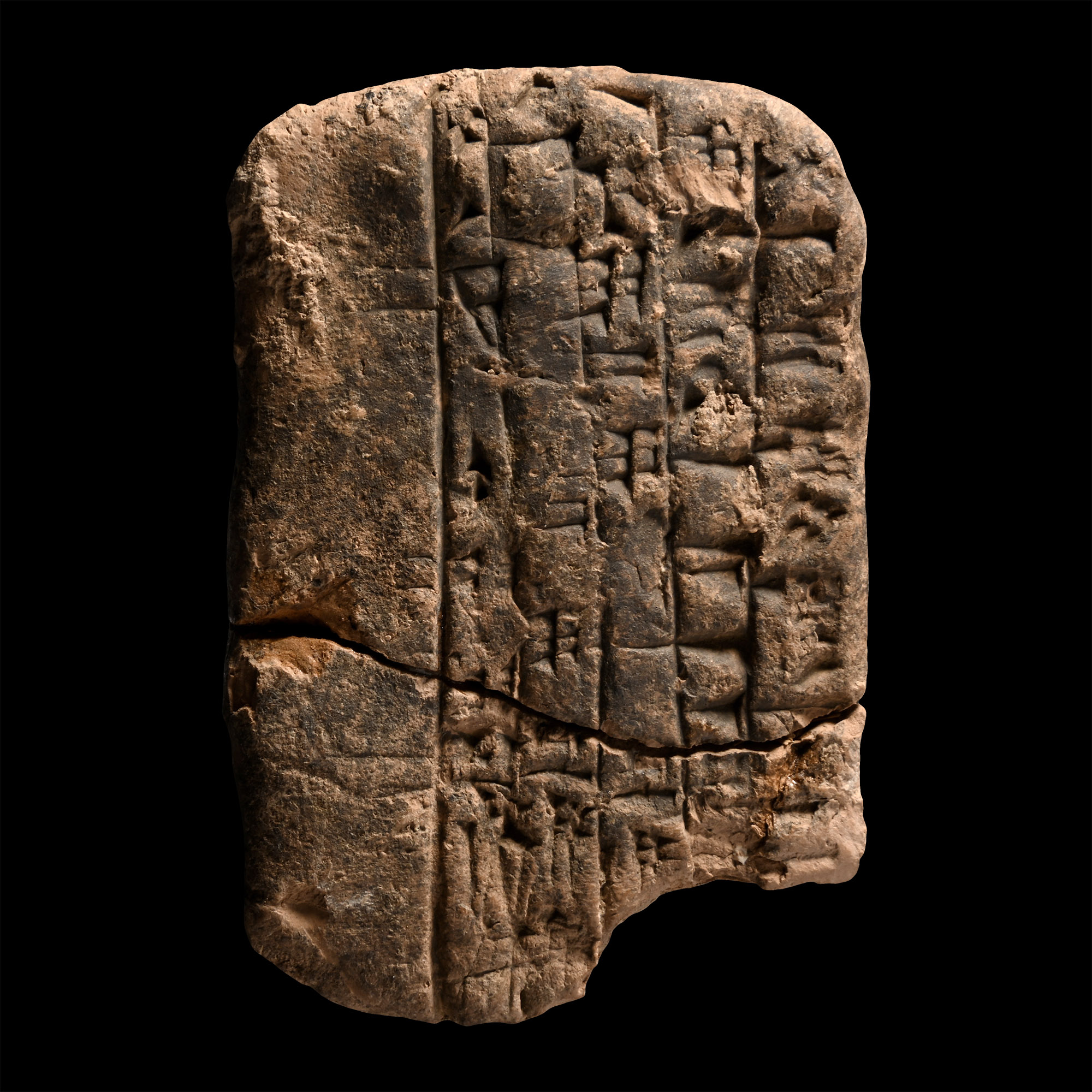
Old Babylonian Cuneiform School Exercise Tablet with Administrative Text
CIRCA 2000-1600 B.C.
2 7/8 in. (90.9 grams, 74 mm).
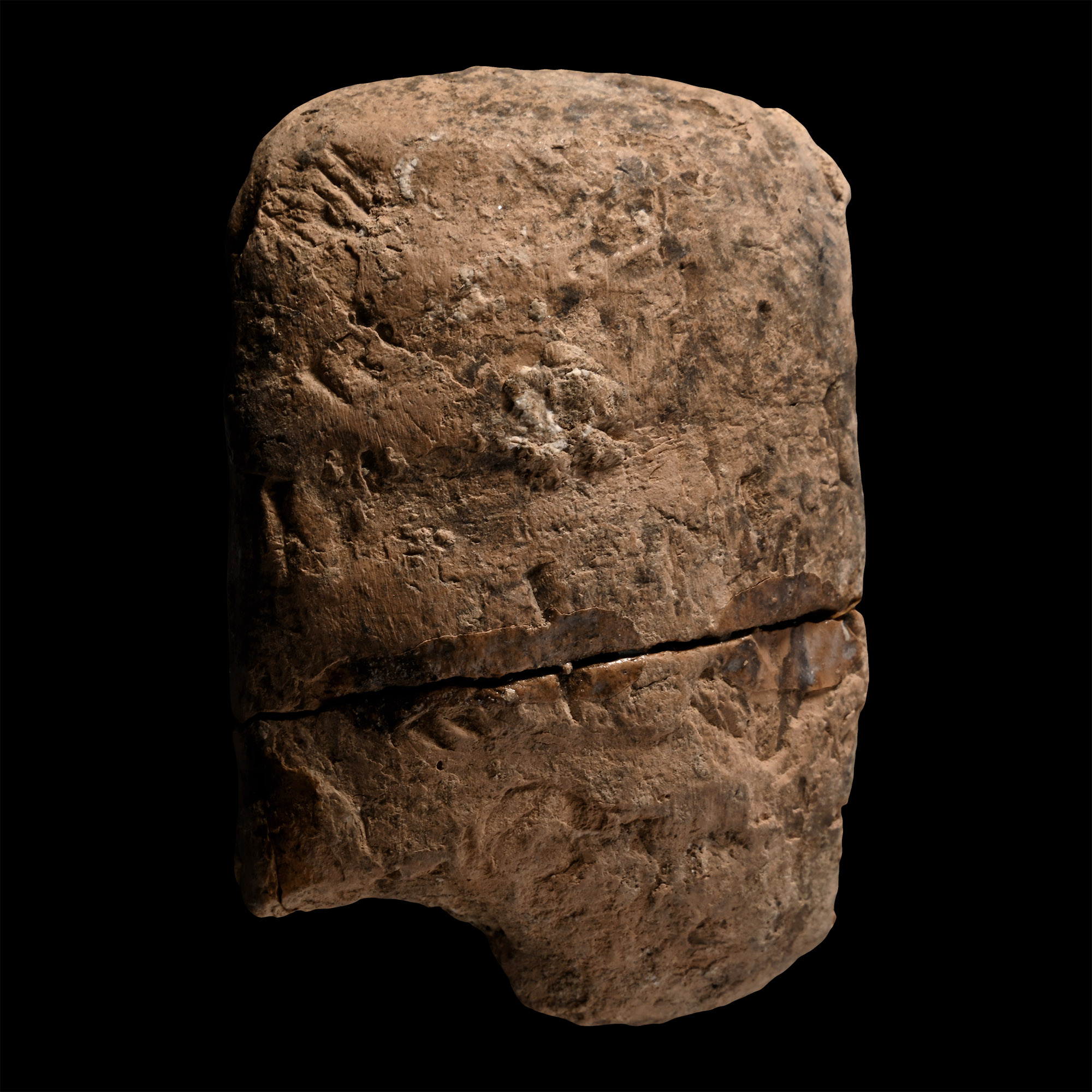
Tablet fragment with a domed underside, the upper face with lines of impressed text.
ProvenancePrivate collection, 1980s.
UK private collection before 2000.
Acquired on the UK art market.
Private collection, London, UK.
Academically researched and catalogued by the late Professor Lambert.
Accompanied by an original handwritten slip written by Professor Wilfrid George Lambert.
TimeLine Auctions follows a vetting process to ensure the authenticity and legality of all items, reinforcing our commitment to integrity and responsible trading. Each antiquity, antique, and coin lot undergoes thorough examination by a vetting committee of at least ten external specialists, professional trade association members, scientists, and archaeologists: Our Vetting Process
AUCTIONS:
TimeLine is a leading auction house specialising in antiquities, ancient art, collectables, natural history, coins, medals, and books. Our auctions offer museums, collectors, historians, and enthusiasts the opportunity to acquire unique and historically significant pieces.
LOT 1425
Old Babylonian Cuneiform School Exercise Tablet with Administrative Text
Sold for (Inc. bp): £780
-
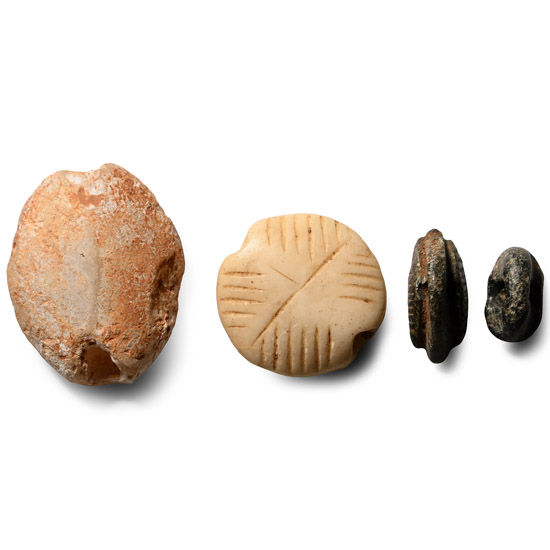
Western Asiatic Stone Scaraboid and Bird Seal Group
1st millennium B.C.-1st millennium A.D.Sold for (Inc. bp): £26
Comprising: a scaraboid in cream stone with hatching on the underside; a black stone seal formed as a stylised bird with its neck resting along the spine, hatched wings and underside; a small black seal pierced through the central ridge, linear motifs on the underside; a pale stone seal with slightly domed upper face, underside with stylised animal(?) motifs. 10.28 grams total, 11-26 mm
From the private collection of a European gentleman (1942-2024), formed since the 1970s. -
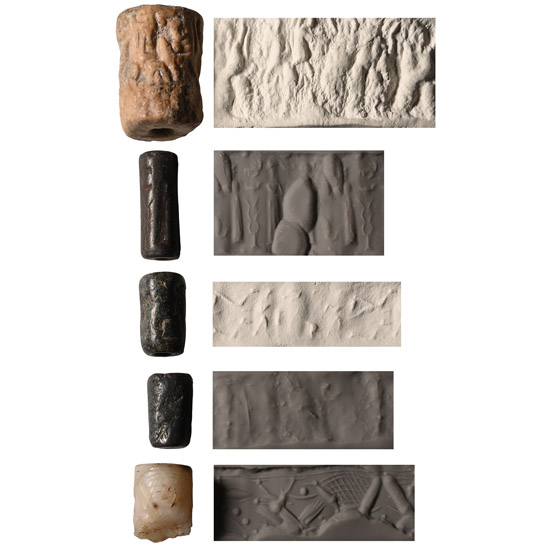
Western Asiatic Stone Cylinder Seal Group
3rd-1st millennium B.C.Sold for (Inc. bp): £117
Comprising: a limestone seal showing lions and bulls in combat; a hematite seal with a seated deity with an axe, and a standing adorant; a hematite seal with two adorants before a scorpion, another scorpion and another small animal, sun and moon crescent; a black steatite seal with two standing figures and a jumping beast; a chalcedony seal with a man to the right, evil eye, bird and a mountain or a skirt; supplied with museum-quality impressions. 45.28 grams total, 18-29 mm
From the private collection of a European gentleman (1942-2024), formed since the 1970s. Accompanied by previous typed catalogue slips with collection nos.27, 31, 34, 43, 79. -
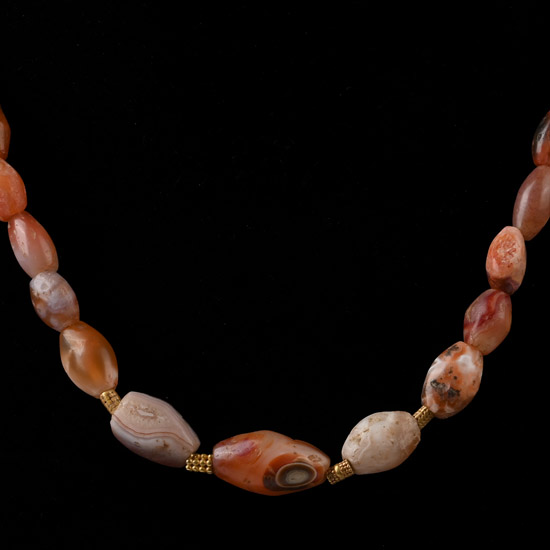
Western Asiatic Agate and Gold Bead Necklace
1st millennium B.C.Estimate: £400 - 600 (+bp*)
Current Winning Bid: £335
Composed of oblate, biconical and barrel-shaped beads with four granulated beads, restrung with a modern clasp. 56 grams, 52.5 cm
Ex London, UK, collection, 1990s.
