
Loading, please wait...
LOT 0174
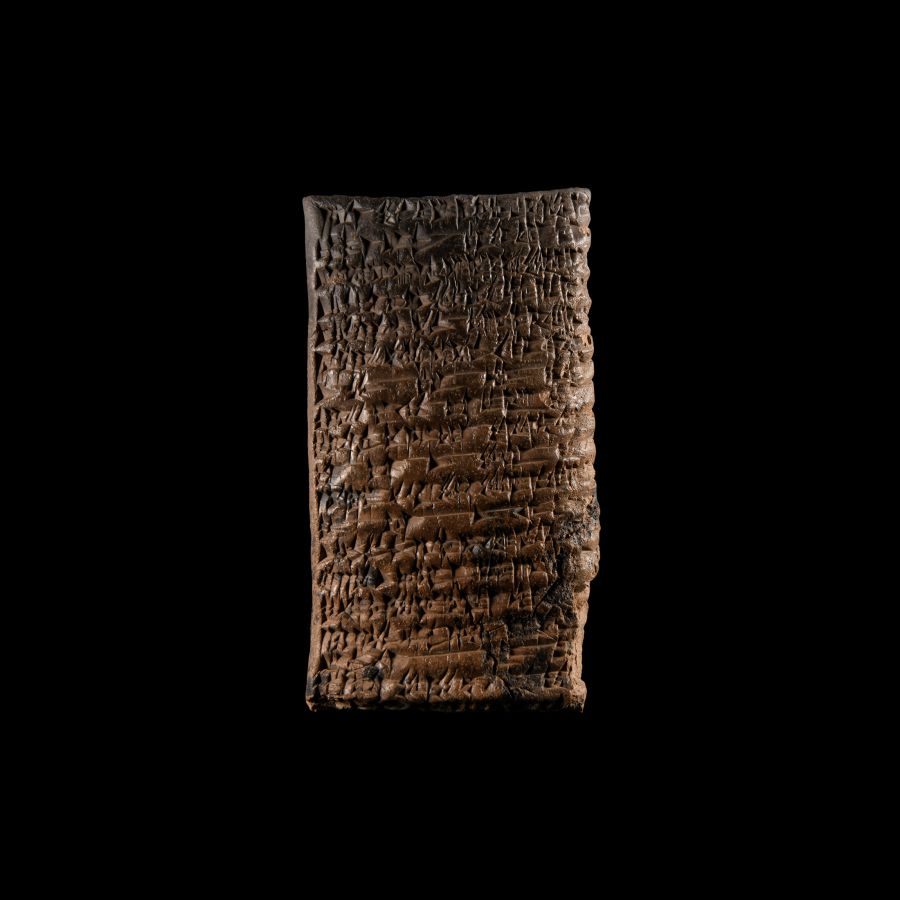
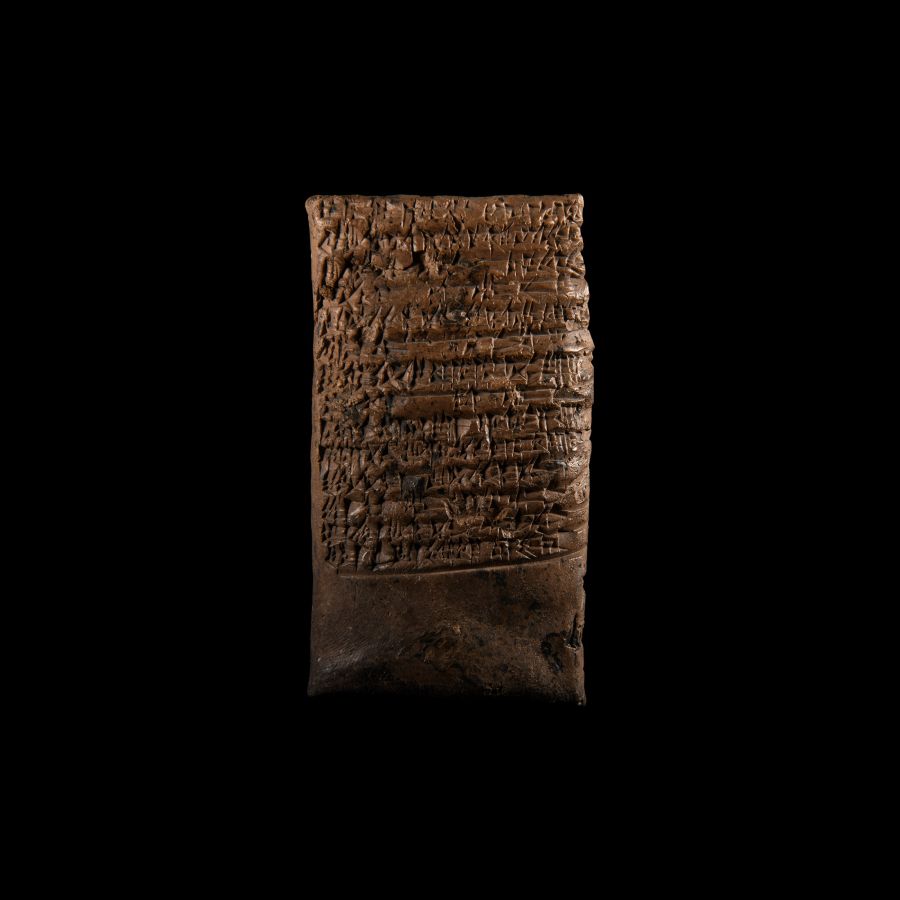
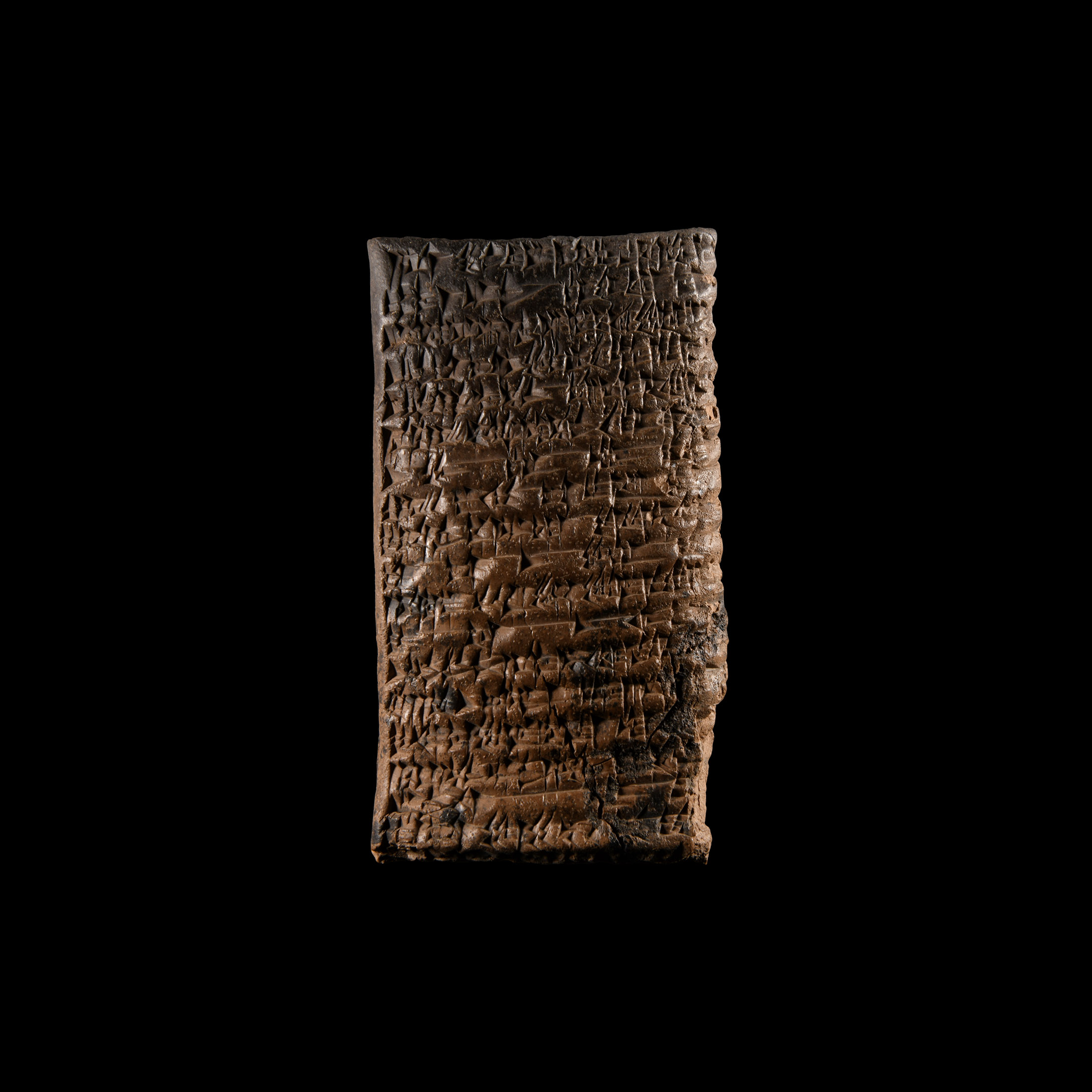
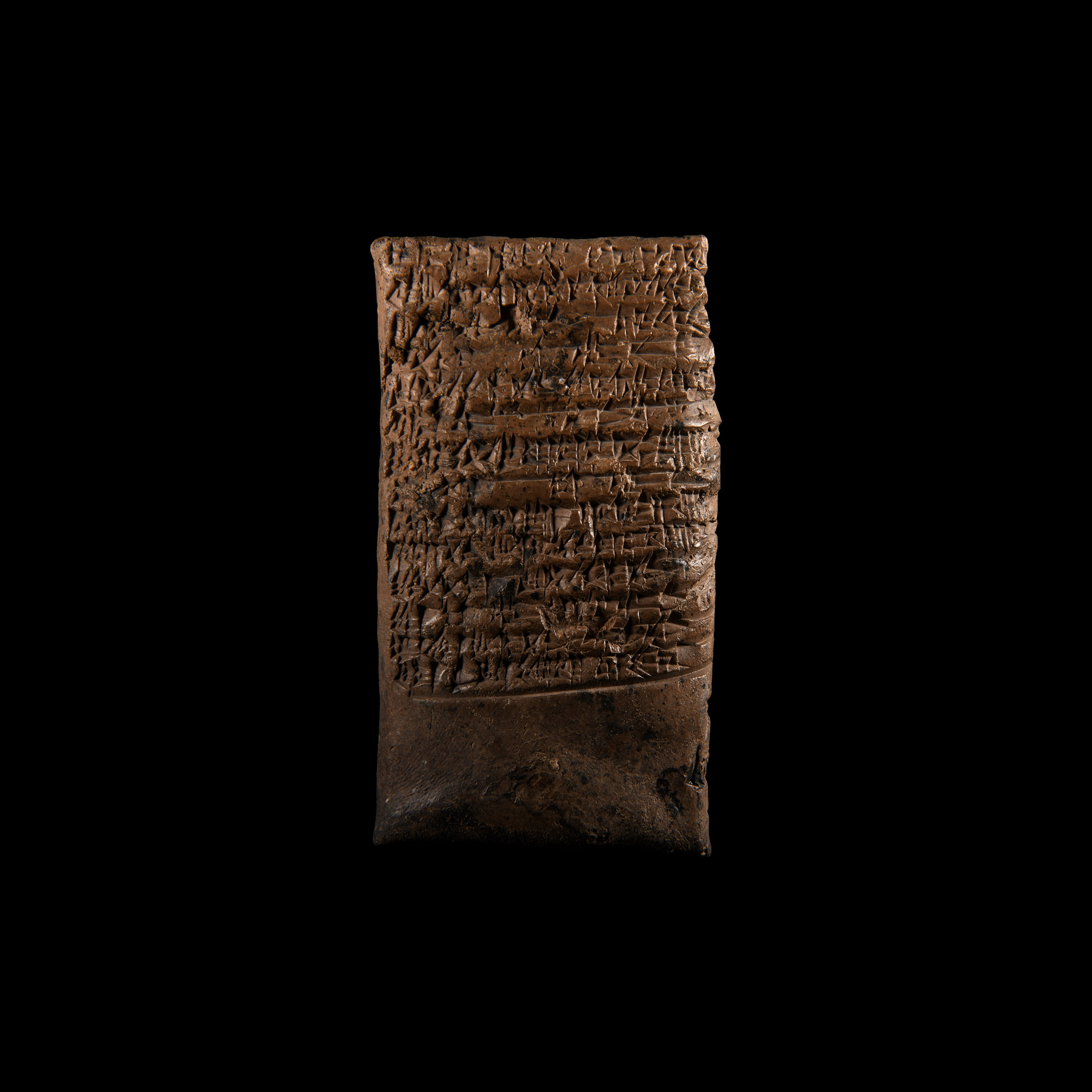
Old Babylonian Cuneiform Letter from King Illuni to Inzuršakšu King of Niqqum About Being Attacked by the Elamites
CIRCA 1730-1720 B.C.
3 3/4 in. (179 grams, 94 mm wide).
A rectangular bifacial clay tablet bearing cuneiform text to both principal faces and two side edges; a letter from Iluni, king of Ešnunna, to Inzuršakšu, king of Niqqum; Iluni answered to a letter from his ally who accused him of not having respected their agreements by not sending him an army as he had asked in a letter; he says he is attacked by the Elamites (neighbors of Niqqum), Iluni defends himself and considers that it is on the contrary Inzuršakšu who is in his wrong, he accuses him indeed not only of being the aggressor, but also of wanting to push him to enter in conflict with the Elamites, whom he was indeed himself a vassal, an incomplete draft of this letter was already known; excerpts: 'About the Elamite troop which rose against my country I had written to you to send me a reinforcement troop but you did not send me any troop. You have therefore violated your divine oath (...). This is what you have just written to me. It is you who have just violated your divine oath! Now you are willing to do bad things to this country and you want me to be angry with the Elamites. (...)'
ProvenanceSpecialised collection of cuneiform texts, the property of a London gentleman and housed in London before 1992.
Thence by descent to family members.
Examined by Professor Wilfrid George Lambert FBA (1926-2011), historian, archaeologist, and specialist in Assyriology and Near Eastern archaeology, in the late 1980s and early 1990s.
The collection is exceptional for the variety of types, including some very rare and well preserved examples.
A draft of this message was already known but the present one gives a more complete version.
CONDITIONTimeLine Auctions follows a vetting process to ensure the authenticity and legality of all items, reinforcing our commitment to integrity and responsible trading. Each antiquity, antique, and coin lot undergoes thorough examination by a vetting committee of at least ten external specialists, professional trade association members, scientists, and archaeologists: Our Vetting Process
AUCTIONS:
TimeLine is a leading auction house specialising in antiquities, ancient art, collectables, natural history, coins, medals, and books. Our auctions offer museums, collectors, historians, and enthusiasts the opportunity to acquire unique and historically significant pieces.
LOT 0174
Old Babylonian Cuneiform Letter from King Illuni to Inzuršakšu King of Niqqum About Being Attacked by the Elamites
Sold for (Inc. bp): £5,200
-
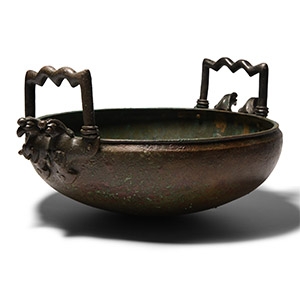
Western Asiatic Bronze Zoomorphic Cauldron
Hasanlu IV, circa 10th-8th century B.C.Estimate: £5,000 - 7,000 (+bp*)
Opening Bid: £2,500
A bronze calotte-shaped cauldron or basin with collared rectangular handles featuring scalloped grips along the upper edges, a pair of stylised bird of prey protomes beneath each, talons drawn up to their chests, bulging eyes, prominent hooked beaks, wings spread and fan-shaped tails. 679 grams, 23.5 cm wide
Ex Maurice Braham, 1970s. London collection, 1990s. Accompanied by previous typed and illustrated catalogue pages. This lot has been checked against the Interpol Database of stolen works of art and is accompanied by search certificate no.11640-199105.
A rare object. The limited number of parallels feature birds of a more schematic style. Only four published parallel cauldrons with bird protomes are known to exist. Given the quality of the ornament, such basis may have been used by members of the elite in Iron Age Iranian society, although their exact functions remains unclear. One 'orientalised' Etruscan bronze cauldron was found used as a cremation vessel, placed in a tumulus and associated with a localised 'heroic' burial context. Other feasible uses include high status drinking vessels or symbols of rank. -
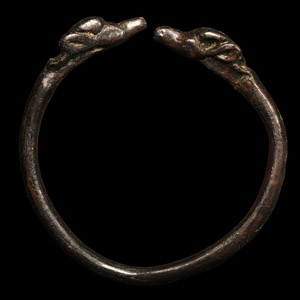
Luristan Zoomorphic Bracelet
Circa 8th-6th century B.C.Sold for (Inc. bp): £78
A copper-alloy bracelet composed of a round-section hoop and horned animal head terminals. 40 grams, 69 mm
with a London, UK gallery 1971-early 2000s. -
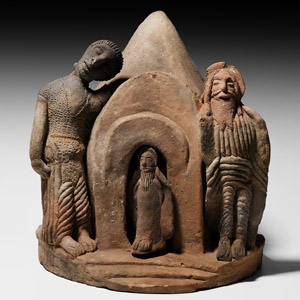
Western Asiatic Terracotta House with Inhabitants
20th century A.D.Sold for (Inc. bp): £91
A terracotta diorama comprising a Middle Eastern conical hut or dwelling with arched frame around the D-shaped entrance; two figures placed beside the doorway: to the left a tall slender with luxuriant curls male wearing a textured shirt (mailcoat?) and ruched trousers, barefoot, resting his head on the frame; to the right a shorter bearded male waring a cloak and quilted tunic and trousers. 9.1 kg, 27 cm
Acquired 1970-1999. Ex collection of deceased Mayfair gentleman.
