
Loading, please wait...
LOT 0209
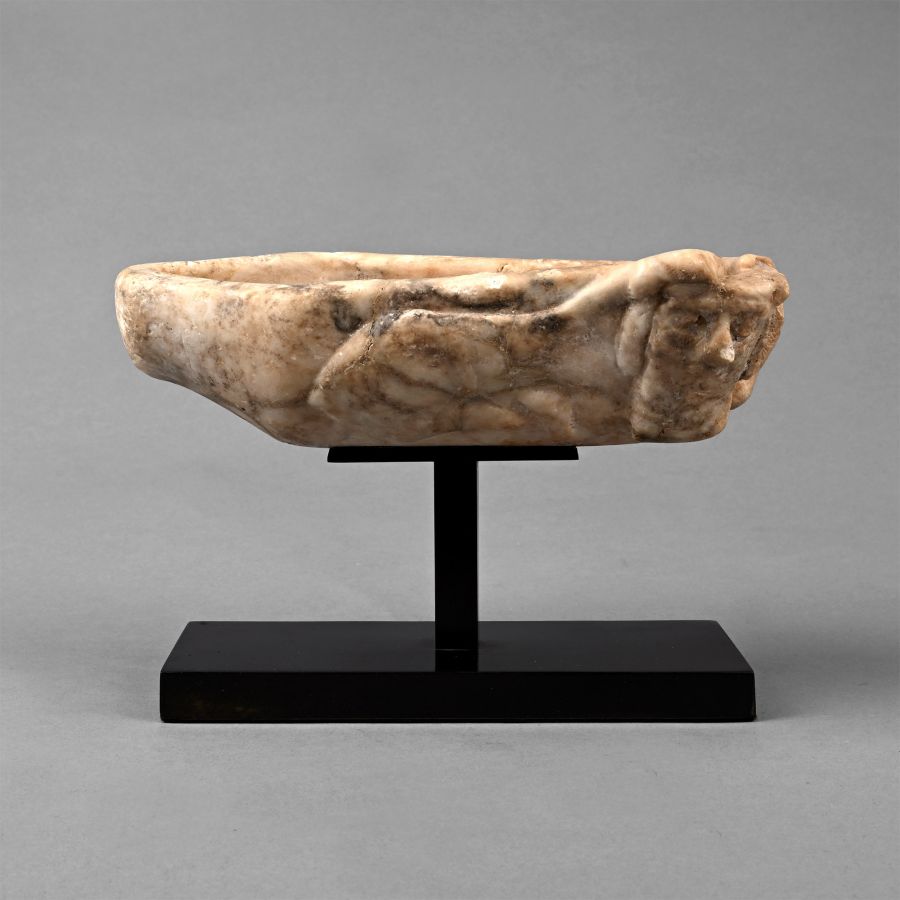
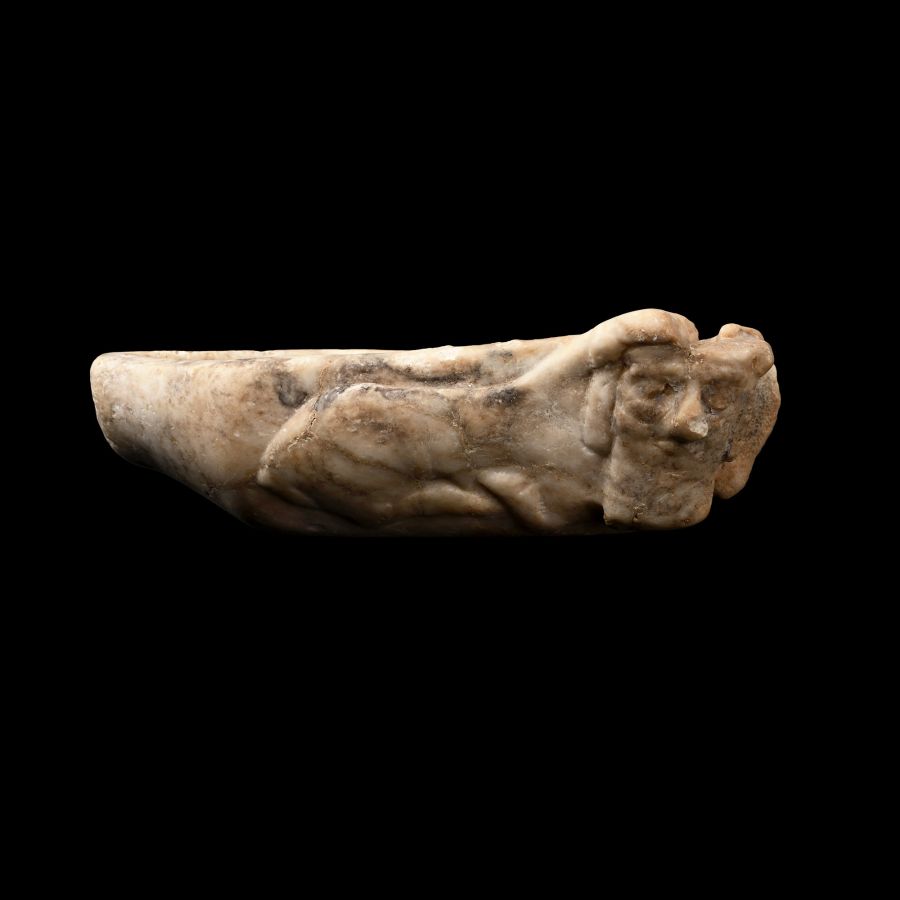
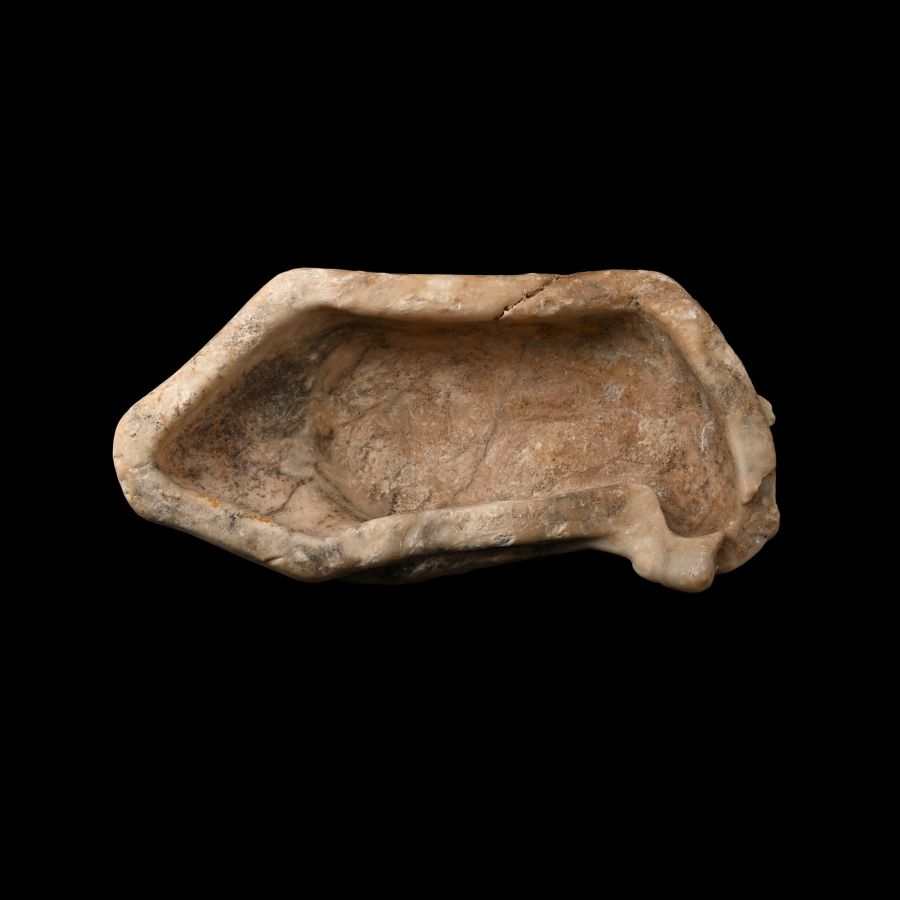
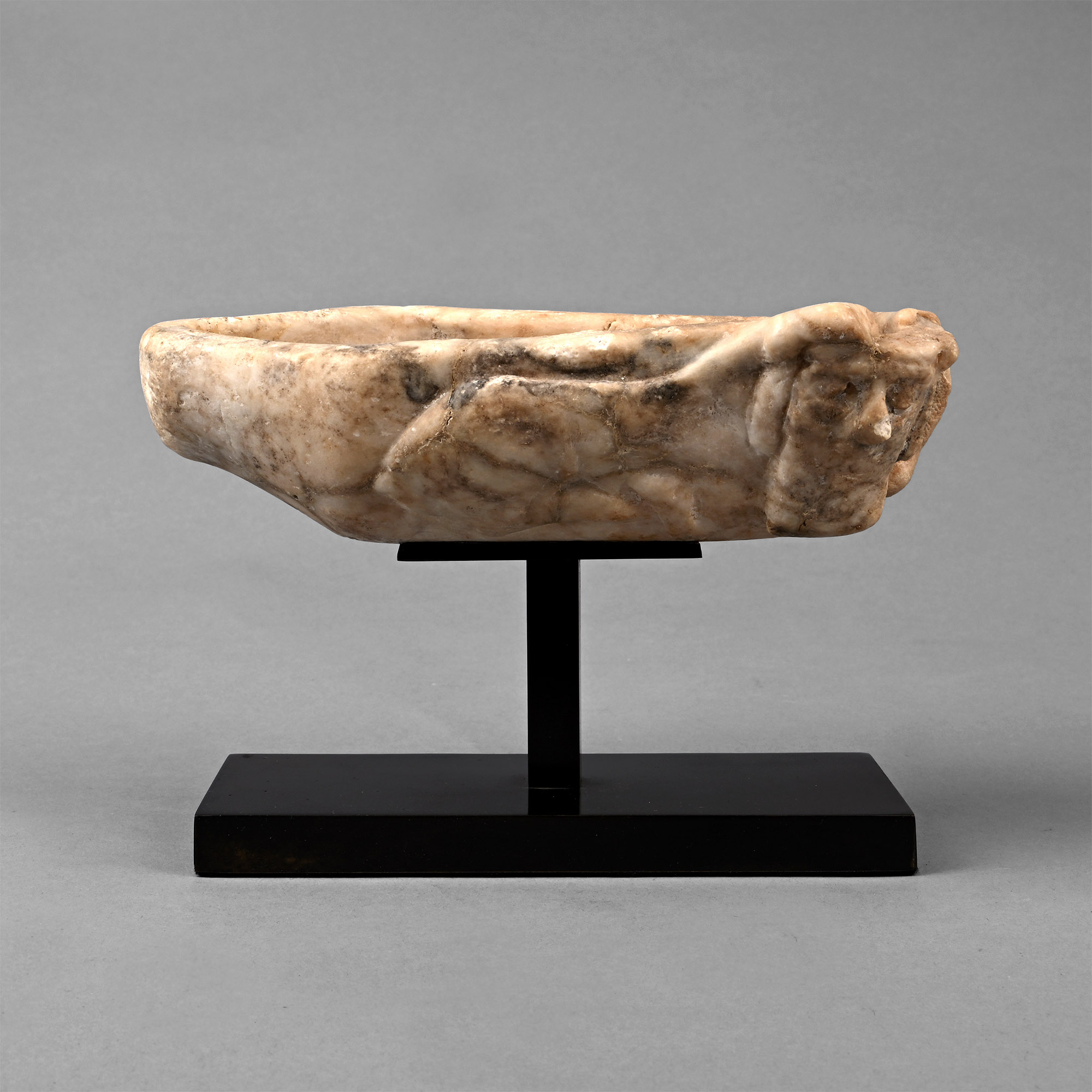
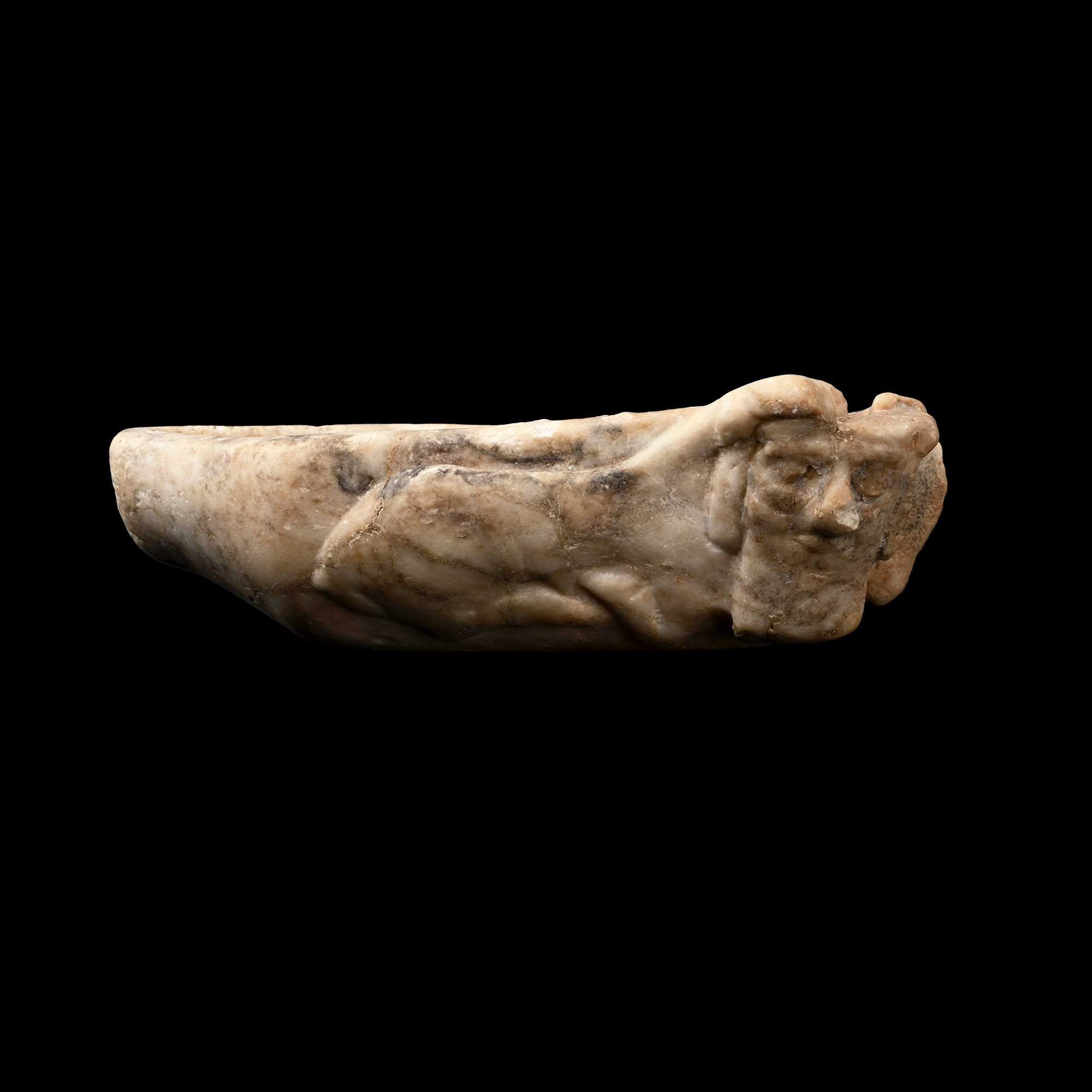
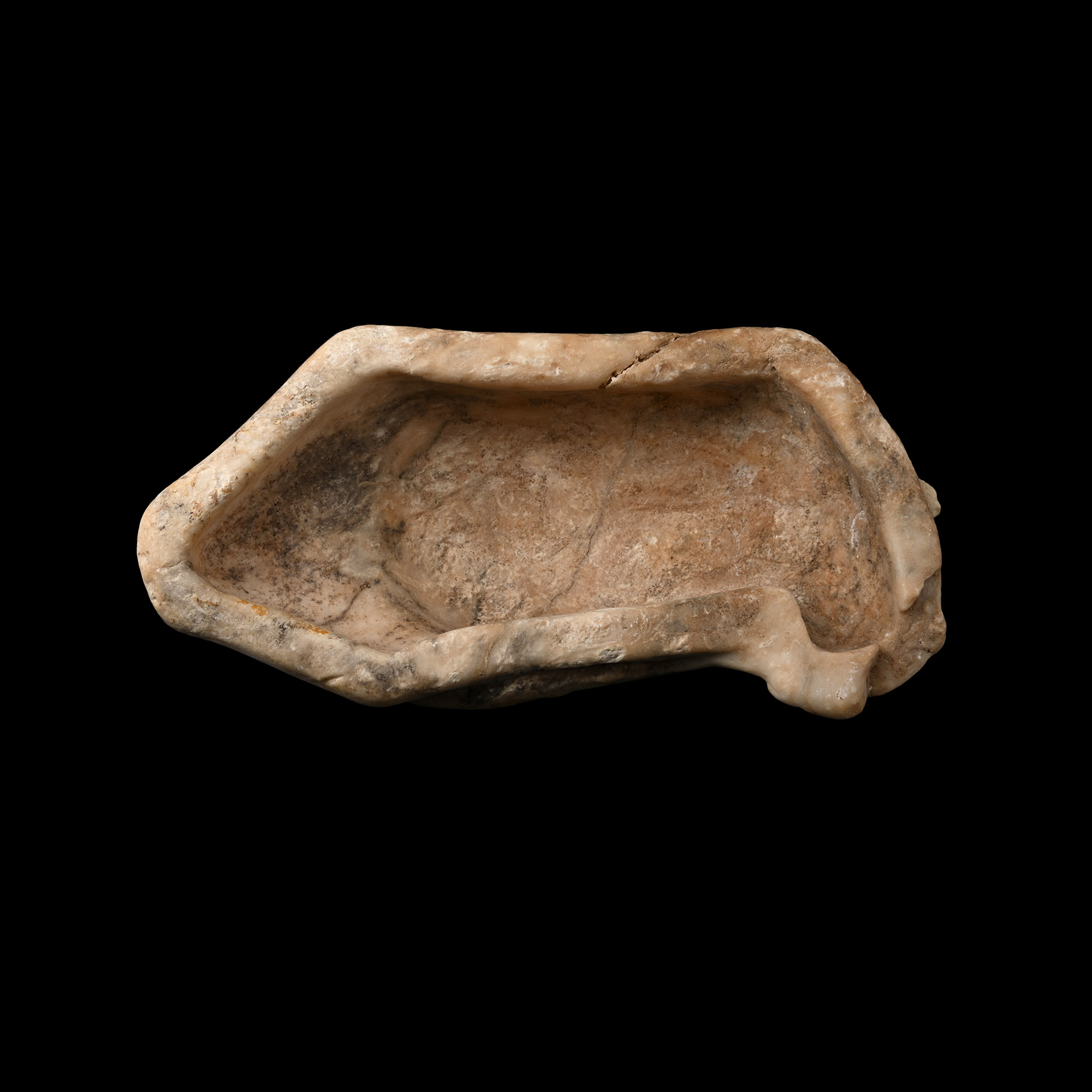
Old Babylonian Alabaster Vessel with Recumbent Lamassu
EARLY 2ND MILLENNIUM B.C.
7 3/4 in. (781 grams, 19.5 cm (1.12 kg total including stand)).
Deep elongated vessel, carved with an image of a reclining Lamassu on one side, the hind legs and the right front leg tucked beneath the body, the left front leg raised on the side of the head, the head modelled in the half-round with a characteristic long beard and hair framing the face; accompanied by a display stand.
ProvenanceFrom an important London-Geneva collection, formed before 1988, by family descent.
This lot has been checked against the Interpol Database of stolen works of art and is accompanied by search certificate number no.13371-258817.
Cf. a similar, slightly smaller vessel in the University of Pennsylvania Museum of Archaeology and Anthropology, Philadelphia, inv. B17087, published in Aruz, J. (ed.), Art of the First Cities. The Third Millennium B.C. from the Mediterranean to the Indus, New York - New Haven - London, 2003, catalogue no. 69 ('Pouring vessel'); see also for images of early Lamassu Frankfort, H., More Sculpture from the Diyala Region, OIP 60, Chicago, 1943, pls.49-51.
FootnotesThe Lamassu was a protective deity related to several Mesopotamian civilisations (Assyrian in particular, where it was represented as a winged bull-man). They were considered beneficial and protective spirits, guardians of the doors with an apotropaic function, destined to ward off dark or hostile forces.
CONDITIONTimeLine Auctions follows a vetting process to ensure the authenticity and legality of all items, reinforcing our commitment to integrity and responsible trading. Each antiquity, antique, and coin lot undergoes thorough examination by a vetting committee of at least ten external specialists, professional trade association members, scientists, and archaeologists: Our Vetting Process
AUCTIONS:
TimeLine is a leading auction house specialising in antiquities, ancient art, collectables, natural history, coins, medals, and books. Our auctions offer museums, collectors, historians, and enthusiasts the opportunity to acquire unique and historically significant pieces.
LOT 0209
Old Babylonian Alabaster Vessel with Recumbent Lamassu
Estimate £3,000 - 4,000€3,480 - 4,640 (for guidance only)$4,050 - 5,400 (for guidance only)
-
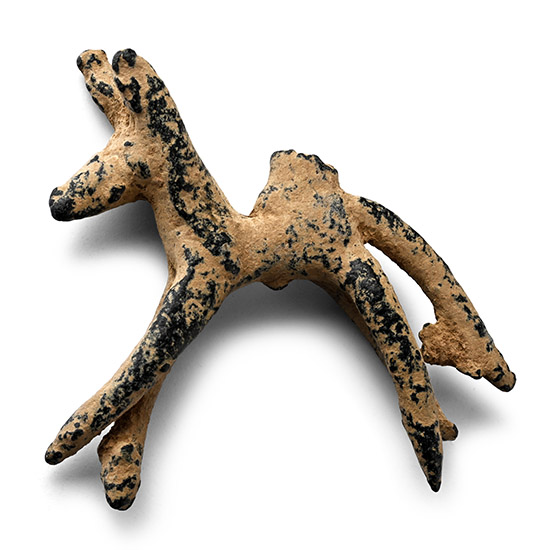
Luristan Bronze Model of a Horse
1st millennium B.C.Sold for (Inc. bp): £91
Featuring a thin body and elongated legs, a long tail pointing downwards and a short neck supporting an emphasised with pointed ears. 12.16 grams, 40 mm
Ex London, UK, collection, formed from the 1990s. Accompanied by a previously illustrated catalogue card with provenance. -
.jpg)
Uzbek Double-Sided Pringi Tunic
20th century A.D.Sold for (Inc. bp): £26
Reversible type in olive green with bands of floral and geometric embroidered designs, and plain brown cloth. 1.8 kg, 1.18 m long
Private collection, UK. -
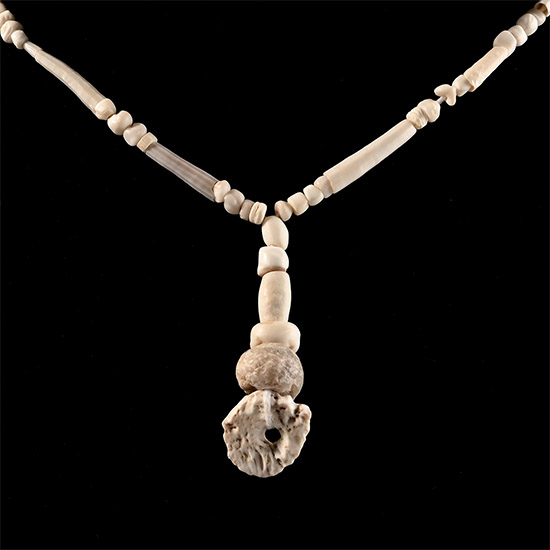
Western Asiatic Cream Glass and Other Bead Necklace String
1st millennium B.C. and laterSold for (Inc. bp): £20
Composed of mainly oblate and tubular beads with larger beads as the central feature, restrung. 12.5 grams, 30.6 cm
Acquired in the 1990s. Ex London, UK, collection.
