
Loading, please wait...

LOT 1501
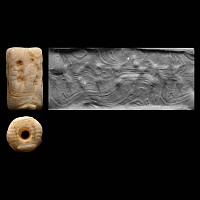
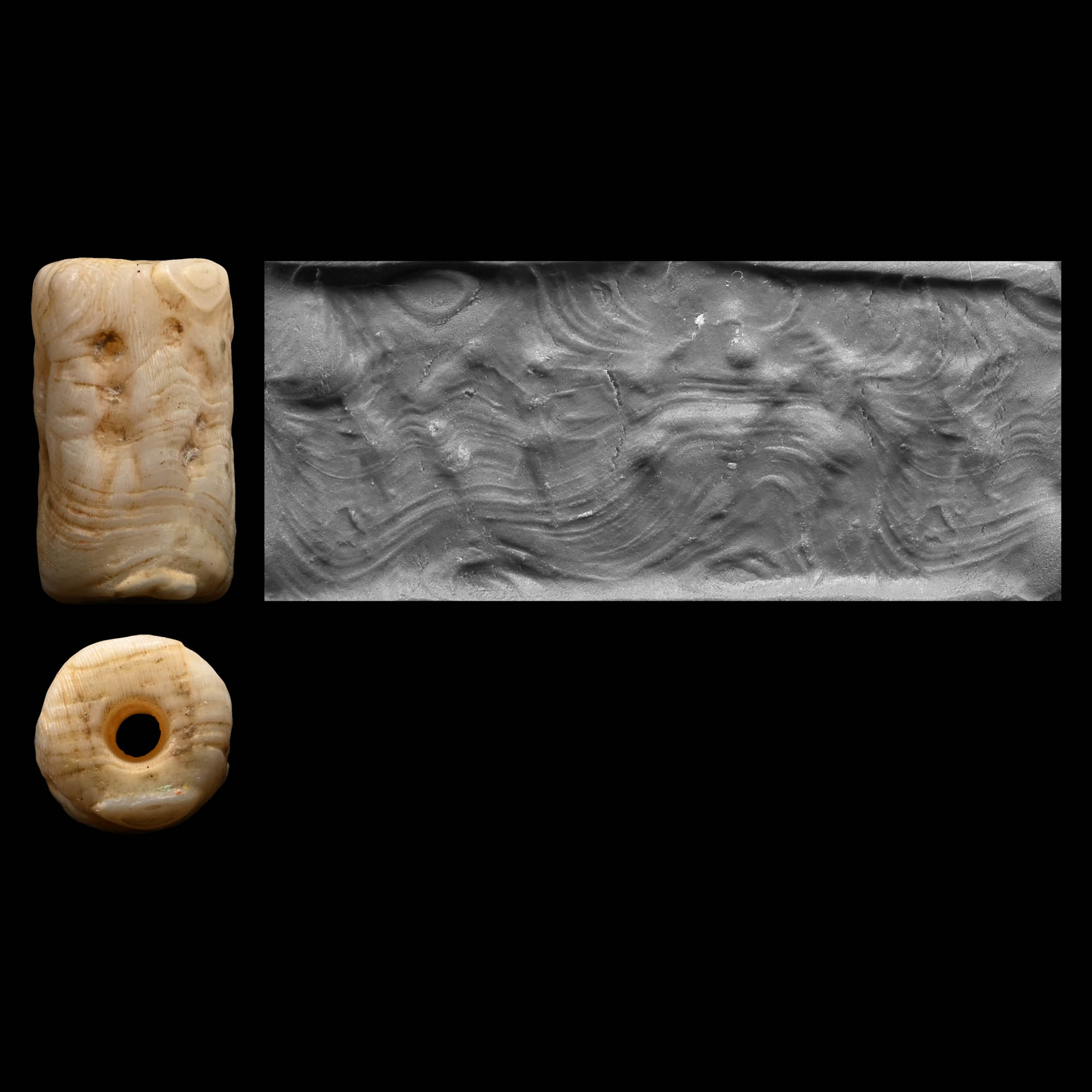
Old Babylonian Alabaster Cylinder Seal
EARLY 2ND MILLENNIUM B.C.
1/2 in. (1.16 grams, 14 mm).
With frieze of robed figures in procession; supplied with a museum-quality impression.
ProvenanceEx Cotswold collection, UK, 1980-1990.
Examined by Professor Wilfrid George Lambert FBA (1926-2011), historian, archaeologist, and specialist in Assyriology and Near Eastern archaeology, in the late 1980s and 1990s.
This lot has been cleared against the Art Loss Register database, and is accompanied by an illustrated lot declaration signed by the Head of the Antiquities Department, Dr Raffaele D'Amato.
TimeLine Auctions follows a vetting process to ensure the authenticity and legality of all items, reinforcing our commitment to integrity and responsible trading. Each antiquity, antique, and coin lot undergoes thorough examination by a vetting committee of at least ten external specialists, professional trade association members, scientists, and archaeologists: Our Vetting Process
AUCTIONS:
TimeLine is a leading auction house specialising in antiquities, ancient art, collectables, natural history, coins, medals, and books. Our auctions offer museums, collectors, historians, and enthusiasts the opportunity to acquire unique and historically significant pieces.
-
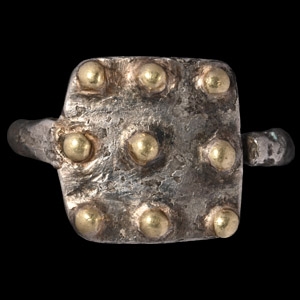
Western Asiatic Silver-Gilt Ring with Bosses
Eastern Roman Period, circa 3rd-5th century A.D.Sold for (Inc. bp): £169
Penannular in form with square bezel, nine gilt bosses. 4.58 grams, 23.23 mm overall, 18.16 mm internal diameter (approximate size British N 1/2, USA 6 3/4, Europe 14.35, Japan 13)
Ex German art market, 2000s. Acquired from an EU collector living in London. From the collection of Surrey, UK, gentleman. This lot has been cleared against the Art Loss Register database, and is accompanied by an illustrated lot declaration signed by the Head of the Antiquities Department, Dr Raffaele D'Amato. -
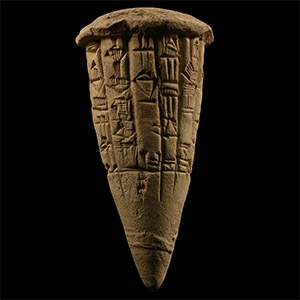
Sumerian Terracotta Foundation Cone From Lagash
Circa 2100 B.C.Sold for (Inc. bp): £3,120
Conical with a domed top, ten-line inscription of Gudea of Lagash, giving a record of the building of Eninnu, the temple of Ningirsu: 'For Ningirsu, might warrior of Enlil, Gudea, ruler of Lagash, produced everything appropriate and built for him Eninnu, this shining Imdugud bird, and restored it.'. 192 grams, 11 cm
From an important collection formed before 1988. Examined by Professor Wilfrid George Lambert FBA (1926-2011), historian, archaeologist, and specialist in Assyriology and Near Eastern archaeology, in the late 1980s and 1990s. Accompanied by a copy of a scholarly note by Professor Wilfrid George Lambert. This lot has been cleared against the Art Loss Register database, and is accompanied by an illustrated lot declaration signed by the Head of the Antiquities Department, Dr Raffaele D'Amato. -
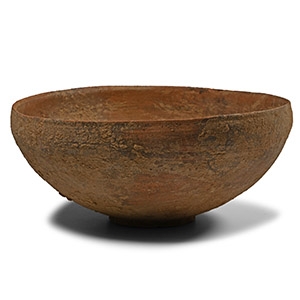
Western Asiatic Terracotta Bowl with Shallow Foot
1st millennium B.C.Sold for (Inc. bp): £33
Featuring a wide shallow body and a small raised disc foot. 462 grams, 19 cm
Ex London, UK, collection, 1990s. Accompanied by an old dealer's ticket. This lot has been cleared against the Art Loss Register database, and is accompanied by an illustrated lot declaration signed by the Head of the Antiquities Department, Dr Raffaele D'Amato.
