
Loading, please wait...
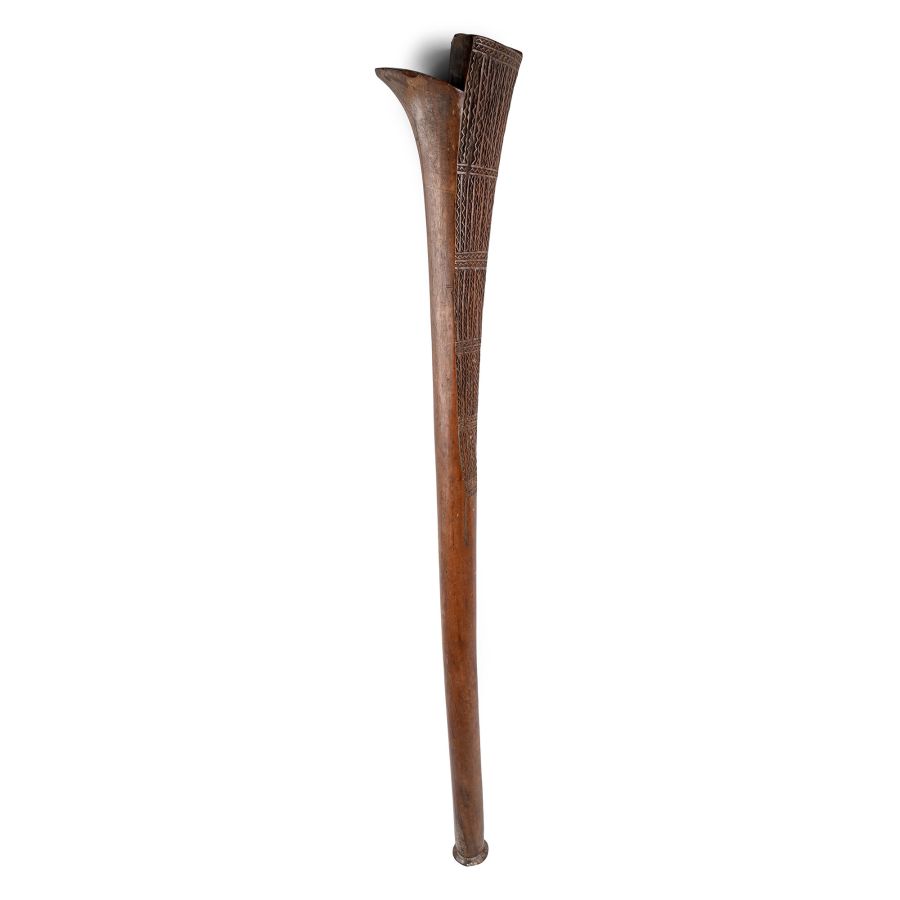


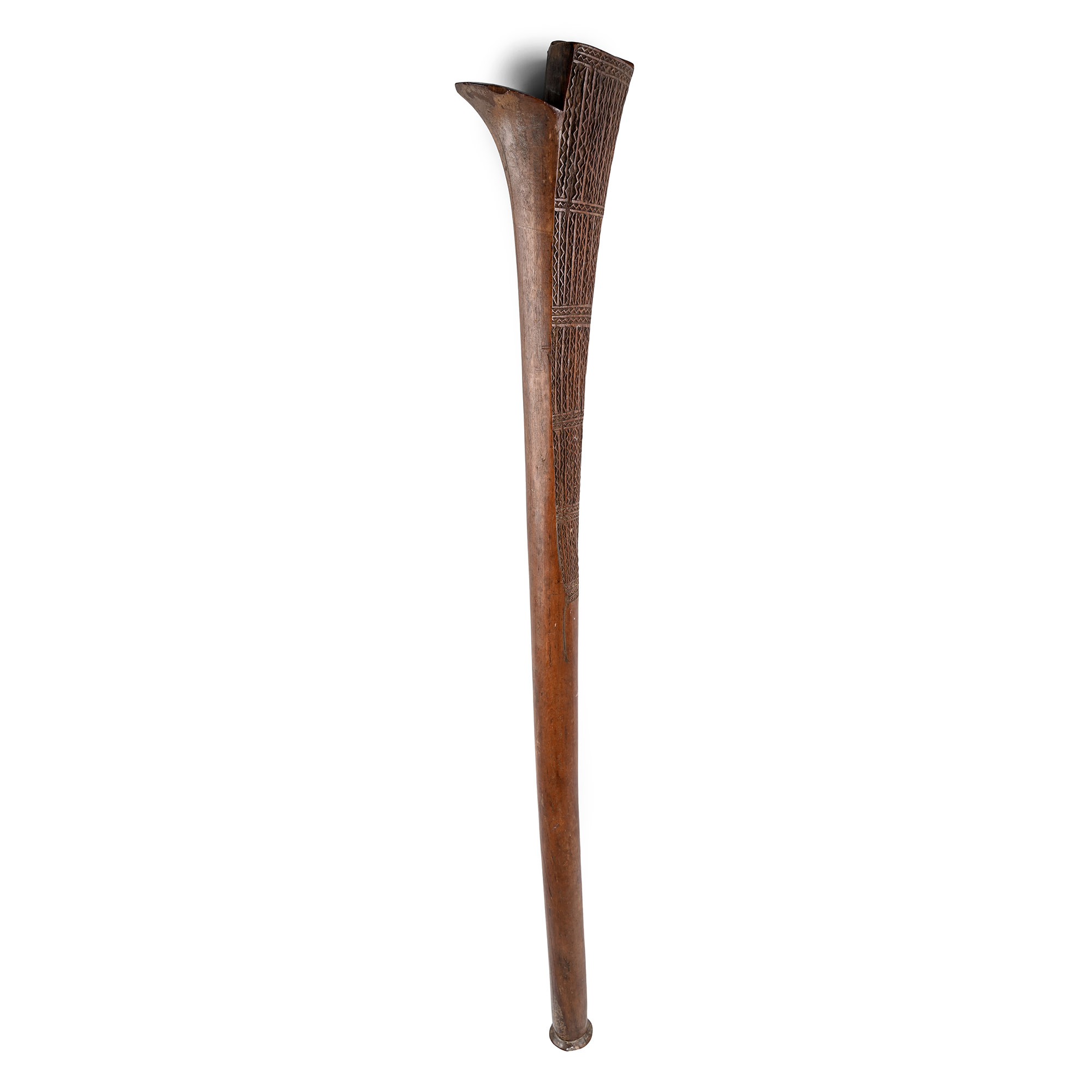
LOT 2763
Oceanic Honey-Coloured Wooden 'Gunstock' Sali War Club
MELANESIA, FIJI, LATE 19TH-EARLY 20TH CENTURY A.D.
37 3/8 in. (1.61 kg, 95 cm).
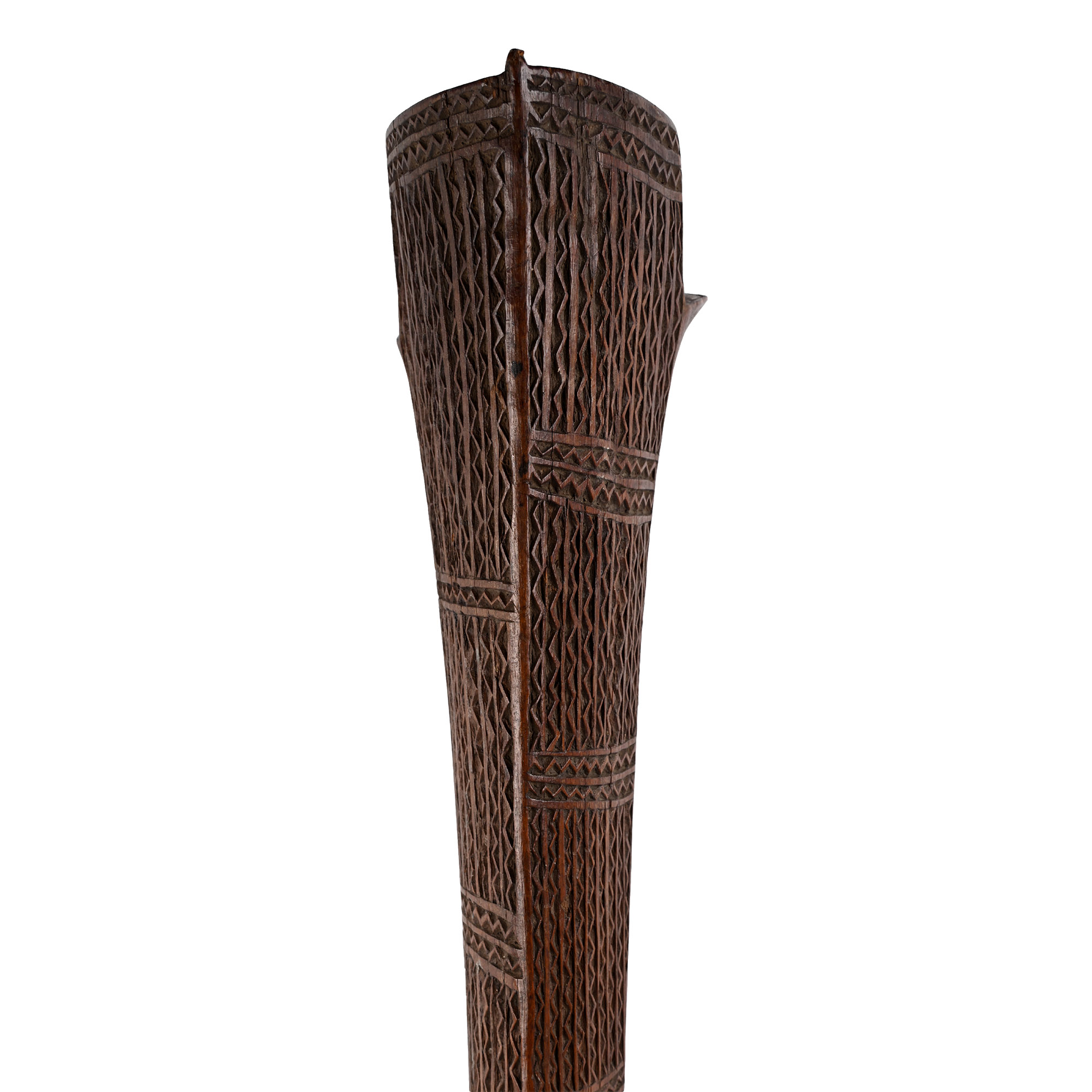
Comprising a round-section haft with a flanged butt, a lozenge-section head with a stepped beak on one face, panels of dense chip-carved geometric ornament to the rear.
ProvenanceFrom the collection of Mr Carlos Bahamonde, Manchester, UK.
CONDITIONTimeLine Auctions follows a vetting process to ensure the authenticity and legality of all items, reinforcing our commitment to integrity and responsible trading. Each antiquity, antique, and coin lot undergoes thorough examination by a vetting committee of at least ten external specialists, professional trade association members, scientists, and archaeologists: Our Vetting Process
AUCTIONS:
TimeLine is a leading auction house specialising in antiquities, ancient art, collectables, natural history, coins, medals, and books. Our auctions offer museums, collectors, historians, and enthusiasts the opportunity to acquire unique and historically significant pieces.
LOT 2763
Oceanic Honey-Coloured Wooden 'Gunstock' Sali War Club
Estimate £500 - 700€580 - 810 (for guidance only)$680 - 950 (for guidance only)
Opening Bid
£200 (EUR 232; USD 270) +BP*
-
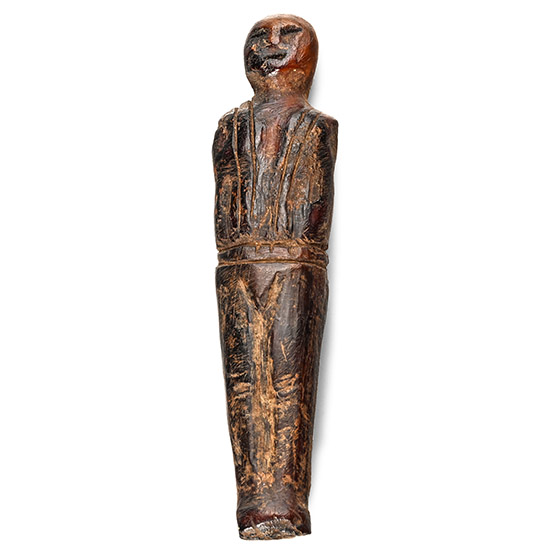
Native North American Carved Fossilized Walrus Bone Figure
Alaska, circa 1,000 A.D.Estimate: £400 - 600 (+bp*)
Opening Bid: £200
Modelled in the round as a standing female figure with a rounded bald head, incised eye and mouth, wearing a waistband above hips and straps(?) to the torso, emphasised carved vulva detail; with a hand-written tag reading 'Ivory doll, ca. 1000 AD, Exc. Wales, Alaska'. 19.4 grams, 79 mm
Ex Wales, Alaska. Ex John and Valerie Arieta, 1993. Dr Alan Black collection. From the collection of Mr Carlos Bahamonde, Manchester, UK. -
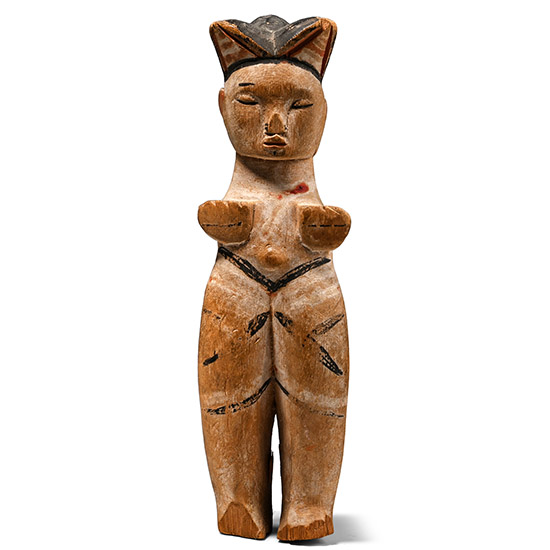
African Wooden Ibibio Doll Figurine
19th century A.D.Estimate: £40 - 60 (+bp*)
Opening Bid: £5
Carved in the round with three-lobed headdress, painted hatched detailing to the body. 105 grams, 20.3 cm
Acquired on the UK art market. Property of a Suffolk, UK, gentleman. -
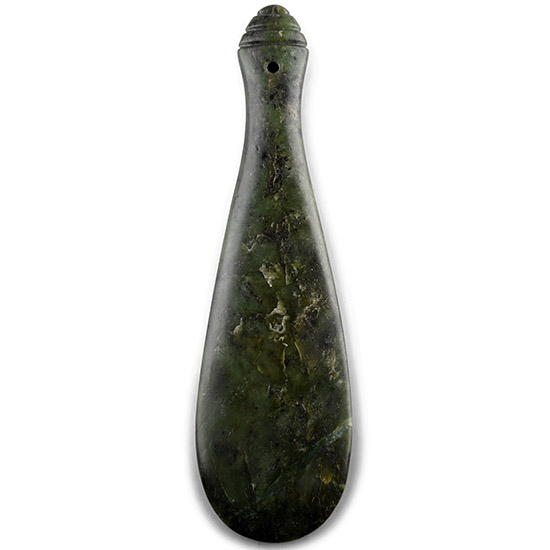
Massive Oceanic Polished Green Nephrite Jade Maori Hand War Club Mere Pounamu
New Zealand, early-mid 20th century A.D.Estimate: £800 - 1,000 (+bp*)
Opening Bid: £400
Polished and of flattened spatulate form with a ribbed terminal pierced for attachment. 1.33 kg, 37 cm
From the collection of Mr Carlos Bahamonde, Manchester, UK.
Pounamu was highly prized by Māori, and the mere pounamu, as the weapon of a chief or rangatira, was the most revered of all Māori weapons. These mere were passed down through generations. The mere was a type of Māori fighting mace also used as a symbol of authority. The mere is one of the three types of patu fighting mace. It is the simplest of the three. It is paddle-shaped and flat and wide at the striking end. It has three or four grooves in the handle, along with a hole through which a cord or strap passes to attach it to the wrist.
