
Loading, please wait...


LOT 0386
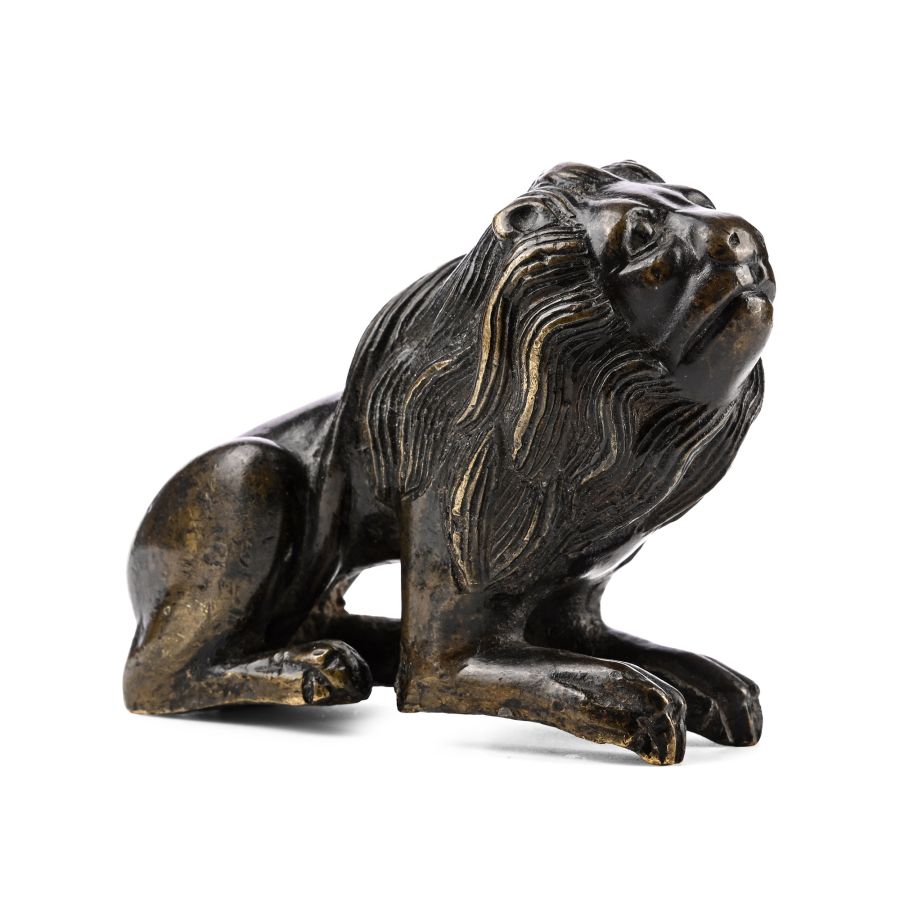
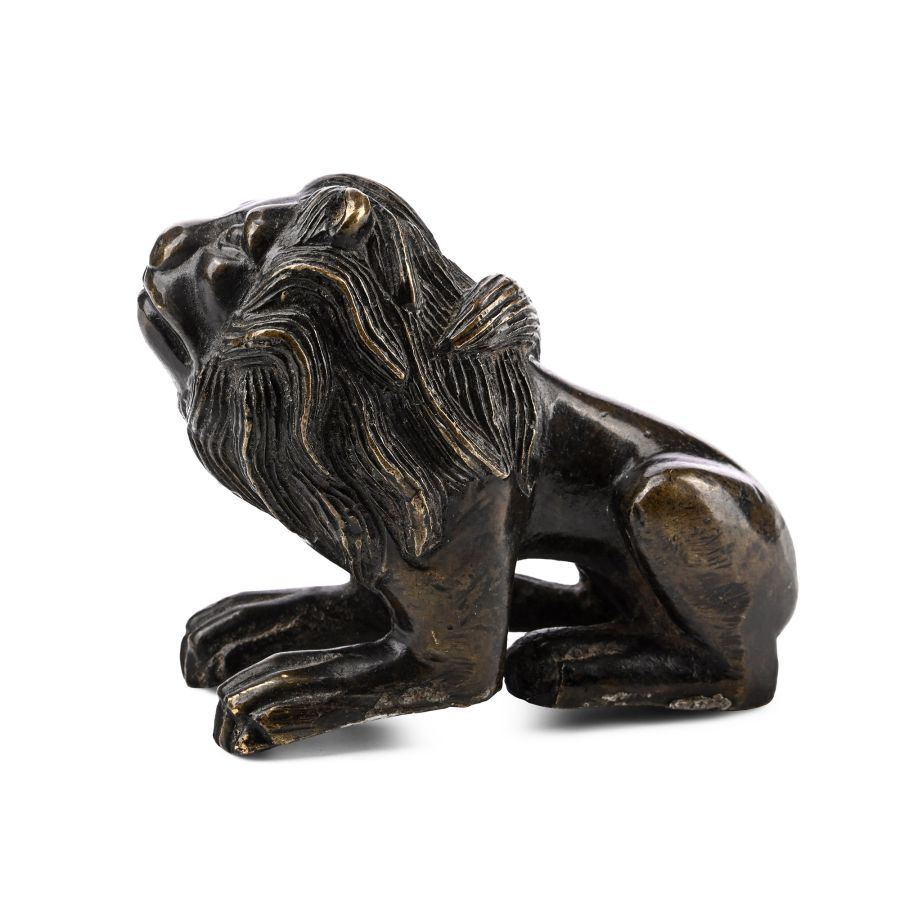
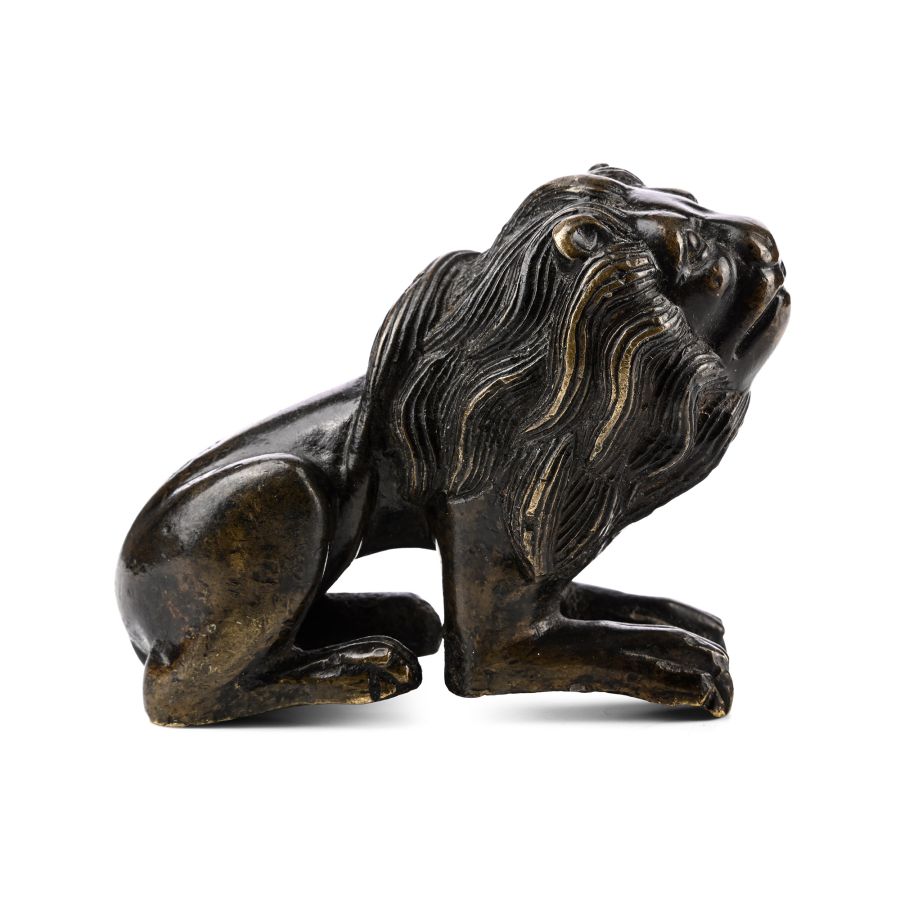
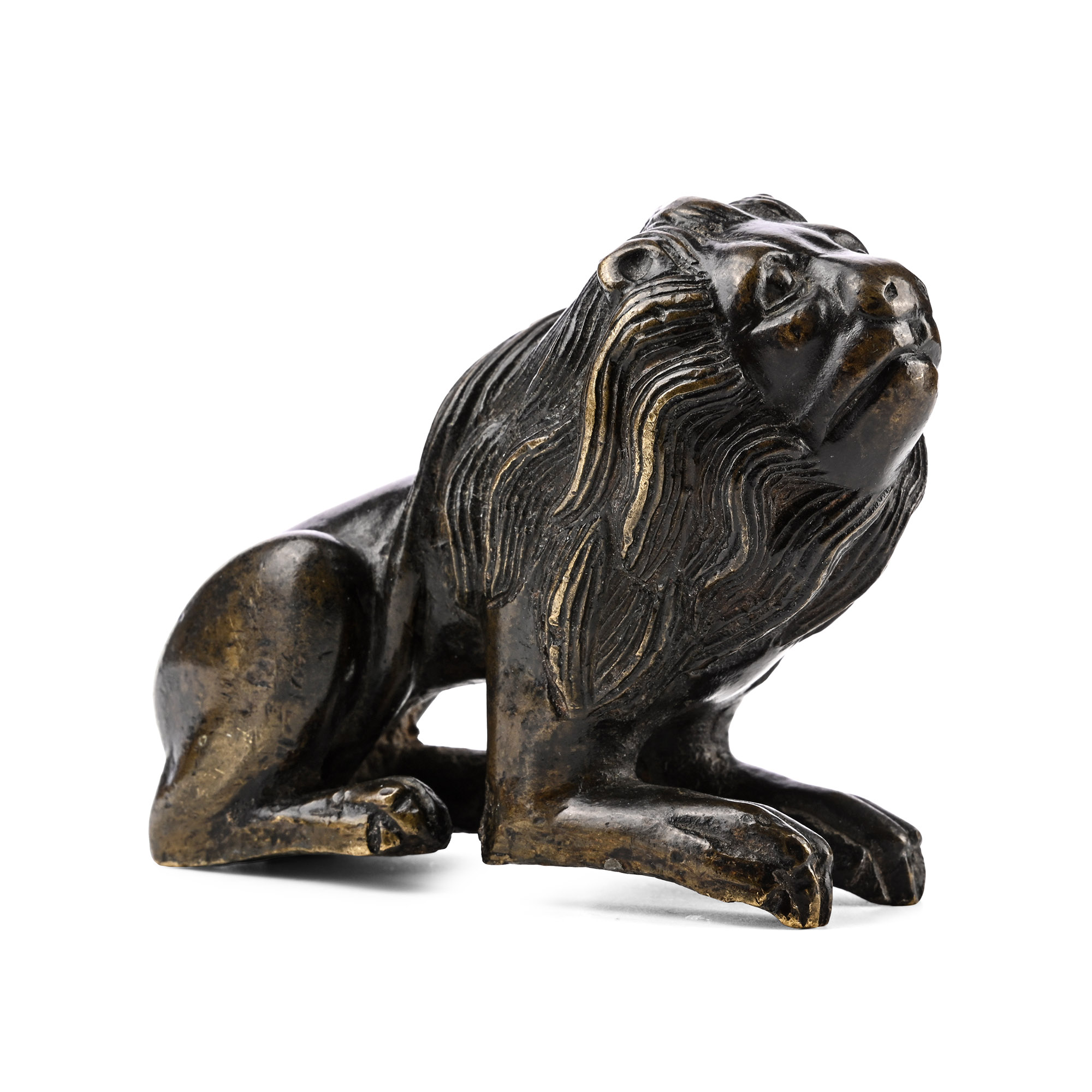
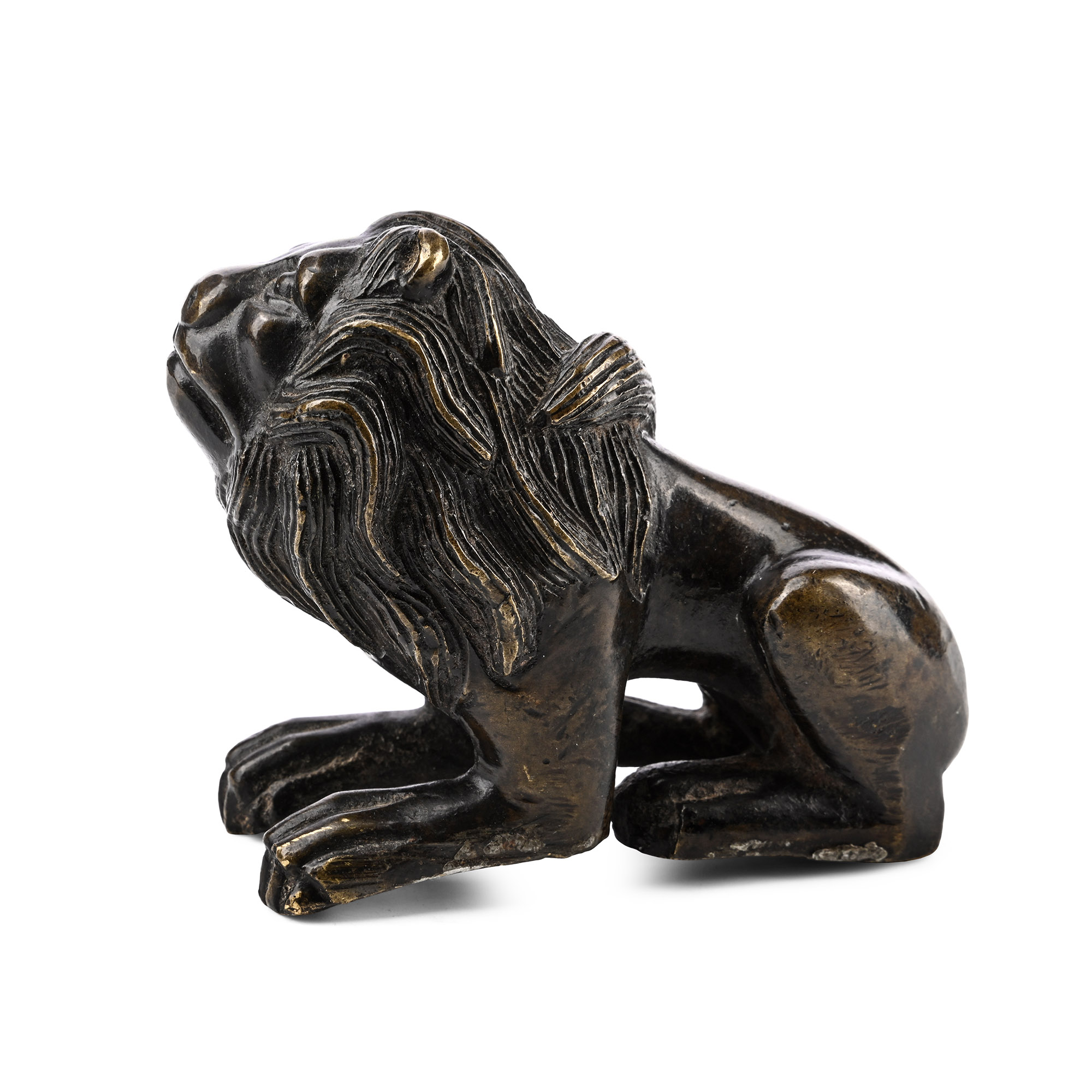
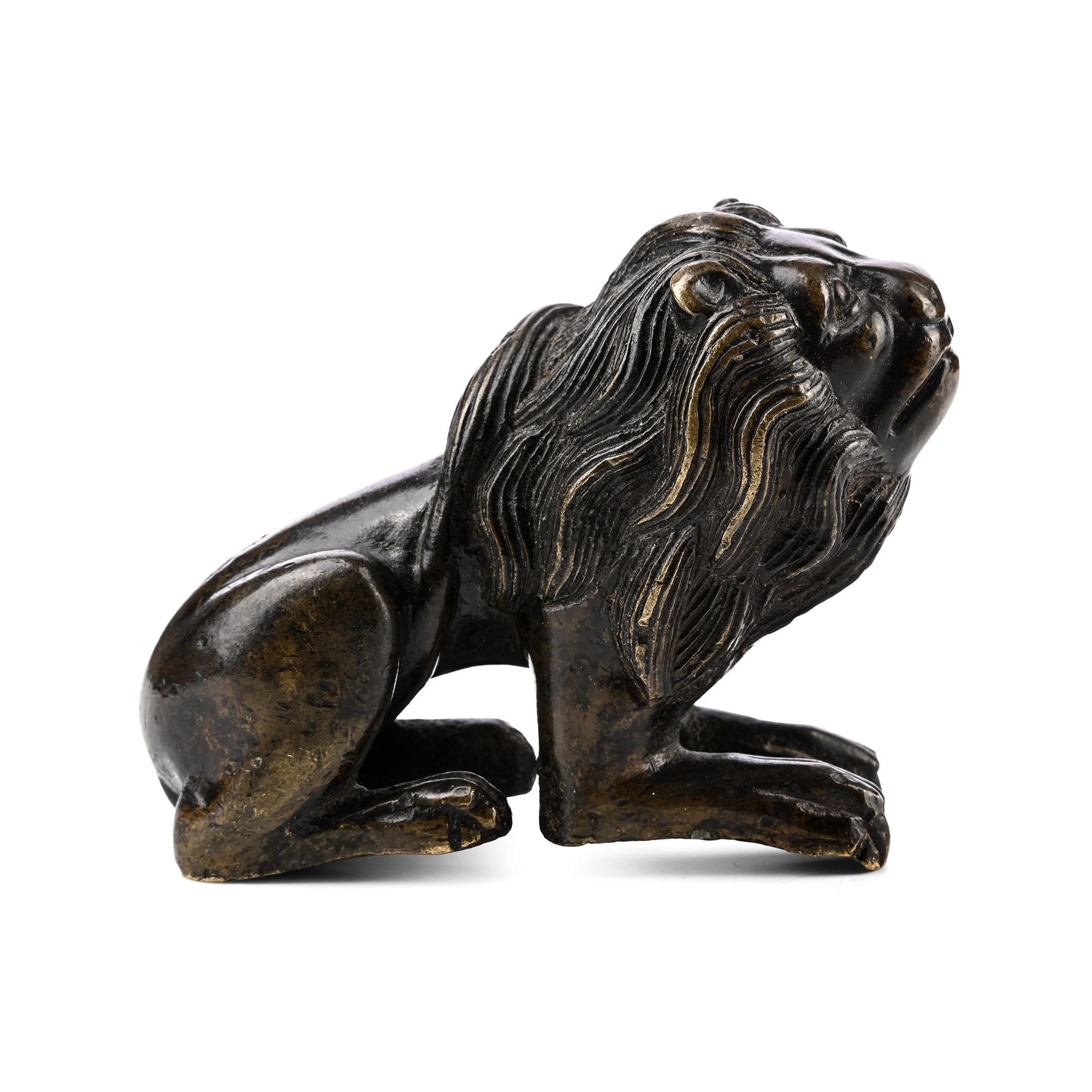
Nuremberg Brass Lion Statue
GERMANY, 16TH CENTURY A.D.
3 3/4 in. (855 grams, 96 mm).
Modelled in a half-seated pose, gazing upwards with compact body, broad forequarters, the mane rendered in long, parallel strands; the tail emerging from underneath the body and resting diagonally on top of the neck.
ProvenanceAcquired on the European art market.
FootnotesThe treatment reflects the continuation of late Gothic conventions within German workshops, while also aligning with the more classicising tendencies found in North Italian bronze production of the period. The anatomical structure is simplified yet purposeful, characteristic of functional or cabinet bronzes produced across central Europe in the sixteenth century. Its scale and form correspond to small bronzes intended for Kunstkammer settings or as elements within larger composite objects such as inkstands or caskets, where the lion served as an emblem of vigilance, authority, and learned taste.
CONDITIONTimeLine Auctions follows a vetting process to ensure the authenticity and legality of all items, reinforcing our commitment to integrity and responsible trading. Each antiquity, antique, and coin lot undergoes thorough examination by a vetting committee of at least ten external specialists, professional trade association members, scientists, and archaeologists: Our Vetting Process
AUCTIONS:
TimeLine is a leading auction house specialising in antiquities, ancient art, collectables, natural history, coins, medals, and books. Our auctions offer museums, collectors, historians, and enthusiasts the opportunity to acquire unique and historically significant pieces.
LOT 0386
Nuremberg Brass Lion Statue
Estimate £500 - 700€580 - 810 (for guidance only)$680 - 950 (for guidance only)
-
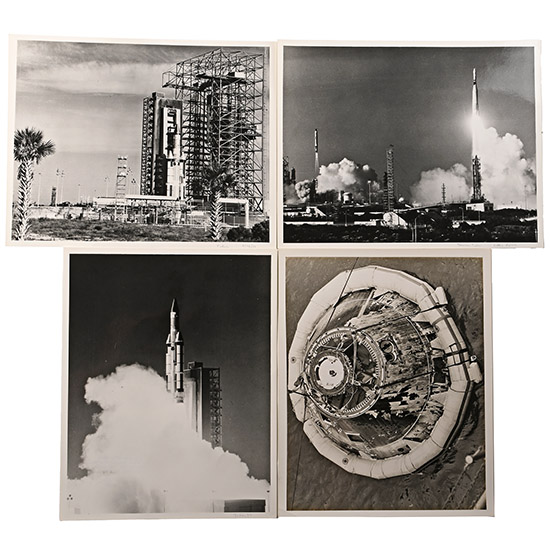
Original NASA Press Photograph Group
1960s A.D.Sold for (Inc. bp): £46
Comprising: monochrome photographic print of a rocket on the launchpad, endorsed 'US Air Force Photo... 8-26-66 CKMYA Titan-Project OfficeSunrise Pre-Launch after Service Tower removal (Palm Tree in foreground) Unclassified'; monochrome photographic print of a rocket leaving the launchpad, endorsed 'US Air Force Photo..Air Force eastern Test [...] Photographic Laboratory Operated by RCA. CKMYA Titan-3C. Launch of Titan-3C Unclassified.'; monochrome photographic print of two rockets leaving their launchpads, endorsed 'US Air Force Photo / Air Force Eastern Test Range Photographic Laboratory Operated by RCA. NASA/GEMINI & Atlas Agena. Unclassified.'; monochrome photographic print of Apollo 9 capsule with flotation ring, endorsed 'John F. Kennedy Space Center. NASA Kennedy Space Center. Florida 32899. For Release March 13, 1969. Photo No. 108-KSC-69P-186 69-H-453. Aboard the USS Guadalcanal - The scorched Apollo 9 spacecraft, cradled in a foatation collar, is hoisted aboard the USS Guadalcanal. prime recovery ship, after safely carrying astronauts James A. McDivitt, David P. Scott and Russell L. Schweikart to splashdown in the Atlantic Ocean. The spacecraft shielded the astronauts from reentry temperatures which exceeded 2,000 degrees. They splashed down at 12:01 pm EST March 13, 1969, at the completion of their 10-day earth orbital mission to test a lunar module spacecraft. Ipact was less than 5 miles from the recovery ship and 780 nautical miles southast of Cape Kennedy. They were launched by an Apolo/Satrn V space vehicle March 3 from the Kennedy Space Center. The National Aeronautics and Space Administration directs the Apollo program. [copyright information.]' 74 grams total, 25.6 x 20.4 cm each
Acquired on the USA art market. Property of a Harwich, UK, collector. -
.jpg)
Post Medieval Iron Axehead
17th-18th century A.D.Sold for (Inc. bp): £39
With a wide, curving blade and an oval socket. 839 grams, 15.6 cm
Property of a Nottinghamshire, UK, gentleman. -
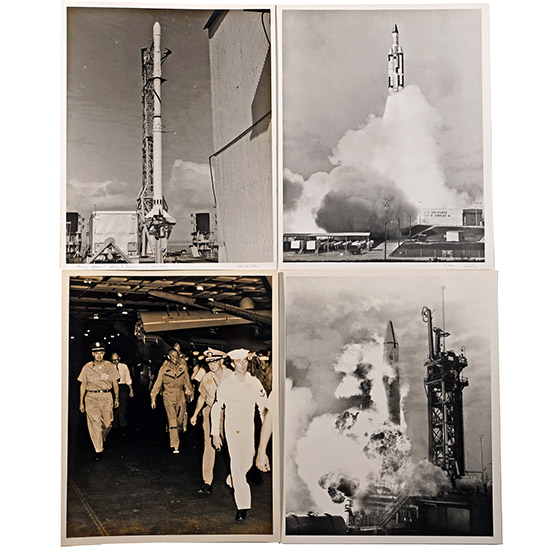
Original NASA Press Photograph Group
1962-1970 A.D.Sold for (Inc. bp): £59
Comprising monochrome gloss prints of NASA launches: an astronaut walking through a crowd of air force and navy personnel, endorsed 'NASA For Release February 22, 1962. NASA Photo no. 62-MA6-121. Cape Canaveral, FLA Aboard USS Randolph Astronaut John H. Glenn walks down the aircraft carrier's hangar deck following world orbital flight.'; rocket on launchpad in flames, endorsed 'Nasa Photo Unclassified 3-2-65 Nasa/Centaur. Cape Kennedy, FLA : 8:25 A.M. EST. March 2. 1966. The fifth experimental Atlas Centaur launch vehicle lifted off the pad, and the main stage prematurely cut off, causing the vehicle to fall back on the pad and explode.'; rocket leaving launchpad, endorsed 'U.S.Air Force Photo / Air Force Eastern T[est] Range / Photographic lLboratory Operated by [Y}CA. / P-66-75271 8/25/66 C[.]YA, Titan... Lift off of Titan ...Unclassified'; rocket on launchpad, endorsed 'NASA For Release: December 12, 1970 / Photo No. 70-H-1641 70-HC-1160 ... Kenya, Africa -- Italy to launch U.S. satellite - The first American satellite to be launched by another country will be placed in Earth orbit by a team of Italian space engineers operating from a mobile launch platform located in the Indian Ocean. The launch will take place off the coast of Kenya in East Africa, no earlier than December 12. The spacecraft is the Small Astronomy Satellite-A (SAS-A) 42 in the National Aeronautics and Space Administration's Explorer series. It is the first satellite equipped with sensitive experiments to detect high-energy X-ray sources in space, and is also known as the X-ray Explorer. Successful operation of the astronomy satellite will allow scientists to take the next giant step in astronomy -- the cataloguing of powerful X-ray sources both within and outside our galaxy, the Milky Way. During the first day of operation of its scientific instruments, the satellite is expected to collect more data than has been obtained with sounding rockets in the eight years since the science of X-ray astronomy was born.' 71 grams total, 25.3 x 20.4 - 25.3 x 20.3 cm
Acquired on the UK art market. Property of a Harwich, UK, collector.
