
Loading, please wait...
_900x900.jpg "Nuragic Bronze Head of a Tribal Chief")
_200x200.jpg "Nuragic Bronze Head of a Tribal Chief")
.jpg "Nuragic Bronze Head of a Tribal Chief")
LOT 0061
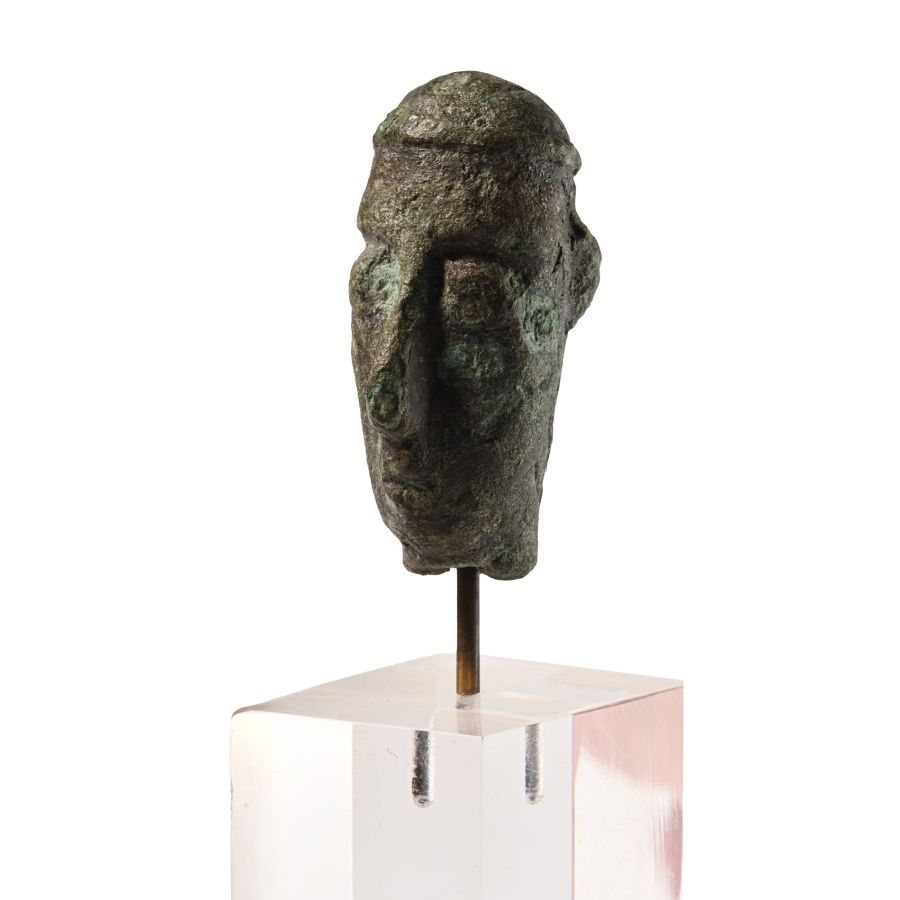
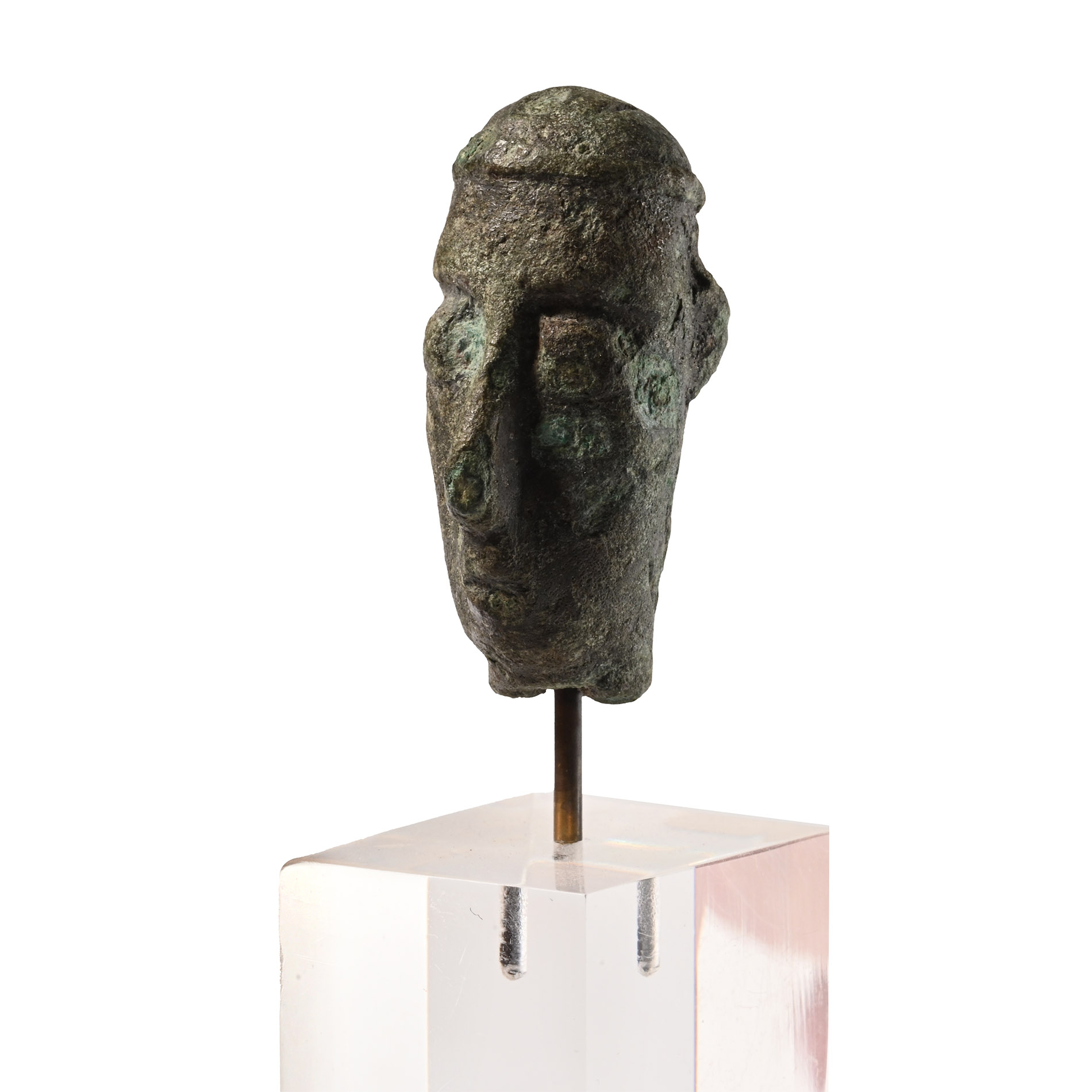
Nuragic Bronze Head of a Tribal Chief
CIRCA 8TH CENTURY B.C.
3 5/8 in. (53 grams total, 91 mm including stand).
The head covered by a small low-top cap; sharp and pronounced nose, prominent eyebrows, small swollen mouth; the hair divided into two braids; mounted on a custom-made display stand.
ProvenanceEx Frank Sternberg collection, Zürich, Switzerland, circa 1980-1985.
Property of an East Sussex, UK, private collector.
Cf. Lilliu, G., Sculture della Sardegna Nuragica, Nuoro, 2008, figs.4, 5, 7, 28, for similar heads.
FootnotesDespite being stylised representations, these bronzes detail the material culture of warriors, tribal leaders, priests, athletes, men and women
of the late Bronze Age and Iron Age Sardinian society.
TimeLine Auctions follows a vetting process to ensure the authenticity and legality of all items, reinforcing our commitment to integrity and responsible trading. Each antiquity, antique, and coin lot undergoes thorough examination by a vetting committee of at least ten external specialists, professional trade association members, scientists, and archaeologists: Our Vetting Process
AUCTIONS:
TimeLine is a leading auction house specialising in antiquities, ancient art, collectables, natural history, coins, medals, and books. Our auctions offer museums, collectors, historians, and enthusiasts the opportunity to acquire unique and historically significant pieces.
-
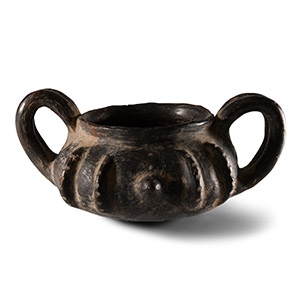
Etruscan Bucchero Kantharoid Vessel
Circa 7th-6th century B.C.Sold for (Inc. bp): £208
Blackware squat cup with applied vertical flanges and lugs to the body. low everted rim, lateral strap handles with median gusset; restored. 323 grams, 16 cm wide
From the Steel family collection, 1950s-late 1990s. -
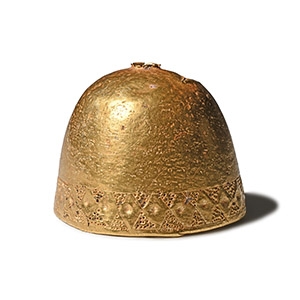
Scythian Decorated Gold Bell
1st millennium B.C.Sold for (Inc. bp): £780
Domed with a rolled rim and vent at the apex; decorative band above the rim with reserved lozenges on a pounced field each with an impressed dimple to the centre; cracked to one side. 19.47 grams, 48 mm
Cracked
Acquired early 1990s. Ex private American collection; thence by descent. Private Swiss collection since 1998. -
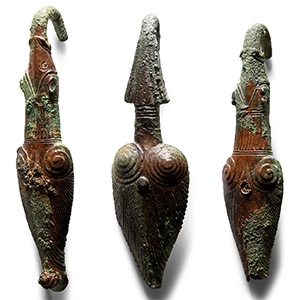
Etruscan Bronze Armoured Belt Hook Collection
6th century B.C.Estimate: £1,500 - 2,000 (‡+bp*)
Opening Bid: £750
Three clasp appliqués from a girdle, each comprising a slightly domed palmette-shaped body with fixing lug to the underside, spirals flanking a narrow neck and triangular hooked finial, two with zoomorphic detailing and one with convergent lines. 59 grams total, 81-88 mm
One with Bonham's, London, Knightsbridge, UK, 22 September 1998, lot 405. Two acquired early 1990s. Ex private American collection; thence by descent. Private collection since 1998. Accompanied by a copy of the relevant Bonhams catalogue pages. This lot has been checked against the Interpol Database of stolen works of art and is accompanied by search certificate no.11610-198948.
