
Loading, please wait...


LOT 2231
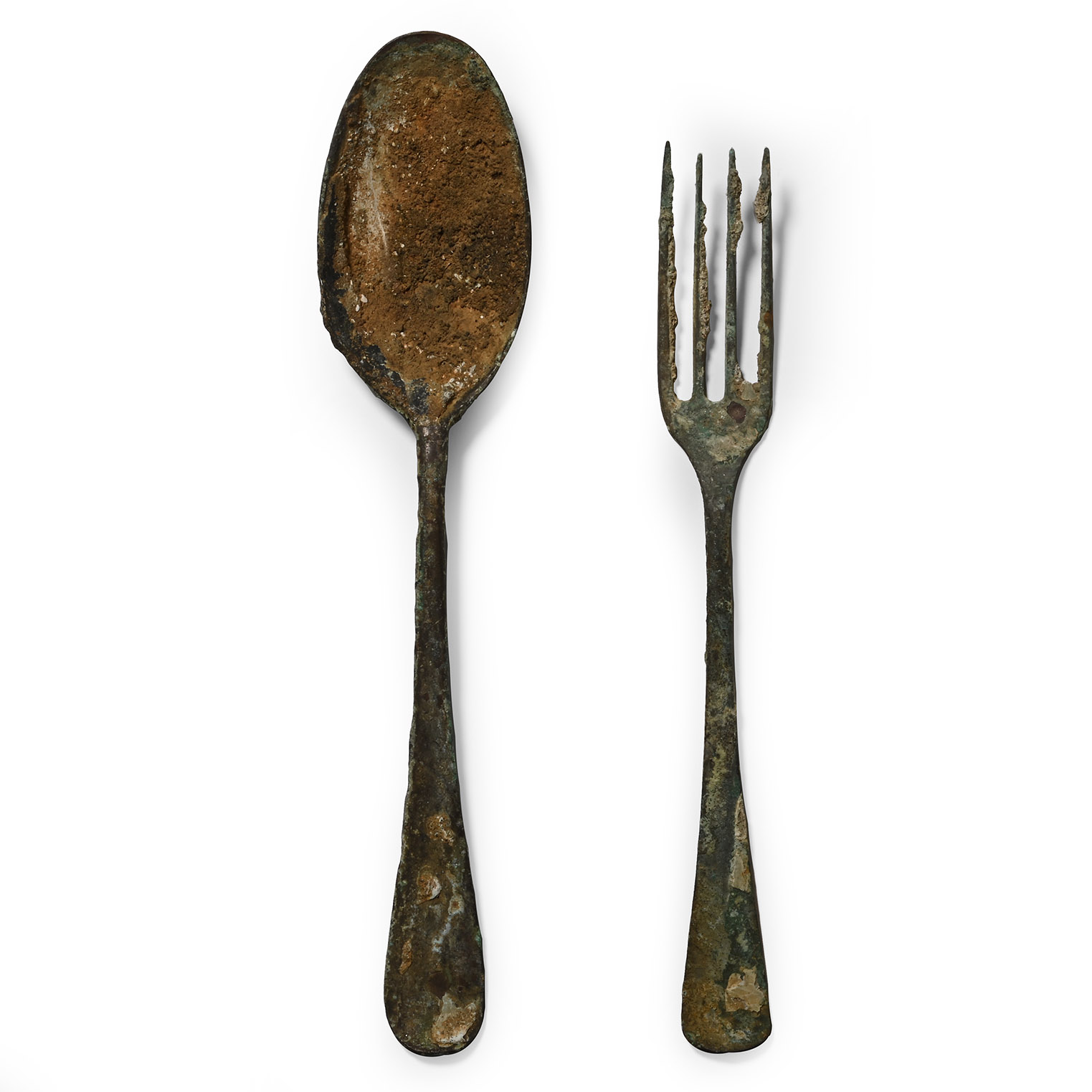
'Nuestra Senora de la Luz' Shipwreck Fork and Spoon Set
SUNK 1752 A.D.
6 1/2 - 7 1/4 in. (66 grams total, 16.6-18.6 cm).
Comprising a four-pronged table fork and a spoon with ovoid bowl. [2, No Reserve]
ProvenanceSalvaged by Ruben Collado Amatriain in 1992.
Accompanied by original signed declarations in both English and Spanish from Ms Mariana Faine Collado, daughter of Mr Ruben Collado Amatriain.
This lot is accompanied by an illustrated lot declaration signed by the Head of the Antiquities Department, Dr Raffaele D’Amato.
Exhibited at the museum 'Museo de los Naufragios y Tesoros' in Punta del Este, Uruguay, from 2003-2004 and then in Colonia del Sacramento, Uruguay until 2005.
CONDITIONTimeLine Auctions follows a vetting process to ensure the authenticity and legality of all items, reinforcing our commitment to integrity and responsible trading. Each antiquity, antique, and coin lot undergoes thorough examination by a vetting committee of at least ten external specialists, professional trade association members, scientists, and archaeologists: Our Vetting Process
AUCTIONS:
TimeLine is a leading auction house specialising in antiquities, ancient art, collectables, natural history, coins, medals, and books. Our auctions offer museums, collectors, historians, and enthusiasts the opportunity to acquire unique and historically significant pieces.
LOT 2231
'Nuestra Senora de la Luz' Shipwreck Fork and Spoon Set
Sold for (Inc. bp): £117
-
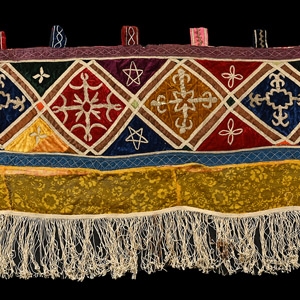
Uzbekistani Embroidered Fabric Panel
19th century A.D.Sold for (Inc. bp): £364
Patchwork band of velvet and other panels in various colours with embroidered quatrefoils, rosettes, and other motifs, loose-weave fabric band to lower edge and tassels. 1.06 kg, 207 cm
From an early 20th century collection, Paris, France. Exhibited at the Silk Road Exhibition, Piccadilly, London W1, held in 2001. This lot is accompanied by an illustrated lot declaration signed by the Head of the Antiquities Department, Dr Raffaele D’Amato. -

Renaissance Illuminated Souflet Panel with Saint Nicholas
Northern France, Champagne, Troyes, circa 1530 A.D.Sold for (Inc. bp): £2,600
Rectangular framed souflet reveal with inset stained glass depicting St. Nicholas standing wearing episcopal robes and mitre and holding a golden crozier beside a tub with three nude male infants; with integral backlight and 12V DC transformer and three-pin plug. 33.5 kg total, 100.5 x 80.5 cm including frame
Ex Neil Phillips Stained Glass Ltd, 2018. This lot has been checked against the Interpol Database of stolen works of art and is accompanied by a search certificate number no.12550-230648. This lot has been cleared against the Art Loss Register database, and is accompanied by an illustrated lot declaration signed by the Head of the Antiquities Department, Dr Raffaele D’Amato.
The scene depicts St. Nicholas and the three children whom he saved from death. Tradition has it that three boys were playing in a field during the harvest. They wandered into the city and were soon lost, so they stopped at a butcher's premises to ask for food and a place to sleep. The butcher murdered them and kept their remains salted in a barrel. Some time later, Saint Nicholas visited the premises and commanded the butcher to open the large salting tub where the bodies still lay. Saint Nicholas said “Rise up, children!” and thus he miraculously resurrected the boys. -

Grand Tour Bronze Twin-Spouted Hanging Oil Lamp
19th century A.D.Sold for (Inc. bp): £451
Hollow-formed with central bulb and two spouts; the handle C-shaped with gryphon-head finial, spiked neck and gaping mouth; basal ring and filler-hole with hinge for a cover; nozzles with flange rims and dentilled edge; three suspension chains with suspension hook; after the antique. 949 grams total, 23.7 cm wide
From a collection acquired on the UK art market from various auction houses and collections mostly before 2000. From an important Cambridgeshire estate; thence by descent. This lot is accompanied by an illustrated lot declaration signed by the Head of the Antiquities Department, Dr Raffaele D’Amato.
