
Loading, please wait...
LOT 0093
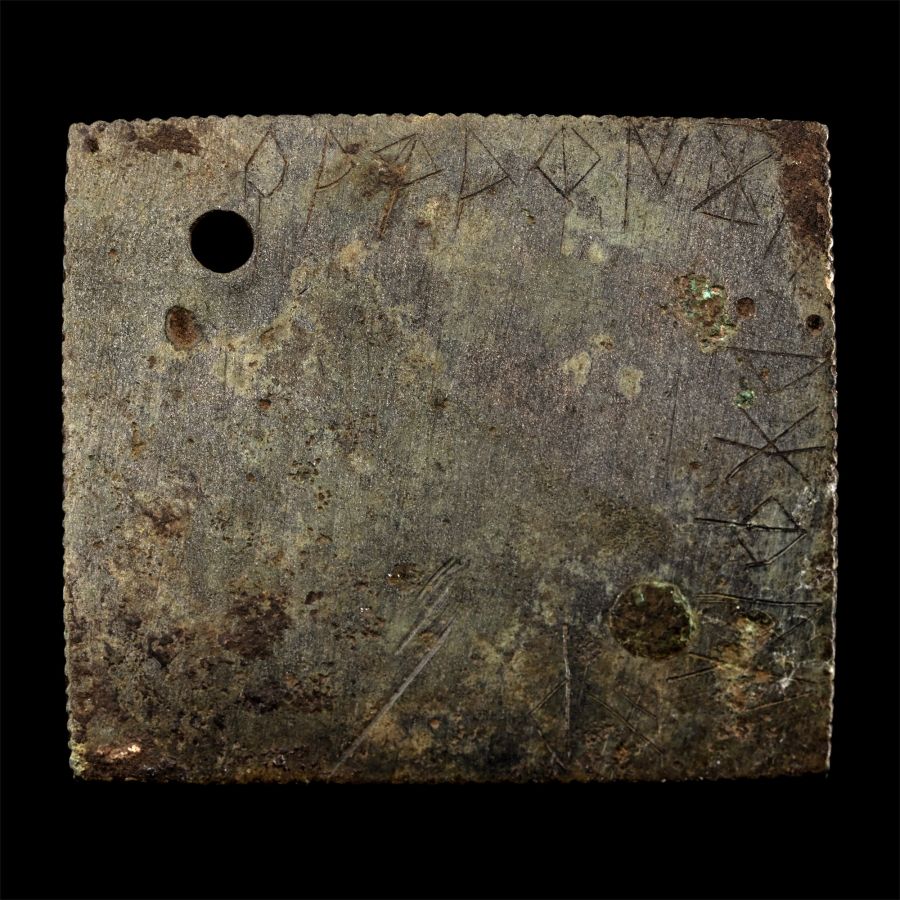
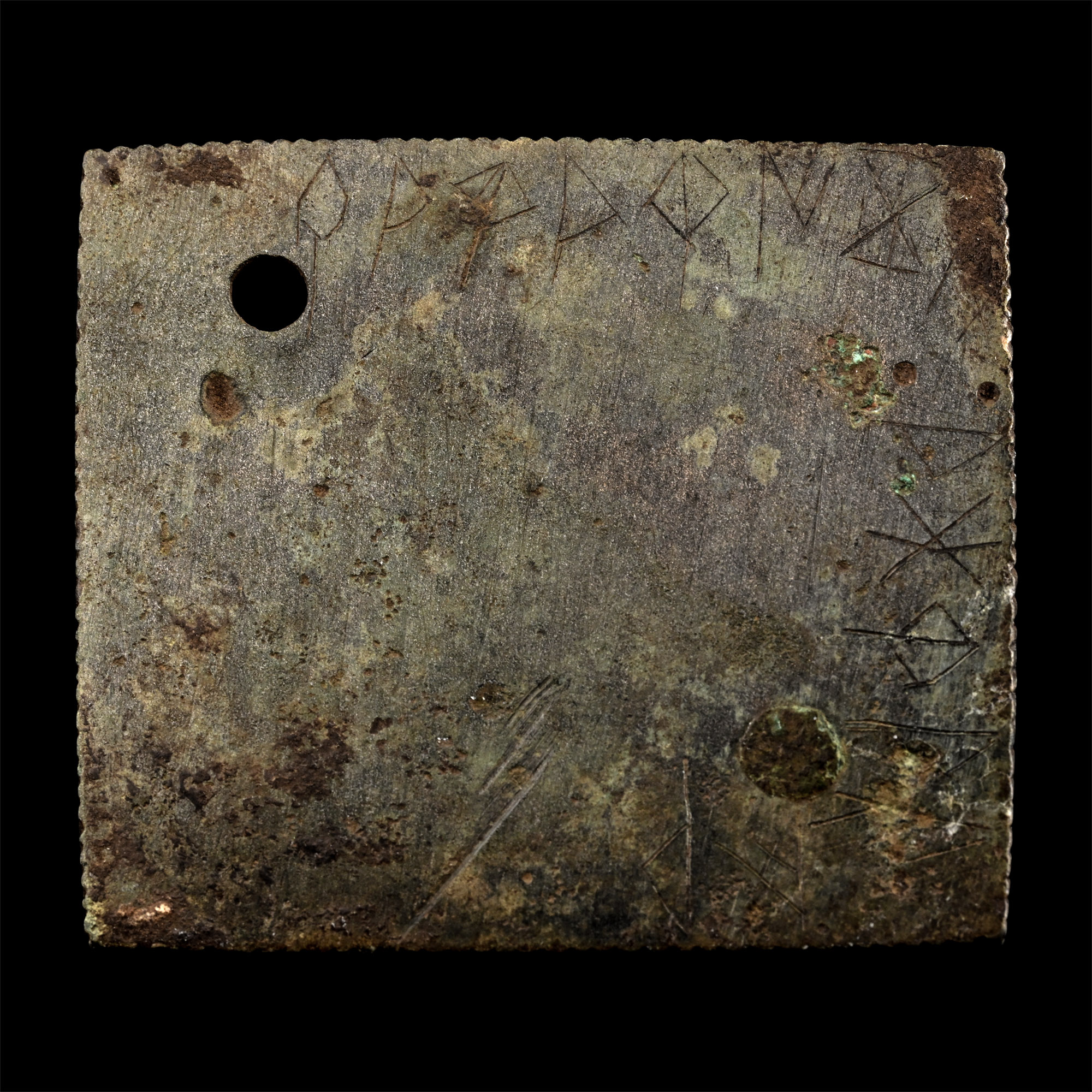
Northeastern Iberian Votive Plaque with Inscription
3RD-2ND CENTURY B.C.
1 5/8 in. (25.78 grams, 43 mm).
Rectangular in plan with hatched edges; two rivet holes, one with rivet in situ; legend in Northeastern Iberian around, apparently: r-a-r-a-r-i-co-[..]-a-bo-r-a-[..]-ca-a. [No Reserve]
ProvenanceFrom an old London, UK, collection since circa 1985.
This lot is accompanied by an illustrated lot declaration signed by the Head of the Antiquities Department, Dr Raffaele D'Amato.
TimeLine Auctions follows a vetting process to ensure the authenticity and legality of all items, reinforcing our commitment to integrity and responsible trading. Each antiquity, antique, and coin lot undergoes thorough examination by a vetting committee of at least ten external specialists, professional trade association members, scientists, and archaeologists: Our Vetting Process
AUCTIONS:
TimeLine is a leading auction house specialising in antiquities, ancient art, collectables, natural history, coins, medals, and books. Our auctions offer museums, collectors, historians, and enthusiasts the opportunity to acquire unique and historically significant pieces.
-
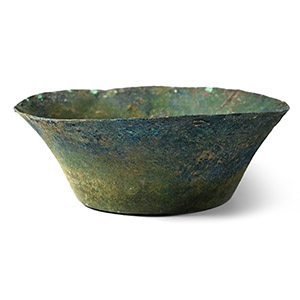
Archaic Cypriot Bronze Dish
7th century B.C.Sold for (Inc. bp): £260
Hemispherical with low profile and gently flaring walls, flat base. 52 grams, 10.7 cm
Ex London, UK, collections, 1990s-2000s. This lot is accompanied by an illustrated lot declaration signed by the Head of the Antiquities Department, Dr Raffaele D'Amato.
The Greek name for a shallow, round bowl, generally with a round boss in the centre, appears to have been phiale, which is described as resembling a shield (Aristotle, Rhetoric, III, 4, 1 1; Poetics, 21, 12), and as without handles. -
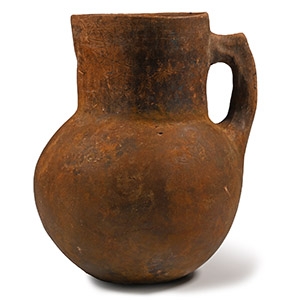
Cypro-Phoenician Terracotta Jug
1st millennium B.C.Sold for (Inc. bp): £208
With bulbous body and broad tubular neck, angled handle to rear. 685 grams, 17.2 cm
From a London, UK, gentleman's collection of ancient pottery and artefacts, 1990s. This lot is accompanied by an illustrated lot declaration signed by the Head of the Antiquities Department, Dr Raffaele D'Amato.
BoR pottery begins to appear on the Phoenician mainland and Cyprus from the middle of the 10th century. The first ceramic horizon, which we can term 'Phase Γ of BoR distribution, continues from this period until the beginning of the 9th century (c.950 - c.890/880 BC). The destruction possibly caused by Pharaoh Shishak at various sites in the Levant has preserved assemblages of similar wares which were probably sealed in the last decades of the 10th century. -
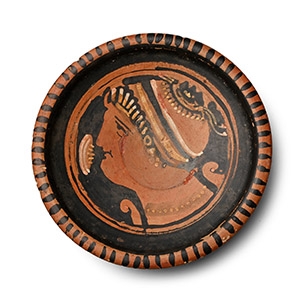
Greek Apulian Red-Figure Plate with Lady of Fashion
South Italic, circa 4th century B.C.Sold for (Inc. bp): £390
Discoid with raised rim, carinated profile and low foot; rim with radiating black lentoid strokes, tondo with reserved ring enclosing a profile female bust with white detailing to the necklace, stephane and sakkos. 139 grams, 12.9 cm
From the private collection of a Canadian gentleman living in Essex, UK, formed since the 1920s-circa 1990. Property of an Essex lady until the late 1990s; thence by descent. From the private collection of an Essex gentleman since the late 1990s. This lot is accompanied by an illustrated lot declaration signed by the Head of the Antiquities Department, Dr Raffaele D'Amato.
