
Loading, please wait...
LOT 1205
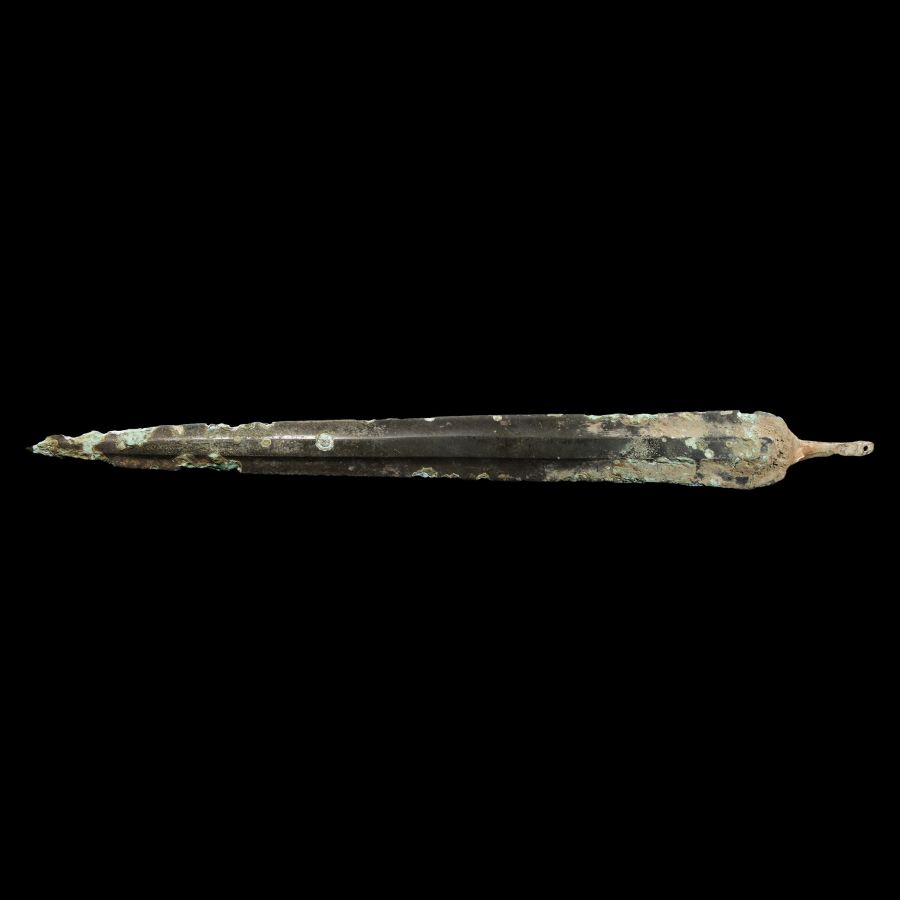
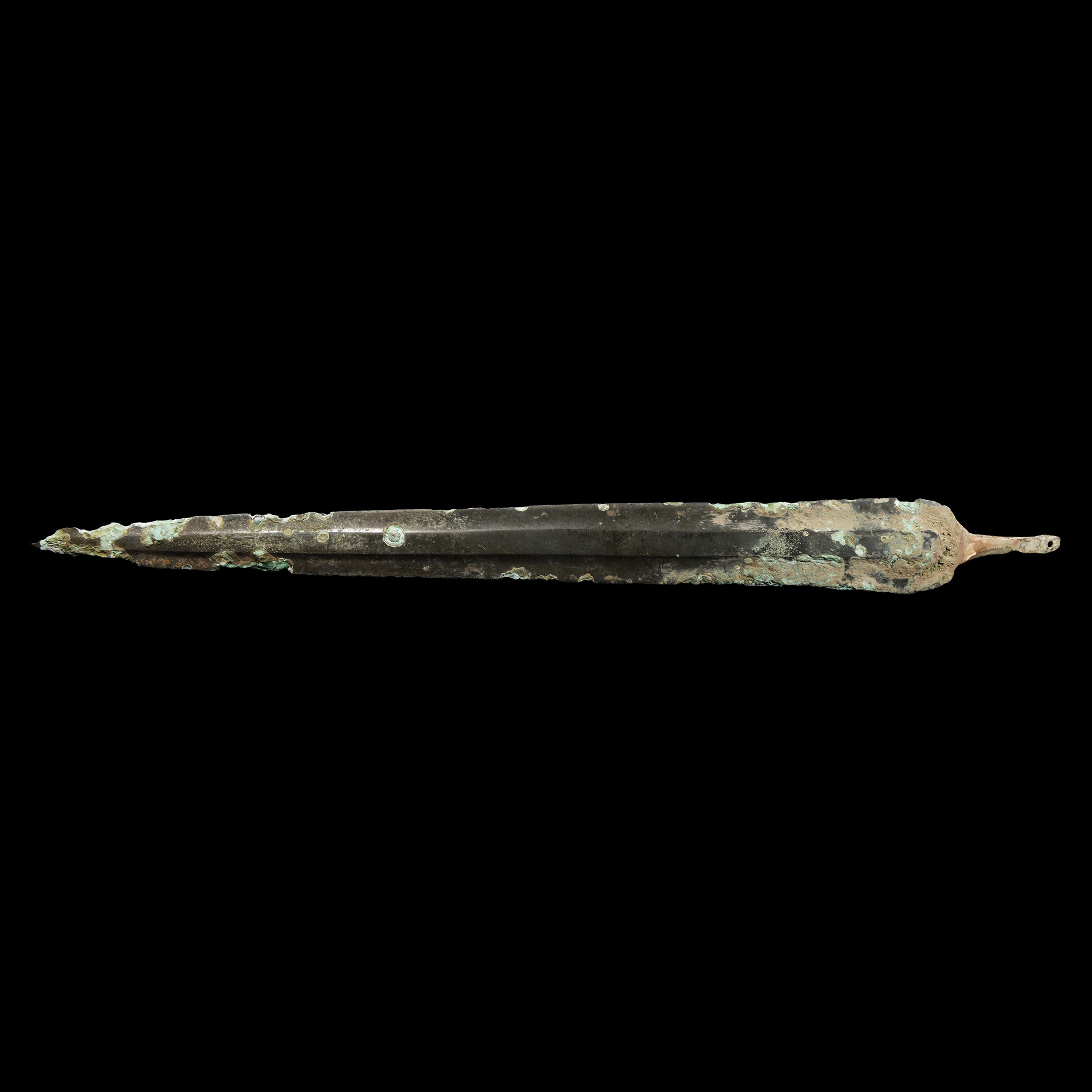
North-Western Persian Sword Blade
1ST MILLENNIUM B.C.
18 1/4 in. (345 grams, 46.5 cm).
With rounded shoulders and square-sectioned mid-rib running to the blade tip; short tang with fastening hole.
ProvenanceAcquired 1980-2015.
Ex Abelita family collection.
Cf. Christie's, The Axel Guttmann Collection of Ancient Arms and Armour, part 2, London, 2004, item 40, p.36.
FootnotesThe Luri people produced a quantity of fine metalwork, which according to Dr. Khorasani, could be due to a settled period which arose as a result of the defeat of the Elamites by the Babylonians, leaving the Luristani people in relative peace for a period of time after 1200 BC. According to Khorasani 'A culture of innovation and experimentation flourished, and the repertoire of the Luristan smiths expanded in the period between 1150–1050 BC.'
CONDITIONTimeLine Auctions follows a vetting process to ensure the authenticity and legality of all items, reinforcing our commitment to integrity and responsible trading. Each antiquity, antique, and coin lot undergoes thorough examination by a vetting committee of at least ten external specialists, professional trade association members, scientists, and archaeologists: Our Vetting Process
AUCTIONS:
TimeLine is a leading auction house specialising in antiquities, ancient art, collectables, natural history, coins, medals, and books. Our auctions offer museums, collectors, historians, and enthusiasts the opportunity to acquire unique and historically significant pieces.
-
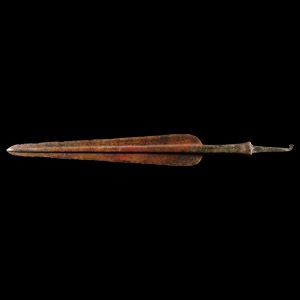
Massive West Persian Bronze Spearhead
Circa 12th-10th century B.C.Estimate: £250 - 350 (+bp*)
Opening Bid: £139
With heavily ridged and tapered blade, short collared shaft and tapered bent tang with round stud terminal. 674 grams, 52.5 cm
Acquired 1980-2015. Ex Abelita family collection.
The weapon belongs to the type 1 of the Khorasani spearhead classification, mainly from Marlik or Amlash areas. Similar pieces have been dated by Stutzinger to 1200-1100 B.C., but the period of use is attested at least until the 1000 B.C. -
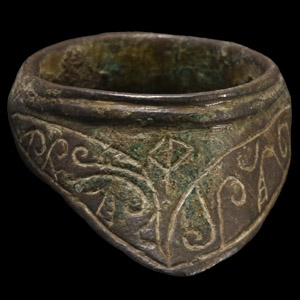
Byzantine Period Bronze Decorated Archer's Ring
12th-15th century A.D.Sold for (Inc. bp): £182
Comprising a hoop with scrolled ornament on the carinated edge and triangular plaque with foliage motifs. 9.14 grams, 34.97 mm overall, 21.22 mm internal diameter (approximate size British X 1/2, USA 11 3/4, Europe 26.92, Japan 25)
Acquired 1980-2015. Ex Abelita family collection. -
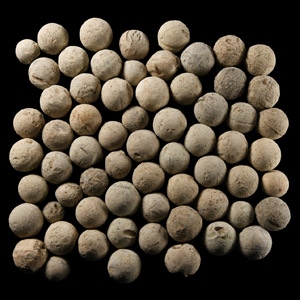
Post Medieval Lead Musket Ball Group
Circa 17th-18th century A.D.Sold for (Inc. bp): £9
Comprising examples with seams and of varying sizes. 1.8 kg total, 11-19 mm
Found Berkshire, UK.
