
Loading, please wait...
LOT 1582
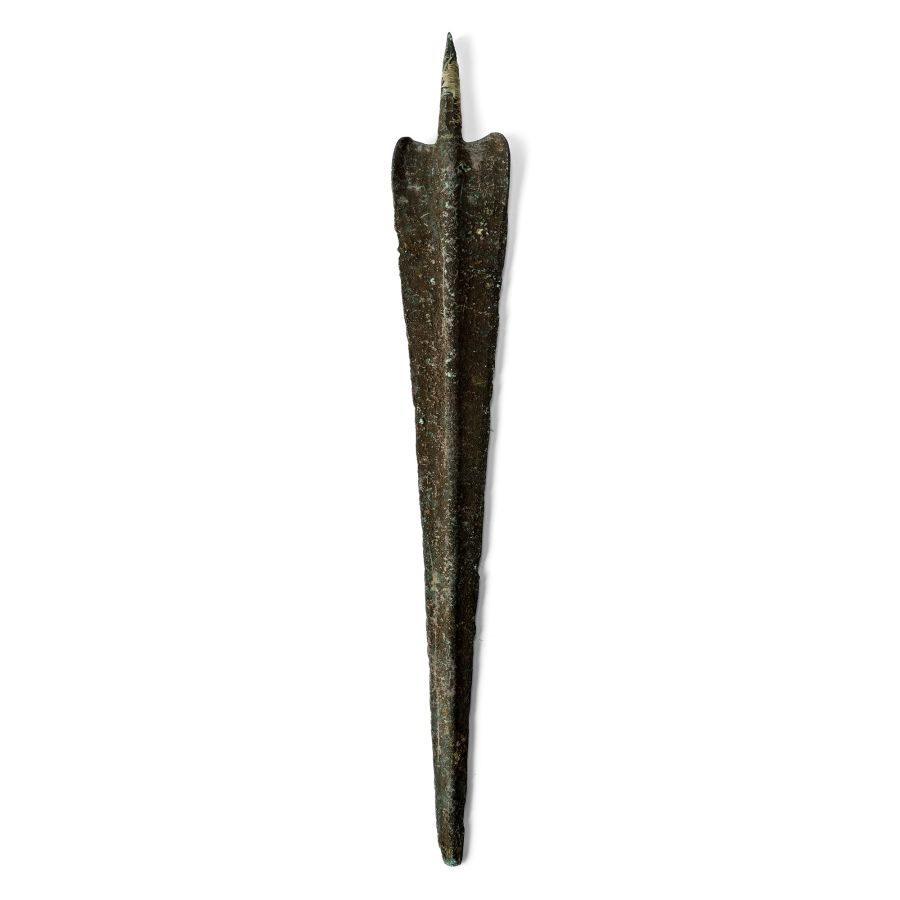
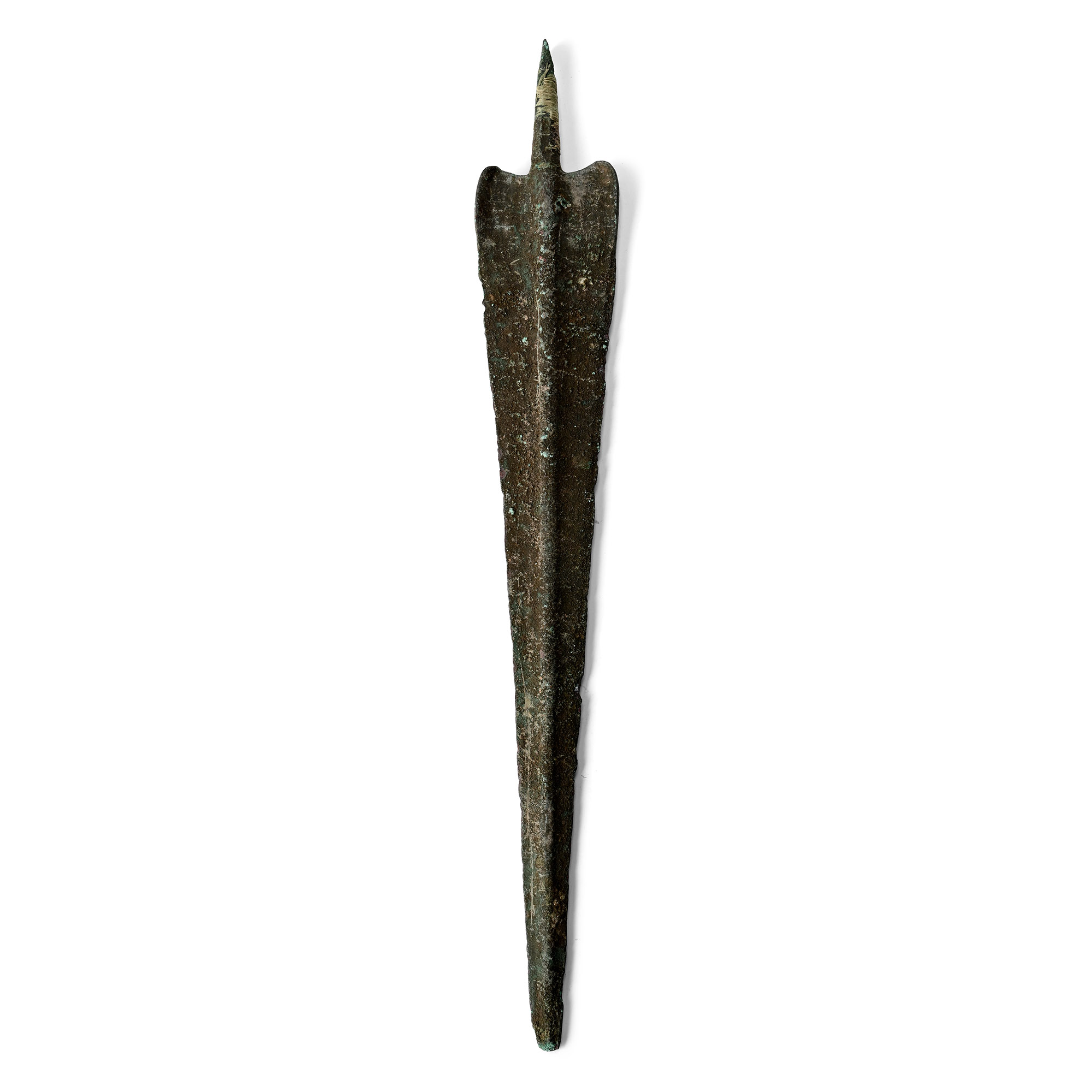
North-Western Persian Bronze Sword Blade
11H-7TH CENTURY B.C.
14 in. (286 grams, 35.5 cm).
With a prominently curved guard extending out from the ricasso, partly framing the hilt, thick midrib extending slightly above the ricasso.
ProvenanceEx Abelita family collection, 1980s-2000s.
LiteratureSee Muscarella, O.W., Bronze and Iron Ancient Near Eastern Artifacts in the Metropolitan Museum of Art, New York, 1988, pp.99-100, for a similar blade.
FootnotesThe hilt of such swords was made separately and, unfortunately, is nearly always missing from the archaeological records. Similar daggers had a northern Iranian background, and excavated examples have been recorded from the South Caspian area from Tomadjan and Ghalekuti. Their chronology ranges from the late 2nd millennium B.C. to the 7th century B.C.
CONDITIONTimeLine Auctions follows a vetting process to ensure the authenticity and legality of all items, reinforcing our commitment to integrity and responsible trading. Each antiquity, antique, and coin lot undergoes thorough examination by a vetting committee of at least ten external specialists, professional trade association members, scientists, and archaeologists: Our Vetting Process
AUCTIONS:
TimeLine is a leading auction house specialising in antiquities, ancient art, collectables, natural history, coins, medals, and books. Our auctions offer museums, collectors, historians, and enthusiasts the opportunity to acquire unique and historically significant pieces.
-
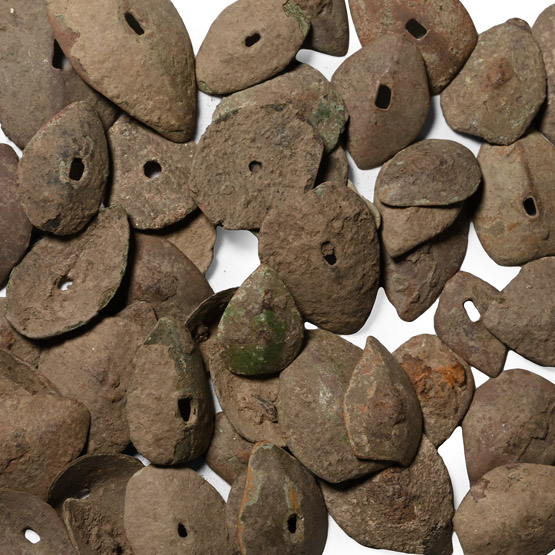
Post Medieval Bronze Scale Armour Collection
Circa 16th-17th century A.D.Sold for (Inc. bp): £85
Mainly teardrop and disc types, with attachment holes. 46 grams, 14-25 mm
Ex London Coin Fair, 1990s. Ex Buckinghamshire, UK, collection. -
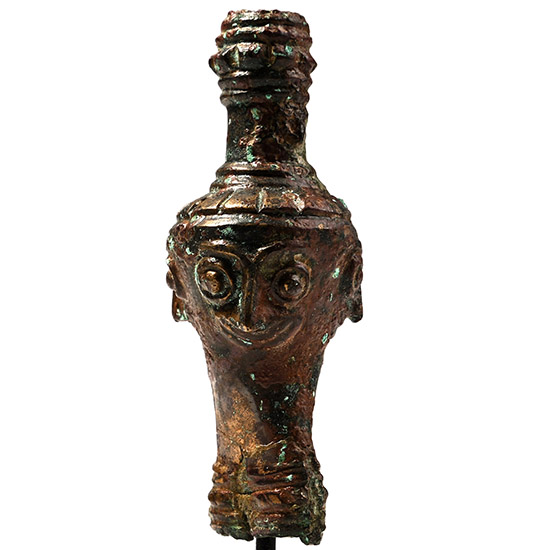
Elamite Bronze Macehead with Faces
Early 1st millennium B.C.Sold for (Inc. bp): £208
A hollow-formed decorative mace or sceptre-head formed as a tubular neck with segmented collar, segmented shoulder above three radiating masks each with exaggerated circular eyes, brow developing to a triangular nose above a crescent mouth; neck developing to a ribbed collar below; mounted on a custom-made stand. 155 grams total, 10.8 cm including stand
Fine condition.
Property of a London gentleman; acquired on the London art market in the 2000s. From the private collection of John Meredith, acquired since the 1990s; thence by descent. -
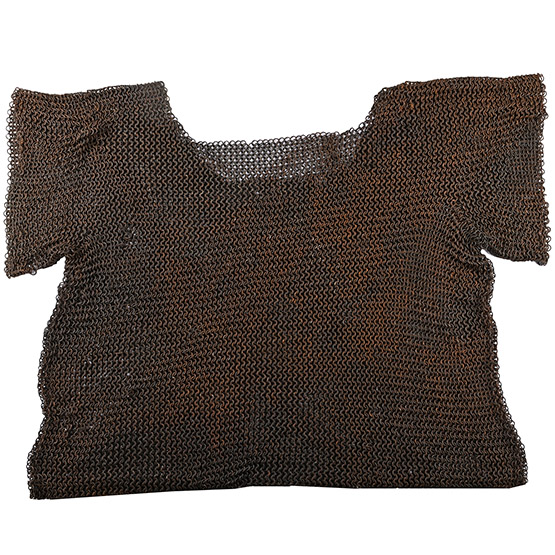
Medieval Warrior's Iron Chain Mail Armour Shirt
Circa 15th century A.D.Sold for (Inc. bp): £1,820
A butted short-sleeved chainmail shirt made of thick oval rings assembled in the usual system of one-to-four; in an excellent state of preservation, with over 95% of the rings intact, very few broken or corroded, with no later additions. 9.93 kg, 87 x 56 cm
Acquired on the German art market before 2000. Private collection, South Germany. Accompanied by an academic report by Dr Raffaele D'Amato. This lot has been checked against the Interpol Database of stolen works of art and is accompanied by search certificate no.13066-249665.
In the German-manufactured ring mail armours, in the 15th century A.D., the rings protecting the breast were very thick, whereas the sleeved mail armours were thinner. Master armourers from Nuremberg were famous for this production across Europe.
