
Loading, please wait...
LOT 1456
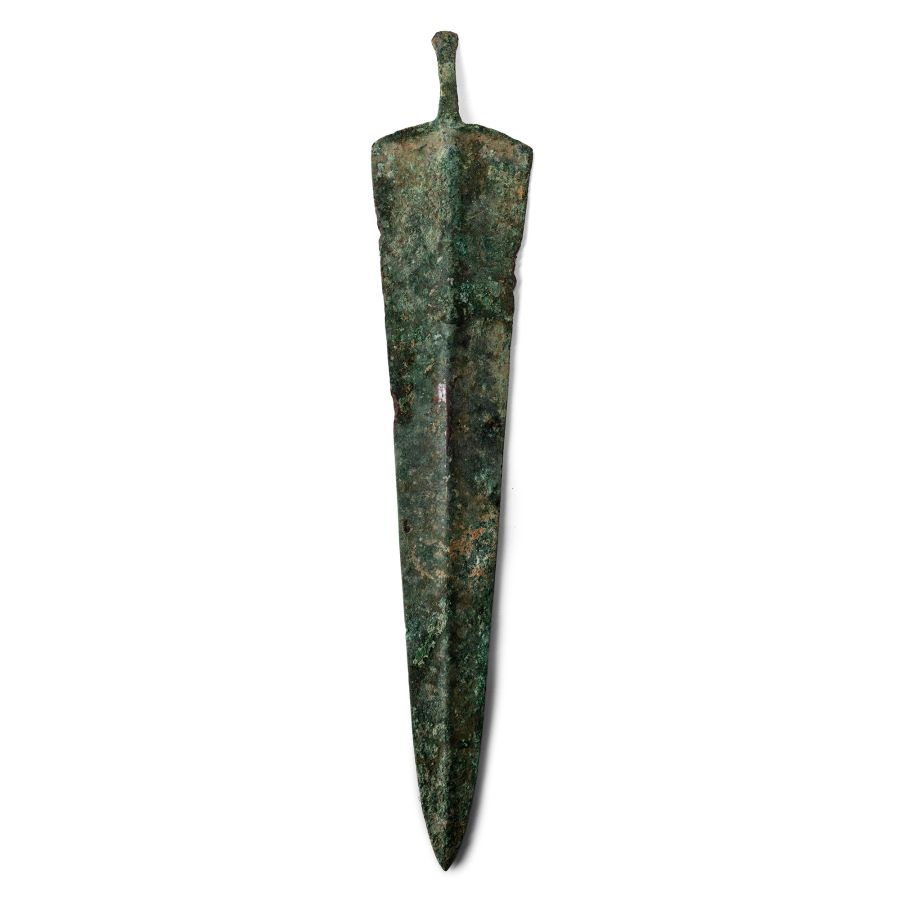
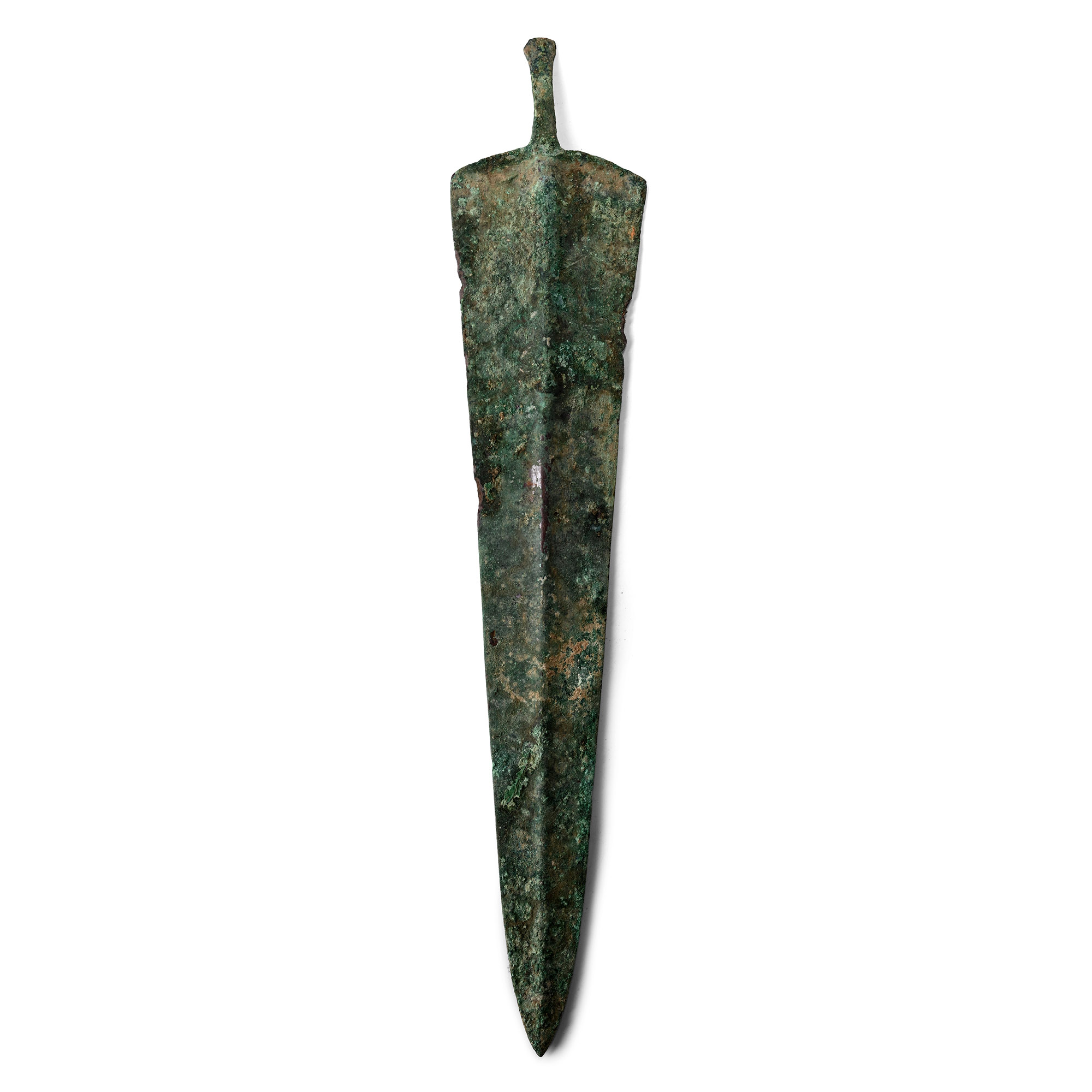
North Western Persian Bronze Blade
EARLY 1ST MILLENNIUM B.C.
14 7/8 in. (311 grams, 37.7 cm).
With a long tapering blade, rounded shoulders, broad flattened mid-rib, and a tapering square-section tang.
ProvenanceEx Abelita family collection, 1980s-2000s.
LiteratureSee a similar blade in Christie's, The Axel Guttmann Collection of Ancient Arms and Armour, part 1, London, 2002, p.34, no.31.
FootnotesEdged weapons with tangs are among the simplest forms of weapons from this culture. This basic type was hardly altered in the period when bronze was the most important material in weapon production. The retention of this basic type with so few alterations makes precise dating challenging. Bronze daggers, dirks and swords exist today only as bronze blades, having lost their perishable handles over the course of time.
CONDITIONTimeLine Auctions follows a vetting process to ensure the authenticity and legality of all items, reinforcing our commitment to integrity and responsible trading. Each antiquity, antique, and coin lot undergoes thorough examination by a vetting committee of at least ten external specialists, professional trade association members, scientists, and archaeologists: Our Vetting Process
AUCTIONS:
TimeLine is a leading auction house specialising in antiquities, ancient art, collectables, natural history, coins, medals, and books. Our auctions offer museums, collectors, historians, and enthusiasts the opportunity to acquire unique and historically significant pieces.
-
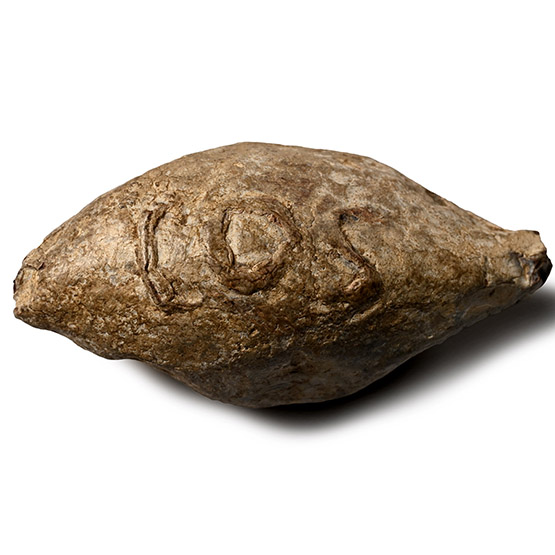
Roman 'Consular' Lead Slingshot
1st century B.C.Sold for (Inc. bp): £143
Fusiform shot with casting nipple at each end, low-relief legend 'COS' to one face and traces of letters on the other. 38 grams, 36 mm
From the collection of a London antiquarian, formed since the 1980s.
The shot (Völling type 1C) is marked with the abbreviation COS, meaning CO(N)S(UL), the highest military magistrate of the Roman Res Publica. The projectiles were made of different materials: lead (glandes) or pottery or stone (lapides missiles). -
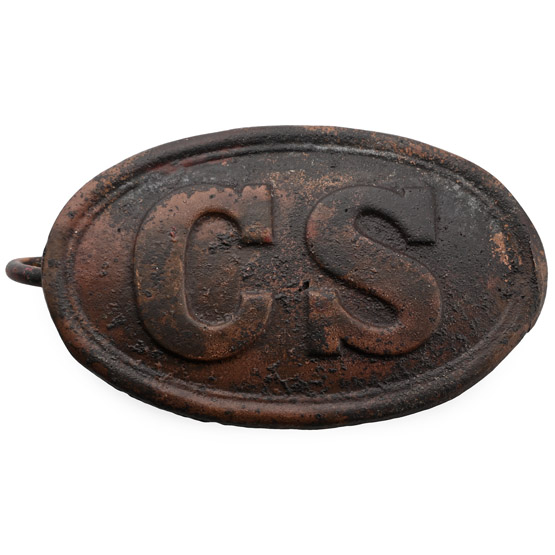
American Confederate States Civil War Belt Buckle
1861-1865 A.D. or laterSold for (Inc. bp): £208
Discoid body with raised rim and low-relief letters 'CS', wide D-section rectangular attachment slot and cook to the underside. 120 grams, 91 mm
From a Cambridgeshire, UK, collection. -
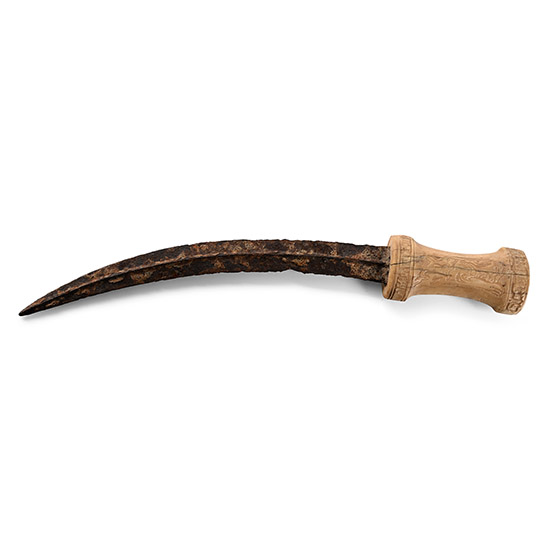
Western Asiatic Iron Dagger with Bone Hilt
19th-early 20th century A.D.Sold for (Inc. bp): £52
Comprising a curved iron blade with midrib, waisted bone hilt with carved scene to each face, band of text above and below. 550 grams, 46 cm
Private collection, UK.
