
Loading, please wait...
LOT 1165
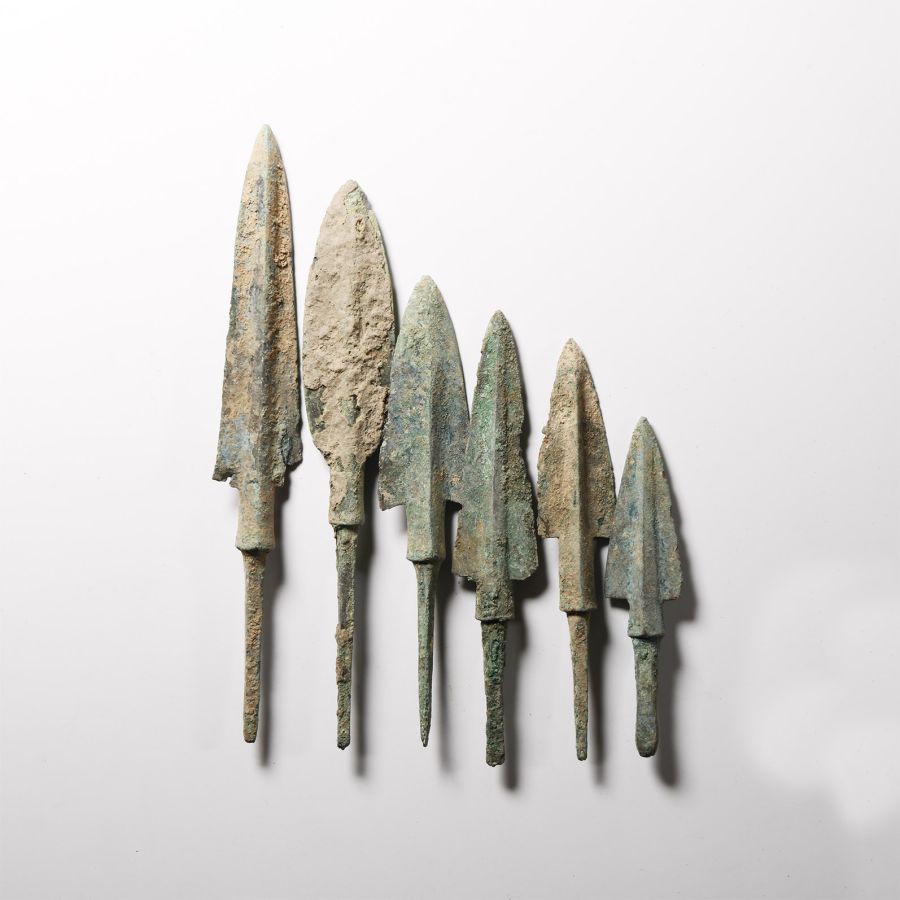
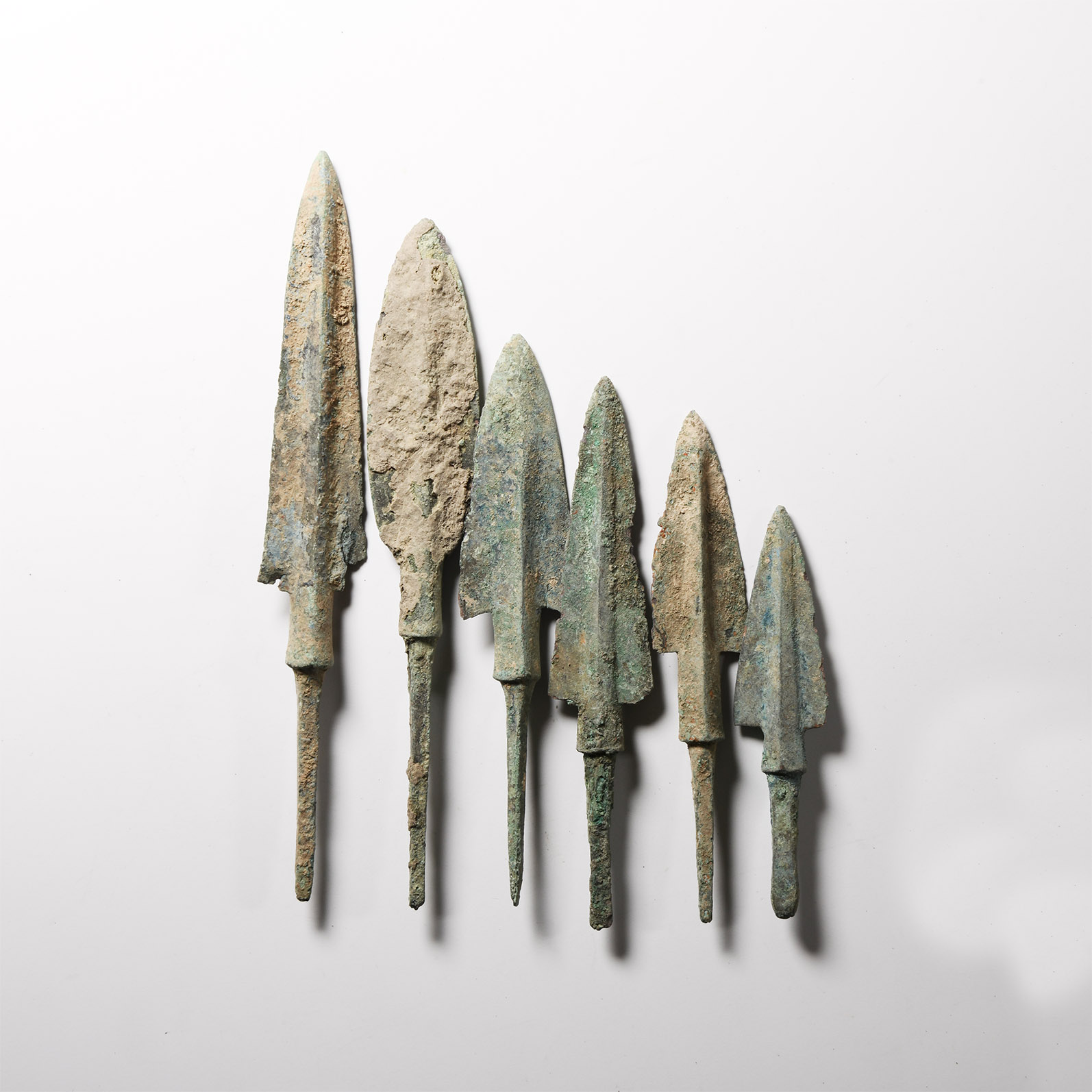
North Western Persian Bronze Arrowhead Group
12TH-10TH CENTURY B.C.
3 1/8 - 5 7/8 in. (145 grams total, 8-15 cm).
Comprising six tanged arrowheads, five with large elongated triangular blades and raised midrib, one with oval shoulders, all with sharp central groove, cylindrical stem with handle for the shaft. [6]
ProvenanceAcquired 1980-2015.
Ex Abelita family collection.
See Khorasani, M.M., Arms and Armour from Iran. The Bronze Age to the End of the Qajar Period, Tübingen, 2006, figures 463, 467, 470-471, for some of these types.
FootnotesSome of these arrowheads seems to belong to the type V, subcategory type C, according to the classification of Khorasani and Negahban. In the four categories of triangular bronze arrowheads from Luristan, Marlik and Northern Iran individuated by Negahban, subtypes C and D of type V are larger arrow or javelin heads, C with barbed shoulders and D with round shoulders.
CONDITIONTimeLine Auctions follows a vetting process to ensure the authenticity and legality of all items, reinforcing our commitment to integrity and responsible trading. Each antiquity, antique, and coin lot undergoes thorough examination by a vetting committee of at least ten external specialists, professional trade association members, scientists, and archaeologists: Our Vetting Process
AUCTIONS:
TimeLine is a leading auction house specialising in antiquities, ancient art, collectables, natural history, coins, medals, and books. Our auctions offer museums, collectors, historians, and enthusiasts the opportunity to acquire unique and historically significant pieces.
-
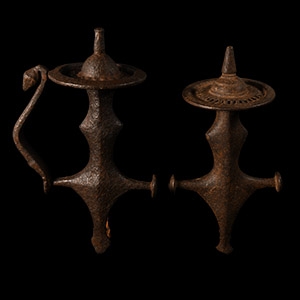
Indian Tulwar Iron Sword Hilt Pair
19th century A.D.Sold for (Inc. bp): £33
Both with lozenge-section quillon block, shaped langet and scalloped grip, quillon with discoid terminals; one with knuckle guard with conical terminal. 528 grams total, 18-18.5 cm
Acquired on the UK art market. Property of a Ruislip, UK, gentleman, by inheritance. -
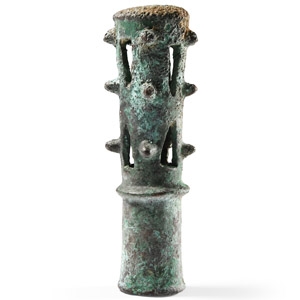
Luristan Bronze Macehead with Points and Fretwork
2600-2400 B.C.Sold for (Inc. bp): £312
Cylindrical in shape, the upper section with alternating holes and vertical rows of three prominent spikes, short cylindrical shaft. 363 grams, 14.5 cm
Collected from 1979-1999. From the collection of the late Mr S.M., London, UK.
This knopped mace head was probably made using the lost-wax method. It corresponds to the type M 2.A.b of the classification of Gernez: single-cylinder spiked maces. These elements are rare and quite diverse. They consist of a metal cylinder with rows of juxtaposed points. There are between 3 and 8 rows each, comprising 3 to 5 more or less pronounced spikes. -
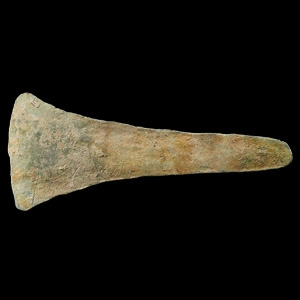
Luristan Bronze Flat Axe
13th-7th century B.C.Estimate: £120 - 170 (+bp*)
Opening Bid: £60
Formed with a rounded butt and flared cutting edge; flat in cross-section. 173 grams, 22 cm
Acquired 1980-2015. Ex Abelita family collection.
