
Loading, please wait...
LOT 1195
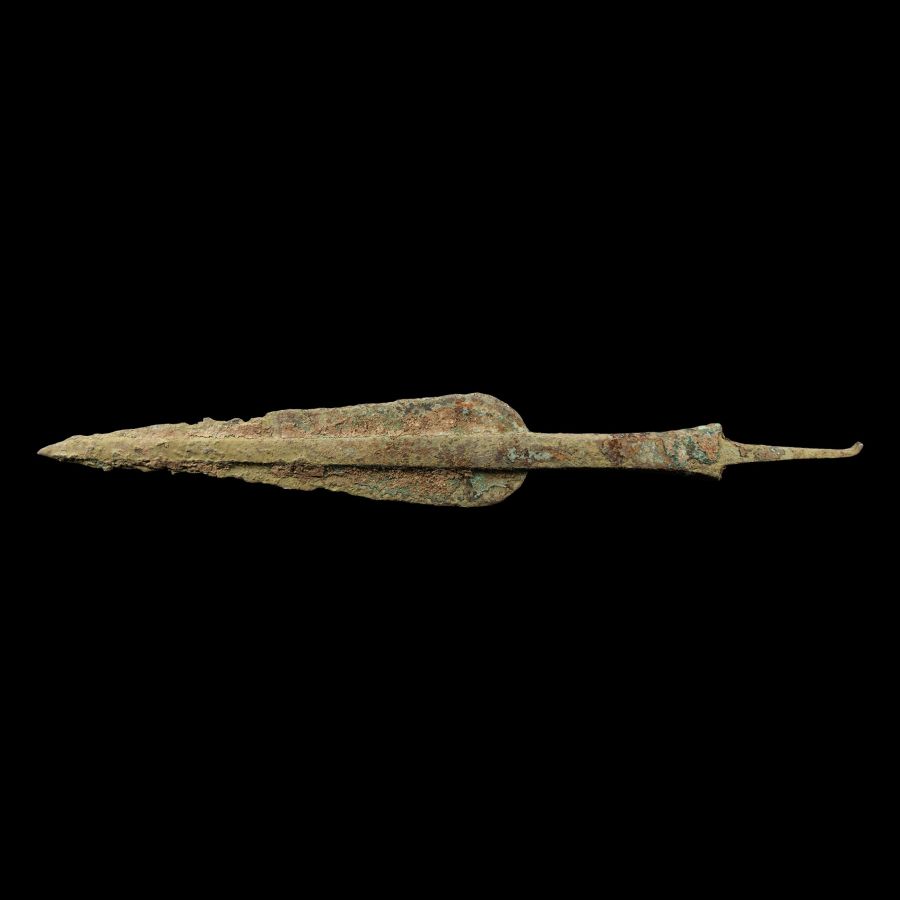
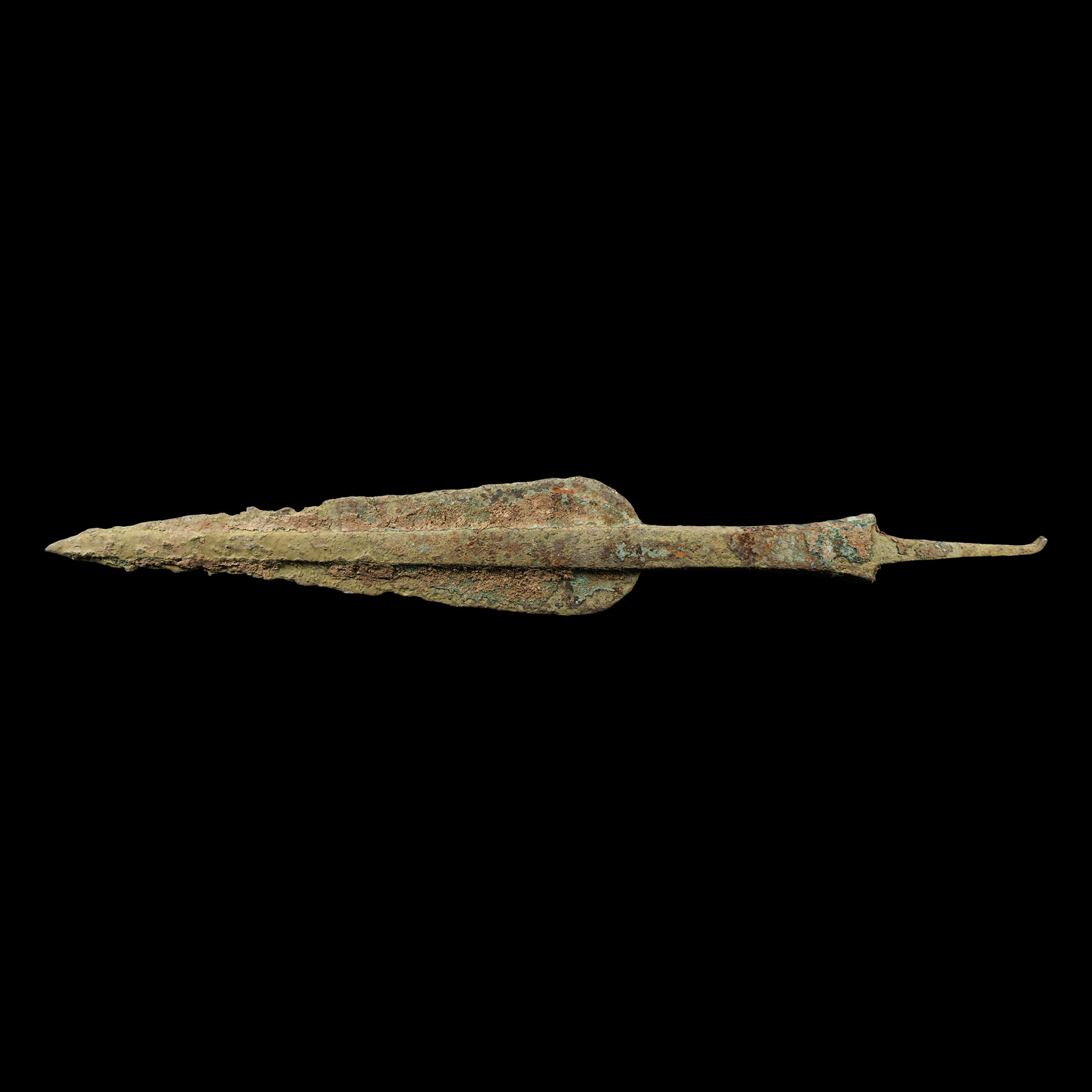
North-West Persian Bronze Spearhead
1200-1000 B.C.
13 1/2 in. (295 grams, 34.5 cm).
With long tapering blade with rounded shoulders and prominent mid-rib, the tang bent at tip with round stud terminal.
ProvenanceAcquired 1980-2015.
Ex Abelita family collection.
Cf. Khorasani, M.M., Arms and Armour from Iran. The Bronze Age to the End of the Qajar Period, Tübingen, 2006, s. cat 280, for type; Christies, Axel Guttmann collection of Ancient Arms and Armour, Part 2, London, South Kensington, 28th April 2004, lot 40.
FootnotesThe weapon belongs to the type 1 of the Khorasani spearhead classification, mainly from Marlik or Amlash areas. Similar pieces have been dated by Stutzinger to 1200-1100 B.C., but the period of use is attested to at least until the 1000 B.C.
CONDITIONTimeLine Auctions follows a vetting process to ensure the authenticity and legality of all items, reinforcing our commitment to integrity and responsible trading. Each antiquity, antique, and coin lot undergoes thorough examination by a vetting committee of at least ten external specialists, professional trade association members, scientists, and archaeologists: Our Vetting Process
AUCTIONS:
TimeLine is a leading auction house specialising in antiquities, ancient art, collectables, natural history, coins, medals, and books. Our auctions offer museums, collectors, historians, and enthusiasts the opportunity to acquire unique and historically significant pieces.
LOT 1195
North-West Persian Bronze Spearhead
Estimate £100 - 140€120 - 160 (for guidance only)$140 - 190 (for guidance only)
-
.jpg)
Neo-Assyrian Bronze Horse Trapping with Eagle-Headed God Nisroch and Winged Supernatural Figures
9th-8th century B.C.Sold for (Inc. bp): £15,600
The left side of a trapping for a horse pulling a chariot, comprising two hammered elements with a hinge; rectangular upper section with a loop to one end, decorated with an eagle-headed genius-demon, wearing a tunic and a fringed kilt, a shawl wrapped around the body, hanging down on the back, carrying a bucket of purifying water in his right hand and a conical pot of incense in his left hand, bracelets to arms, two rows of lotus buds above; the discoid lower section divided in two registers, each with a winged genii in combat with winged bulls; the dividing raised band with fish motifs similar to the border formed of fish; the edges of both elements with punched edges for the attachment of leather lining; Neo-Assyrian or Urartian; mounted on a custom-made display stand. 3.75 kg total, 59 cm including stand
Acquired in the 1960s. Ex private collection, Switzerland, thence by descent in 1996. Accompanied by an academic report by Dr Raffaele D'Amato. This lot has been checked against the Interpol Database of stolen works of art and is accompanied by search certificate number no.11780-205646.
These pieces of horse armour, destined to be the lateral protection for horses, were usually fixed at the four corners of the yoke (Connolly, 1986, p.17). Sometimes these side pendants provided protection for the upper part of horse's legs. Drawings and reconstructions of an Urartian chariot compiled from archaeological evidence shows the likely positioning on the shoulder of the horse (Gorelik, 1995, p.4). They served to protect the horse and also as symbols of divine protection. Similar pieces are visible on Assyrian reliefs (Born-Seidl, 1995, figs.53-54, relief from Nimrod; 62, from Assur; Curtis, 2013, pl.LXXV; Dezső, 2012, pl.12-13). -
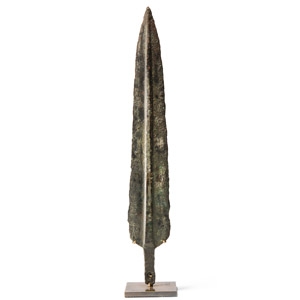
North-West Persian Bronze Dagger
Early 1st millennium B.C.Sold for (Inc. bp): £468
With long tapered blade, rounded shoulders and broad flattened mid-rib, tapered square sectioned tang pierced at the tip. 298 grams total, 29.2 cm high including stand
Dr. T.J. Arne, Sweden, 1934. Private collection, Sweden, late 1930s. with Stockholm Auktionsverk, Stockholm, Sweden, 9 June 2014, lot 2613.
This tanged bronze blade from Luristan belongs to a category of Luristan swords still in use in the Achaemenid Period, as proved from a blade with a perished handle (probably bone or wood) of the same type, in the National Museum of Iran (2694/15633). Examples without inscriptions like our model have been classified by Grotkamp-Schepers in the Solingen Museum as pieces from Luristan. -
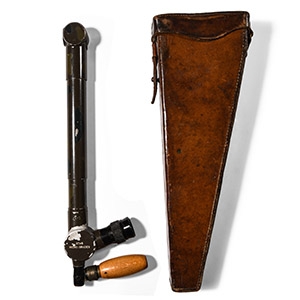
French WWII Trench Periscope
1940s A.D.Sold for (Inc. bp): £137
Aluminium rotating bodied vertical trench periscope with camouflage finish, marked 'GT=6 / MICRO:GRADES' to one side and M.G. / No.34185' to other, fitted with hinged wood handle; including original leather case with loops for belt/webbing. 1.36 kg, 40 cm
The Kusmirek Collection, UK.
