
Loading, please wait...
LOT 2005
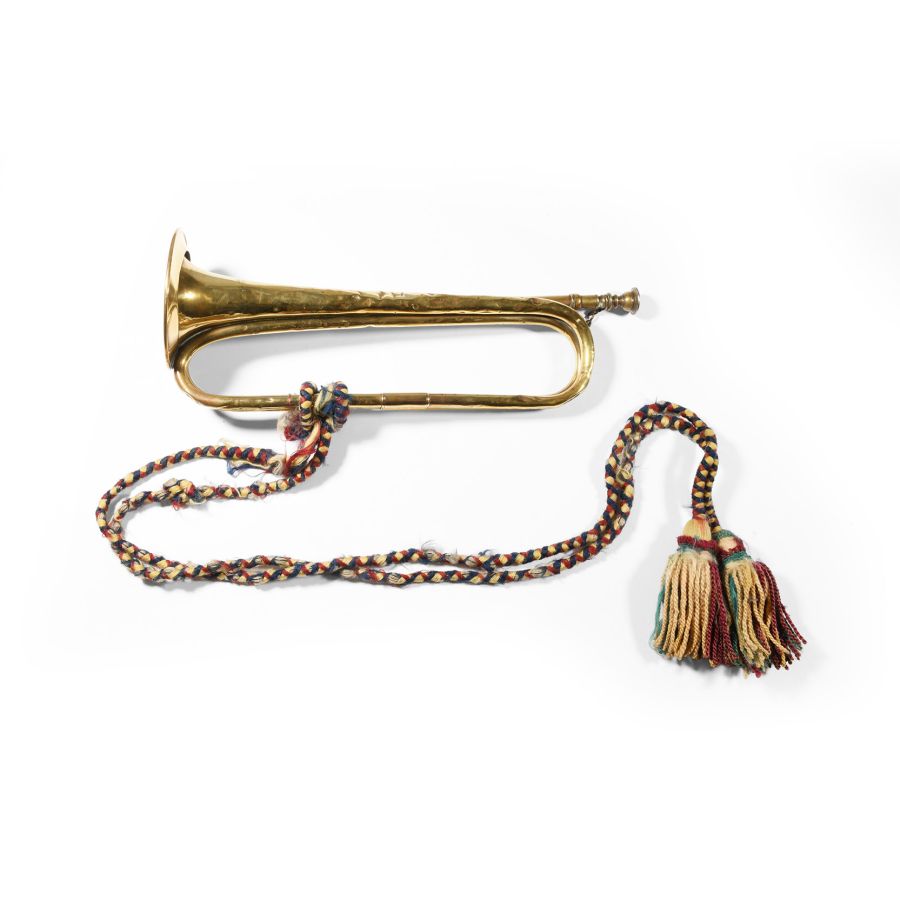
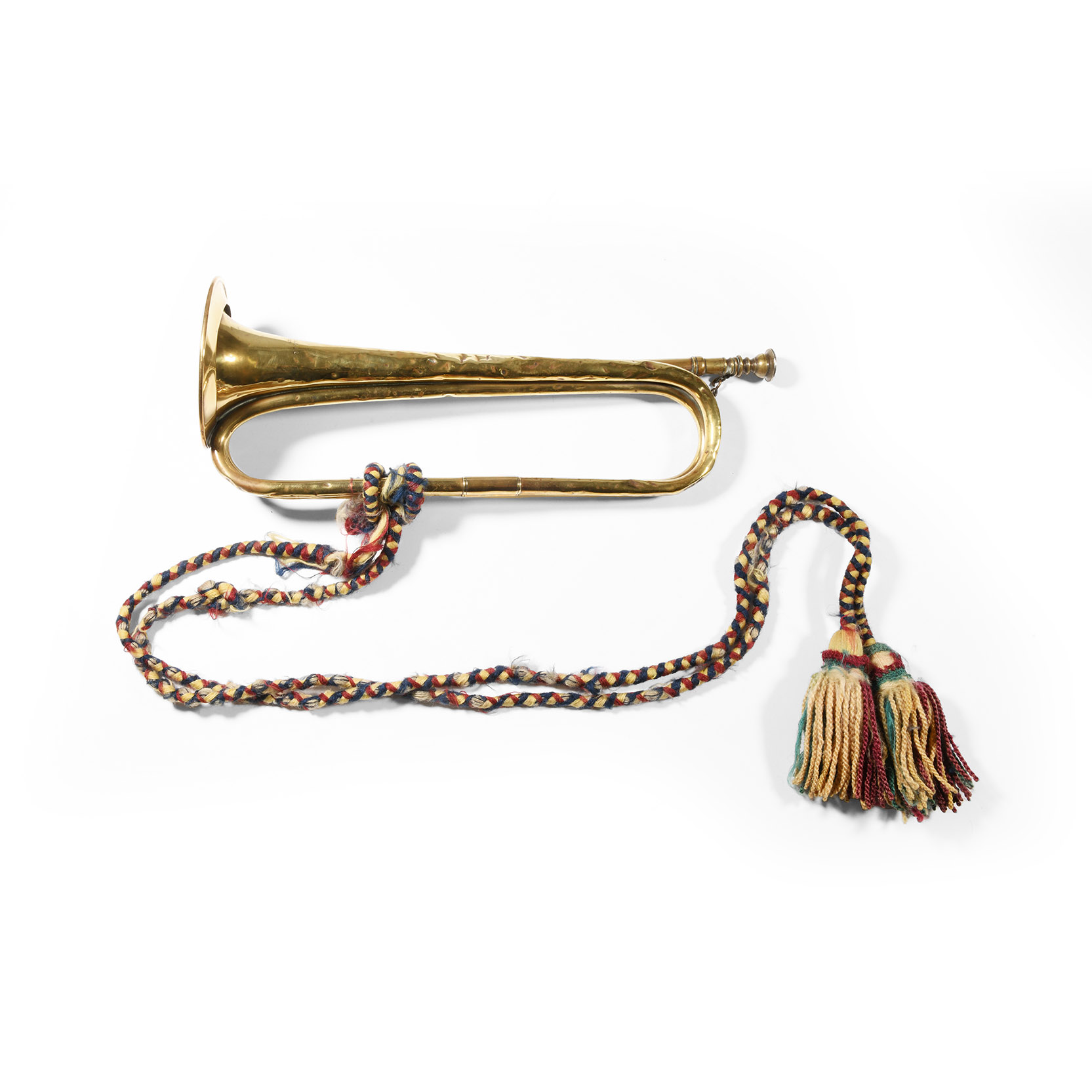
North Irish Horse Regiment Brass Trumpet
STAMPED 1888 A.D.
17 in. (648 grams, 43 cm).
Stamped 'W D 50 HENRY POTTER & CO 30. CHARING CROSS LONDON C&M 1888'; scratched graffiti near the mouth reading 'N.Irish Horse'; decorative fabric cord.
ProvenanceAcquired from The Antiques Storehouse, UK, 2015.
The Kusmirek Collection, UK.
Accompanied by a copy of the invoice and other information.
Produced for the North Irish Horse (60th Imperial Yeomanry) regiment and was presented to a Colonel at some stage in its history. The NIH is a yeomanry unit of the British Territorial Army raised in the northern counties of Ireland in the aftermath of the Second Boer War.
CONDITIONTimeLine Auctions follows a vetting process to ensure the authenticity and legality of all items, reinforcing our commitment to integrity and responsible trading. Each antiquity, antique, and coin lot undergoes thorough examination by a vetting committee of at least ten external specialists, professional trade association members, scientists, and archaeologists: Our Vetting Process
AUCTIONS:
TimeLine is a leading auction house specialising in antiquities, ancient art, collectables, natural history, coins, medals, and books. Our auctions offer museums, collectors, historians, and enthusiasts the opportunity to acquire unique and historically significant pieces.
-
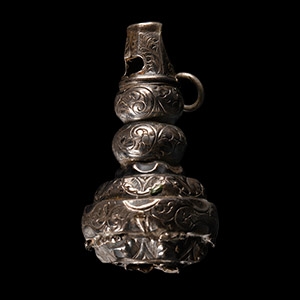
Victorian Silver Baby Rattle with Whistle
19th-early 20th century A.D.Sold for (Inc. bp): £13
The body decorated with foliate scrolls; articulate attachment loop to reverse; stamped 'GU' in a rectangular cartouche to underside of mouthpiece; coral stick and bells absent. 18.1 grams, 51 mm
Private U.K. family collection formed in the early 1970s. The property of Mr and Mrs P.R. of East Sussex. Thence by descent to family members.
Traditionally accompanied by a teether of red or white coral, such teethers were both practical aids and examples of sympathetic' magic, symbolising blood or bone. -
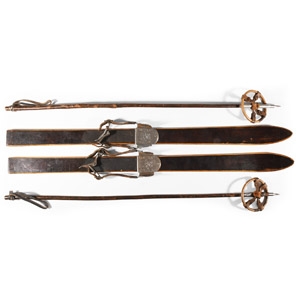
Vintage Child's Skis
Circa 1950s A.D.Estimate: £150 - 200 (+bp*)
Opening Bid: £72
Complete with leather fitting straps and hazel wood skiing poles with bamboo rings; metal bindings to skis marked 'MESTA PIONIER'; in ash or hickory. 1.7 kg total, 96-98 cm
Acquired from Manfred Schotten Antiques, UK. The Kusmirek Collection, UK. Accompanied by a copy of the previous listing. -
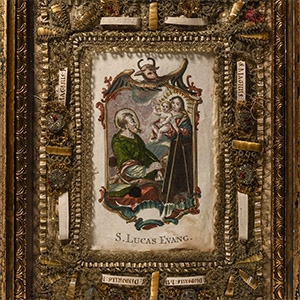
Western European Framed Devotional St Luke Icon and Reliquary
Mid 19th century A.D.Sold for (Inc. bp): £468
Composed of a chalcographic print representing the Evangelist Luke who, depicted with a brush and easel, is painting a true image of the Virgin and Child, who appear to him in a cloud radiating Divine Light; a winged ox above; inscription 'S. Lucas Evang.' (St Luke the Evangelist) below; the central image enclosed within a lace frame, decorated with embroidery, containing relics of Saints Magnus, Diodorus and Prosperus; all enclosed in a gilded wooden frame. 1.06 kg, 35 x 28.5 cm
Acquired in Germany. Property of RWM Collection.
According to Christian tradition, St Luke made the first pictorial representations of the Mother of God, which were defined as acheiropitae, that is, not created by humans. The presence of the relics of Saint Magnus (saint patron of Anagni, Lazio), of the Roman martyr St Diodorus and of St Prosperus, (patron saint of Reggio Emilia), would suggest an Italic environment as the centre of production of the sacred image.
