
Loading, please wait...
LOT 1598
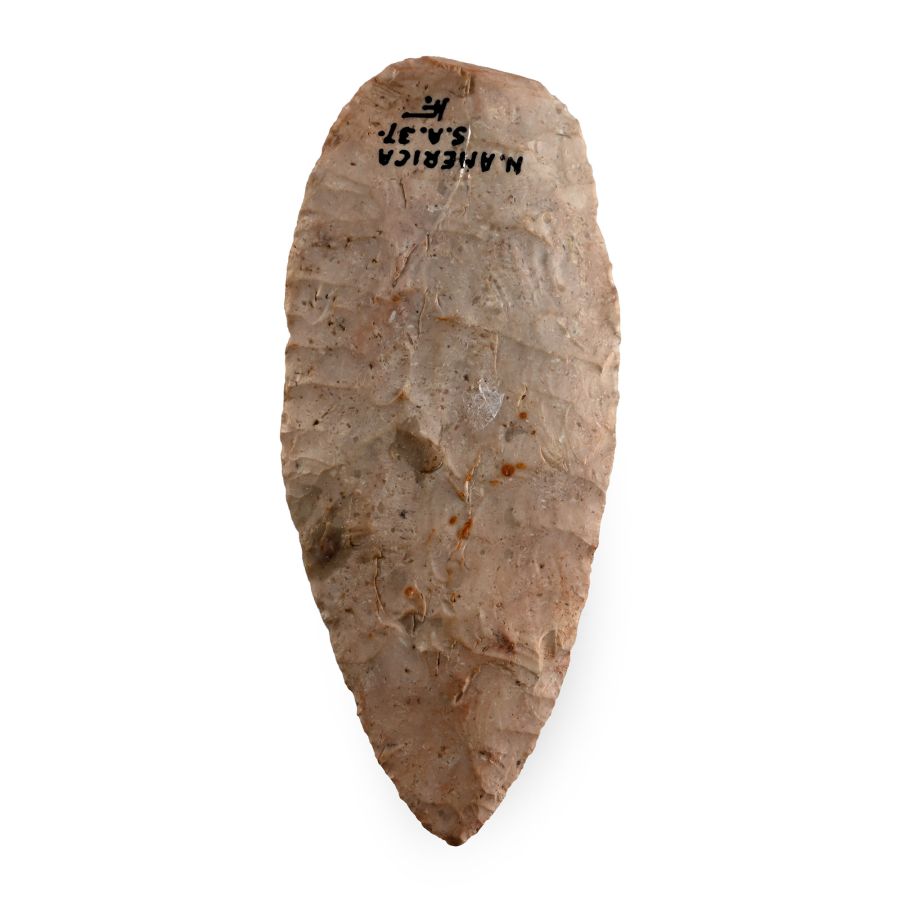
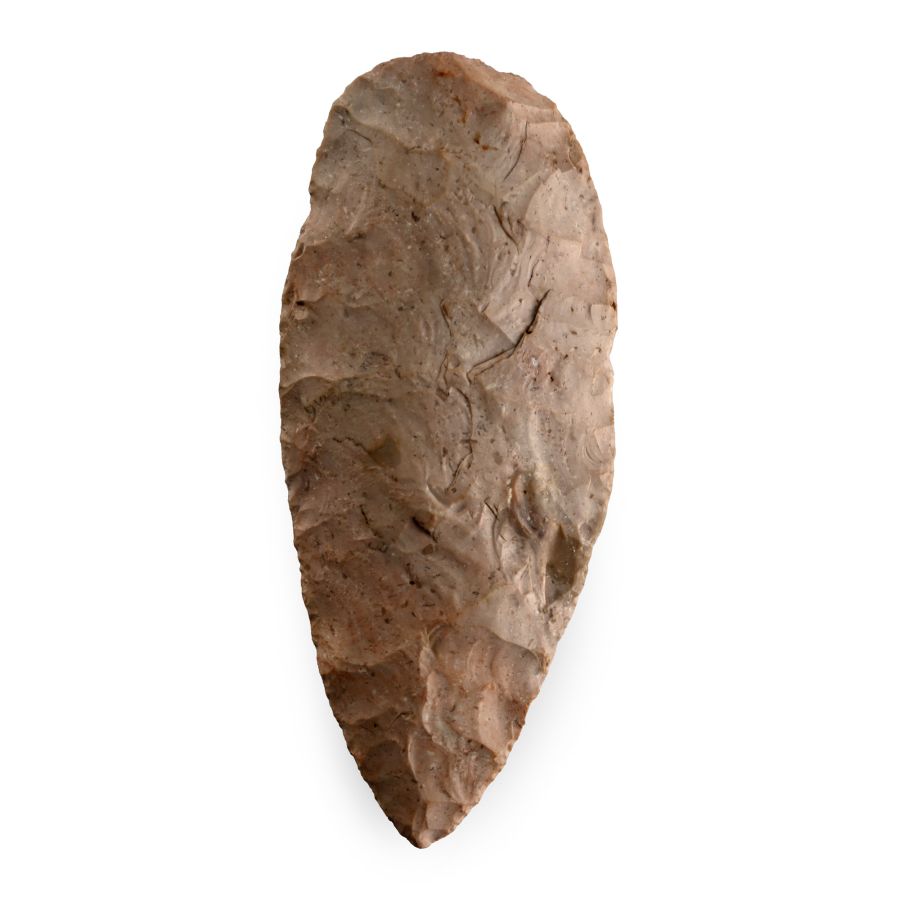
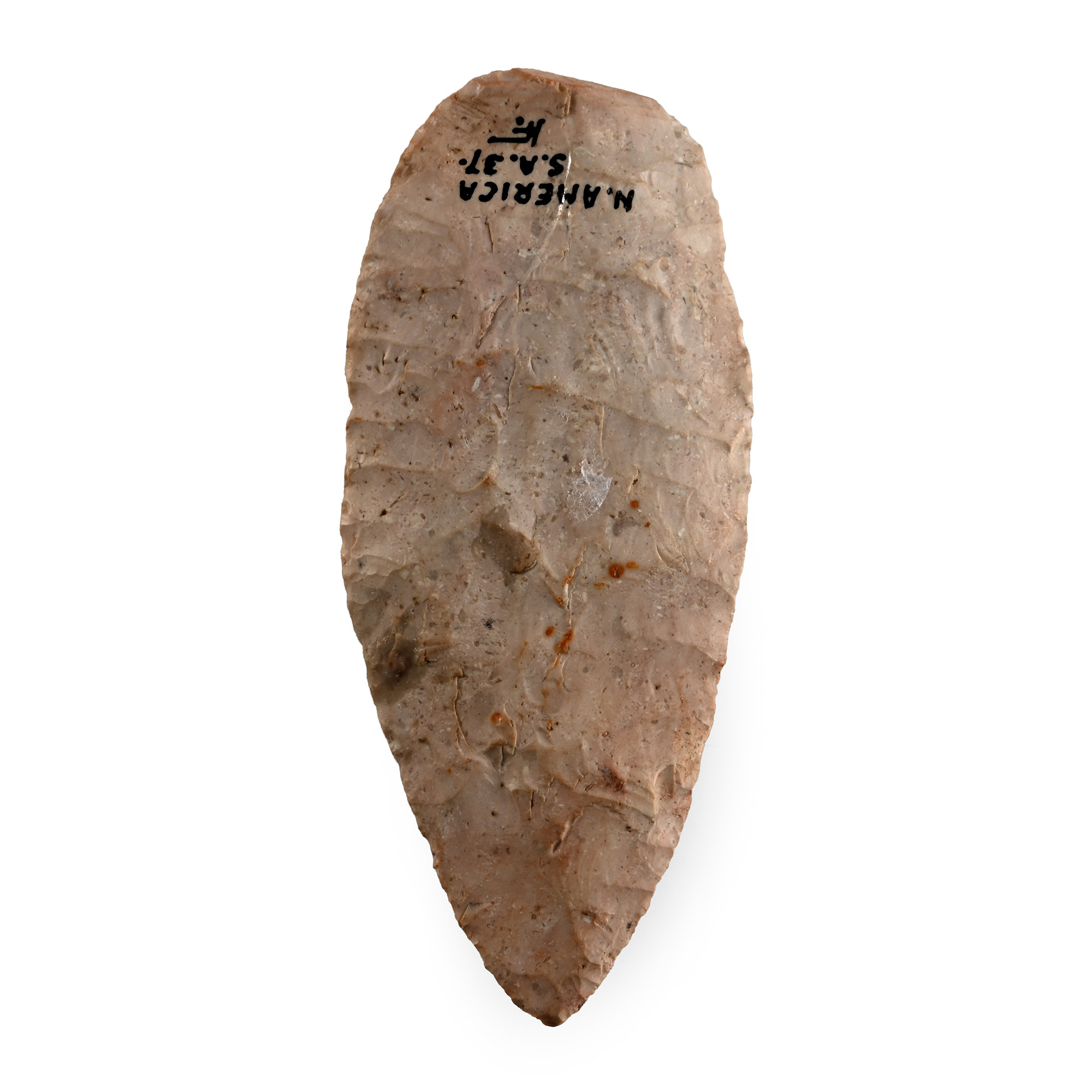
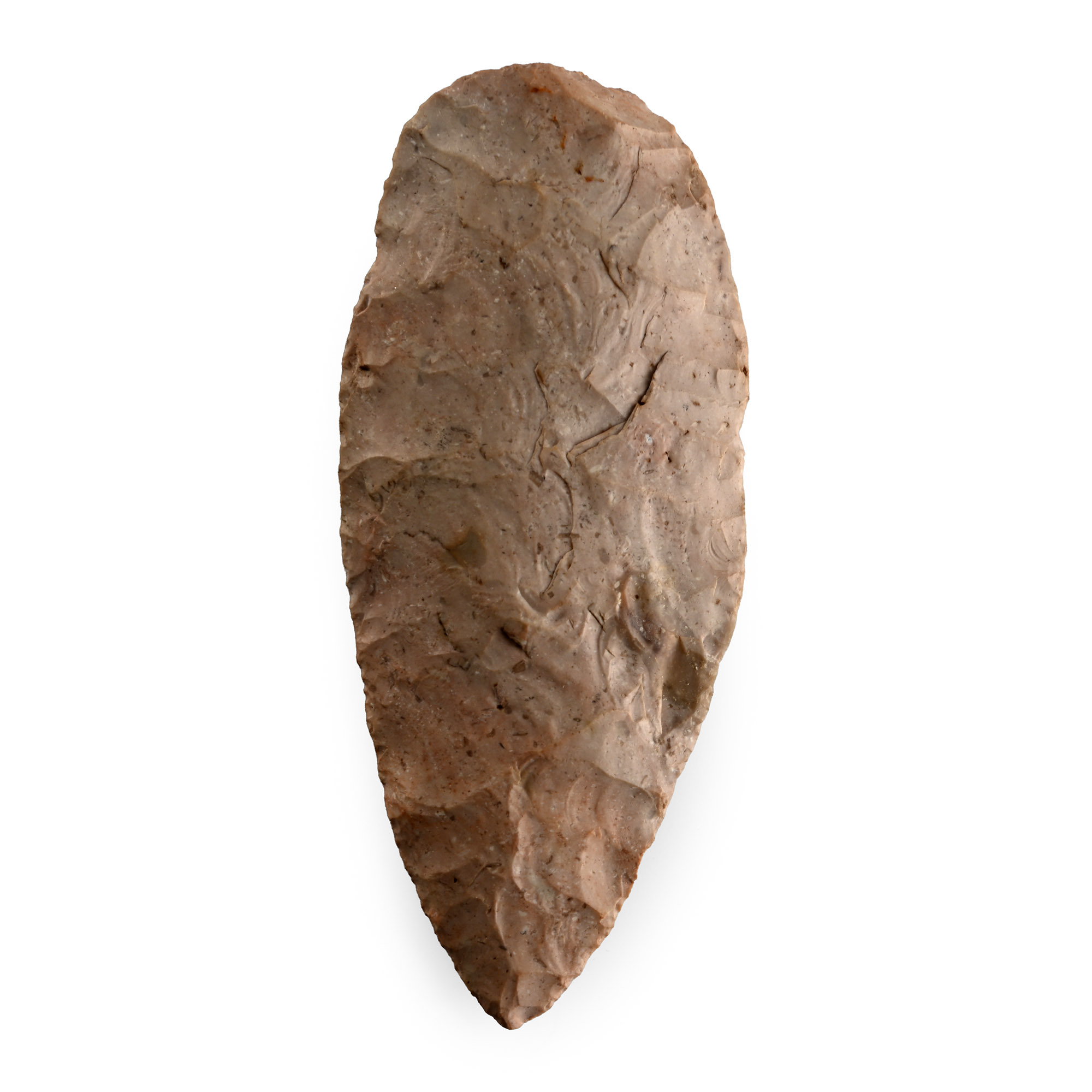
North American Stone Age Knapped Bifacial Knife
CIRCA 6000-4000 B.P.
3 1/8 in. (25.4 grams, 79 mm).
Ovate blade in cream-coloured stone, narrow point, inked collector's note 'N.America S.A 37' and Hugh Fawcett collection monogram below. [No Reserve]
ProvenanceEx Dr Hugh Alderson Fawcett (1891-1982), a general practitioner and antiquarian who built up an important collection of ancient implements, weapons and ornaments.
From the collection of a West Sussex collector.
Acquired from the UK art market in the 2020s.
Dr Hugh Alderson Fawcett (1891-1982) was a general practitioner and antiquarian who built up an important collection of ancient implements, weapons and ornaments. The bulk of his collection is now in the Bristol Museum and Art Gallery, but Fawcett previously sold or traded some examples. His distinctive monogram and careful recording of provenance make his pieces readily identifiable.
CONDITIONTimeLine Auctions follows a vetting process to ensure the authenticity and legality of all items, reinforcing our commitment to integrity and responsible trading. Each antiquity, antique, and coin lot undergoes thorough examination by a vetting committee of at least ten external specialists, professional trade association members, scientists, and archaeologists: Our Vetting Process
AUCTIONS:
TimeLine is a leading auction house specialising in antiquities, ancient art, collectables, natural history, coins, medals, and books. Our auctions offer museums, collectors, historians, and enthusiasts the opportunity to acquire unique and historically significant pieces.
-
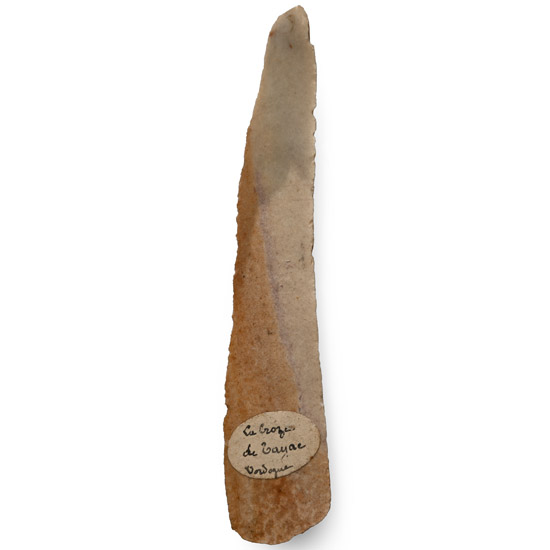
French Stone Age Knapped Flint Long Blade Scraper
Gravettian Period, circa 33,000-21,000 B.P.Sold for (Inc. bp): £390
Slender triangular-section scraper with usage wear to long edges and rounded ends; old inked label 'La Croze du Tayac, Dordogne'. 20.1 grams, 11.1 cm
From La Croze du Tayac, France. Acquired in the 1970s-1990s. From the collections of the famous UK musician and amateur archaeologist, Victor Brox (1941-2023). From the private collection of an East Anglian, UK, specialist collector. -
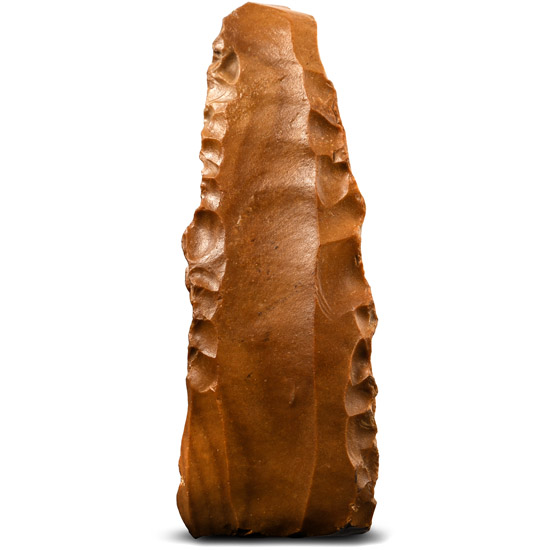
Large Stone Age 'Livre de Beurre' from Le Grand Pressigny
Neolithic Period, 5500-2400 B.P.Sold for (Inc. bp): £260
A substantial flint core or so-called 'Livre de Beurre' with vertical traces of blows on the work side. 1.99 kg, 25.3 cm
Previously in an old Stone Age tool collection. Acquired from an Oxfordshire, UK, auction house. From the private collection of a West Midlands lady collector. -
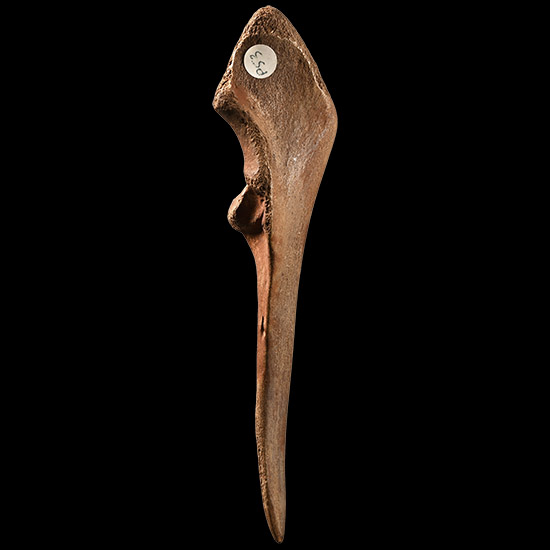
Large French Stone Age Magdalenian Bone Awl
Late Upper Palaeolithic, circa 21,000-13,000 B.P.Estimate: £500 - 700 (+bp*)
Current Winning Bid: £250
Well-preserved bone awl with a long tapering point, inked collector's note 'Abris Val de Seine Poinçon, Magdalenien Dragage / Seine 75480'. 25.9 grams, 14.4 cm
From Abris Val De Seine, France. From an auction with Art Remy Le Fur. Acquired on the European art market in the 2020s. Accompanied by a copy of a French export licence no.257541.
The Magdalenian is a technocomplex of the Late Upper Palaeolithic, named after the type site of Abri de la Madeleine, a rock shelter located in the Vézère valley of Tursac in Dordogne, France.
