
Loading, please wait...
LOT 1577
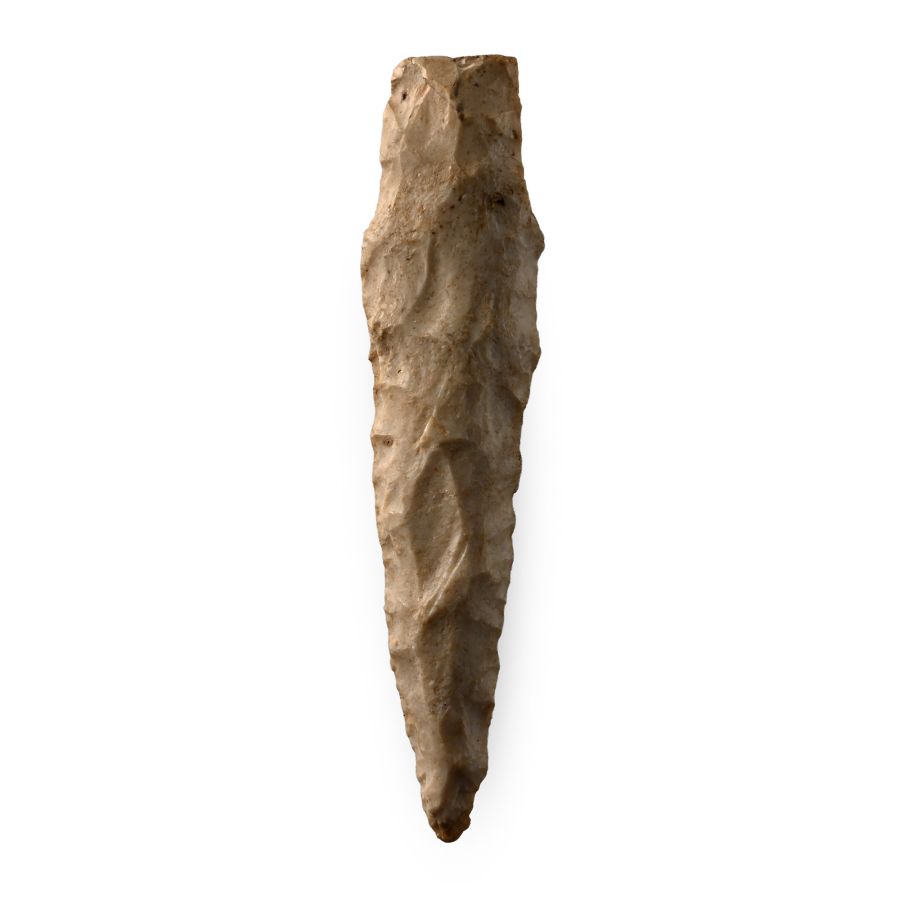
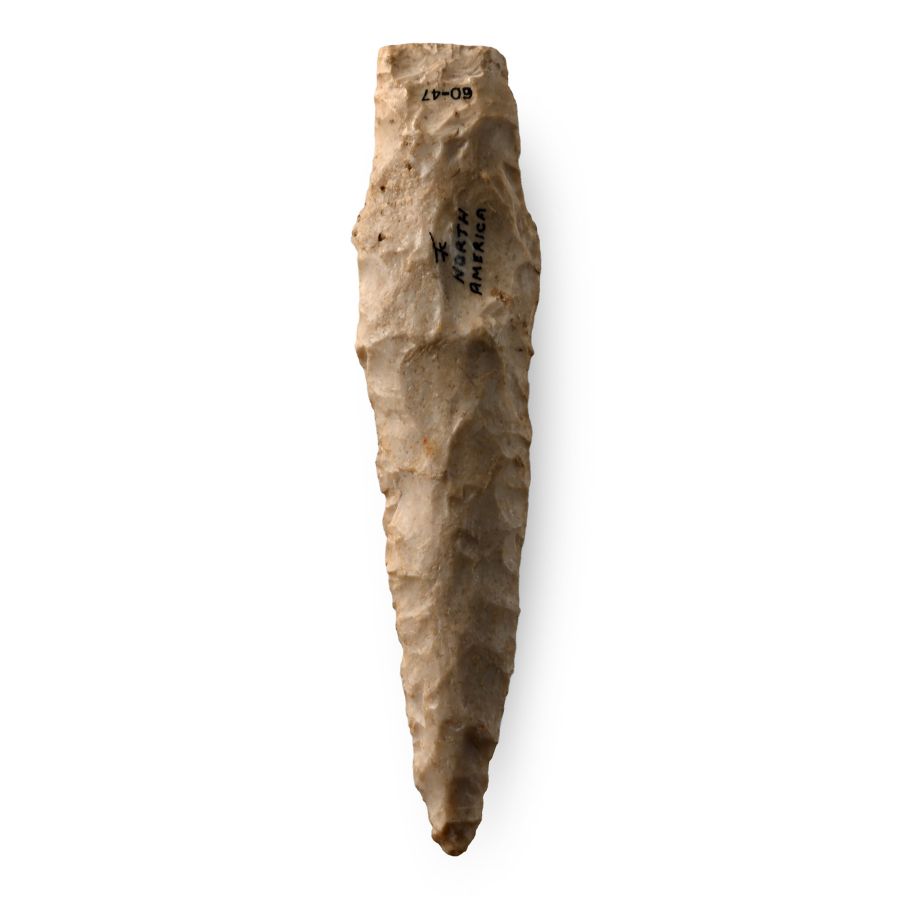
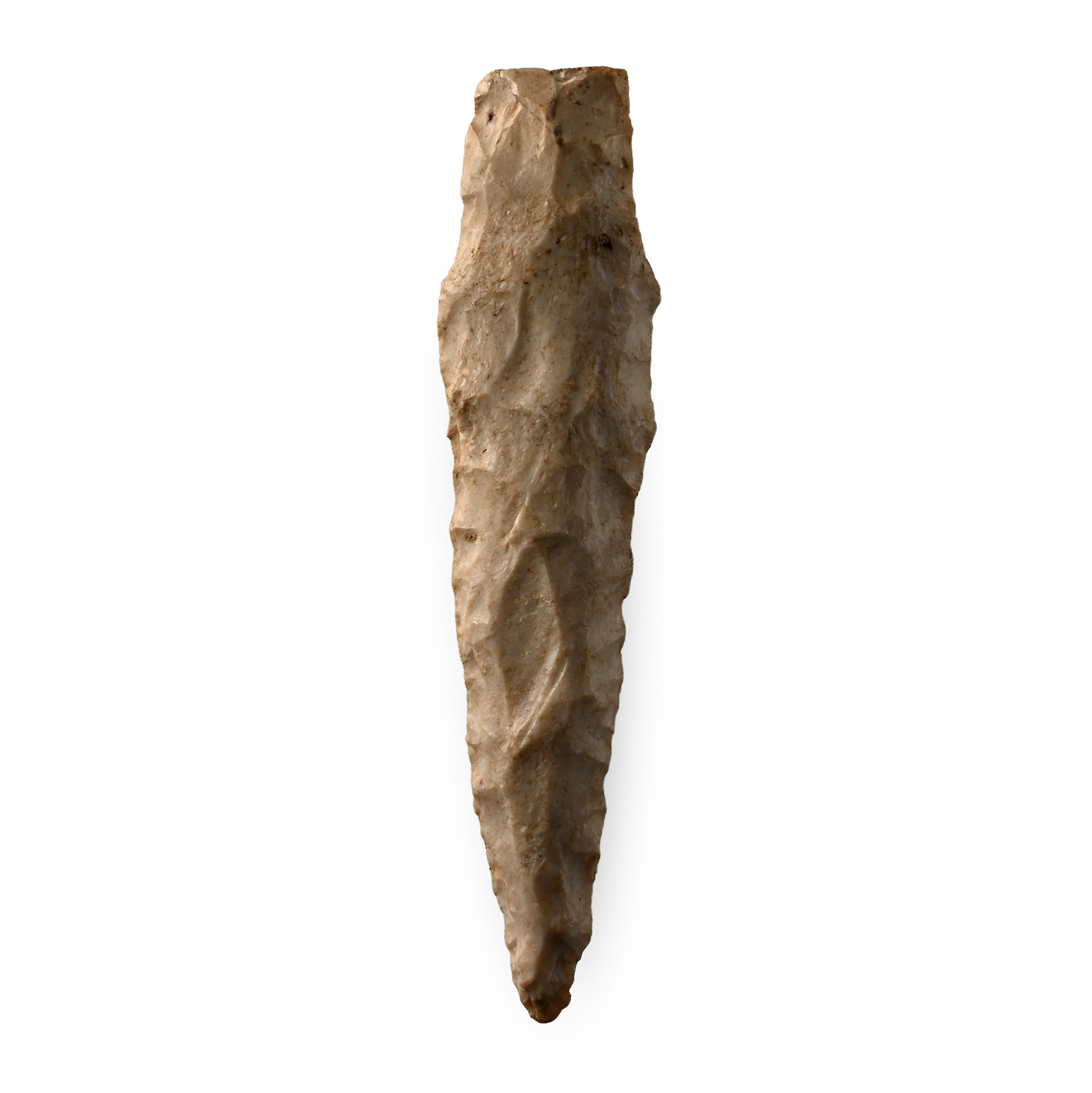
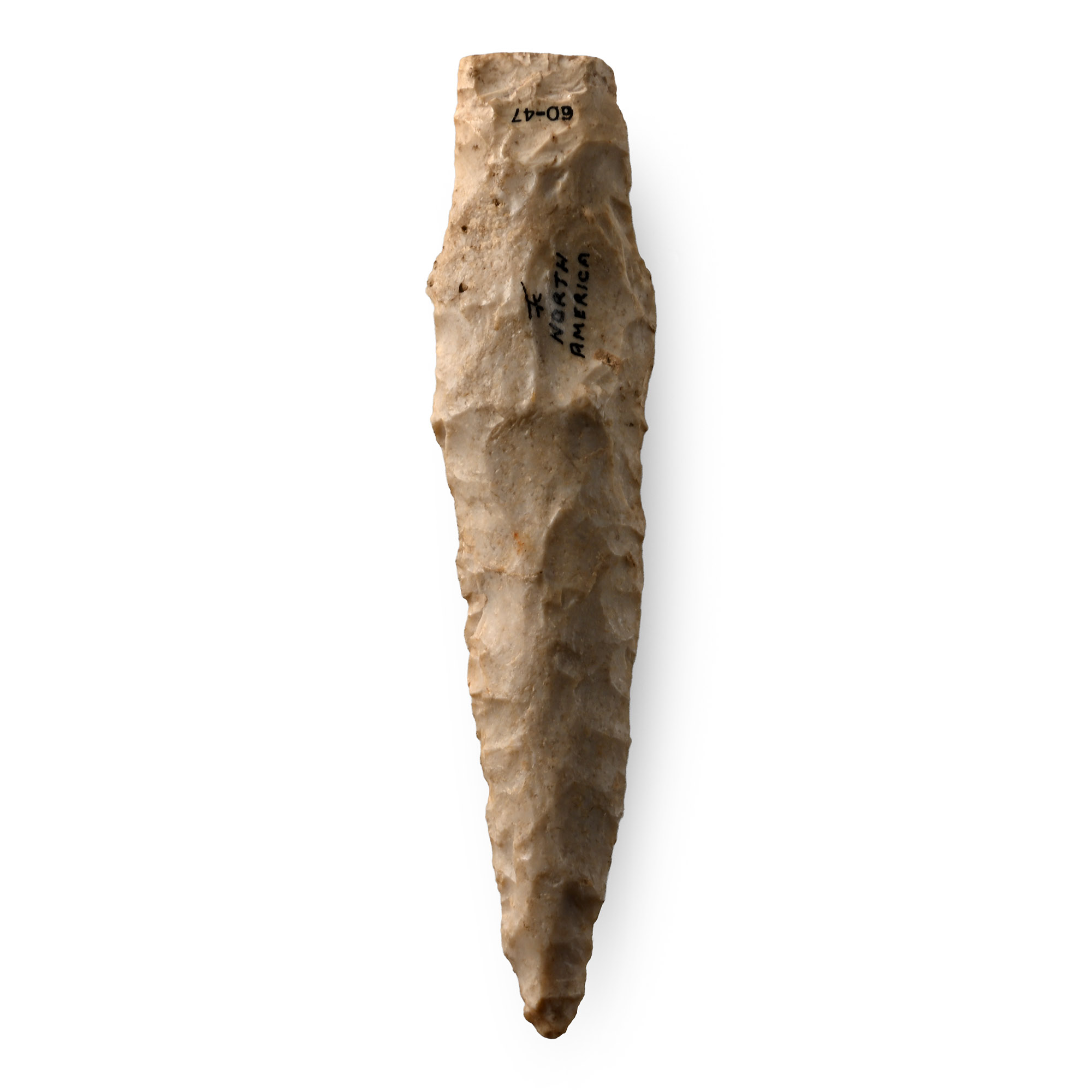
North American Stone Age Knapped Bifacial Dagger
CIRCA 6000-4000 B.P.
4 1/4 in. (33.5 grams, 10.8 cm).
Narrow blade made from cream stone, inked Hugh Fawcett collection monogram and notes 'North America, 60-47'. [No Reserve]
ProvenanceEx Dr Hugh Alderson Fawcett (1891-1982), a general practitioner and antiquarian who built up an important collection of ancient implements, weapons and ornaments.
From the collection of a West Sussex collector.
Acquired from the UK art market in the 2020s.
Dr Hugh Alderson Fawcett (1891-1982) was a general practitioner and antiquarian who built up an important collection of ancient implements, weapons and ornaments. The bulk of his collection is now in the Bristol Museum and Art Gallery, but Fawcett previously sold or traded some examples. His distinctive monogram and careful recording of provenance make his pieces readily identifiable.
CONDITIONTimeLine Auctions follows a vetting process to ensure the authenticity and legality of all items, reinforcing our commitment to integrity and responsible trading. Each antiquity, antique, and coin lot undergoes thorough examination by a vetting committee of at least ten external specialists, professional trade association members, scientists, and archaeologists: Our Vetting Process
AUCTIONS:
TimeLine is a leading auction house specialising in antiquities, ancient art, collectables, natural history, coins, medals, and books. Our auctions offer museums, collectors, historians, and enthusiasts the opportunity to acquire unique and historically significant pieces.
-
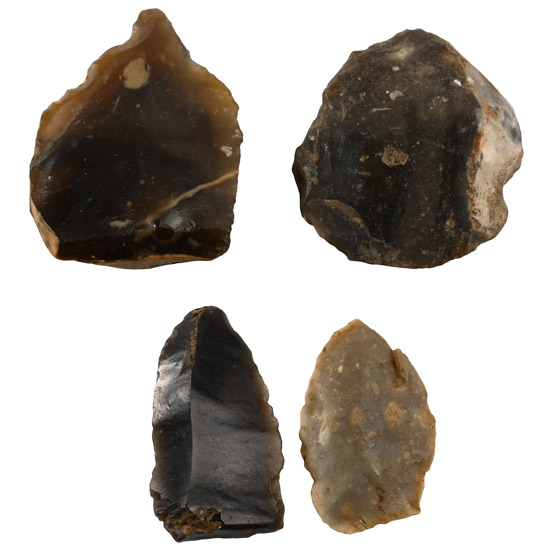
Stone Age Knapped Flint Drill, Arrowhead and Scraper Collection
Neolithic Period, circa 6th millennium B.P.Sold for (Inc. bp): £20
Comprising four knapped implements. 56.5 grams total, 36-48 mm
From the private collection of the late Mr M., a collector from Waterlooville, Hampshire, UK; late 1980s-early 1990s. -
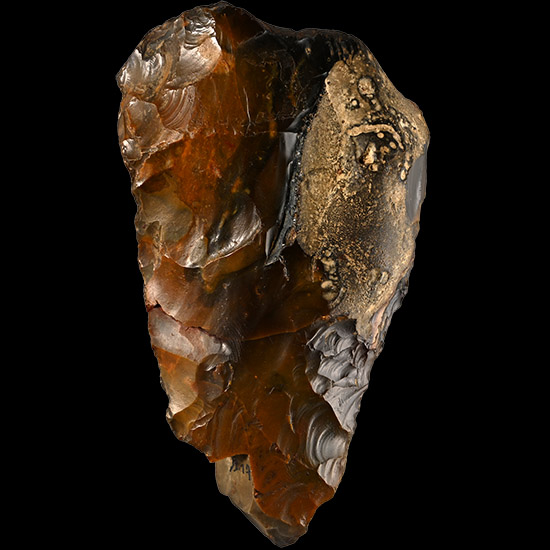
Stone Age Acheulean Handaxe
Lower Palaeolithic, circa 700,000-300,000 B.P.Sold for (Inc. bp): £520
Ovate axe in dark brown stone with some cortex visible, old collector's note ' 2 P. Abbevillier alluvions de la Somme.' 617 grams, 15.3 cm
From Abbeville, France (according to inscription). Collection of Michel C. Vaes (1934-2024), Belgium, formed 1960s-90s. Accompanied by a copy of the EU Licence no.2026 DMF 0436. -
.jpg)
Very Large French Stone Age Mousterian Knapped Flint Knife
Middle Palaeolithic Period, circa 150,000-60,000 B.P.Sold for (Inc. bp): £169
Triangular in profile with remains of cortex to the broad base; made by Neanderthal. 180 grams, 11.3 cm
From Yonne, Bourgogne Franche-Compte Region of France. From a large French collection built up in the early 1900s. Acquired on the European art market. From a private collection.
