
Loading, please wait...
LOT 1740
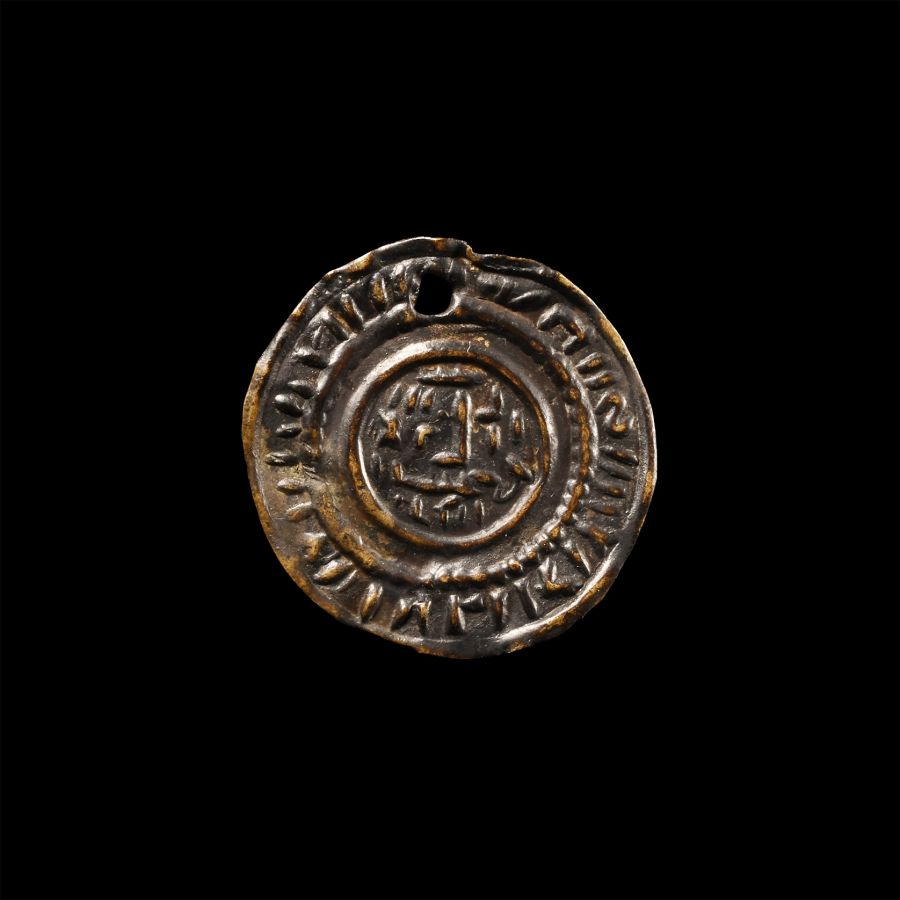
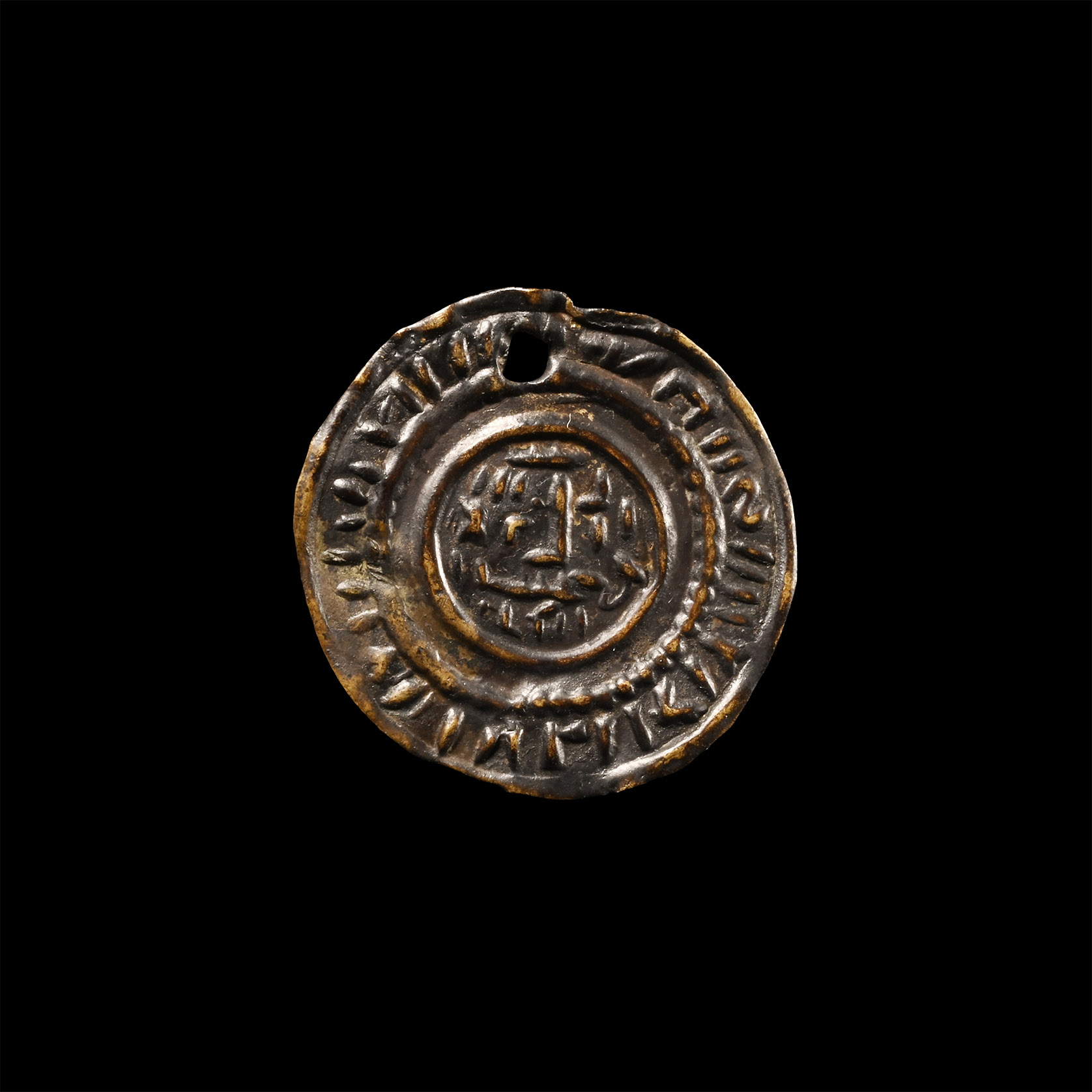
Norman Period 'Thames' Bronze Bracteate Badge
CIRCA 12TH CENTURY A.D.
7/8 in. (0.72 grams, 23 mm).
Displaying a repoussé design of concentric roundels with enigmatic script too centre and outer legend; pierced. [No Reserve]
ProvenanceFound Billingsgate spoil from the Thames foreshore, London, UK.
CONDITIONTimeLine Auctions follows a vetting process to ensure the authenticity and legality of all items, reinforcing our commitment to integrity and responsible trading. Each antiquity, antique, and coin lot undergoes thorough examination by a vetting committee of at least ten external specialists, professional trade association members, scientists, and archaeologists: Our Vetting Process
AUCTIONS:
TimeLine is a leading auction house specialising in antiquities, ancient art, collectables, natural history, coins, medals, and books. Our auctions offer museums, collectors, historians, and enthusiasts the opportunity to acquire unique and historically significant pieces.
-
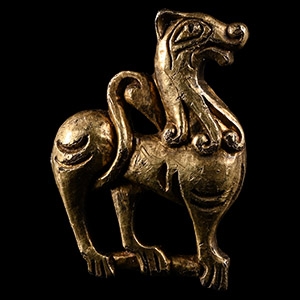
Norman Silver-Gilt Statant Beast Brooch
Circa 11th-12th century A.D.Sold for (Inc. bp): £2,106
Of Romanesque style with hollow reverse to the body, catch behind the neck and hinged pin to the reverse; modelled in the half-round. 8.3 grams, 28 mm
Acquired early 1990s. From an East Anglian private collection. -
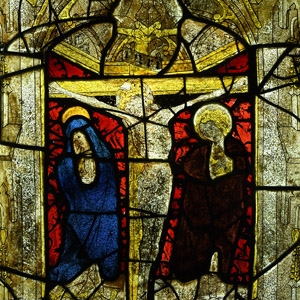
Medieval Stained Glass Panel with the Crucifixion
Germany, Erfurt(?), circa 1420 A.D.Sold for (Inc. bp): £2,889
Rectangular with lead came framing; scene of the Crucifixion with emaciated nimbate Christ on the Christ flanked by a robed and nimbate male and female figure (Mary Magdalene), within an arch formed by two vertical pillars with facet detailing, scroll with 'INRI' above. 3.3 kg, 59.5 x 44 cm
Galerie de Chartres, 8 March 2009, lot 12. Ex central London gallery. This lot has been checked against the Interpol Database of stolen works of art and is accompanied by search certificate no.11904-207296. -
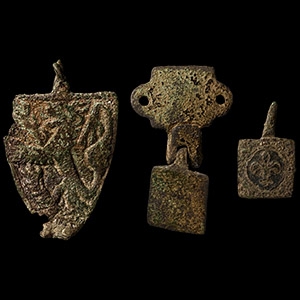
Medieval Bronze Knight's Heraldic Horse Harness Pendant Group
14th-15th century A.D.Sold for (Inc. bp): £46
A shield-shaped example displaying a rampant lion; square-shaped pendant with fleur; hinged pendant with lion in roundel to both panels. 18 grams total, 23-43 mm
Found Nottinghamshire, UK.
