
Loading, please wait...


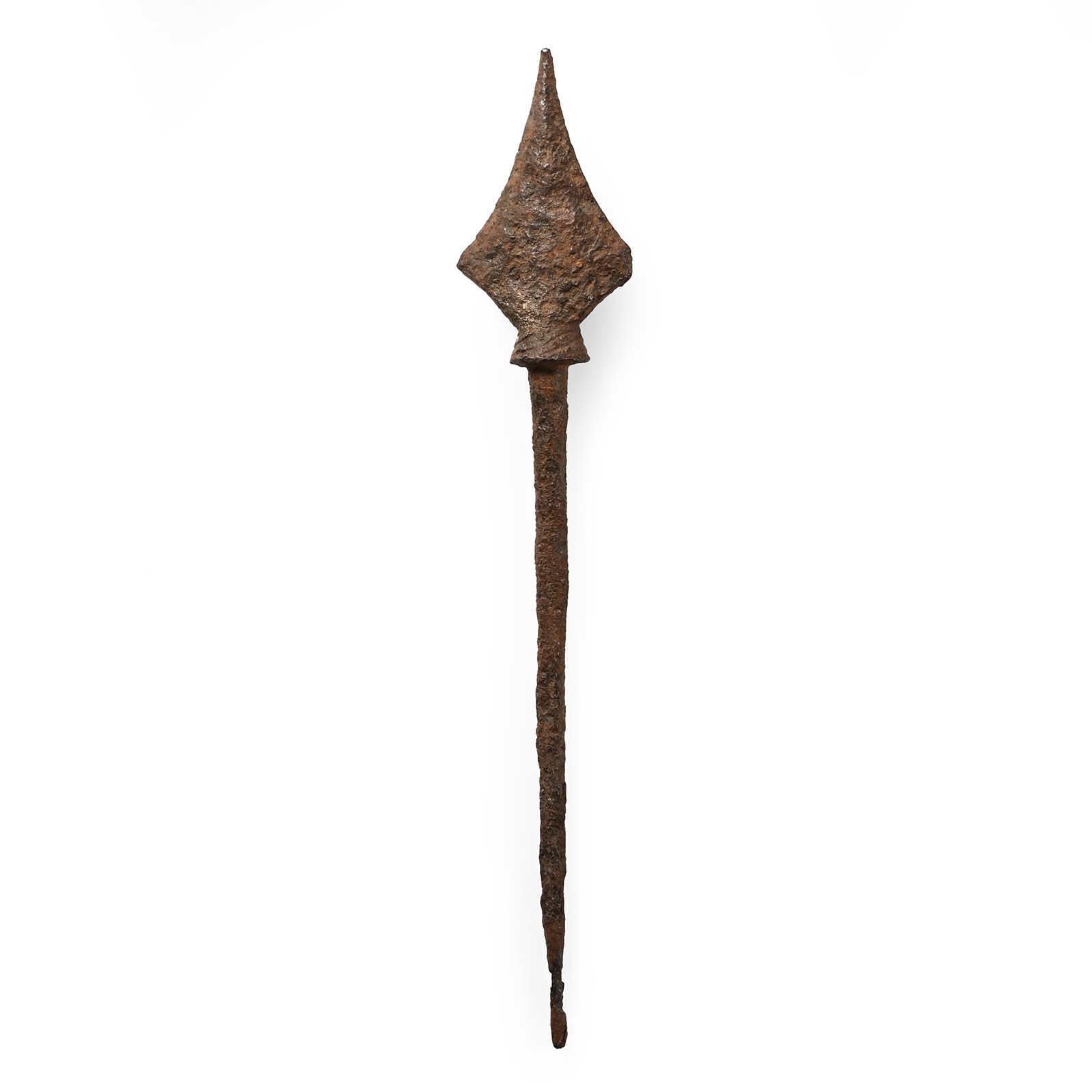
LOT 1418
Norman Period Iron Arrowhead
11TH-12TH CENTURY A.D.
4 1/8 in. (8.5 grams, 10.4 cm).
Tapering tang with collar and scooped edges to the blade. [No Reserve]
ProvenanceUK private collection before 2000.
Acquired on the UK art market.
Property of a London gentleman.
TimeLine Auctions follows a vetting process to ensure the authenticity and legality of all items, reinforcing our commitment to integrity and responsible trading. Each antiquity, antique, and coin lot undergoes thorough examination by a vetting committee of at least ten external specialists, professional trade association members, scientists, and archaeologists: Our Vetting Process
AUCTIONS:
TimeLine is a leading auction house specialising in antiquities, ancient art, collectables, natural history, coins, medals, and books. Our auctions offer museums, collectors, historians, and enthusiasts the opportunity to acquire unique and historically significant pieces.
-
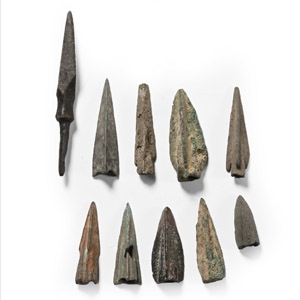
Greek Bronze Arrowhead Collection
Circa 5th-3rd century B.C.Sold for (Inc. bp): £52
Mainly socketted and triangular in section. 23 grams total, 15-49 mm
From a private Barnsley, UK, family collection. -
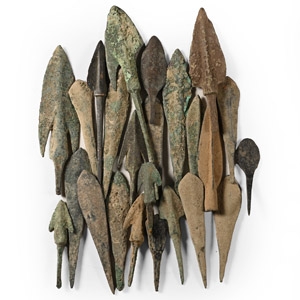
Luristan and Phoenician Bronze Arrowhead Group
13th-7th century B.C.Sold for (Inc. bp): £468
Including socketted, tanged and other types. 220 grams total, 4.3-11 mm
Ex London, UK, collection, 1990s. -
.jpg)
Luristan Bronze Short Sword
13th-7th century B.C.Sold for (Inc. bp): £221
With lentoid-section blade, tongue-shaped in plan with integral tapering hilt with flared finial, lateral flanges to accept a panel of bone to each face forming the grip, mounting pegs at neck. 279 grams, 35.7 cm
Ex British private collection, Buckinghamshire, UK. From the private collection of Kenneth Machin (1936-2020), Buckinghamshire, UK; with collection no.BA22; his collection of antiquities and natural history was formed since 1948; thence by descent.
