
Loading, please wait...
LOT 1713
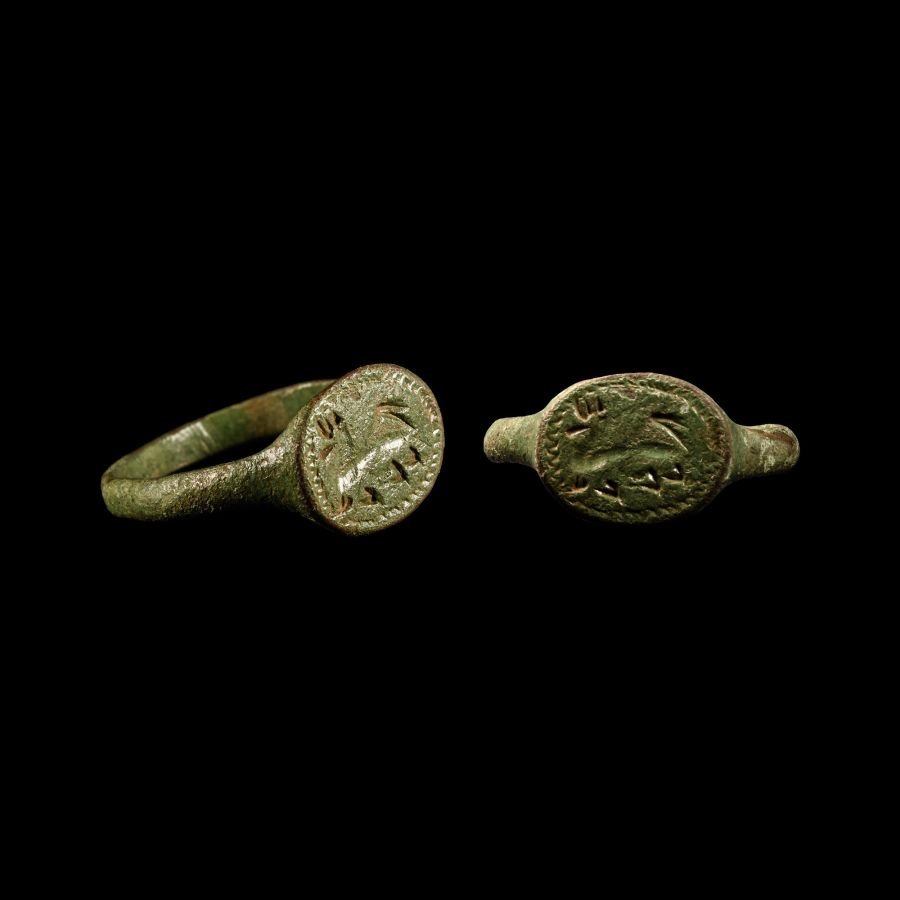
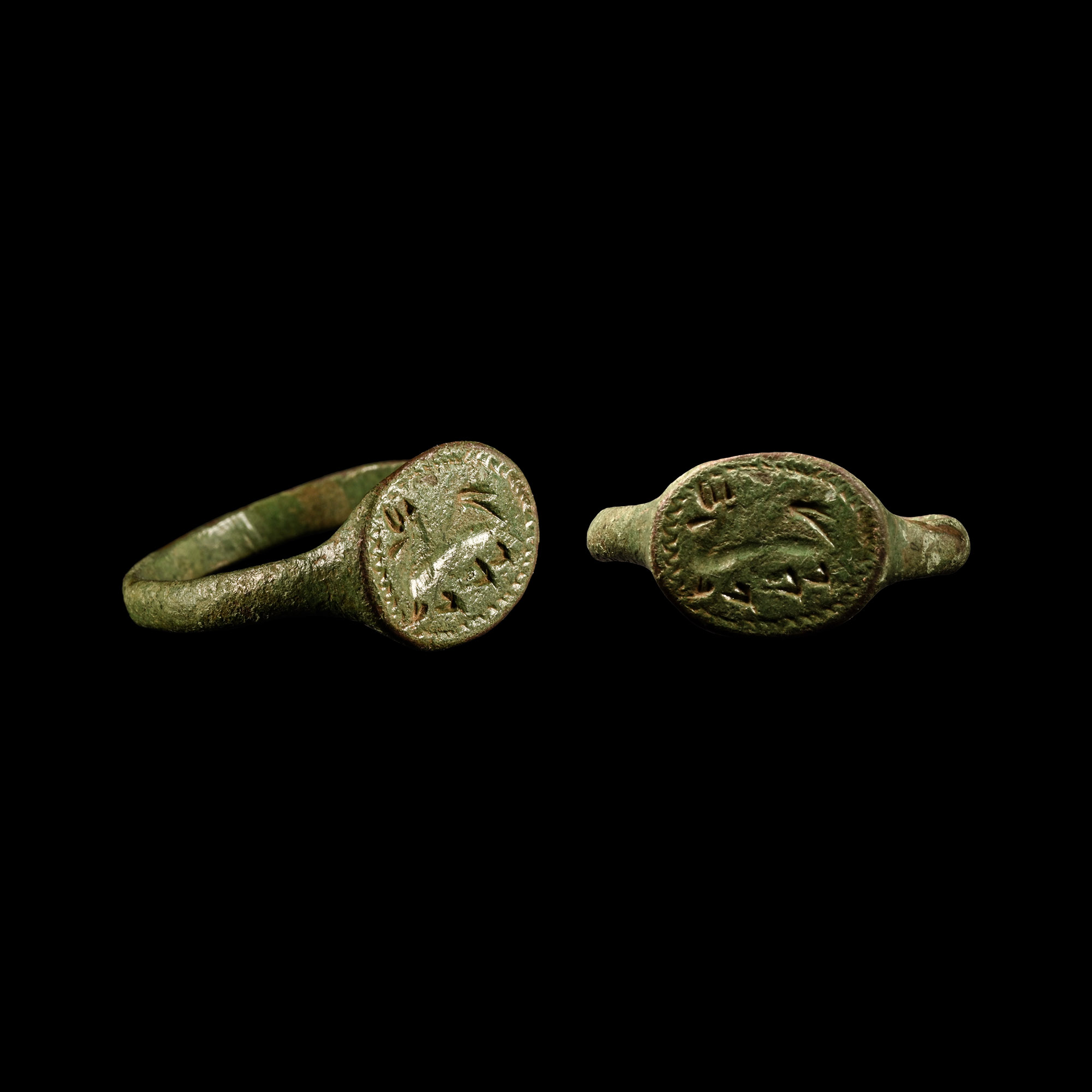
Norman Period Bronze Ring with Dragon Walking Right
CIRCA 11TH-12TH CENTURY A.D.
7/8 in. (2.81 grams, 22.82 mm overall, 19.16 mm internal diameter (approximate size British S 1/2, USA 9 1/4, Europe 20.63, Japan 19)).
The slender, convex hoop supporting an oval-shaped bezel, engraved with a dragon trotting left within a zigzag border. [No Reserve]
ProvenancePrivate collection formed since the 1940s.
UK art market.
Property of an Essex gentleman.
TimeLine Auctions follows a vetting process to ensure the authenticity and legality of all items, reinforcing our commitment to integrity and responsible trading. Each antiquity, antique, and coin lot undergoes thorough examination by a vetting committee of at least ten external specialists, professional trade association members, scientists, and archaeologists: Our Vetting Process
AUCTIONS:
TimeLine is a leading auction house specialising in antiquities, ancient art, collectables, natural history, coins, medals, and books. Our auctions offer museums, collectors, historians, and enthusiasts the opportunity to acquire unique and historically significant pieces.
-
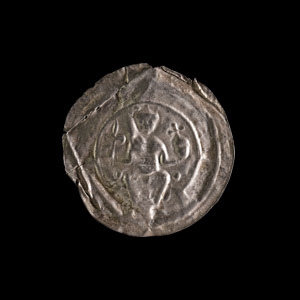
Medieval Silver Bracteate with Seated Figure
Germany, 11th century A.D.Estimate: £200 - 300 (+bp*)
Opening Bid: £111
Repoussé work with an enthroned figure holding cross-on-globe and a sceptre. 0.95 grams, 31.5 mm
Fine condition.
Acquired on the European art market between 1975-2000. Ex property of a Dutch collector. -
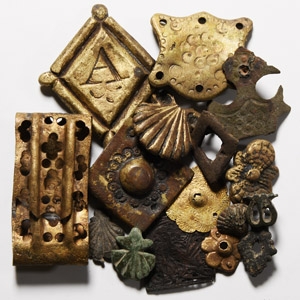
Medieval and Later Belt Mount Group
Mainly 14th-18th century A.D.Sold for (Inc. bp): £39
Comprising mounts of various types, including examples retaining gilding: a 13th-15th century Lombardic letter M, for 'Maria'; a 16th-17th century lozenge displaying letter A with floral dashes below; numerous stylised flower-shaped mounts and flower decorated mounts; various shell-shaped mounts, possibly associated with pilgrimage; a squashed 'hoop' with floral piercings to one face; a square plaque displaying a bird amongst flowering tendrils. 70 grams total, 11-47 mm
Found Thames foreshore, Tower of London, UK. Accompanied by a copy of the British Museum's Portable Antiquities Scheme (PAS) report numbers LON-33F3F4; LON-45DA48. -
.jpg)
Medieval 'Thames' St. Thomas Becket Lead-Alloy Pilgrim's Badge
Late 13th-14th century A.D.Sold for (Inc. bp): £156
Depicted standing on the back of a peacock with his right hand extended in a gesture of benediction, crozier in his left hand. 2.19 grams, 24 mm
Fine condition.
Found on the Thames foreshore at Chiswick, London, UK. Acquired on the UK antiques market between 1974-1985. Albert Ward collection, Essex, UK.
