
Loading, please wait...


LOT 1844
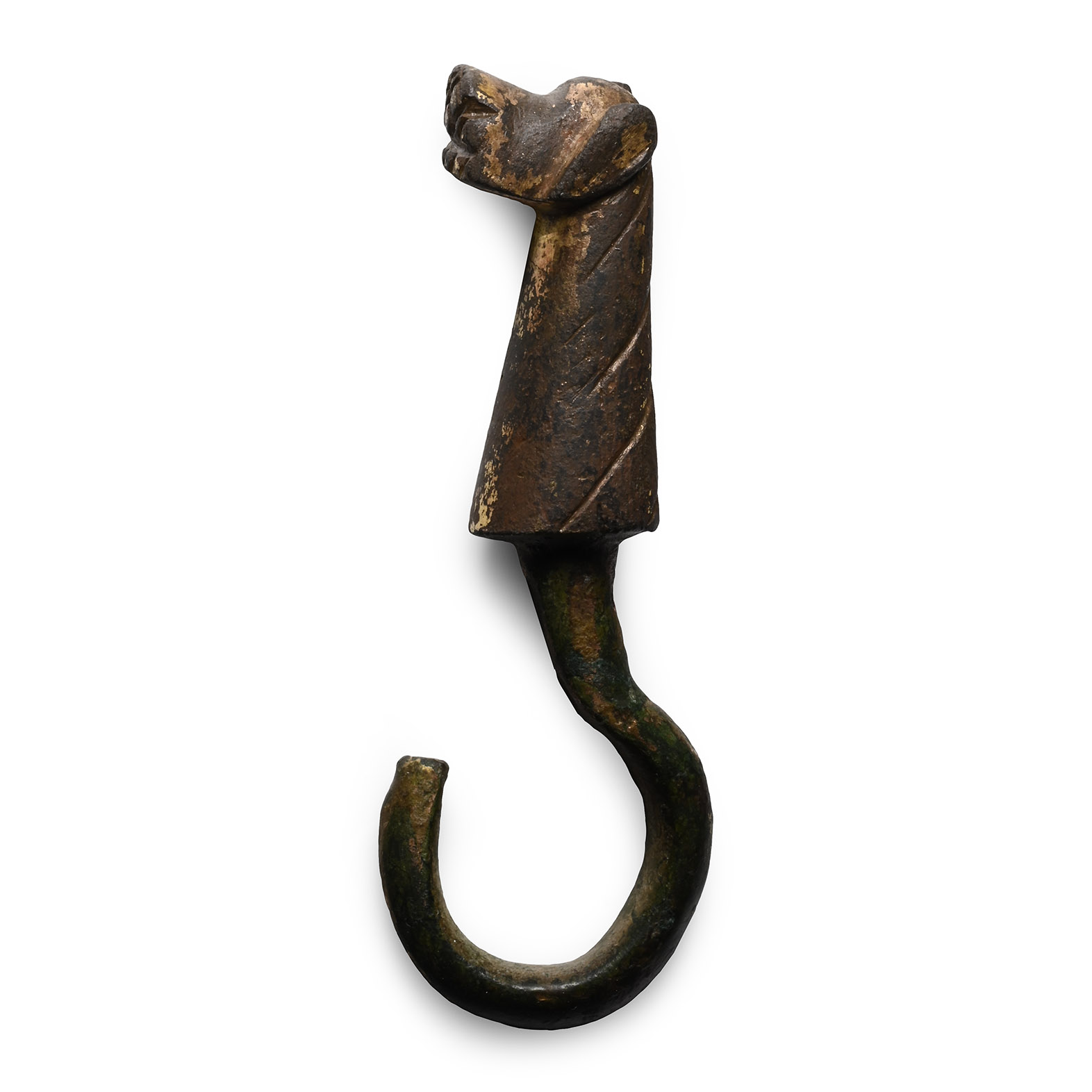
Norman Gilt Bronze Dog-Headed Fitting
CIRCA 12TH CENTURY A.D.
2 1/2 in. (34.3 grams, 64 mm).
With a curved hook, finial formed as stylised dog with hatching to the muzzle. [No Reserve]
ProvenanceAcquired from a Norfolk, UK, collector.
Property of an Essex gentleman.
TimeLine Auctions follows a vetting process to ensure the authenticity and legality of all items, reinforcing our commitment to integrity and responsible trading. Each antiquity, antique, and coin lot undergoes thorough examination by a vetting committee of at least ten external specialists, professional trade association members, scientists, and archaeologists: Our Vetting Process
AUCTIONS:
TimeLine is a leading auction house specialising in antiquities, ancient art, collectables, natural history, coins, medals, and books. Our auctions offer museums, collectors, historians, and enthusiasts the opportunity to acquire unique and historically significant pieces.
-
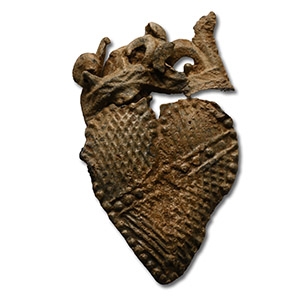
Medieval Pewter Crowned Heart Pilgrim's Badge
14th-15th century A.D.Sold for (Inc. bp): £52
Comprising a hatched heart with diagonal pelletted band surmounted by an openwork crown, integral pin to reverse. 5 grams, 30 mm
Acquired on the European art market since the early 2000s. From the private Northern Ireland collection of R.M. -
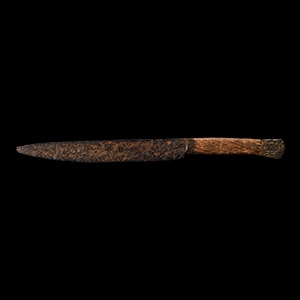
Medieval Iron Knife with Bronze Pommel
Circa 1500 A.D.Sold for (Inc. bp): £182
Comprising a single cutting edge and scale tang, bifacial pommel incised with a female figure possibly holding an arrow to one face and what is apparently a mythical beast or other animal to the other. 23 grams, 18.7 cm
Acquired 1960s-1990s. Late Alison Barker collection, a retired London barrister.
Examining the medieval miniatures, the knives were diagonally suspended, but the vertical suspension was the most common method in all periods. With the contrivance of an additional inner scabbard it was possible to carry more than one knife. -
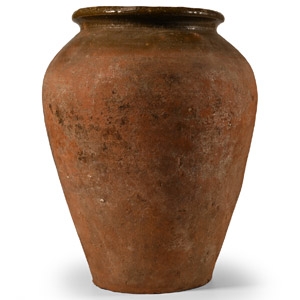
Large Medieval Green Glazed Terracotta Jar
Circa 14th century A.D.Sold for (Inc. bp): £65
Comprising a tall piriform body with flat bottom, high shoulder and everted rolled rim; brown glaze to the rim and interior. 1.84 kg, 25.8 cm
Acquired 1960s-1980s. From the Walter Steinberg collection. Ex property of an English collector.
