
Loading, please wait...
LOT 2193
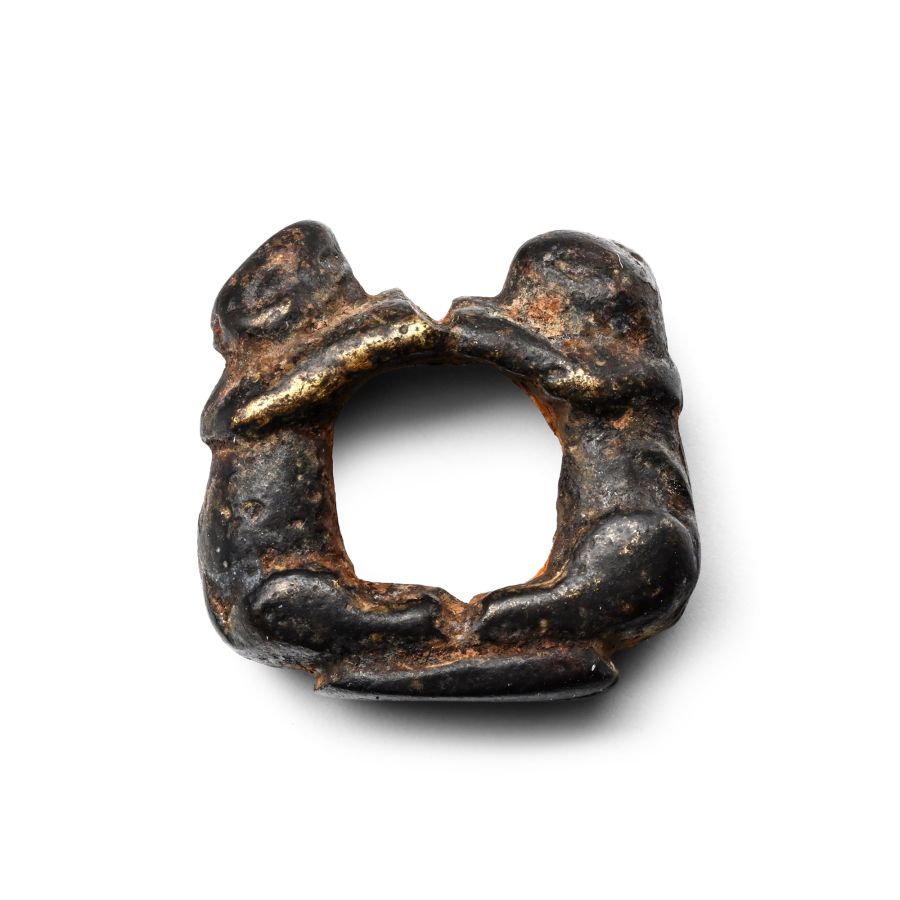
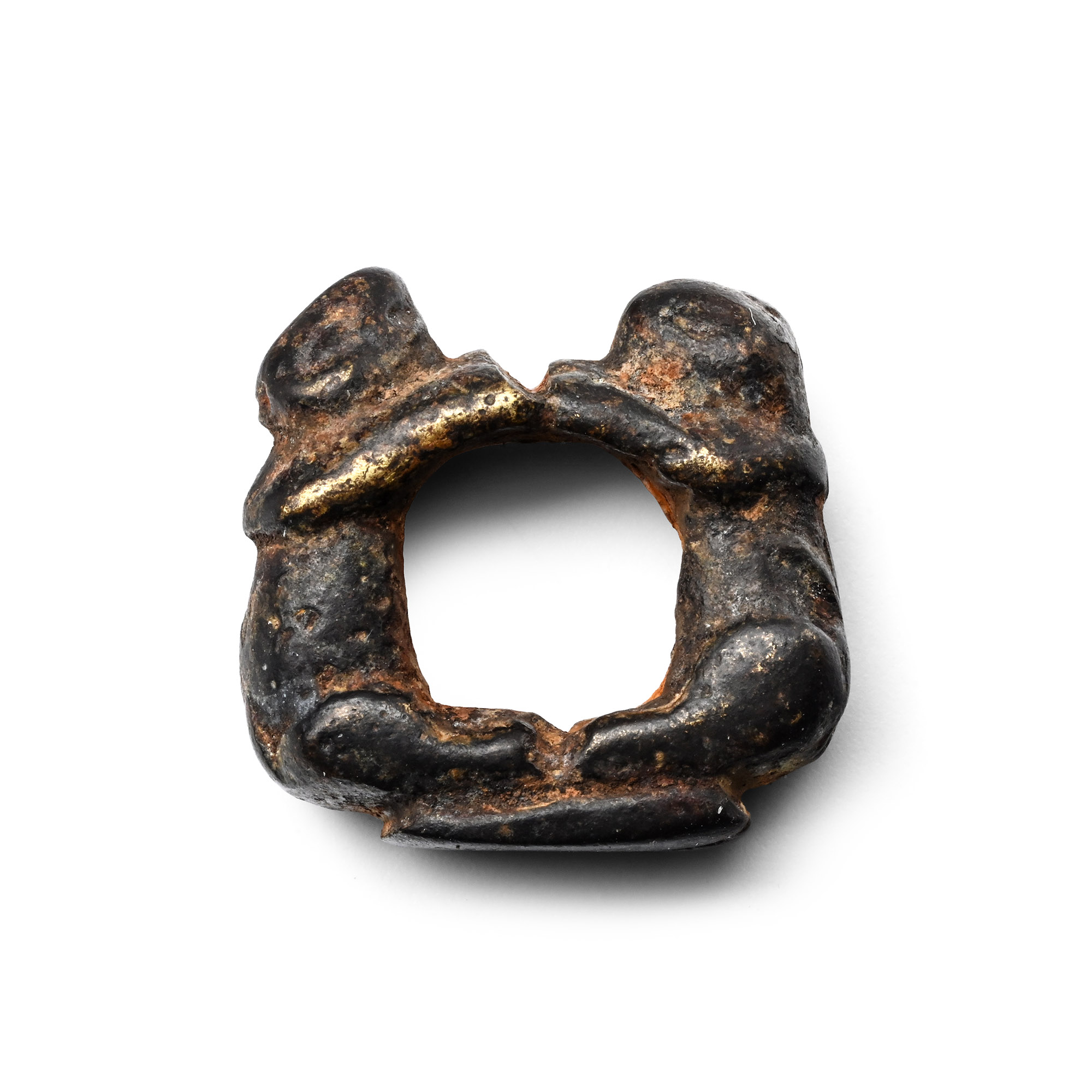
Norman Bronze Zoomorphic Loop
CIRCA 11TH-12TH CENTURY A.D.
3/4 in. (9.52 grams, 19.4 mm).
Formed as two opposing stocky animals with conjoined paws forming the loop. [No Reserve]
ProvenanceFrom the private collection of a European gentleman (1942-2024), formed since the 1970s.
CONDITIONTimeLine Auctions follows a vetting process to ensure the authenticity and legality of all items, reinforcing our commitment to integrity and responsible trading. Each antiquity, antique, and coin lot undergoes thorough examination by a vetting committee of at least ten external specialists, professional trade association members, scientists, and archaeologists: Our Vetting Process
AUCTIONS:
TimeLine is a leading auction house specialising in antiquities, ancient art, collectables, natural history, coins, medals, and books. Our auctions offer museums, collectors, historians, and enthusiasts the opportunity to acquire unique and historically significant pieces.
-
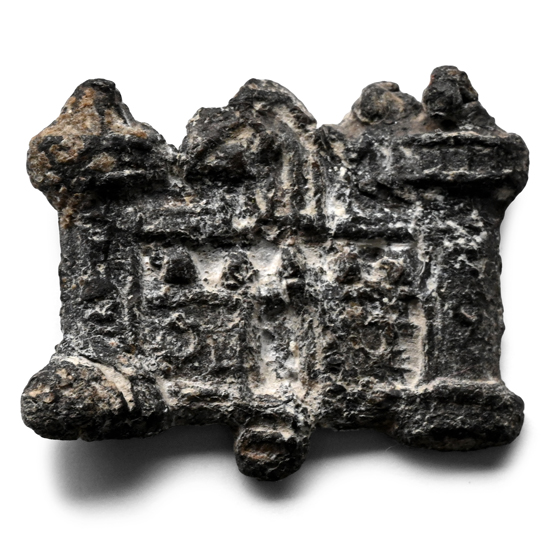
Medieval Pewter Pilgrim's Badge with Castle
14th-15th century A.D.Sold for (Inc. bp): £52
Tower of London keep modelled in low-relief with bust of King Henry above (head absent); collector's inked legend to reverse 'BROOK WH.'. 4.63 grams, 25 mm
From a retired Lincolnshire, UK, gentleman's collection, a long time member of the Pewter Society. -
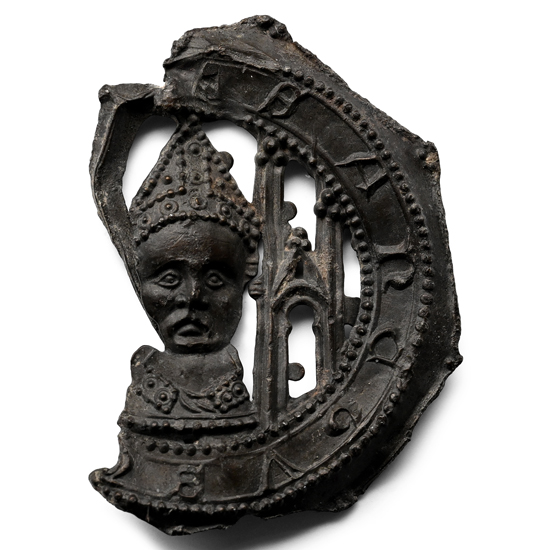
Medieval Pewter Pilgrim's Badge of Archbishop Thomas Becket
14th-15th century A.D.Sold for (Inc. bp): £845
Comprising the facing bust of Thomas Becket wearing his mitre and with flanking tracery, a carinated ring with reserved legend 'SANCTVS' (holy, saint) and a pin to the reverse. 5.28 grams, 38 mm
From a retired Lincolnshire, UK, gentleman's collection, a long time member of the Pewter Society. -
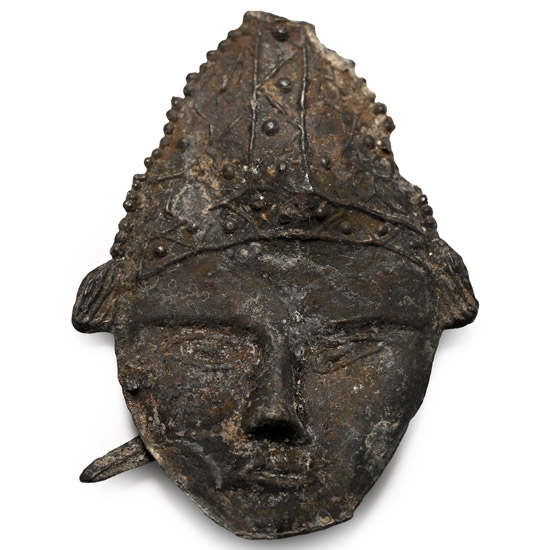
Medieval Pewter Pilgrim's Badge of Archbishop Thomas Becket
Circa 14th-15th century A.D.Sold for (Inc. bp): £247
Head of Thomas Becket wearing archbishop's mitre; pin to reverse. 3.33 grams, 31 mm
From a retired Lincolnshire, UK, gentleman's collection, a long time member of the Pewter Society.
