
Loading, please wait...

LOT 1814
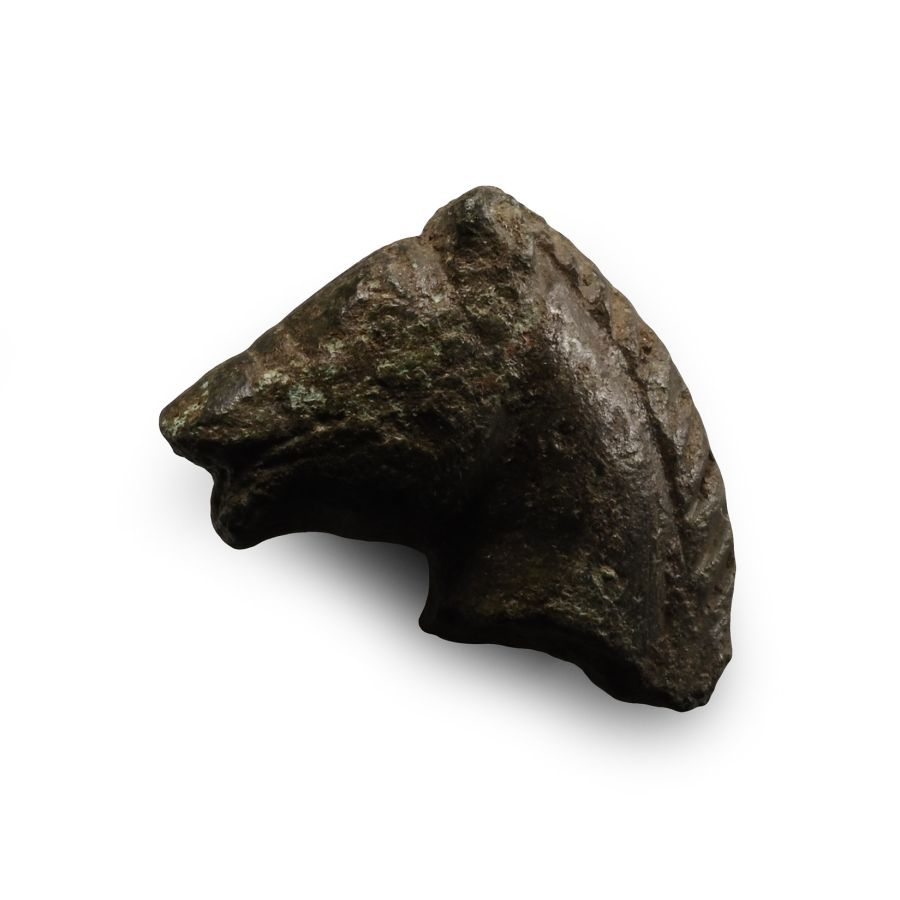
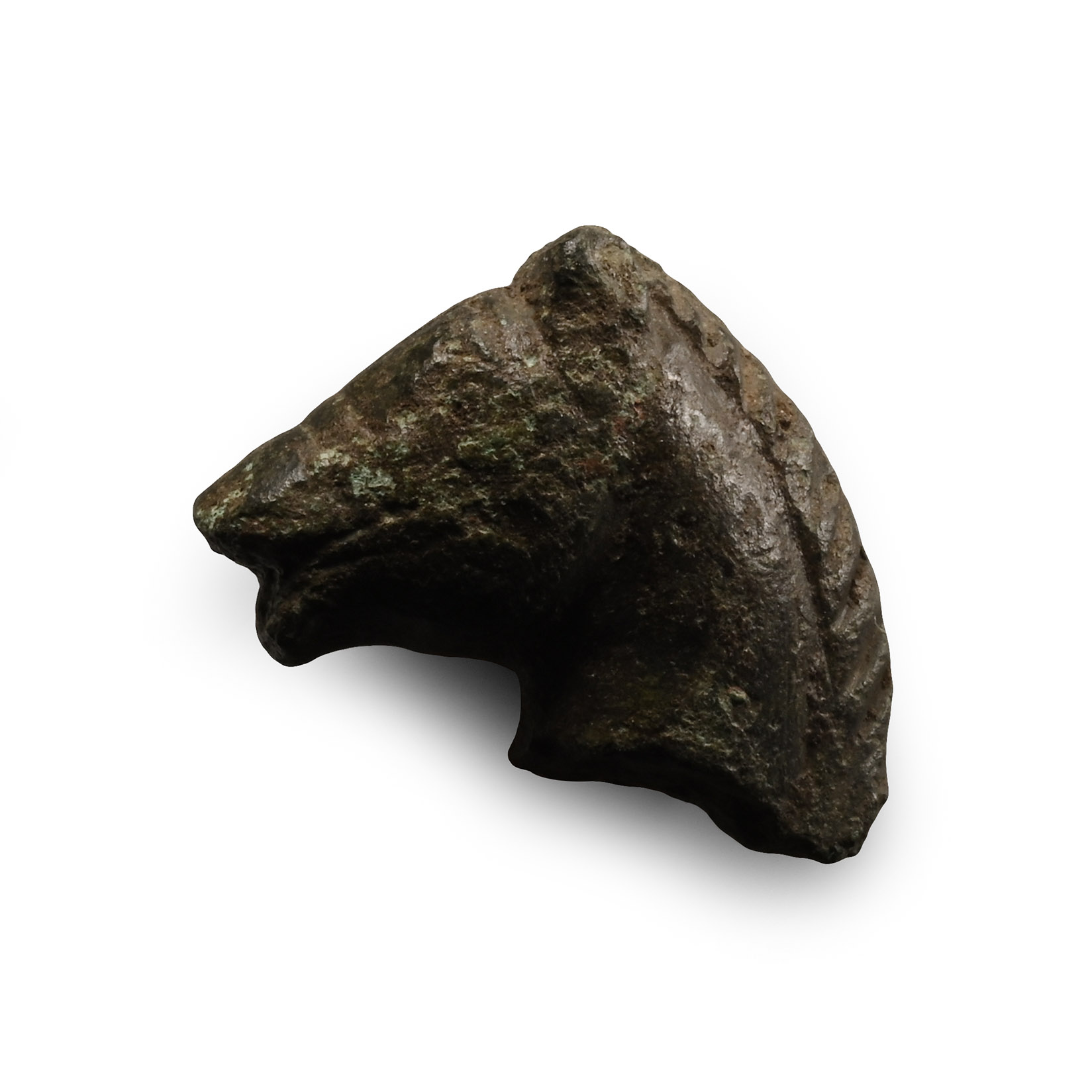
Norman Bronze Romanesque Horse Head Terminal
CIRCA 11TH-12TH CENTURY A.D.
7/8 in. (14.3 grams, 21 mm).
Modelled in the round with notched mane, detailed bridle, socket eyes. [No Reserve]
ProvenanceAcquired on the European art market since the early 2000s.
From the private Northern Ireland collection of R.M.
TimeLine Auctions follows a vetting process to ensure the authenticity and legality of all items, reinforcing our commitment to integrity and responsible trading. Each antiquity, antique, and coin lot undergoes thorough examination by a vetting committee of at least ten external specialists, professional trade association members, scientists, and archaeologists: Our Vetting Process
AUCTIONS:
TimeLine is a leading auction house specialising in antiquities, ancient art, collectables, natural history, coins, medals, and books. Our auctions offer museums, collectors, historians, and enthusiasts the opportunity to acquire unique and historically significant pieces.
-
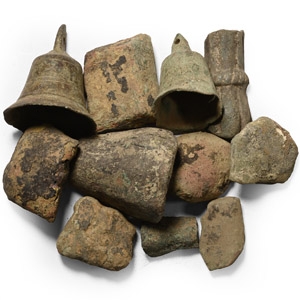
Medieval Bronze Pot Leg and Bell Group
12th-15th century A.D.Sold for (Inc. bp): £7
Comprising nine stubby cast legs from bronze cooking pots, and a small bell with pierced knop finial. 754 grams total, 35-50 mm
Ex Stocker collection, Kent, UK, 1955-early 2000s. -
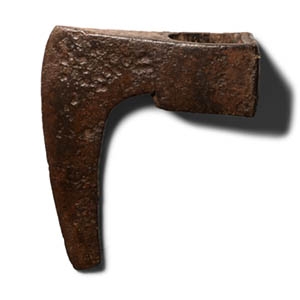
Medieval Iron Bearded Axehead
Circa 14th-16th century A.D. or laterSold for (Inc. bp): £111
With broad curved blade and square chin, broad neck, small socket with square-section hammer to the reverse. 450 grams, 12.5 cm
Ex North American collection, 1970s-1990s. -
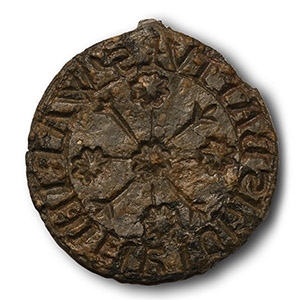
Medieval Personal Lead Seal Matrix of Warin Son of John Battle
Circa 13th century A.D.Sold for (Inc. bp): £46
Discoid with remains of a loop, central quincunx of rosettes with crows' feet between; legend to the rim '* S' WA[R]INI FIL IOhIS BATTVL' (seal of Warin son of John [of] Battle). 14.76 grams, 33 mm
Ex Paul Moore collection, West Sussex, UK, 1990s-2000s. Accompanied by a Paul Moore display card.
The name Warin was popular among the Merovingian Franks and a bishop of that name was canonised; it then remained in use as a Christian name into the medieval period.
