
Loading, please wait...
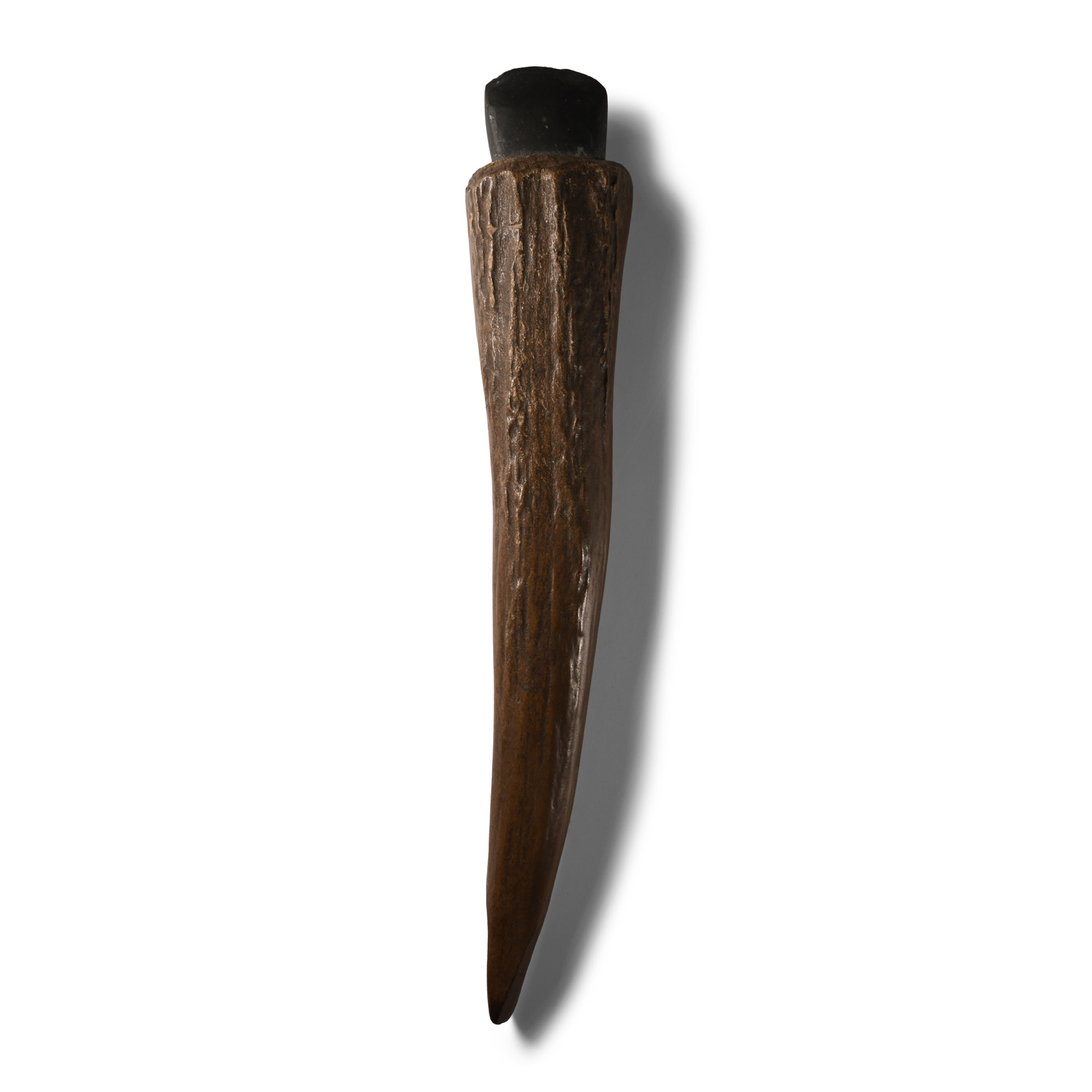
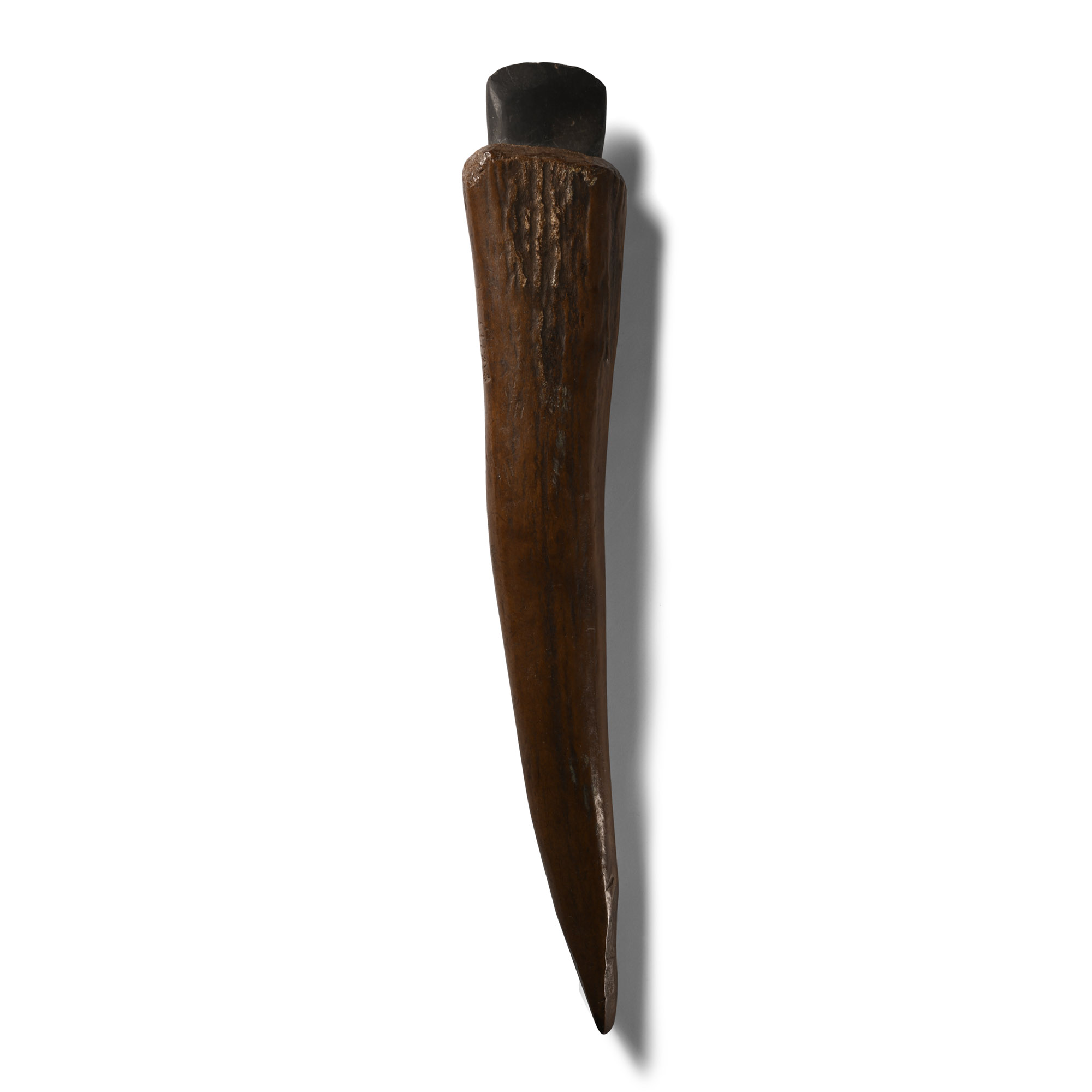
LOT 1626
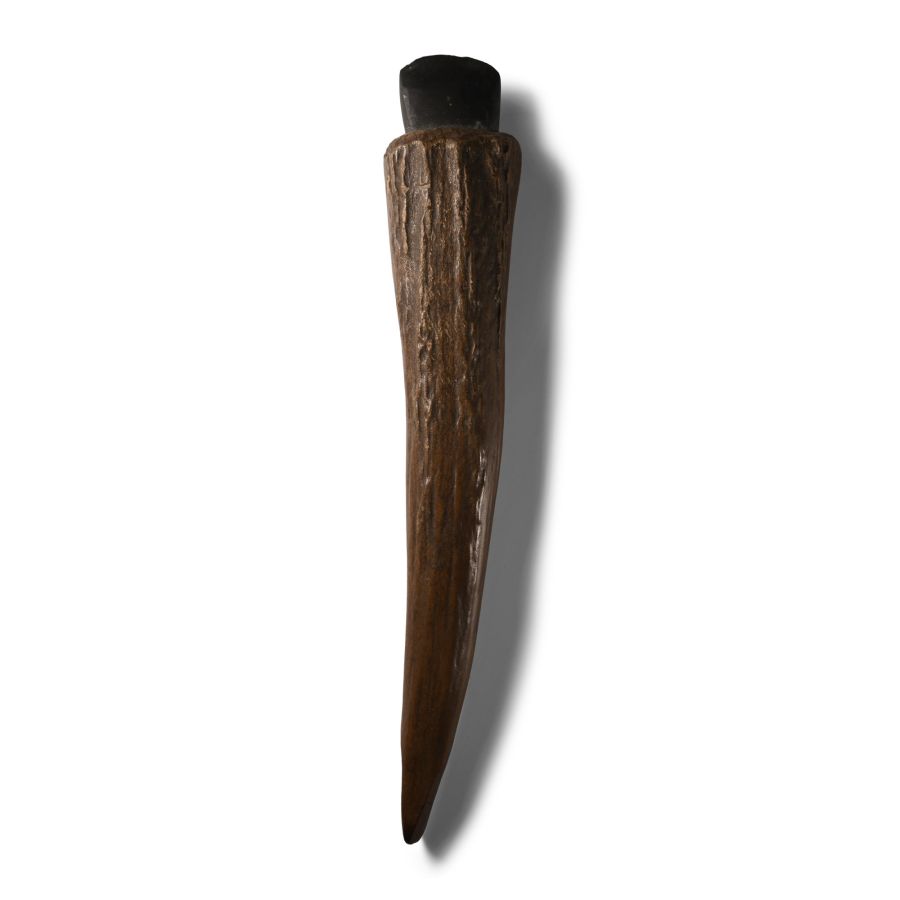
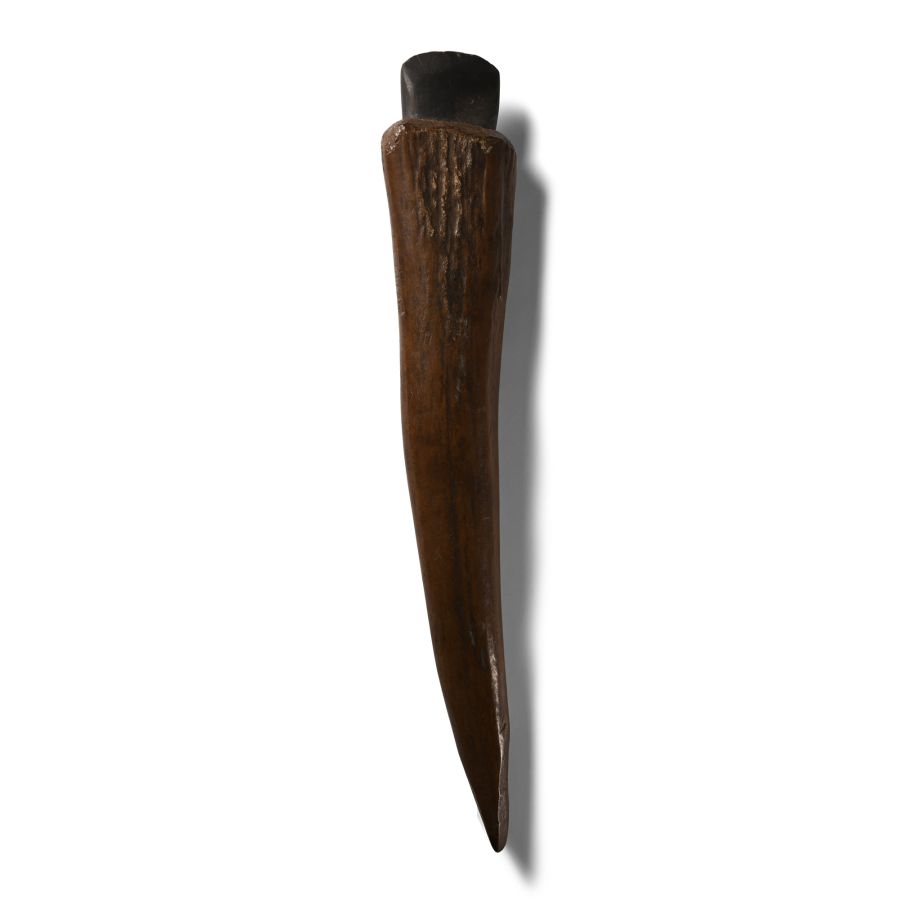
Neolithic Wood Shaving Blade with Antler Handle
3RD-2ND MILLENNIUM B.P.
9 1/8 in. (134 grams, 23.1 cm).
Finely knapped and polished tongue-shaped blade embedded in a more recent antler handle with chisel finial.
ProvenanceAcquired in the mid 1980s-1990s.
Private collection, Switzerland, thence by descent.
Private collection, since the late 1990s.
TimeLine Auctions follows a vetting process to ensure the authenticity and legality of all items, reinforcing our commitment to integrity and responsible trading. Each antiquity, antique, and coin lot undergoes thorough examination by a vetting committee of at least ten external specialists, professional trade association members, scientists, and archaeologists: Our Vetting Process
AUCTIONS:
TimeLine is a leading auction house specialising in antiquities, ancient art, collectables, natural history, coins, medals, and books. Our auctions offer museums, collectors, historians, and enthusiasts the opportunity to acquire unique and historically significant pieces.
LOT 1626
Neolithic Wood Shaving Blade with Antler Handle
Estimate £250 - 350€290 - 410 (for guidance only)$340 - 470 (for guidance only)
-
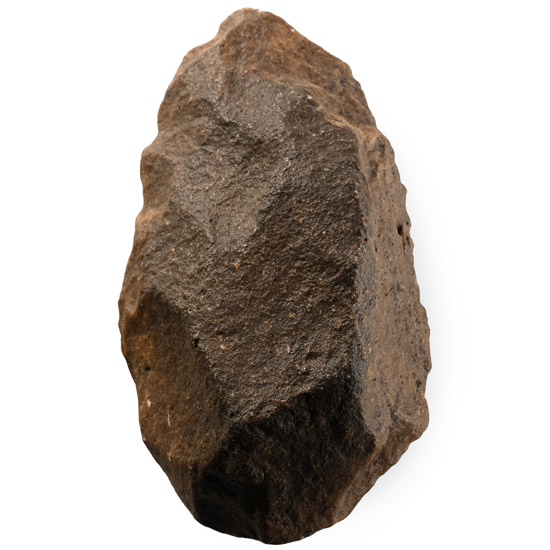
African Stone Age Homo Erectus Knapped Acheulean Handaxe
Lower Palaeolithic Period, circa 1,000,000-500,000 B.P.Sold for (Inc. bp): £78
Piriform in plan, knapped in dark red quartzite with narrow point. 440 grams, 12.2 cm
From the Northern Sahara, North Africa. From a collection formed during the 1970s and 1980s, having been acquired on the British art market; thence by descent to the current owner in 1998. -
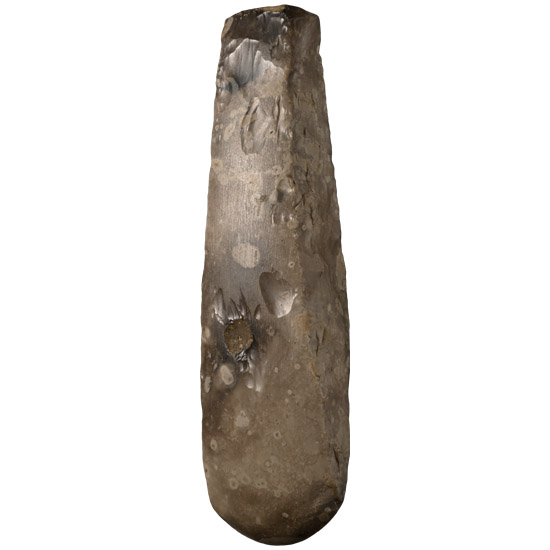
Danish Stone Age Knapped Flint Axehead
Neolithic Period, circa 6,000 B.P.Sold for (Inc. bp): £169
Long, thick-butted body with curved blade; two inked collector's notes on one side 'Denmark. CD.61' and 'Denmark (monogram)'. 615 grams, 20 cm
Found Denmark. From the collection of Martin Doyle, Leverstock, UK, 1980s-2000s. -
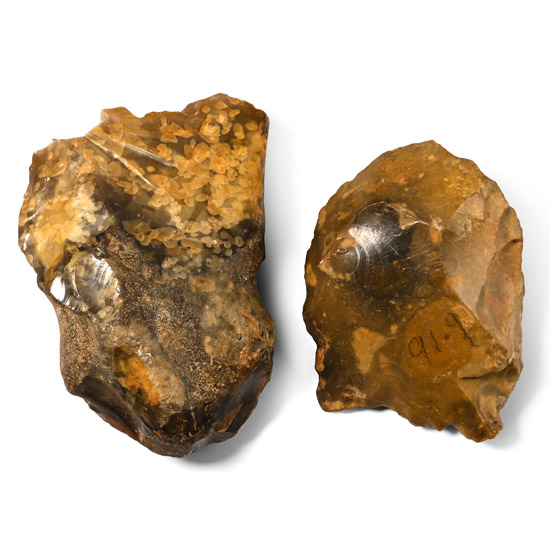
Stone Age Flint Debitage Group
Lower Palaeolithic Period, circa 700,000-300,000 B.P. or laterSold for (Inc. bp): £26
Comprising one debitage and possibly one natural, each with two inked collection notes, one with 'SNC 11.81 W.G.S.' and '4078/1/28' and a pencilled note '91.9' to the other side, the other with 'SNC 7.80 W.G.S.' and '4266/1/28'. 255 grams total, 66-86 mm
Previously in several old collections, having been annotated with two different accession numbers. Acquired from an Oxfordshire, UK, auction house. From the private collection of a West Midlands lady collector.
