
Loading, please wait...
_900x900.jpg "Neoclassical Tinted Green Agate Gemstone with a Votive Scene")
_200x200.jpg "Neoclassical Tinted Green Agate Gemstone with a Votive Scene")
.jpg "Neoclassical Tinted Green Agate Gemstone with a Votive Scene")
LOT 0395
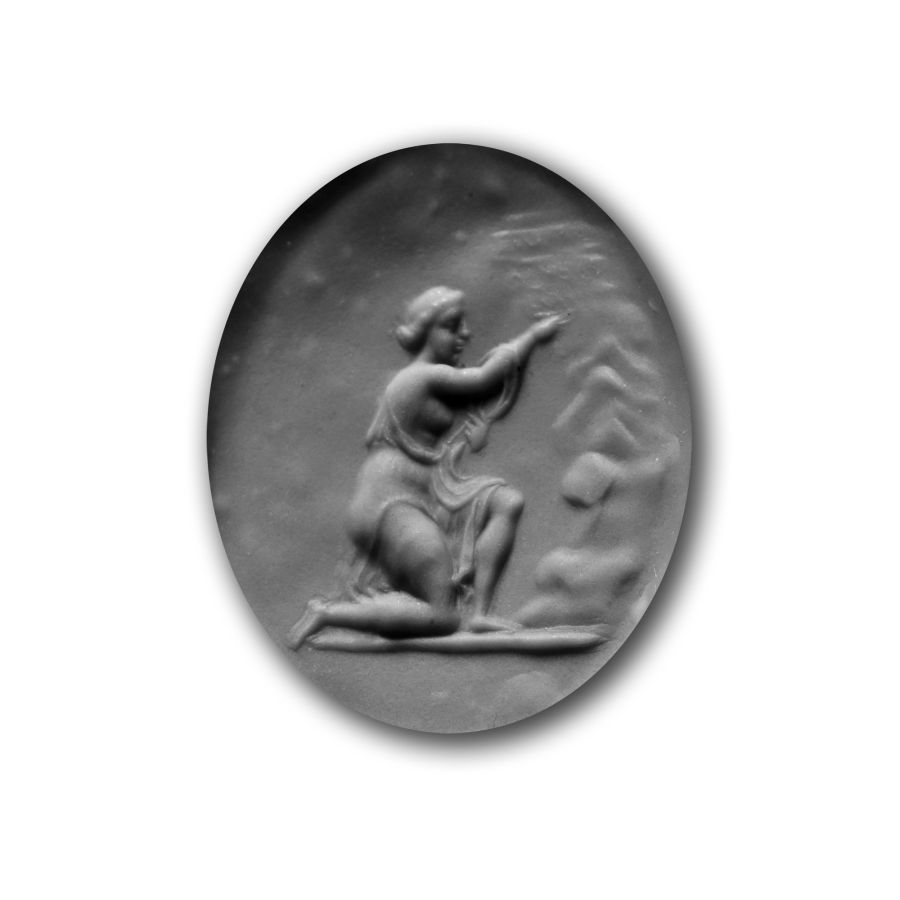
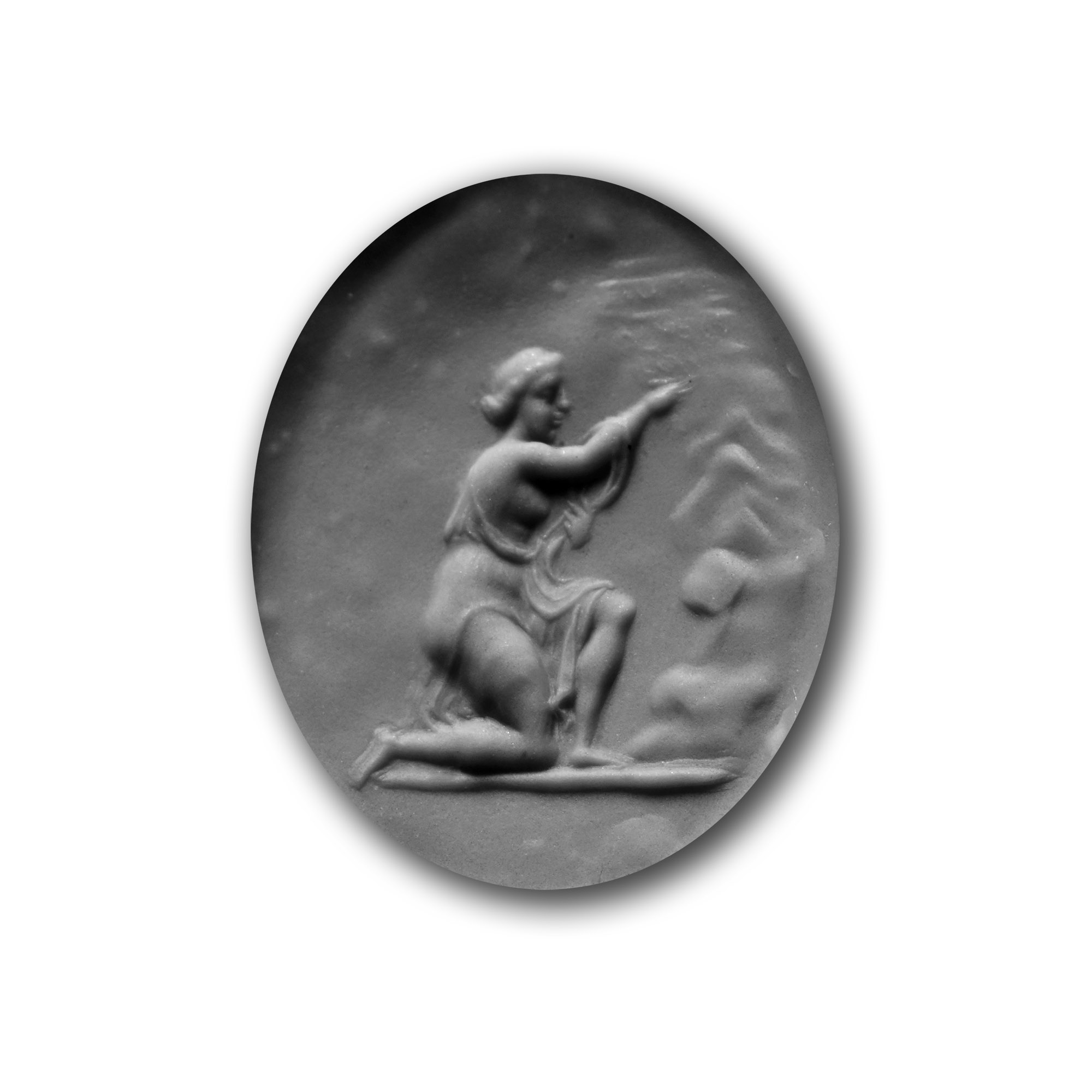
Neoclassical Tinted Green Agate Gemstone with a Votive Scene
18TH CENTURY A.D.
3/4 in. (2.07 grams, 20 mm).
Intaglio votive scene with female figure kneeling before a flaming altar; upper right, three lines of enigmatic inscription; supplied with a museum-quality impression.
ProvenanceAcquired on the European art market.
Private collection, England.
TimeLine Auctions follows a vetting process to ensure the authenticity and legality of all items, reinforcing our commitment to integrity and responsible trading. Each antiquity, antique, and coin lot undergoes thorough examination by a vetting committee of at least ten external specialists, professional trade association members, scientists, and archaeologists: Our Vetting Process
AUCTIONS:
TimeLine is a leading auction house specialising in antiquities, ancient art, collectables, natural history, coins, medals, and books. Our auctions offer museums, collectors, historians, and enthusiasts the opportunity to acquire unique and historically significant pieces.
LOT 0395
Neoclassical Tinted Green Agate Gemstone with a Votive Scene
Sold for (Inc. bp): £1,170
-
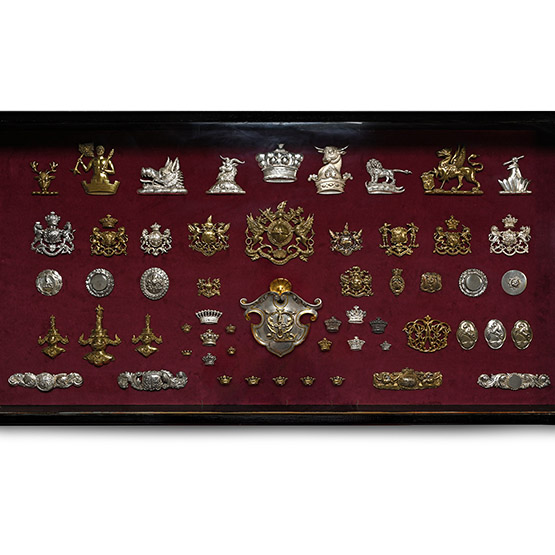
Wall Cabinet Containing an Assembly of Livery and Military Badges
Sold for (Inc. bp): £845
Fifty-six livery and military badges and metalled horse trappings, housed in a glazed wall cabinet with opening front. 24.6 kg, 61 x 122 x 12 cm
Ex Morningthorpe Manor, Norfolk, UK.
The parish of Morningthorpe is situated in south Norfolk, east of Long Stratton and west of Hempnall. The parish was certainly well established by the time of the Norman Conquest, its population, land ownership and productive resources being detailed in the Domesday Book of 1086. -
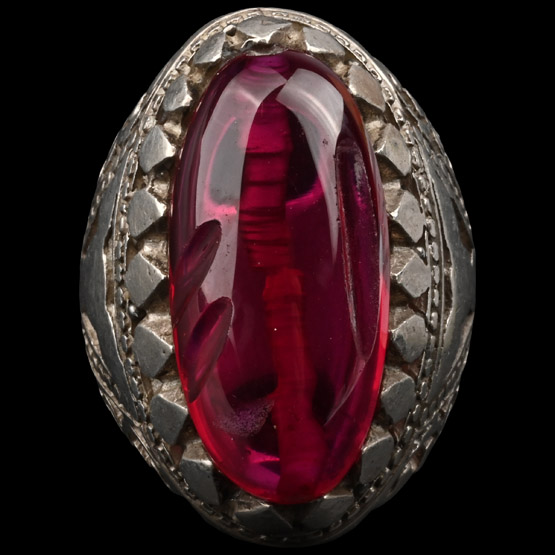
Silver-Coloured Metal Ring with Bead Gem
Late 20th-21st century A.D.Sold for (Inc. bp): £33
With a broad hoop, applied scroll to each shoulder, filigree collar to the cell, inset ellipsoid synthetic ruby cabochon with wheel-cut fluting. 23.94 grams, 36.11 mm overall, 20.36 mm internal diameter (approximate size British V, USA 10 1/2, Europe 23.77, Japan 22)
Private collection, UK. -
.jpg)
Post-Classical Banded Agate Gemstone with Two Horses and Sun
19th-20th century A.D.Sold for (Inc. bp): £468
Plano-convex in section with intaglio rearing horses each on its own baseline, sunburst between. 1.64 grams, 19 mm
Acquired on the Swiss art market. Private collection, England.
The imagery possibly refers to the twin horsemen, Castor and Pollux.
