
Loading, please wait...
LOT 2159
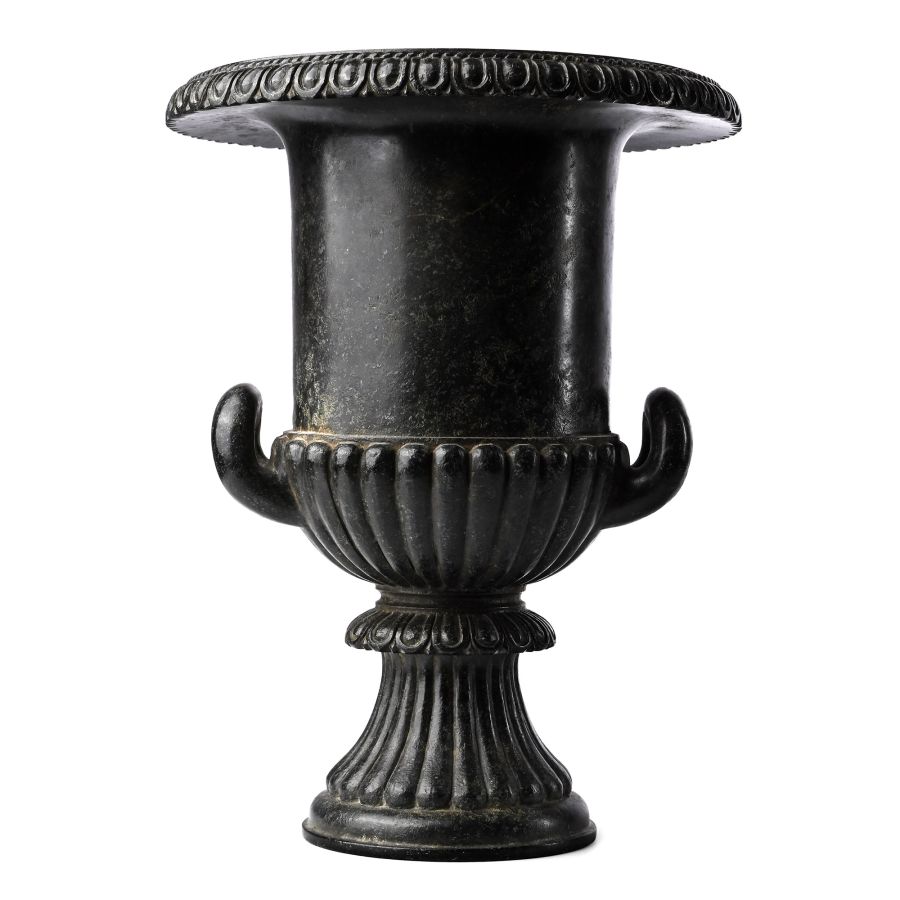
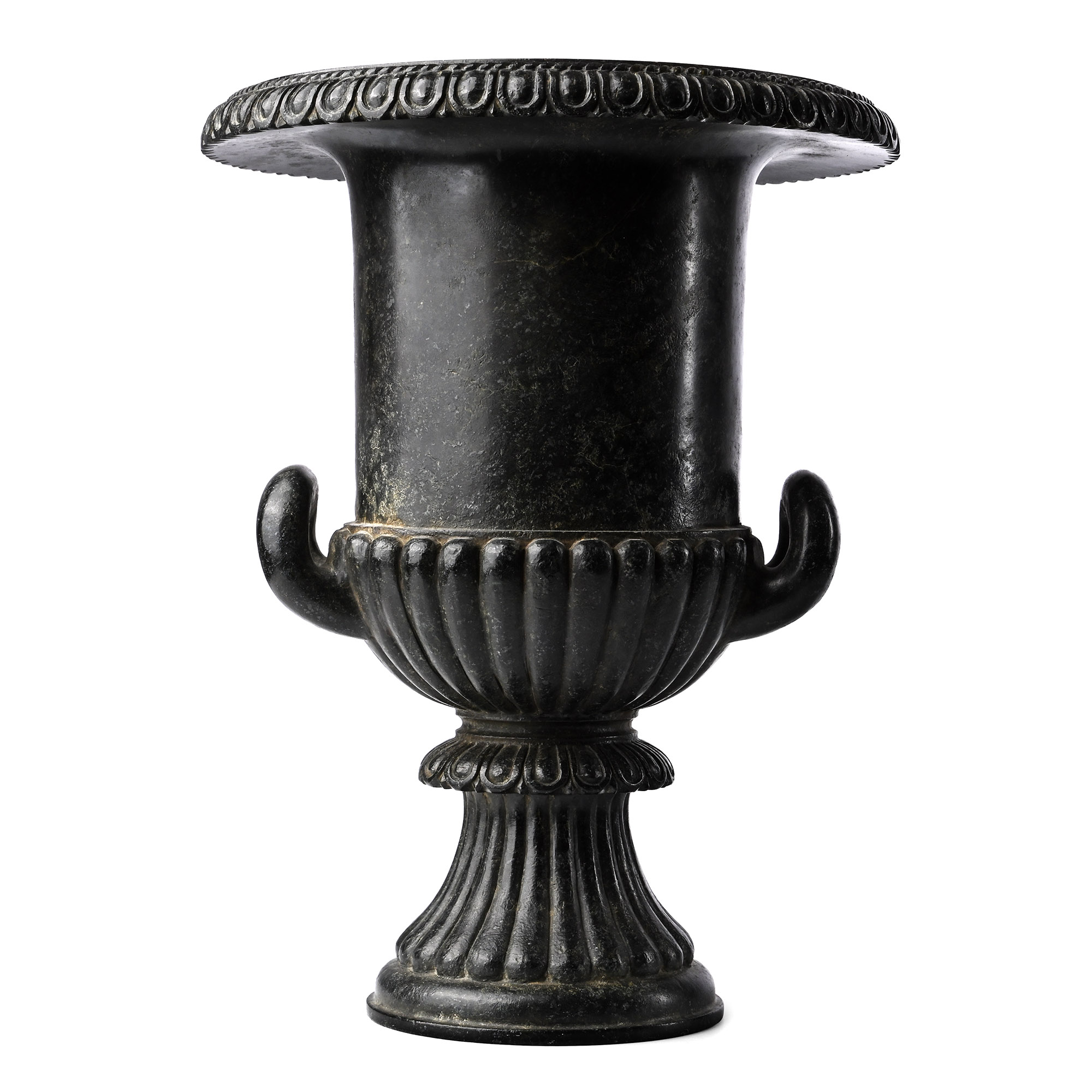
Neoclassical Roman Style Stone Krater
18TH CENTURY A.D.
10 3/4 in. (2.92 kg, 27.2 cm).
Comprising a cylindrical body and bell-shaped mouth with egg-and-dart detailing to the rim; segmented lower body with round-section strap handle; lotus-flower foot.
ProvenanceSwiss private collection.
Ex Herman Feldermann, Frankfurt, Germany, prior to 1985.
Private collection, UK.
TimeLine Auctions follows a vetting process to ensure the authenticity and legality of all items, reinforcing our commitment to integrity and responsible trading. Each antiquity, antique, and coin lot undergoes thorough examination by a vetting committee of at least ten external specialists, professional trade association members, scientists, and archaeologists: Our Vetting Process
AUCTIONS:
TimeLine is a leading auction house specialising in antiquities, ancient art, collectables, natural history, coins, medals, and books. Our auctions offer museums, collectors, historians, and enthusiasts the opportunity to acquire unique and historically significant pieces.
-
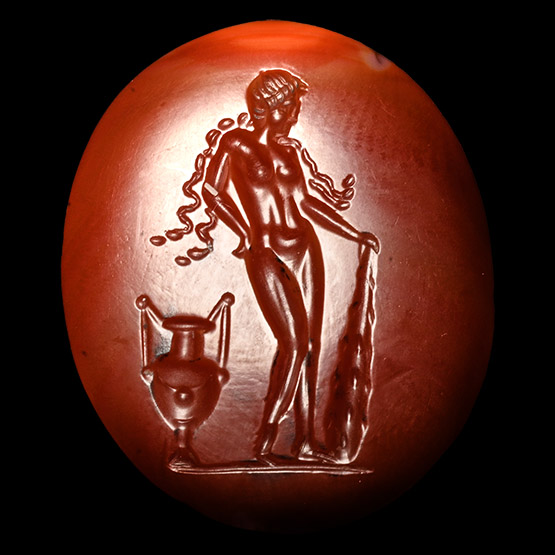
Post-Classical Red Agate Gemstone with Omphale
19th-20th century A.D.Estimate: £500 - 700 (+bp*)
Opening Bid: £250
Elipsoid in plan with domed obverse; intaglio with Omphale standing nude on a baseline, right hand on her hip and supporting her club with her left; at her feet an Apulian trozella vessel; supplied with a museum-quality impression. 4.13 grams, 25 mm
Private collection, England.
The figure bears the classic symbol of Hercules - the club - but the details of her nude body and lack of beard indicate that this is a female. Omphale was the queen of Lydia, daughter of the river Lardanos. According to myth, Hercules was a slave to the beautiful queen for three years and was forced by her to dress as a woman and spin wool, giving up his lion's head. It was Omphale who donned her lion's head and wielded the club, as depicted in this intaglio, an allegory of submission and revenge in love. An interesting post-classical work. -
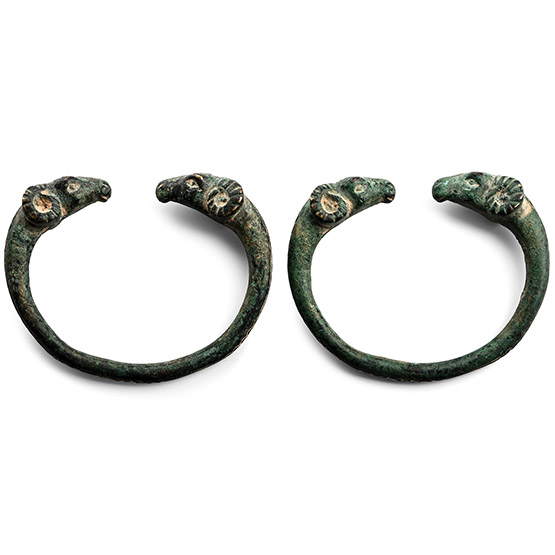
Western Asiatic Style Silver Inlaid Bronze Bracelet Pair
20th century A.D.Sold for (Inc. bp): £52
Each a round-section shank with ram's head finials. 328 grams total, 96-99 mm
Private collection, UK. -

Large Post Medieval Merchant’s Seal Ring Engraved with 'BG' and Shield
Germany, 16th century A.D.Sold for (Inc. bp): £12,350
Engraved with the owner's initials ‘B G’ above a tilting shield with flanche; merchant's mark motif of capital 'A' and a cross. 20.03 grams, 28.33 mm overall, 23.00 x 18.47 mm internal diameter (approximate size British T 1/2, USA 9 3/4, Europe 21.89, Japan 21)
Private collection, Europe. Acquired on the English art market. This lot has been checked against the Interpol Database of stolen works of art and is accompanied by a search certificate number no.13051-248349.
Merchants' marks were chosen by their owners as a form of personal cypher, and so it is almost impossible to decipher the owner of many merchants' marks, as they were not governed by the strict regulation and recording that heraldry laws dictated. Merchants' rings were engraved with geometric symbols used to mark their goods or personal belongings and used instead of a coat of arms for those not entitled to them. Most merchants in the sixteenth and seventeenth centuries had marks, easily identifiable and formed with a few strokes. Many such rings also bear religious or talismanic inscriptions or imagery, combining a spiritual with a commercial function. The shape of the shield on this example draws direct parallels to the heraldic shields and jewels of this period in Germany.
