
Loading, please wait...
LOT 1409
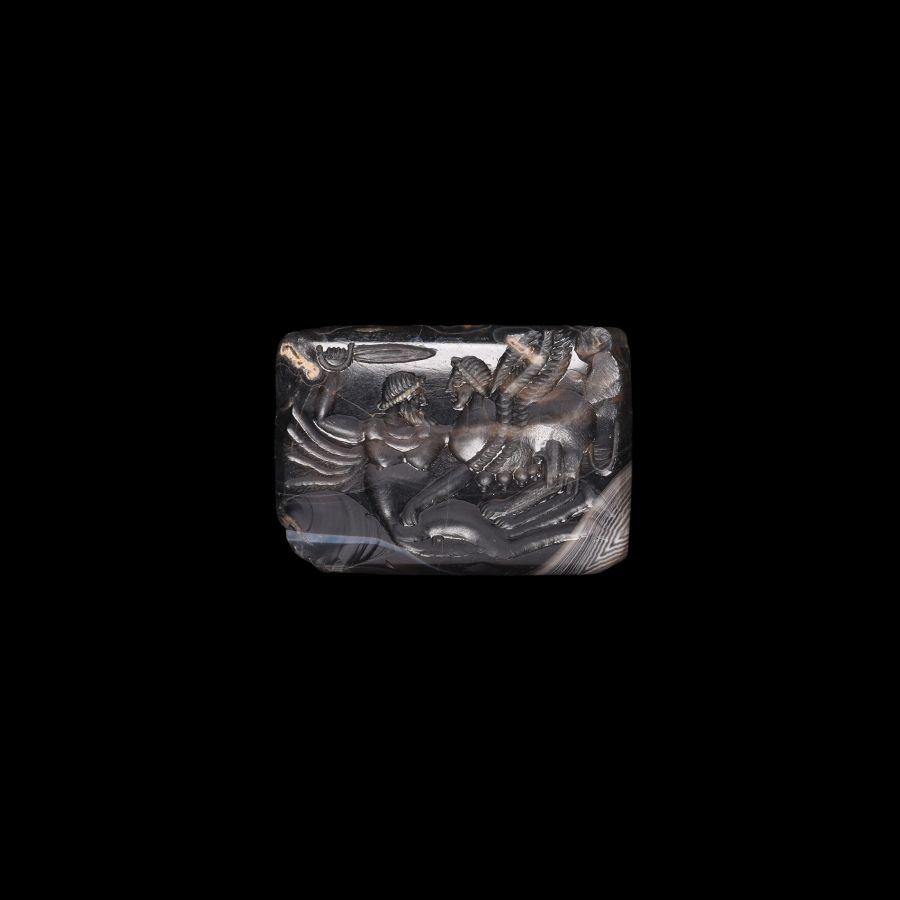
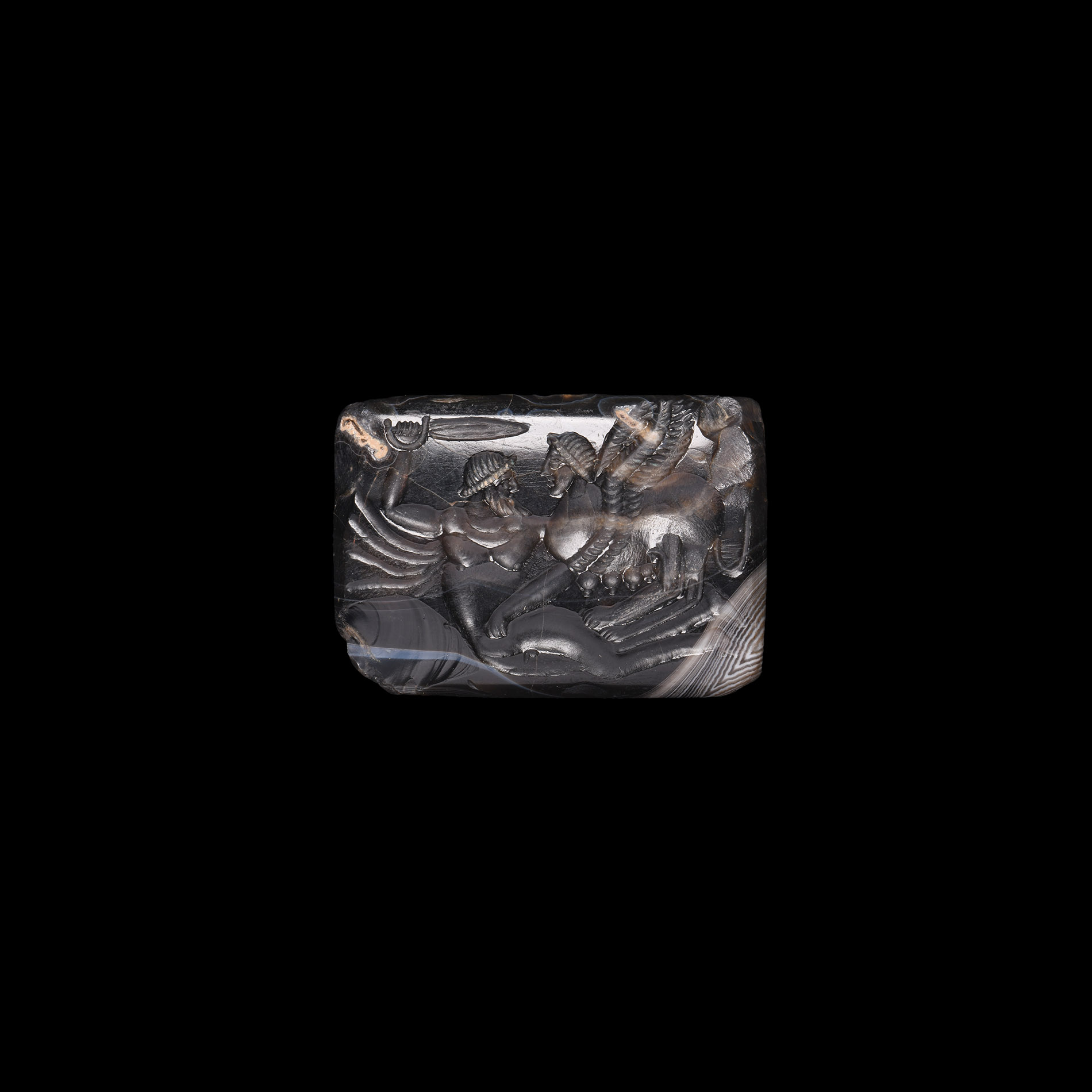
Neoclassical Gemstone Plaque
18TH-19TH CENTURY A.D.
1 3/4 in. (21.6 grams, 43 mm).
A banded agate intaglio engraved with an ancient Assyrian(?) style figural scene showing a man with sword in hand battling a sphinx-like mythical winged creature with the head of a woman and body of a lion, swollen teats lining the creature's belly; pair of drilled holes for suspension; chipped.
ProvenanceProperty of a North London gentleman.
FootnotesLikely an allusion to ancient tales of the monstrous and treacherous sphinx attacking the hero.
CONDITIONTimeLine Auctions follows a vetting process to ensure the authenticity and legality of all items, reinforcing our commitment to integrity and responsible trading. Each antiquity, antique, and coin lot undergoes thorough examination by a vetting committee of at least ten external specialists, professional trade association members, scientists, and archaeologists: Our Vetting Process
AUCTIONS:
TimeLine is a leading auction house specialising in antiquities, ancient art, collectables, natural history, coins, medals, and books. Our auctions offer museums, collectors, historians, and enthusiasts the opportunity to acquire unique and historically significant pieces.
-
Roman Style Seated Putti
17th-19th century A.D. or earlierEstimate: £1,000 - 1,400 (+bp*)
Opening Bid: £500
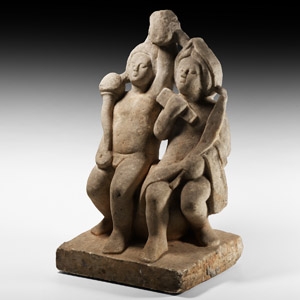
A carved stone scene depicting a male and female putti pair seated on a globe, one figure holding a cornucopia; on a rectangular base. 17.6 kg, 40 cm high
English private collection. -

Bactrian Style Lapis Lazuli Bead Necklace
20th century A.D.Sold for (Inc. bp): £59
A bead necklace composed of graduated lapis lazuli beads of various types, including tubular, biconical, oblate and other types. 143 grams, 48 cm long
Acquired 1980-2015. Ex Abelita family collection. -
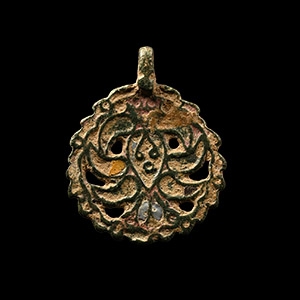
Post Medieval Enamelled Pendant
Circa 18th century A.D.Sold for (Inc. bp): £39
A bronze pendant of discoid form and suspension loop to apex, openwork design comprising a stylised figure with polychrome enamelling. 5.56 grams, 35 mm
Acquired before 2000. From the collection of a European gentleman living in the UK.
