
Loading, please wait...
LOT 2176
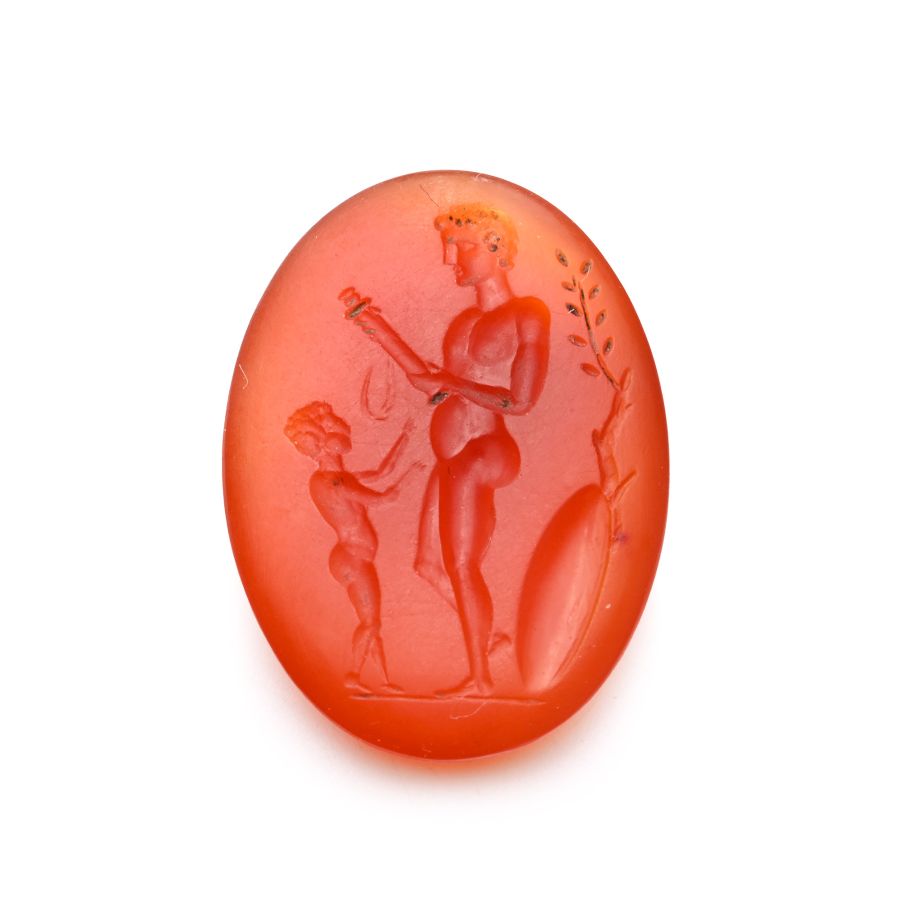
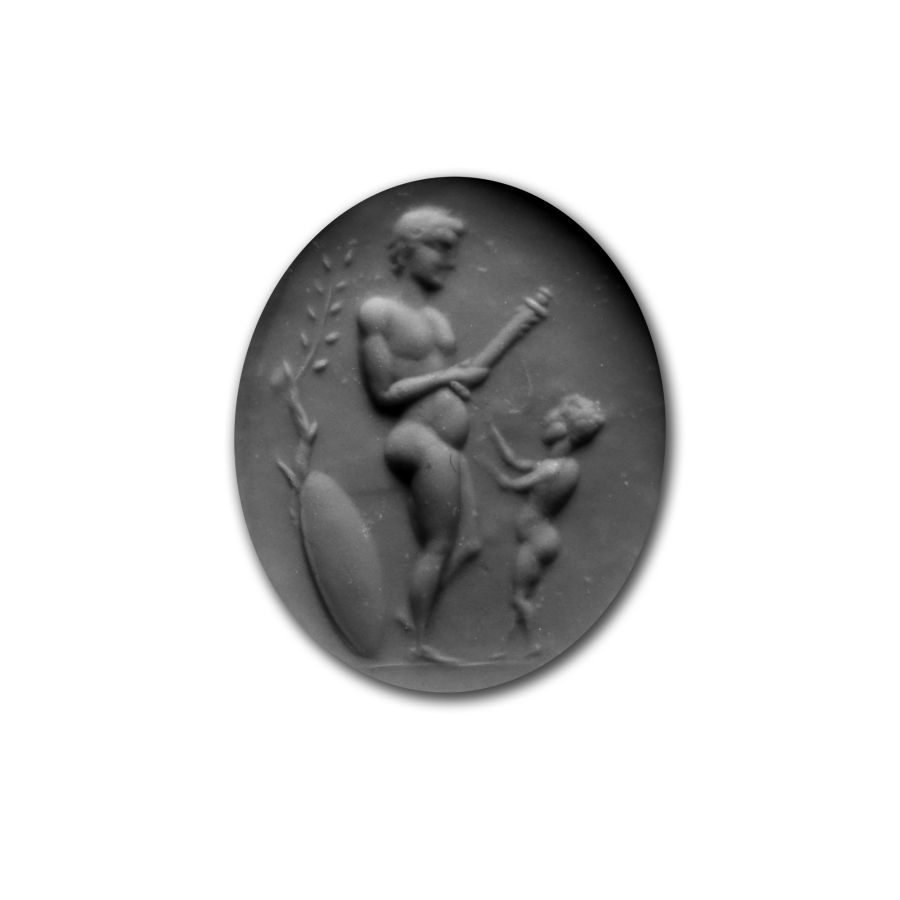
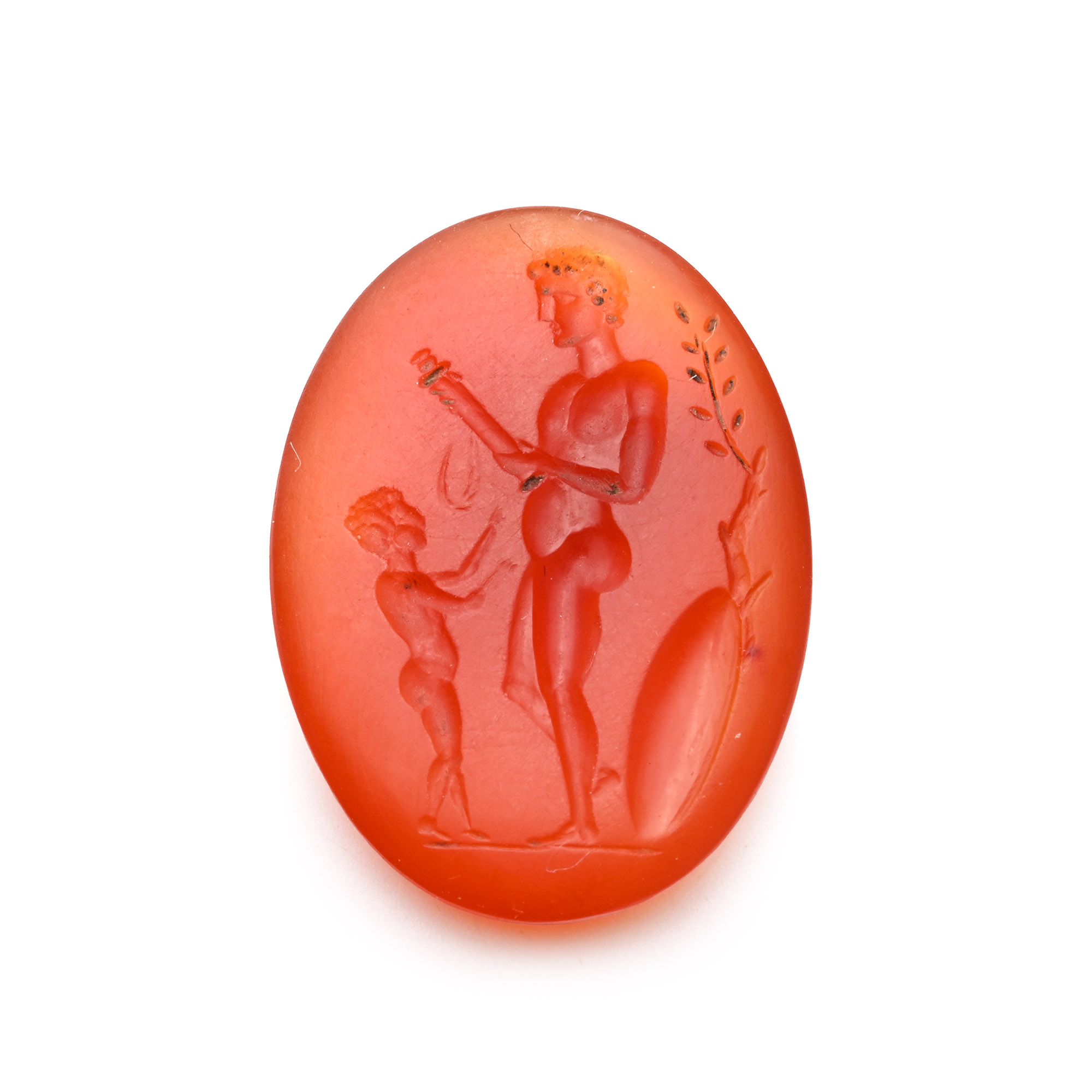
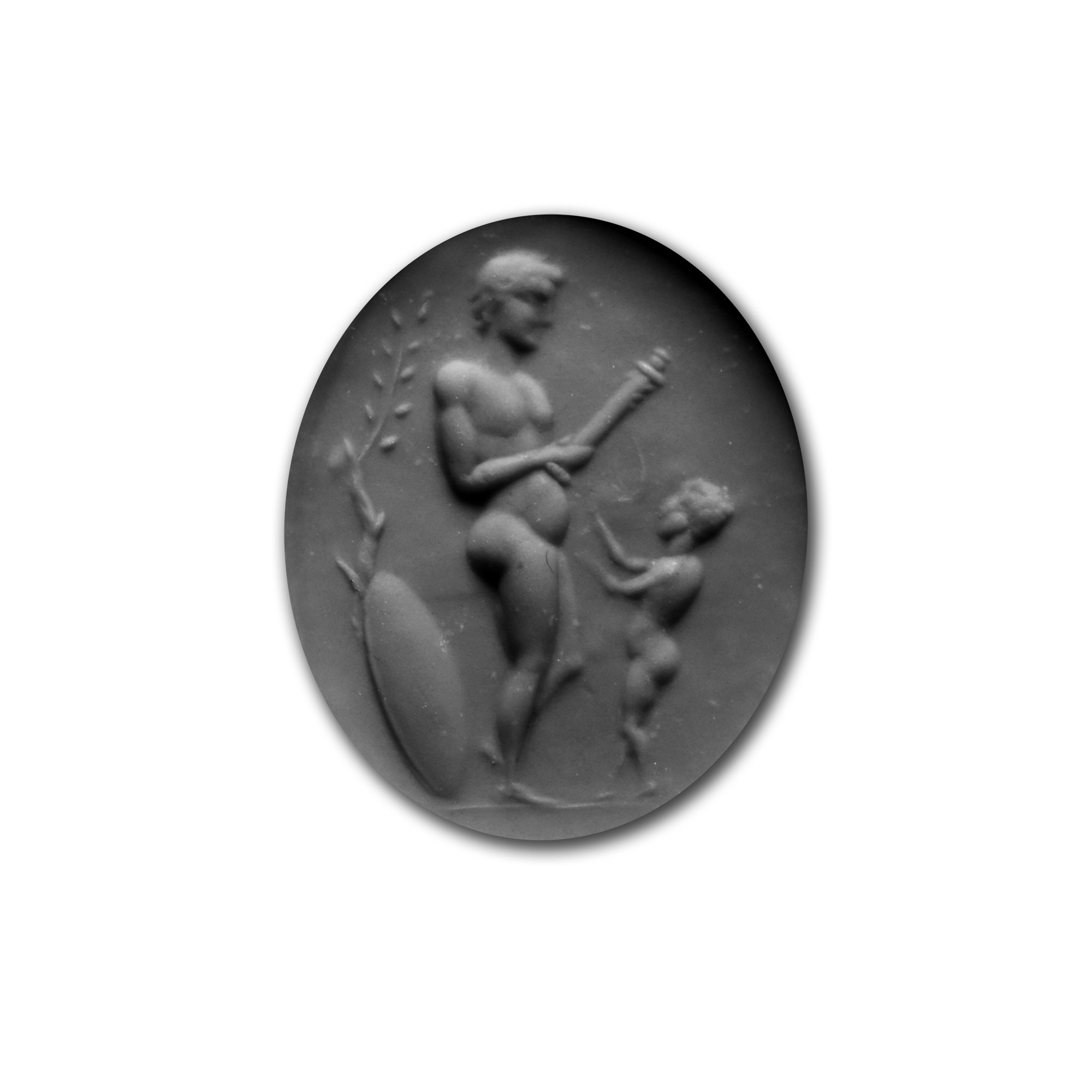
Neoclassical Carnelian Gemstone with Warrior and Putto
18TH-19TH CENTURY A.D.
1 in. (2.75 grams, 23 mm).
With incuse warrior naked and facing left, putto facing him, a shield propped against a tree to his rear; supplied with a museum-quality impression.
ProvenanceAcquired on the European art market.
Private collection, England.
TimeLine Auctions follows a vetting process to ensure the authenticity and legality of all items, reinforcing our commitment to integrity and responsible trading. Each antiquity, antique, and coin lot undergoes thorough examination by a vetting committee of at least ten external specialists, professional trade association members, scientists, and archaeologists: Our Vetting Process
AUCTIONS:
TimeLine is a leading auction house specialising in antiquities, ancient art, collectables, natural history, coins, medals, and books. Our auctions offer museums, collectors, historians, and enthusiasts the opportunity to acquire unique and historically significant pieces.
LOT 2176
Neoclassical Carnelian Gemstone with Warrior and Putto
Estimate £400 - 600€460 - 700 (for guidance only)$540 - 810 (for guidance only)
-
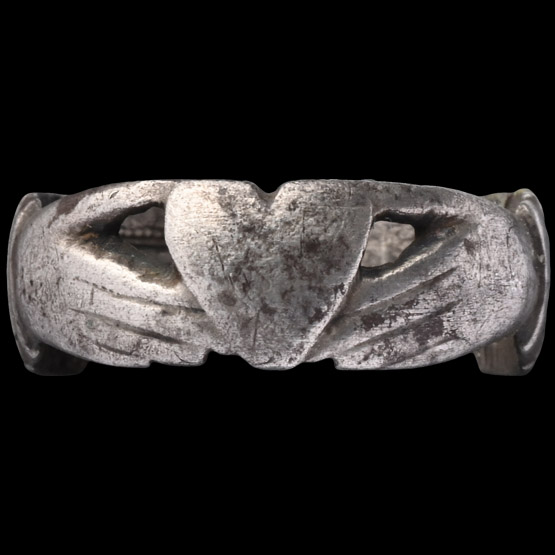
Claddagh Silver Ring Made from a Victorian Coin
19th century A.D.Sold for (Inc. bp): £247
Comprising a flat-section hoop and openwork bezel formed as two hands encircling a heart with a crown above; inner face showing traces of the original coin. 4.88 grams, 21.64 mm overall, 18.44 mm internal diameter (approximate size British P 1/2, USA 7 3/4, Europe 16.86, Japan 16)
From the collection of a late Gloucestershire, UK, collector. -
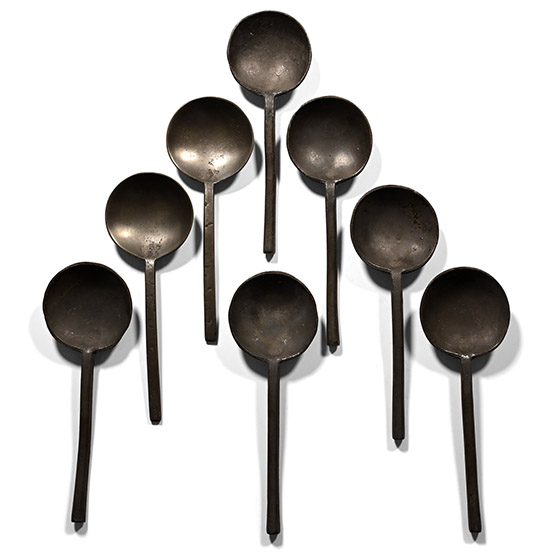
Pewter Spoon Collection
Circa 17th-18th century A.D.Sold for (Inc. bp): £46
Each with a shallow circular bowl and sturdy stem, six with a stamped X-motif within pelletted border to the bowl, and two with three stamped rosettes above letters(?). 839 grams total, 16.5 cm
Acquired in the Netherlands in the 1990s. Ex Cambridgeshire, UK, gentleman. -
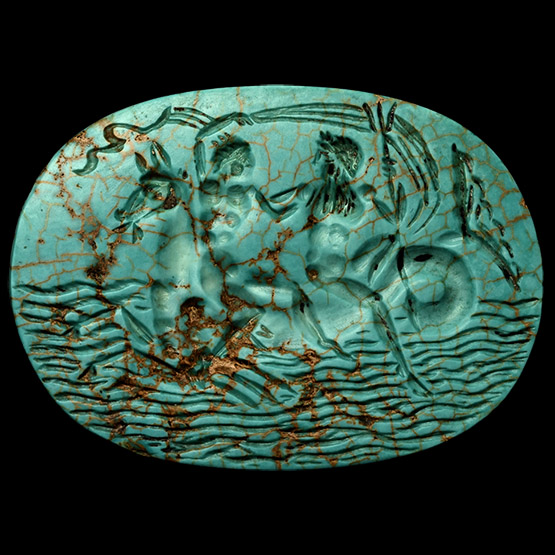
Large Post-Classical Turquoise Gemstone with Mythological Scene of Poseidon with Amphitrite on Seahorse
19th century A.D. or earlierEstimate: £500 - 700 (+bp*)
Opening Bid: £250
Ellipsoid with intaglio scene of a hippocamp in profile with coiled tail on an aquatic background supporting two seated figures, Poseidon and Amphitrite; billowing sail or banner above; supplied with a museum-quality impression. 13.05 grams, 41 mm
Private collection, England.
