
Loading, please wait...
LOT 0385
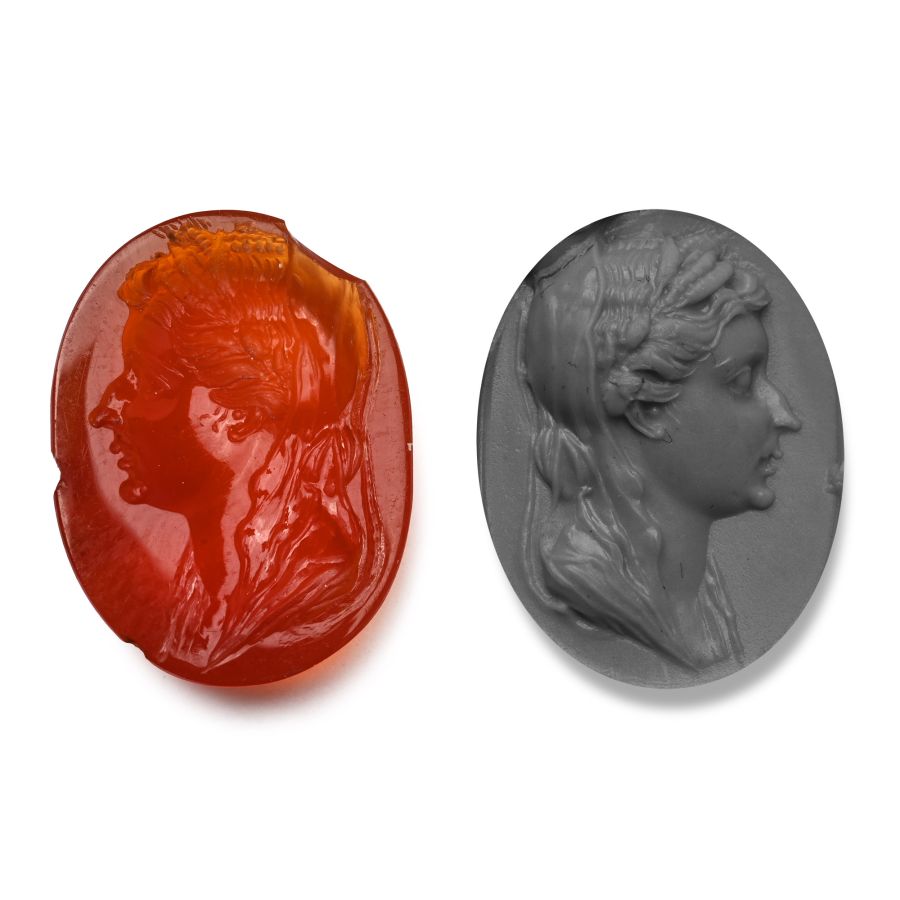
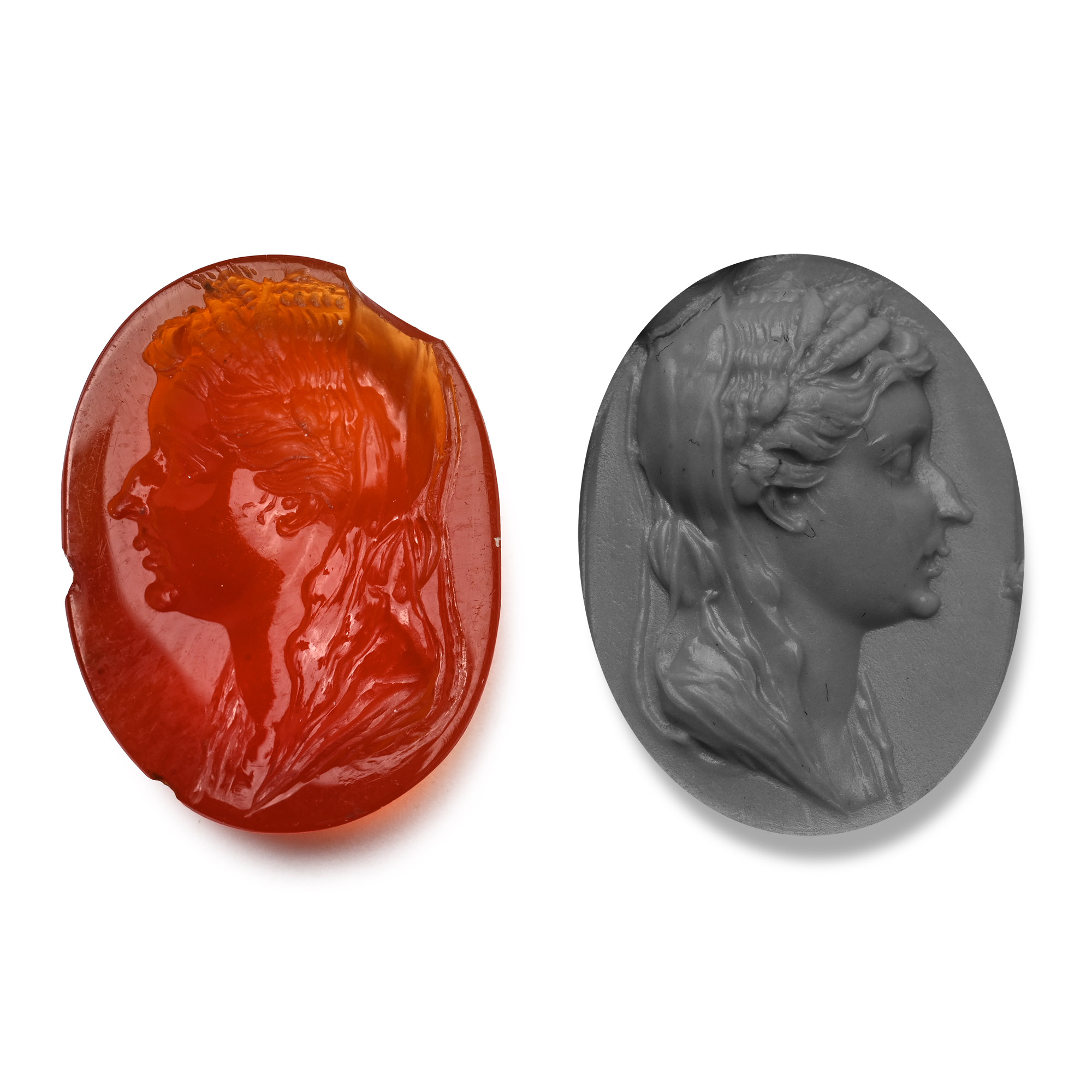
Neoclassical Carnelian Gemstone with Bust of the Roman Empress Livia as the Greek Goddess Ceres
ITALY, 18TH CENTURY A.D.
3/4 in. (1.51 grams, 19 mm).
Intaglio profile bust of Empress Livia with laurel wreath to her long hair, presented in the guise of Ceres; supplied with a museum-quality impression.
ProvenancePrivate English collection, formed between the late 1970s and early 1990s.
Private collection, London, UK.
Livia Drusilla (59 B.C.-A.D. 29) was Roman empress from 27 B.C.-A.D. 14 as the wife of Emperor Augustus. She was known as Julia Augusta after her admission into the Julian family in AD 14. Charis (Greek: Χάρις meaning 'Grace') was a goddess in Greek mythology, one of the 'Charites' or 'Graces' associated with charm, beauty, nature, creativity and fertility.
CONDITIONTimeLine Auctions follows a vetting process to ensure the authenticity and legality of all items, reinforcing our commitment to integrity and responsible trading. Each antiquity, antique, and coin lot undergoes thorough examination by a vetting committee of at least ten external specialists, professional trade association members, scientists, and archaeologists: Our Vetting Process
AUCTIONS:
TimeLine is a leading auction house specialising in antiquities, ancient art, collectables, natural history, coins, medals, and books. Our auctions offer museums, collectors, historians, and enthusiasts the opportunity to acquire unique and historically significant pieces.
LOT 0385
Neoclassical Carnelian Gemstone with Bust of the Roman Empress Livia as the Greek Goddess Ceres
Sold for (Inc. bp): £650
-
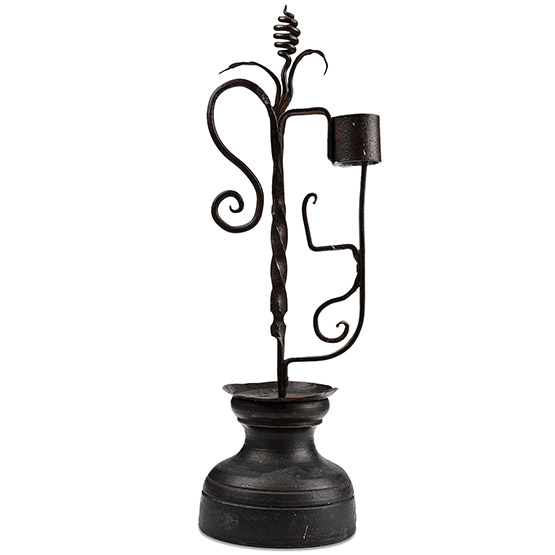
Published Iron Alpine Candle Holder
France or Switzerland, 19th century A.D.Sold for (Inc. bp): £338
With spring arm to secure the candle, with raised tray feature. 687 grams, 36.5 cm
From a private collection. Ex Nic McElhatton, former chairman of Christie's South Kensington. Property of a Berkshire, UK, collector. Accompanied by copies of the relevant book pages where published. -
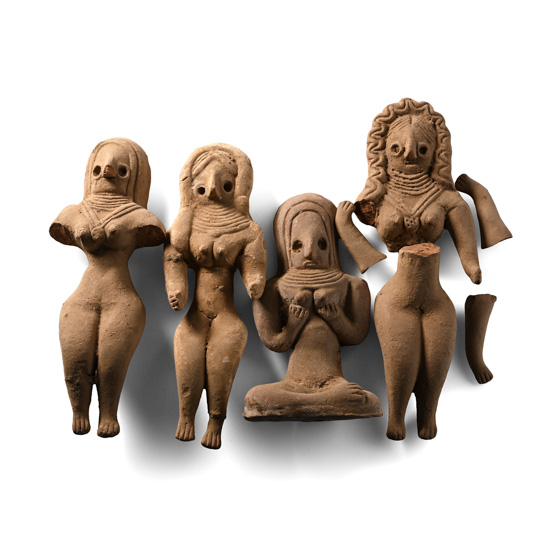
Indus Valley Style 'Mohenjo-Daro' Terracotta Idol Group
20th century A.D. or earlierSold for (Inc. bp): £7
A mixed group of idol figures, each a recumbent nude female with headdress. 224 grams total, 8-12 cm
Fine condition, two broken.
Property of a London gentleman; acquired before 2000. From the private collection of John Meredith, acquired since the 1990s; thence by descent. -
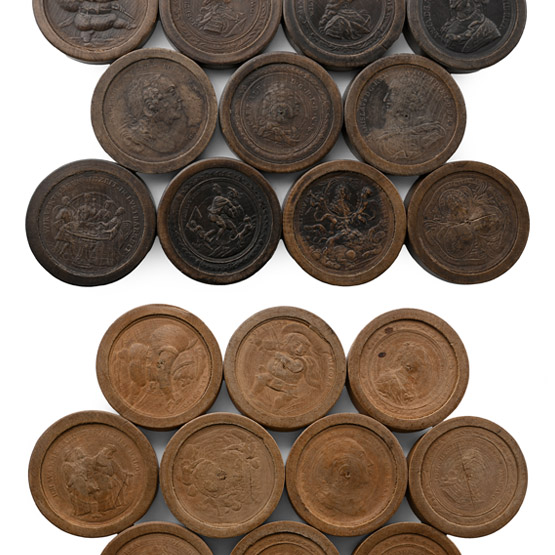
Post Medieval Stained and Natural Wooden Gaming Pieces
Southern Germany, Nuremberg, 18th century A.D.Sold for (Inc. bp): £468
Turned wooden counters in natural and dark-stained versions; some of the darker type with the bust of a Holy Roman Emperor to one face and a prospect of a city (Vienna, Danzig, etc.), as well as comic figures and scenes; the lighter group with similar motifs as well as hunting and other scenes. 320 grams total, 51 mm each
Private collection, Europe. Acquired on the English art market.
Similar game pieces are often signed ‘PHM’ for Philipp Heinrich Müller (1654-1719). There are eleven stained pear wood pieces and ten natural pear-wood pieces. The game pieces are decorated with busts, commemorative medals, cities, figural scenes including interiors, daily life and great battles, German / Austrian cities and figures from the engravings of Jacques Callot (1592-1635).
