
Loading, please wait...
LOT 2401
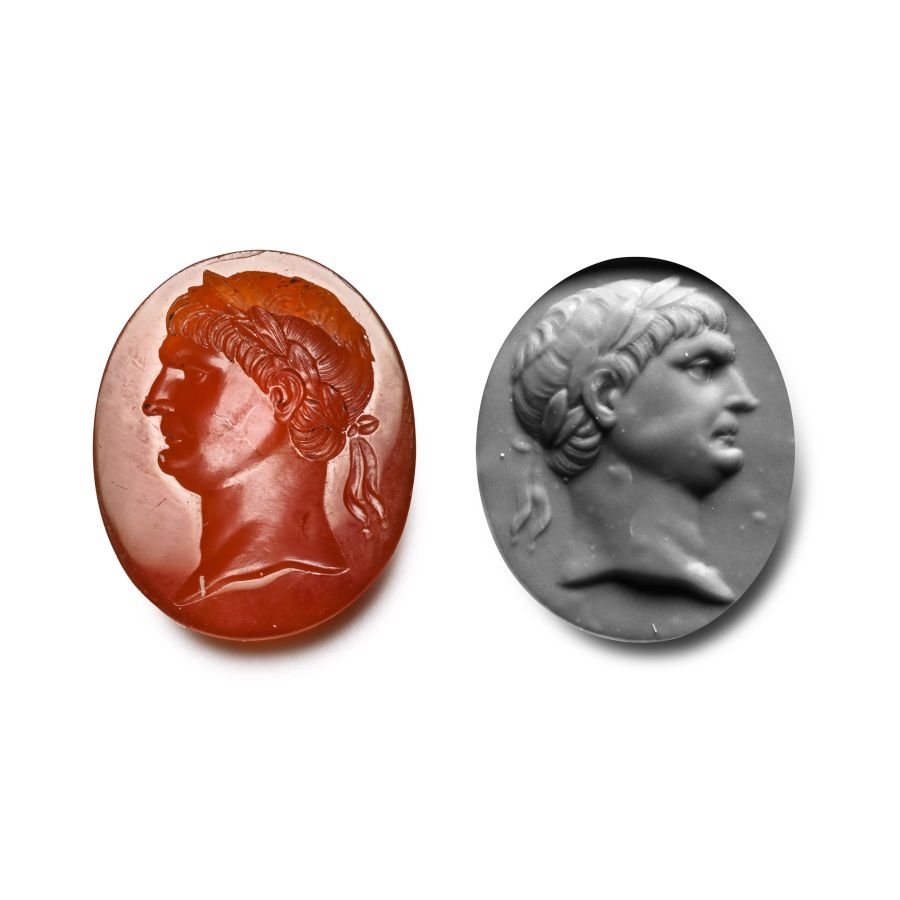
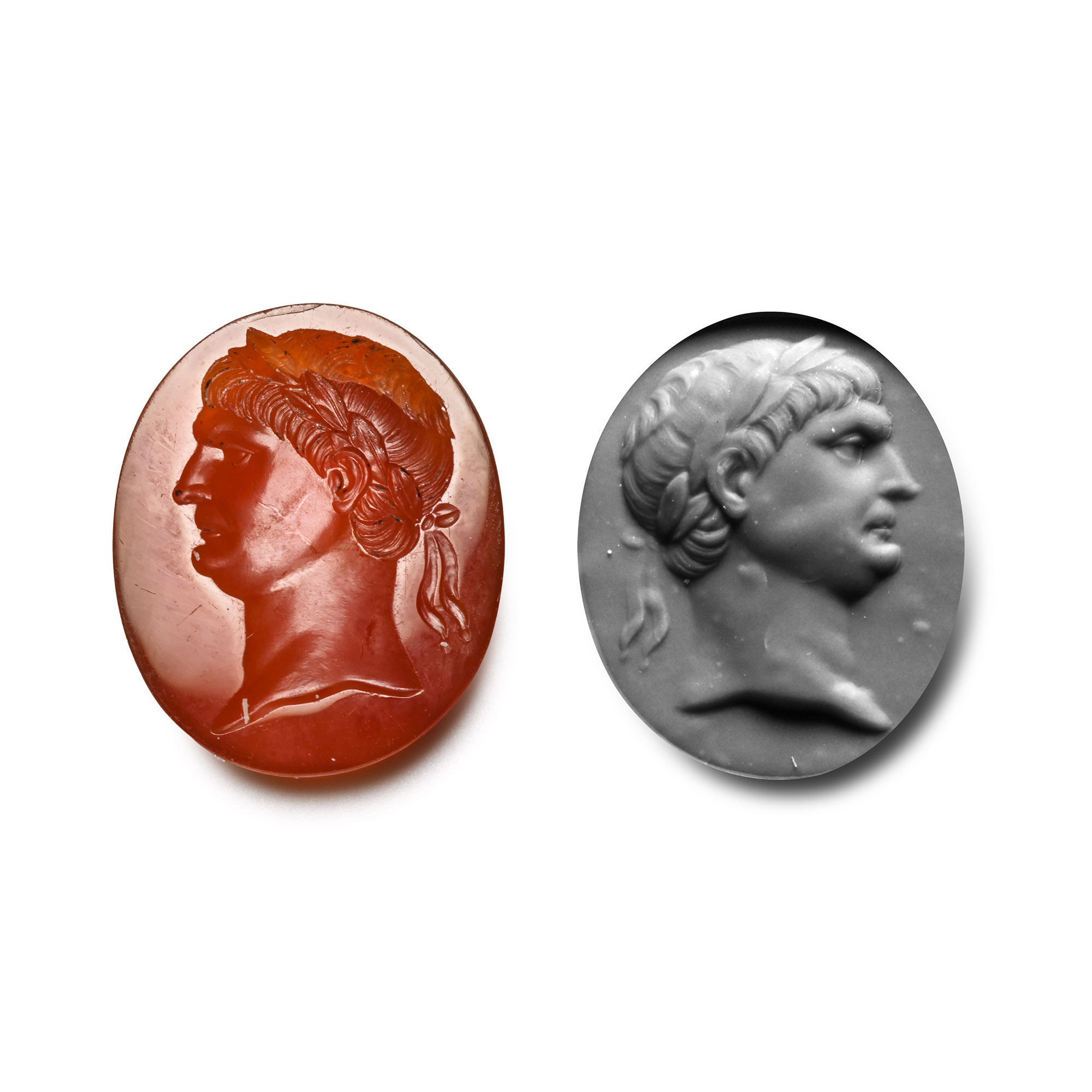
Neoclassical Carnelian Gemstone of Roman Emperor Trajan
ITALY, 18TH CENTURY A.D.
7/8 in. (3.01 grams, 21 mm).
Intaglio profile bust with short hair and laurel wreath; supplied with a museum-quality impression.
ProvenancePrivate English collection, formed between the late 1970s and early 1990s.
Private collection, London, UK.
TimeLine Auctions follows a vetting process to ensure the authenticity and legality of all items, reinforcing our commitment to integrity and responsible trading. Each antiquity, antique, and coin lot undergoes thorough examination by a vetting committee of at least ten external specialists, professional trade association members, scientists, and archaeologists: Our Vetting Process
AUCTIONS:
TimeLine is a leading auction house specialising in antiquities, ancient art, collectables, natural history, coins, medals, and books. Our auctions offer museums, collectors, historians, and enthusiasts the opportunity to acquire unique and historically significant pieces.
LOT 2401
Neoclassical Carnelian Gemstone of Roman Emperor Trajan
Sold for (Inc. bp): £520
-
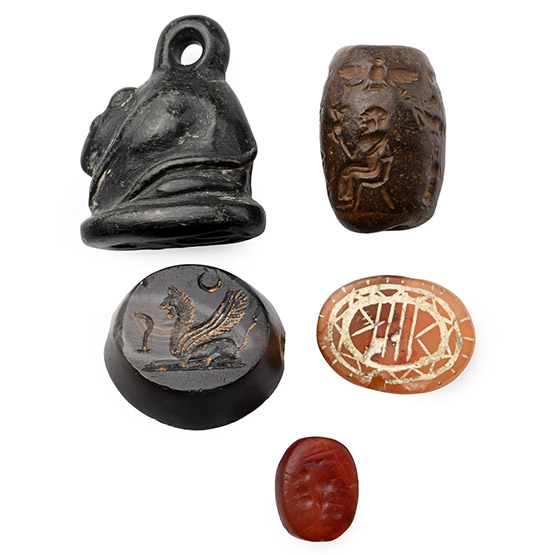
Group of Seals and Scaraboids
20th century A.D.Sold for (Inc. bp): £104
Including fusiform, plano-convex and other types; after the antique. 46 grams total, 14-31 mm
From the late S M collection, London, UK, 1969-1999. -
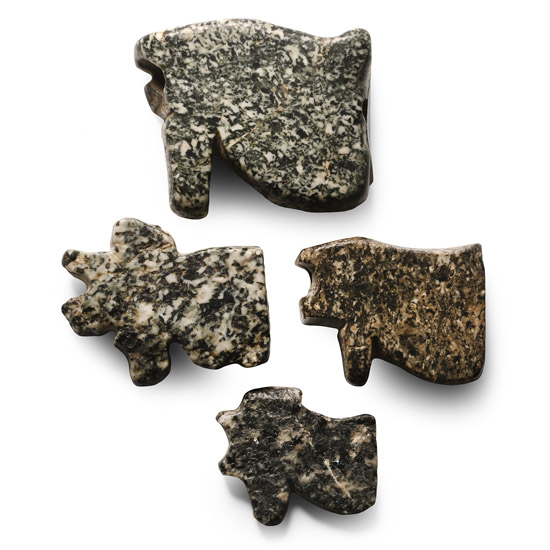
Egyptian Style Black Granite Eye of Horus Amulet Collection
20th century A.D.Estimate: £80 - 100 (+bp*)
Opening Bid: £40
Each carved into the wedjat amulet and pierced longitudinally. 28.9 grams total, 20-30 mm
with Archaeologia, Switzerland, before 1983. Ex private North American collection. London private collection, 2016. -
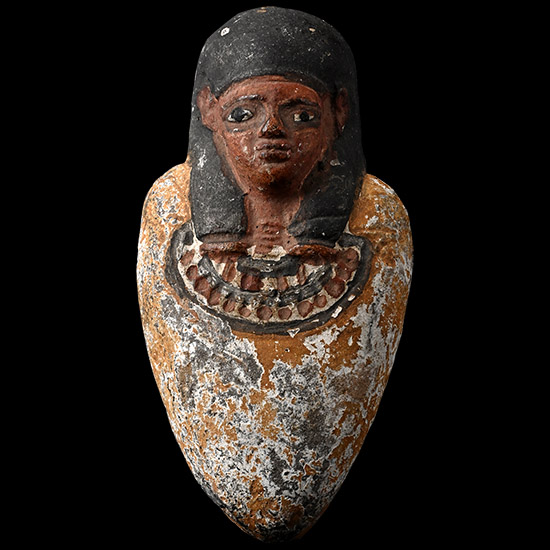
Egyptian Style Bust of a Mummy
20th century A.D.Sold for (Inc. bp): £39
Wearing a tripartite wig and a broad collar, heart-shaped body; after the antique. 146 grams, 10.1 cm
Acquired by the present owner from a gallery in London, UK, circa 1979. Property of a West Northamptonshire, UK, gentleman.
